
In the dynamic world of finance, understanding growth is paramount. Whether you’re tracking your investments, analyzing budget changes, evaluating business performance, or simply assessing the impact of inflation, the ability to calculate percentage increase between two numbers is an indispensable skill. It transforms raw figures into actionable insights, allowing you to gauge performance, make informed decisions, and plan for the future. This article delves into the core mechanics of calculating percentage increase, highlighting its vital role across various financial landscapes and equipping you with the knowledge to apply it effectively.
The Fundamentals of Percentage Increase
At its heart, a percentage increase quantifies the relative growth or change of a value in relation to an initial value. It expresses this change as a fraction of 100, making it easier to compare different situations, regardless of the absolute numbers involved.
Defining Percentage Increase
Percentage increase is a mathematical concept used to describe the magnitude of change in a value, expressed as a percentage of the original value. When a number goes up from a starting point to an ending point, we say it has increased. The percentage increase tells us how much it increased relative to its initial size. For instance, if an investment of $100 grows to $110, it’s a $10 increase. But what percentage is that $10 of the original $100? That’s what percentage increase helps us determine. It provides a standardized way to look at growth, making it universally understandable.
Why This Metric Matters in Finance
In the realm of personal and business finance, percentage increase isn’t just an academic exercise; it’s a critical analytical tool.
- Investments: It allows investors to accurately measure the return on investment (ROI) over specific periods. Knowing that your stock portfolio increased by 15% is far more informative than just knowing it went up by $1,500, especially if you want to compare it to another investment that went up by $2,000 but had a much larger initial capital.
- Salaries and Income: Individuals use it to understand the real growth in their earnings. A 5% raise might sound small, but it’s a concrete measure of increased purchasing power or net worth.
- Budgeting and Savings: Tracking percentage increases in expenses (like utility bills or groceries) can highlight areas where spending is getting out of control. Conversely, tracking percentage increases in savings helps measure progress toward financial goals.
- Inflation: Governments and economists use percentage increases to report inflation rates, indicating how much the cost of goods and services has risen over time. This directly impacts your purchasing power.
- Business Performance: Businesses rely on percentage increases to evaluate sales growth, profit margins, market share, and operational efficiency year-over-year or quarter-over-quarter.
Without this metric, financial analysis would be limited to absolute numbers, which often lack the necessary context for meaningful comparisons and strategic decision-making.
The Basic Formula Explained
The formula for calculating percentage increase is straightforward and relies on three key pieces of information: the original value, the new value, and the difference between them.
The core formula is:
$$ text{Percentage Increase} = left( frac{text{New Value} – text{Original Value}}{text{Original Value}} right) times 100 $$
Let’s break down each component:
- New Value: This is the current or final number after the increase has occurred.
- Original Value: This is the starting number, the baseline against which the increase is measured.
- New Value – Original Value: This calculation gives you the absolute amount of the increase. It tells you how much the number has gone up.
- Dividing by the Original Value: This step converts the absolute increase into a decimal fraction of the original value. It answers the question: “What proportion of the original value is this increase?”
- Multiplying by 100: This final step converts that decimal fraction into a percentage, making it easier to read and interpret.
Understanding this formula is the gateway to unlocking deeper financial insights.
Step-by-Step Calculation Guide
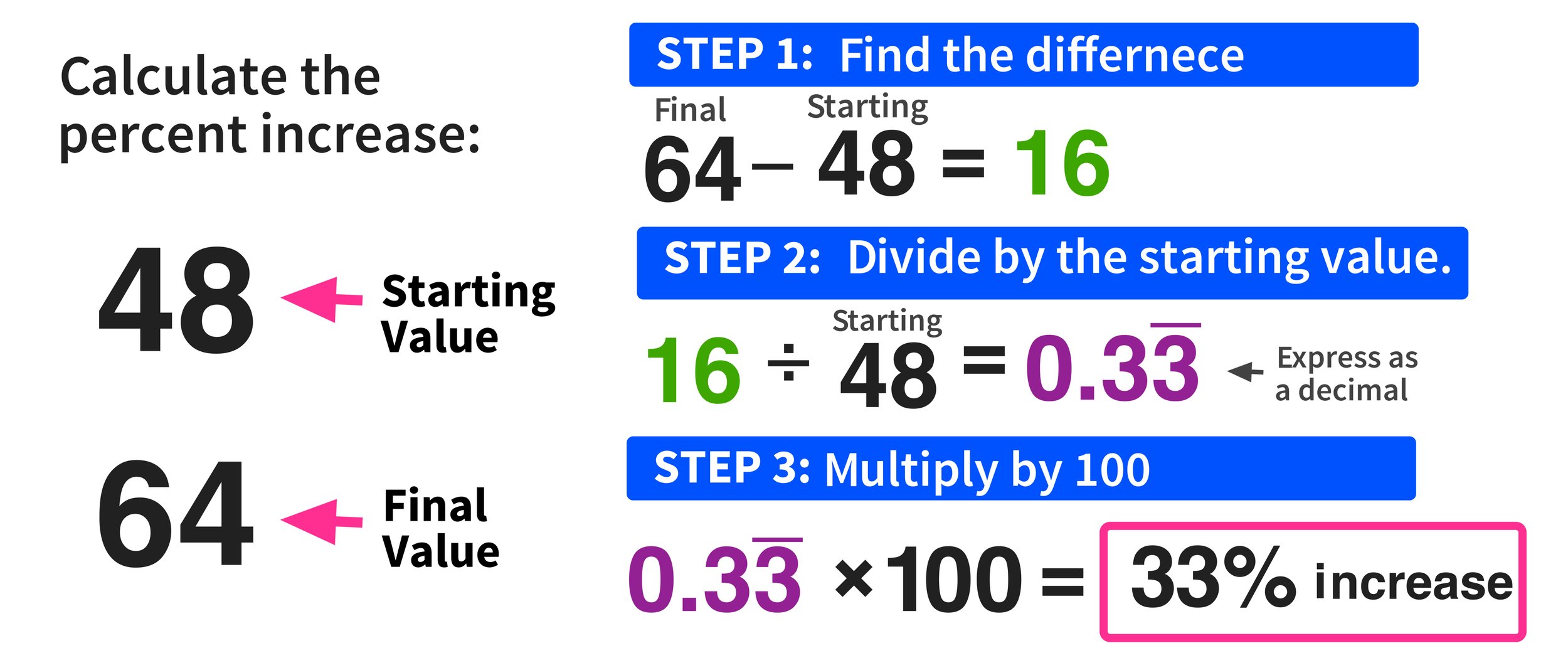
Calculating percentage increase is a three-step process that can be applied to virtually any financial scenario where a value has grown.
Step 1: Find the Difference (New Value – Original Value)
The first step is to determine the absolute change between the two numbers. You simply subtract the original (smaller) value from the new (larger) value. This gives you the raw amount by which the number has increased.
Example:
- Original Value (e.g., initial investment): $1,000
- New Value (e.g., current investment value): $1,200
- Difference = $1,200 – $1,000 = $200
This $200 represents the absolute monetary gain from your investment.
Step 2: Divide by the Original Value
Once you have the difference, you divide it by the original value. This step expresses the increase as a decimal fraction relative to the starting point. It’s crucial to divide by the original value, not the new value, as we are measuring the increase from that initial baseline.
Example (continuing from Step 1):
- Difference = $200
- Original Value = $1,000
- Divide = $200 / $1,000 = 0.20
This 0.20 means the increase is 20 hundredths of the original value.
Step 3: Multiply by 100 to Convert to a Percentage
The final step is to convert the decimal from Step 2 into a percentage. You do this by multiplying the decimal by 100. This provides the percentage increase in its most commonly understood format.
Example (continuing from Step 2):
- Decimal = 0.20
- Multiply by 100 = 0.20 × 100 = 20%
Therefore, the investment increased by 20%.
Practical Example: Investment Growth
Let’s say you bought shares of a company for $5,000. A year later, those shares are worth $6,500.
- Find the Difference: $6,500 (New Value) – $5,000 (Original Value) = $1,500
- Divide by Original Value: $1,500 / $5,000 = 0.30
- Multiply by 100: 0.30 × 100 = 30%
Your investment saw a 30% increase. This percentage is far more useful for comparing its performance against other investment options or market benchmarks.
Practical Example: Salary Increase
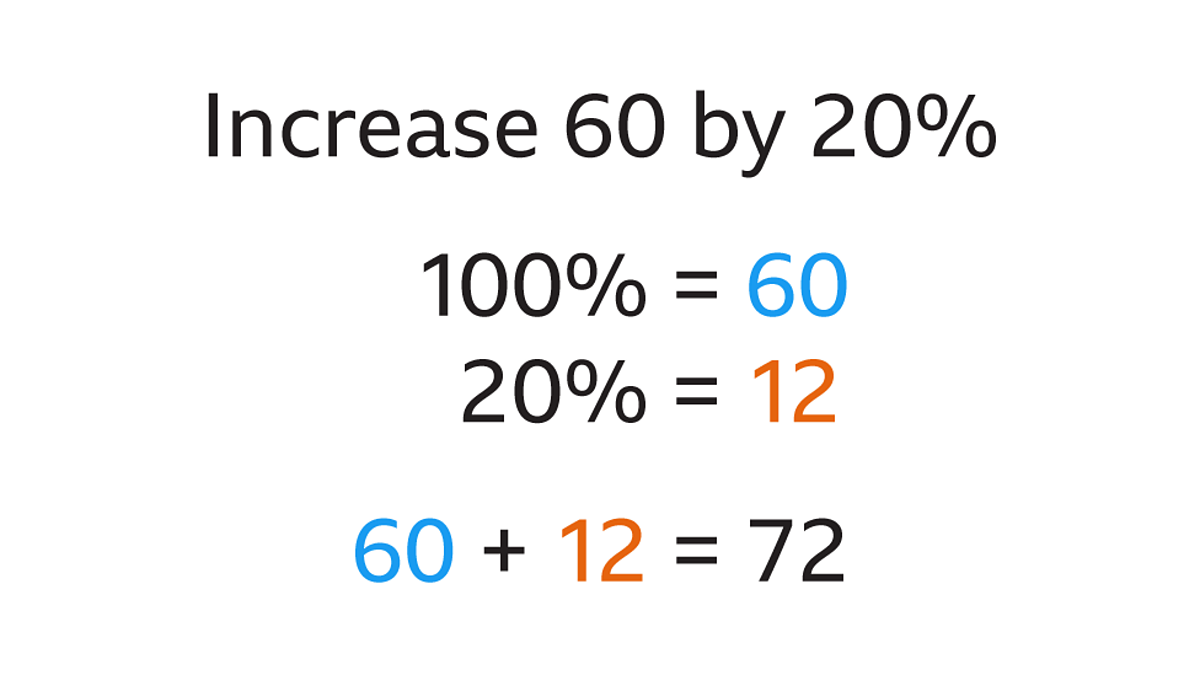
Suppose your annual salary was $60,000 last year, and this year it increased to $63,000.
- Find the Difference: $63,000 (New Salary) – $60,000 (Original Salary) = $3,000
- Divide by Original Value: $3,000 / $60,000 = 0.05
- Multiply by 100: 0.05 × 100 = 5%
You received a 5% salary increase. This calculation helps you understand the actual growth in your earnings and can be crucial for personal financial planning and negotiation.
Common Applications in Personal and Business Finance
The utility of percentage increase extends across virtually every facet of financial management. Mastering this calculation empowers individuals and organizations to make data-driven decisions.
Tracking Investment Performance (Stocks, Funds, Real Estate)
For investors, percentage increase is the primary metric for evaluating the success of their portfolio. It allows for:
- Comparing Assets: Easily compare the performance of different stocks, mutual funds, or real estate properties over the same period, even if the initial investment amounts were vastly different.
- Benchmarking: Measure how well an investment performs against a market index (e.g., S&P 500) or a target return.
- Compounding Growth: Understand the power of compounding by calculating the percentage increase year-over-year, revealing accelerating returns.
For example, if one fund grew from $10,000 to $12,000 (a 20% increase) and another grew from $50,000 to $58,000 (a 16% increase), the first fund, despite a smaller absolute gain, shows stronger percentage growth.
Analyzing Budget Deviations and Savings Growth
In personal finance, percentage increase helps in:
- Expense Analysis: Identify if categories like groceries or utilities are increasing disproportionately, prompting a review of spending habits. If your grocery bill went from $400 to $480, that’s a 20% increase – a significant jump to investigate.
- Savings Goals: Track the percentage growth of your savings accounts, retirement funds, or emergency fund to ensure you’re on track to meet your financial objectives. Seeing your emergency fund increase by 10% each quarter provides tangible motivation.
Evaluating Business Revenue and Profit Margins
Businesses live and die by their numbers, and percentage increase is critical for:
- Revenue Growth: Assess the year-over-year or quarter-over-quarter growth in sales, indicating market expansion or product success. A 15% increase in annual revenue could signal a thriving business.
- Profitability: Analyze the percentage increase in net profit, which directly impacts a company’s financial health and shareholder value.
- Operational Efficiency: Measure the percentage increase in productivity or decrease in costs to identify improvements or areas needing attention.
Understanding Inflation and Purchasing Power
Inflation, the general increase in prices and fall in the purchasing value of money, is always expressed as a percentage increase.
- If the inflation rate is 3%, it means that, on average, goods and services cost 3% more than they did last year.
- This understanding helps individuals anticipate rising costs and adjust their financial planning, such as salary expectations or investment returns needed to maintain purchasing power.
Assessing Loan Interest and Debt Growth
While we mostly focus on increases, this calculation is equally important when looking at the flip side of money.
- Interest Rates: Understanding how interest compounds involves percentage increases. A 5% annual interest rate on a loan means your principal grows by 5% (if not paid down).
- Debt Growth: Tracking the percentage increase in credit card balances or loan amounts can highlight escalating debt problems that require immediate attention.
Beyond Basic Calculation: Interpretation and Caveats
While the calculation of percentage increase is straightforward, its interpretation requires nuance and context, especially in complex financial scenarios.
The Importance of Context (Timeframes, Base Numbers)
A percentage increase rarely tells the whole story in isolation.
- Timeframes: A 10% increase over one month is far more impressive than a 10% increase over five years. Always consider the period over which the increase occurred. Annualized percentage increases are often used for comparison.
- Base Numbers: A 100% increase from $10 to $20 is numerically identical to a 1% increase from $1,000,000 to $1,010,000 in terms of absolute dollar change ($10,000). While the percentage seems small in the latter, the absolute impact is much larger. Be mindful of the original value when interpreting significance. Small base numbers can lead to dramatically high percentage increases that might not reflect substantial growth in absolute terms.
Distinguishing from Percentage Decrease
It’s important not to confuse percentage increase with percentage decrease. While they use similar components, the formula for decrease focuses on the reduction relative to the original value. The percentage increase formula will always yield a positive result when the new value is greater than the original, whereas a decrease will yield a negative percentage or require a different formula structure. Ensure you are comparing an increase when using this specific formula.
Avoiding Misinterpretation: When Small Percentages are Significant
Sometimes, even a small percentage increase can have a massive impact.
- Large-Scale Finance: A 0.1% increase in a national GDP figure, when dealing with trillions of dollars, represents billions of dollars in economic activity.
- Compound Interest: Even seemingly small percentage increases in investment returns, compounded over decades, can lead to exponential wealth growth. Understanding this long-term effect is crucial for retirement planning.
- Inflation: A seemingly low 2% annual inflation rate, sustained over many years, significantly erodes purchasing power.
Always consider the scale and duration when evaluating the practical implications of a percentage increase.
Tools and Resources for Easier Calculation
While manually calculating percentage increase is simple, in today’s digital age, numerous tools can automate this process, making it faster and less prone to human error, especially when dealing with large datasets.
Spreadsheet Software (Excel, Google Sheets)
Spreadsheets are perhaps the most common and powerful tools for financial calculations, including percentage increase.
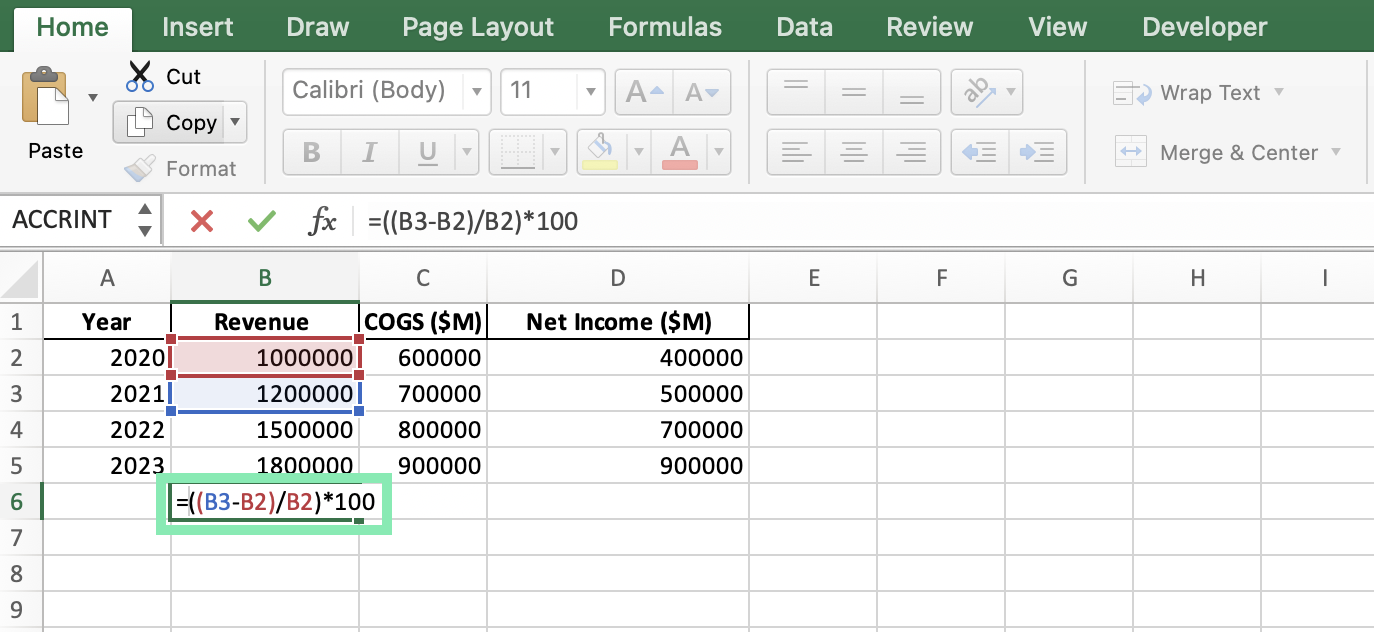
- Formulas: You can set up columns for “Original Value,” “New Value,” and then a third column for “Percentage Increase” using the formula
=((B2-A2)/A2)*100(assuming A2 is Original Value and B2 is New Value). - Automation: Once the formula is set up, you can drag it down to apply to hundreds or thousands of rows of data, instantly calculating increases for your entire financial portfolio, budget, or sales figures.
- Charting: Spreadsheets also allow you to create charts and graphs to visualize percentage increases over time, offering further insights.
Online Calculators
Many websites offer free, simple online percentage increase calculators. These are great for quick, one-off calculations without needing to open a spreadsheet. Just input the original and new values, and the calculator provides the result instantly. A quick search for “percentage increase calculator” will yield many options.
Financial Apps and Dashboards
Modern personal finance apps (like Mint, Personal Capital) and investment brokerage platforms often include built-in features that automatically track and display percentage increases for your income, expenses, investments, and net worth. Business accounting software and analytics dashboards provide similar functionalities for revenue, profit, and other key performance indicators. These tools offer real-time updates and often present the information visually, making it even easier to monitor your financial growth.
Conclusion
The ability to calculate the percentage increase between two numbers is far more than a basic math skill; it’s a cornerstone of financial literacy and sound decision-making. From evaluating the performance of your investments to understanding the impact of inflation on your purchasing power, and from analyzing your personal budget to driving strategic business growth, this metric provides invaluable context. By mastering the simple three-step formula – finding the difference, dividing by the original value, and multiplying by 100 – you unlock a powerful lens through which to view and interpret financial data. In a world where numbers constantly evolve, understanding percentage increase empowers you to not just observe change, but to truly comprehend its significance and act wisely.
aViewFromTheCave is a participant in the Amazon Services LLC Associates Program, an affiliate advertising program designed to provide a means for sites to earn advertising fees by advertising and linking to Amazon.com. Amazon, the Amazon logo, AmazonSupply, and the AmazonSupply logo are trademarks of Amazon.com, Inc. or its affiliates. As an Amazon Associate we earn affiliate commissions from qualifying purchases.