
In the realm of personal and professional finance, the ability to calculate a percentage of a number is more than just a vestige of middle-school mathematics; it is a fundamental survival skill. Whether you are evaluating a discount on a luxury purchase, determining the tax implications of an investment, or calculating the interest rate on a high-yield savings account, percentages are the universal language of value.
Understanding how to manipulate these numbers allows you to move beyond “ballpark” estimates and into the territory of precise financial planning. In this comprehensive guide, we will explore the core mechanics of percentage calculations and apply them to the most critical aspects of your financial life, from daily budgeting to long-term wealth building.
The Fundamental Formula: Why Financial Literacy Starts with Percentages
At its core, a percentage is a way to express a number as a fraction of 100. The word “percent” literally translates to “by the hundred.” In the world of money, this allows us to compare different financial scenarios on an equal playing field. Before we dive into complex investment returns, we must master the basic arithmetic that governs every transaction.
The Basic Equation: The “Is/Of” Method
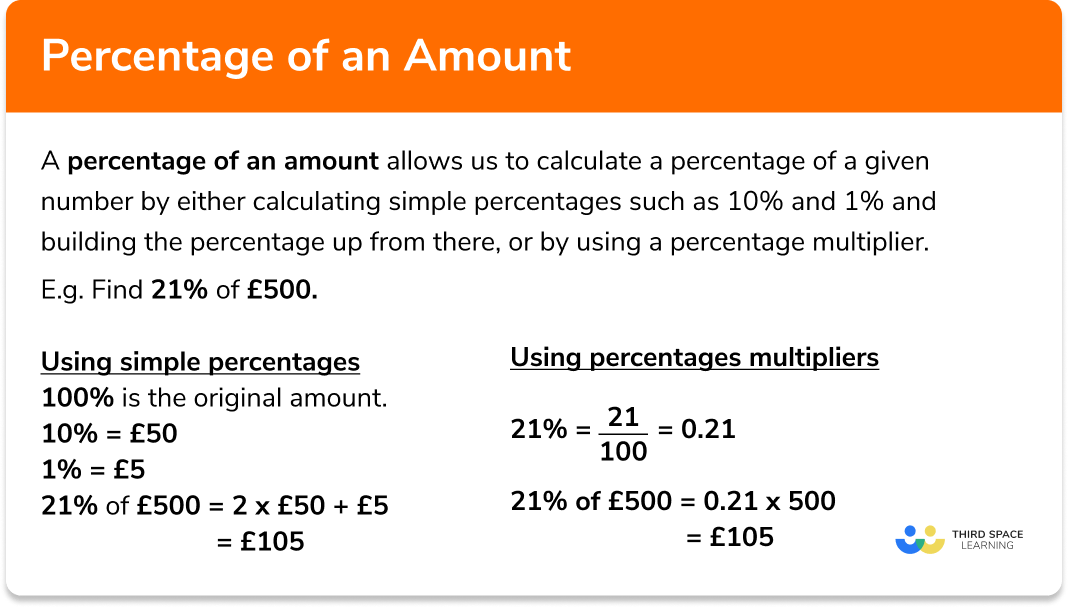
The most straightforward way to calculate a percentage of a number is to follow a simple three-step process: convert, multiply, and solve. If you want to find $X$ percent of $Y$, you turn the percentage into a decimal by dividing it by 100, then multiply that decimal by the total number ($Y$).
For example, if you are a freelancer setting aside 25% of a $$4,000$ invoice for taxes, the math looks like this:
- Convert: $25 div 100 = 0.25$
- Multiply: $0.25 times 4,000 = 1,000$
- Result: You need to set aside $$1,000$.
This “is/of” method ($Part = Percentage times Total$) is the bedrock of financial calculations.
Decimal Conversions: The Financial Professional’s Shortcut
Financial analysts rarely use the percentage button on a calculator; they work almost exclusively in decimals. Mastering decimal conversion allows for faster mental math and more efficient spreadsheet management. To convert any percentage to a decimal, simply move the decimal point two places to the left.
- 7% becomes 0.07
- 15% becomes 0.15
- 125% becomes 1.25
In a business context, if you are looking to calculate a 7% commission on a $$150,000$ real estate sale, the decimal shortcut ($150,000 times 0.07$) immediately reveals a $$10,500$ payout.
Percentages in Personal Finance: Budgeting and Savings Strategies
Once the basic math is mastered, the most immediate application is in personal budgeting. Most successful financial frameworks are built entirely on percentage-based allocations rather than fixed dollar amounts. This ensures that as your income grows, your financial habits scale proportionally.
The 50/30/20 Rule
One of the most popular budgeting frameworks is the 50/30/20 rule. This strategy suggests allocating your after-tax income into three categories:
- 50% for Needs: Housing, utilities, groceries, and insurance.
- 30% for Wants: Dining out, hobbies, and entertainment.
- 20% for Savings and Debt Repayment: Building an emergency fund or paying down credit cards.
If your monthly take-home pay is $$5,500$, calculating these percentages is vital for maintaining balance.
- Needs: $5,500 times 0.50 = $2,750$
- Wants: $5,500 times 0.30 = $1,650$
- Savings: $5,500 times 0.20 = $1,100$
By using percentages, you can quickly identify if your “needs” (like a high mortgage) are consuming too much of your income, allowing for strategic adjustments before you fall into debt.
Calculating Compound Interest and APY
Percentages are not just static figures; in the world of savings, they are engines of growth. When you look at a High-Yield Savings Account (HYSA) offering a 4.5% Annual Percentage Yield (APY), you are looking at the rate at which your money will grow over a year.
To calculate the simple interest earned on a $$10,000$ balance at 4.5%, you multiply $$10,000$ by 0.045, resulting in $$450$. However, compound interest means you earn a percentage on your previous interest. Understanding the “Rule of 72″—a percentage-based mental shortcut—is helpful here. Divide 72 by your interest rate to find how many years it will take for your money to double. At 4.5%, your money doubles in approximately 16 years ($72 div 4.5 = 16$).
The Savvy Shopper’s Guide: Discounts, Sales Tax, and Gratuity
For many, the most frequent use of percentage calculations occurs at the point of sale. Being able to calculate these numbers on the fly prevents “sticker shock” at the register and ensures you are actually getting the deal you think you are.

Finding the True Cost After a Discount
Retailers often use “percentage off” marketing to entice buyers. To find the sale price of an item, you can either calculate the discount and subtract it, or calculate the “remaining percentage.”
If a suit originally priced at $$450$ is on sale for 35% off, the “remaining percentage” method is faster. If you take 35% off, you are still paying 65% of the original price ($100% – 35% = 65%$).
- Calculation: $$450 times 0.65 = $292.50$.
This method is particularly useful in business procurement when negotiating bulk discounts or evaluating vendor contracts.
Calculating Sales Tax and Tip Quickly
Sales tax and gratuity are added percentages that can significantly alter the final cost of a service. In a professional dining setting, knowing how to calculate a 15%, 18%, or 20% tip is a matter of etiquette and financial accuracy.
A quick mental trick for a 20% tip:
- Find 10% of the bill by moving the decimal one place to the left.
- Double that number.
On a $$120$ business lunch:
- 10% is $$12.00$.
- Double it to get 20%, which is $$24.00$.
For sales tax, the calculation remains the same as the basic formula. If you are buying office equipment for $$2,000$ in a jurisdiction with 8.25% sales tax, you multiply $2,000$ by $0.0825$, adding $$165$ to the total cost.
Business Finance and Investing: Profit Margins and ROI
In the corporate world and the stock market, percentages are the primary metrics used to measure health and performance. A company’s “success” isn’t measured by how many dollars it makes, but by the percentage of those dollars it keeps as profit.
Gross vs. Net Profit Margins
For business owners, understanding profit margins is critical.
- Gross Profit Margin: This is the percentage of revenue exceeding the cost of goods sold (COGS). Formula: $((Revenue – COGS) / Revenue) times 100$.
- Net Profit Margin: This is the percentage of revenue left after all expenses, including taxes and interest, have been paid.
If a consulting firm brings in $$500,000$ in revenue and has $$350,000$ in total expenses, the net profit is $$150,000$. The net profit margin is 30% ($150,000 div 500,000$). In most industries, a 30% net margin is considered exceptionally healthy, whereas a 5% margin might indicate a need for immediate cost-cutting.
Return on Investment (ROI) Percentages
ROI is the ultimate percentage for any investor. It tells you the efficiency of an investment. The formula is: $((Current Value – Original Cost) / Original Cost) times 100$.
Imagine you invested $$5,000$ in a diversified index fund, and five years later, the account balance is $$7,500$.
- Gain: $$7,500 – $5,000 = $2,500$
- Divide by Original: $$2,500 div $5,000 = 0.50$
- Percentage: 50% total ROI.
While a 50% return sounds impressive, professional investors would further calculate the “Annualized ROI” to compare it against other opportunities, such as real estate or treasury bonds.
Understanding Percentage Changes in the Stock Market
Financial news often reports that an index “fell by 2%” or a stock “gained 10%.” It is important to remember that percentage gains and losses are not symmetrical. If a stock portfolio drops by 50%, it does not need a 50% gain to get back to even—it needs a 100% gain.
For example, if $$100$ drops by 50%, you have $$50$. To get that $$50$ back to $$100$, you must double it (a 100% increase). This mathematical reality is why risk management and avoiding large percentage drawdowns are the hallmarks of sophisticated wealth management.

Conclusion: The Power of Percentages in Wealth Building
Mastering how to calculate a percentage of a number is more than an academic exercise; it is a vital tool for navigating the modern financial landscape. By converting these abstract figures into concrete data, you gain the clarity needed to make informed decisions. Whether you are optimizing your personal budget through the 50/30/20 rule, calculating the true cost of a loan, or analyzing the profit margins of a burgeoning business, percentages provide the context necessary for success.
Financial freedom is rarely the result of luck; it is the result of consistently applying sound mathematical principles to your earnings, savings, and investments. By internalizing the formulas and mental shortcuts discussed in this guide, you equip yourself with the precision needed to turn your financial goals into a calculated reality.
aViewFromTheCave is a participant in the Amazon Services LLC Associates Program, an affiliate advertising program designed to provide a means for sites to earn advertising fees by advertising and linking to Amazon.com. Amazon, the Amazon logo, AmazonSupply, and the AmazonSupply logo are trademarks of Amazon.com, Inc. or its affiliates. As an Amazon Associate we earn affiliate commissions from qualifying purchases.