
In the dynamic world of money, understanding change is paramount. Whether you’re tracking the performance of your investments, scrutinizing your monthly expenses, or analyzing a business’s declining revenue, the ability to accurately calculate a percentage decrease is an indispensable financial skill. It moves beyond mere absolute numbers, providing a relative measure that offers far greater insight into the true magnitude and implications of a reduction. From personal budgeting to professional financial analysis, mastering this calculation empowers you to make more informed decisions, identify trends, and effectively strategize. This article will demystify the process, explain its core components, and demonstrate its critical applications across various facets of your financial life.
The Fundamentals of Percentage Decrease
At its core, calculating a percentage decrease is about quantifying a reduction relative to its original starting point. It’s not enough to know a number went down; we need to know how much it went down in proportion to what it was. This relative perspective is what makes percentage decrease such a powerful tool in financial analysis.
Defining Percentage Decrease
A percentage decrease represents the proportional reduction in a value from an initial amount to a final, smaller amount, expressed as a fraction of 100. It answers the question: “By what percentage has this value shrunk from its original size?” This is distinct from an absolute decrease, which simply tells you the difference in dollar amounts without context. For instance, a $10 decrease from $100 is far more significant than a $10 decrease from $1,000,000, and percentage decrease clearly illustrates this disparity.
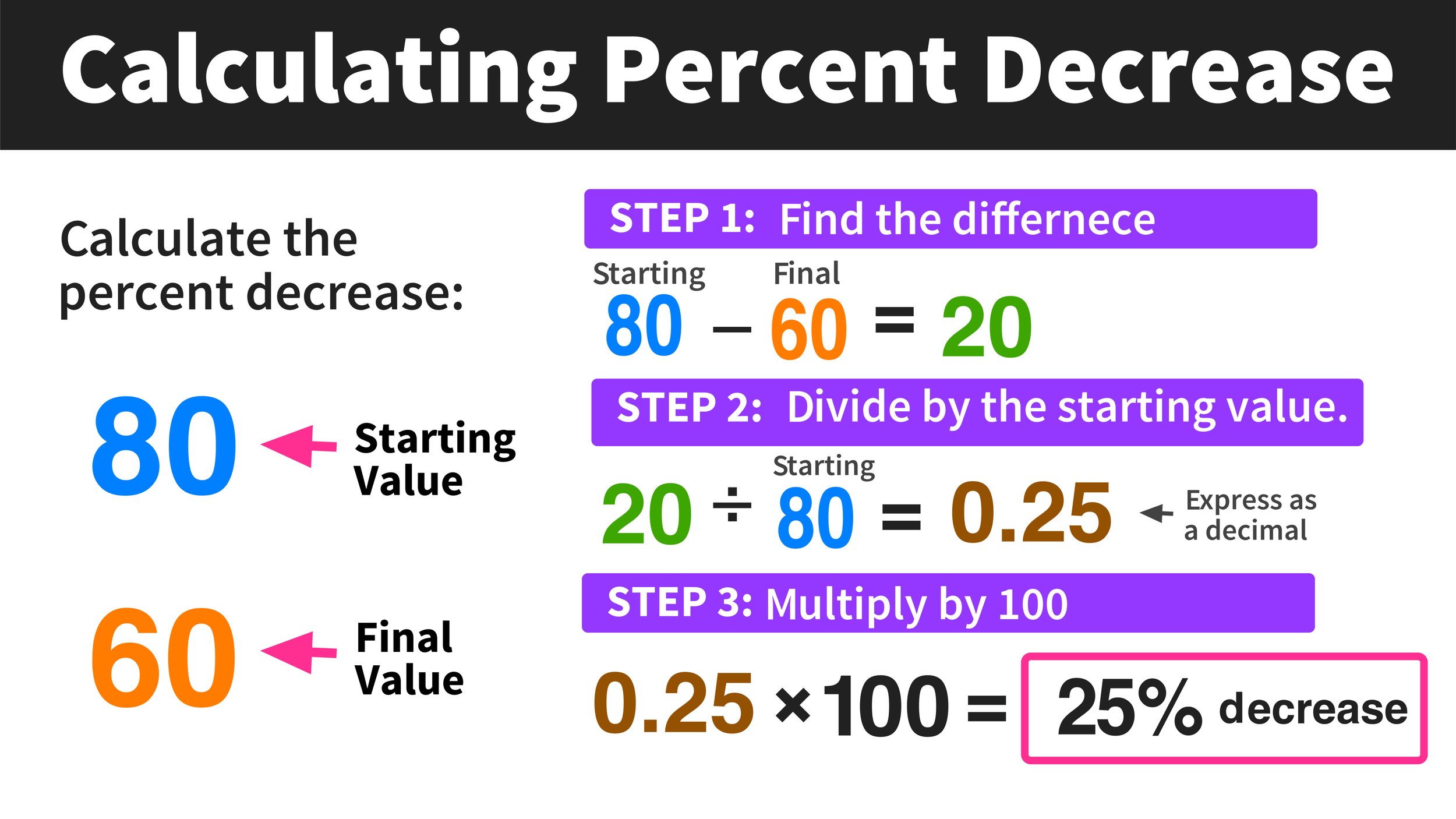
The Core Formula Unpacked
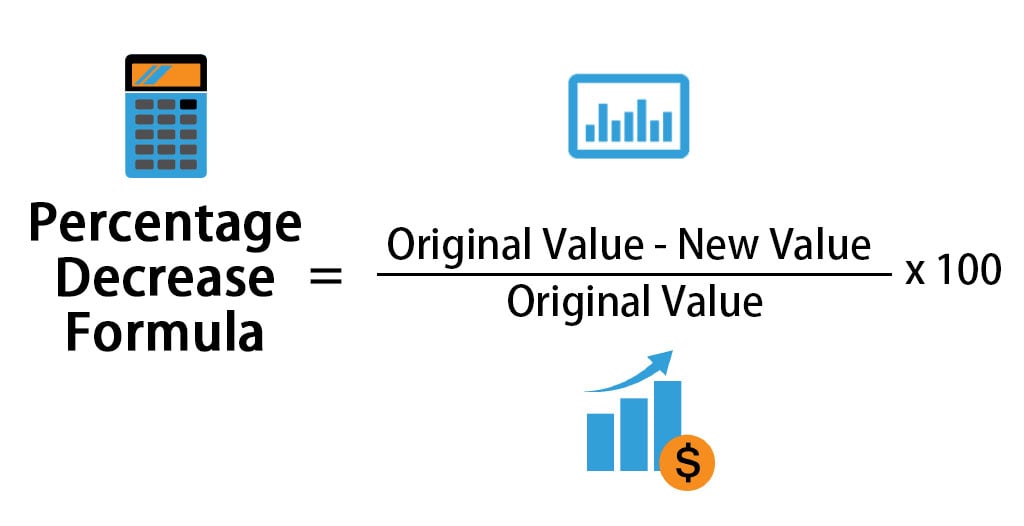
The formula for calculating a percentage decrease is straightforward and universally applied:
Percentage Decrease = ((Original Value - New Value) / Original Value) * 100
Let’s break down each component:
- Original Value: This is your starting point, the initial amount before any reduction occurred. It’s the baseline against which the decrease is measured.
- New Value: This is the reduced amount, the value after the decrease has taken place.
- Original Value – New Value: This first step calculates the absolute difference between the two values, quantifying the raw amount of the decrease.
- Divide by Original Value: This is the crucial step that transforms the absolute decrease into a relative proportion. By dividing the difference by the original value, you determine what fraction of the original amount the decrease represents. For example, if the difference is 20 and the original value is 100, then 20/100 = 0.20, meaning the decrease is 20% of the original.
- Multiply by 100: Finally, multiplying the resulting decimal by 100 converts the proportion into a percentage, making it easier to understand and compare.
A Simple Illustrative Example (Personal Finance)
Imagine your average monthly electricity bill was $150, but after implementing some energy-saving measures, your latest bill is $120. How do you calculate the percentage decrease?
- Identify Values:
- Original Value = $150
- New Value = $120
- Calculate the Difference:
- $150 – $120 = $30
- Divide by Original Value:
- $30 / $150 = 0.20
- Multiply by 100:
- 0.20 * 100 = 20%
Therefore, your electricity bill decreased by 20%. This provides a much clearer picture of your energy-saving success than simply stating you saved $30.
Applying Percentage Decrease in Personal Finance
For individuals striving for financial wellness, the percentage decrease is an invaluable tool for tracking progress and identifying opportunities. It offers a standardized way to assess improvements in spending habits, debt management, and even the health of personal savings.
Budgeting and Expense Management
Effectively managing personal finances often begins with a budget. Percentage decrease helps you gauge the impact of your cost-cutting efforts. Did you reduce your dining-out expenses by 15% this month? Did your transportation costs decrease by 25% after switching to public transport? This metric allows you to:
- Track spending cuts: Identify specific categories where you’ve successfully reduced expenditures.
- Prioritize areas for savings: See which categories have the largest percentage of discretionary spending and target them for further reductions.
- Monitor utility and recurring bills: Compare month-over-month or year-over-year figures to ensure you’re not overpaying. For example, if your internet bill suddenly decreases, calculating the percentage helps you understand the impact of a new promotional rate.
Debt Reduction and Interest Rates
Tackling debt is a significant financial goal for many. Percentage decrease is crucial in understanding your progress and the impact of interest rate changes.
- Measuring debt burden reduction: If you started with $10,000 in credit card debt and reduced it to $7,500, that’s a 25% decrease. This percentage often feels more motivating than just the dollar amount, especially for large debts.
- Impact of interest rate decreases: When interest rates on loans (like mortgages or credit cards) go down, understanding the percentage decrease helps you calculate potential savings on interest payments over the life of the loan. A 0.5% decrease in an interest rate from 5% to 4.5% is a 10% decrease in the rate itself (0.5/5 * 100), which can translate to significant savings.
Savings Goals and Financial Progress
While many focus on increasing savings, sometimes a decrease can occur (e.g., an emergency withdrawal). Understanding the percentage decrease helps you contextualize these events.
- Assessing withdrawals: If you had $10,000 in an emergency fund and had to withdraw $2,000, your fund decreased by 20%. This percentage can help you quickly grasp the impact and plan to replenish it.
- Evaluating progress against targets: If your investment portfolio was aimed at a certain value by year-end, and market downturns caused a temporary dip, calculating the percentage decrease helps you measure the setback against your overall goal.
Navigating Investments and Market Fluctuations
In the world of investing, volatility is a constant. Understanding percentage decrease is absolutely vital for assessing risk, analyzing performance, and making strategic decisions about your portfolio.
Understanding Investment Losses
One of the most common applications of percentage decrease in investing is calculating the loss on an asset or an entire portfolio.
- Stock price drops: If you bought a stock at $100 and it drops to $75, that’s a 25% decrease. This metric allows you to quickly gauge the impact on your capital. It helps differentiate a minor correction from a significant downturn.
- Portfolio value decrease: During market corrections, your entire portfolio might decline. Calculating the percentage decrease helps you understand the overall impact on your net worth and whether it aligns with your risk tolerance. A portfolio falling from $500,000 to $400,000 represents a 20% decrease, a much more telling figure than the $100,000 absolute loss alone.
Analyzing Economic Indicators
Many key economic indicators are reported as percentage changes, including decreases. Understanding these figures is crucial for making macroeconomic investment decisions.
- GDP contraction: A decrease in Gross Domestic Product (GDP) signifies a shrinking economy, often leading to market apprehension.
- Inflation decrease (disinflation/deflation): While high inflation is a concern, a rapid decrease in inflation (disinflation) or even deflation (a sustained decrease in prices) can also impact investment strategies and consumer spending.
- Unemployment rate decline: A falling unemployment rate, while typically positive, is often discussed as a percentage point decrease, which needs to be understood in the context of the initial rate.
Risk Assessment and Portfolio Rebalancing
Percentage decrease plays a role in evaluating the downside risk of investments and informing rebalancing strategies.
- Drawdown analysis: Investors often look at historical drawdowns – the peak-to-trough percentage decline in an investment – to understand its potential volatility.
- Rebalancing triggers: If a particular asset class in your portfolio decreases significantly in percentage value, it might trigger a rebalancing act to restore your desired asset allocation. For example, if your target is 60% stocks and 40% bonds, and stocks drop by 20%, you might need to sell some bonds and buy more stocks to maintain your target percentages.
Business Finance and Operational Insights
For business owners, financial managers, and analysts, percentage decrease is a cornerstone of performance evaluation, strategic planning, and operational efficiency. It provides critical insights into a company’s health, market position, and areas for improvement.
Revenue and Profitability Analysis
Tracking revenue and profit changes is fundamental to business success.
- Measuring sales decline: If quarterly sales drop from $1,000,000 to $800,000, that’s a 20% decrease. This signals a need to investigate market conditions, competitive pressures, or internal operational issues.
- Profit margin erosion: A decrease in net profit margin (e.g., from 15% to 12%) indicates that the business is becoming less efficient at converting revenue into profit. This percentage drop can be a major red flag, prompting a review of costs or pricing strategies.
Cost Reduction and Efficiency
Businesses constantly seek ways to reduce costs and improve efficiency. Percentage decrease is the primary metric for evaluating these efforts.
- Operational cost savings: A company might aim to reduce manufacturing costs by 10%. Calculating the actual percentage decrease in costs (e.g., raw material costs, labor costs) helps assess whether these targets are being met.
- Marketing spend effectiveness: If a marketing campaign’s cost per acquisition decreases by a certain percentage, it signifies improved efficiency.
Market Share and Competitive Analysis
Understanding how a company’s market share changes relative to competitors is vital for strategic positioning.
- Declining market share: If a company’s market share drops from 20% to 18%, that’s a 10% decrease in its share. This is a critical indicator of competitive challenges or shifting consumer preferences.
- Benchmarking: Comparing percentage decreases in revenue or customer base against competitors provides insights into relative performance within the industry.
Discounting and Pricing Strategies
When businesses offer sales or discounts, percentage decrease is fundamental to the pricing strategy.
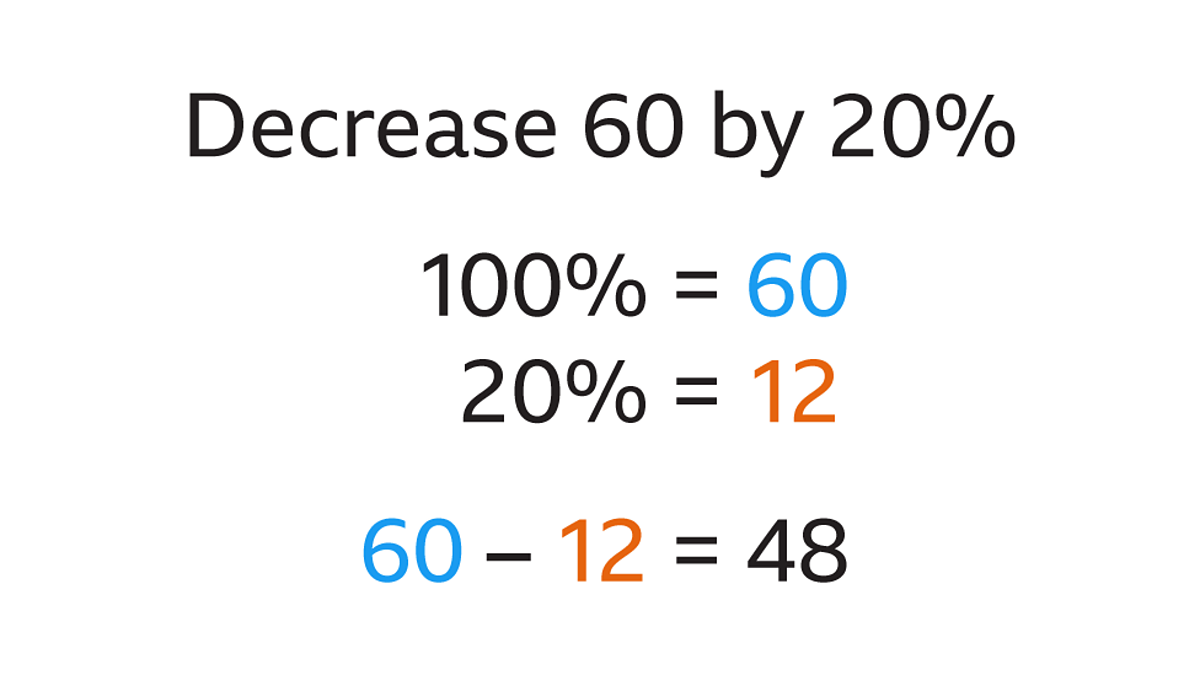
- Calculating sale prices: A “25% off” sale directly uses this calculation. If an item costs $100, a 25% decrease means the sale price is $75.
- Impact on profit margins: While discounts can drive sales volume, understanding the percentage decrease in selling price helps assess the impact on overall profit margins.
Tools and Common Pitfalls
While the calculation is straightforward, knowing how to apply it efficiently using tools and avoiding common mistakes will enhance your financial literacy.
Leveraging Financial Tools
You don’t always need a pen and paper. Modern financial tools simplify percentage decrease calculations:
- Spreadsheets (Excel, Google Sheets): These are perhaps the most powerful tools. You can input your
Original Valuein cell A1 andNew Valuein cell B1, then use the formula=( (A1-B1) / A1 ) * 100in cell C1. Remember to format cell C1 as a percentage for clarity. Spreadsheets also allow for easy replication of this formula across many data points. - Online calculators: Many websites offer simple percentage decrease calculators; a quick search will yield numerous options.
- Financial software: Most personal finance management apps (e.g., Mint, YNAB) and business accounting software (e.g., QuickBooks, Xero) incorporate percentage change metrics into their reporting dashboards.
- Basic calculator: Even a simple handheld calculator can perform the operations in sequence: subtract, divide, then multiply by 100.
Common Mistakes to Avoid
Even with simple calculations, errors can occur if you’re not careful:
- Using the wrong original value: Always ensure the denominator in your formula is the original or starting value. Swapping
Original ValueandNew Valuewill lead to incorrect results (or even percentage increase ifNew Valueis higher). - Confusing percentage points with percentage decrease: If an interest rate decreases from 10% to 8%, that’s a 2 percentage point decrease. However, the percentage decrease of the rate itself is
((10-8)/10)*100 = 20%. This distinction is crucial, especially in financial reporting. - Rounding errors: Be mindful of rounding too early in the calculation, which can lead to inaccuracies, especially with very small or very large numbers.
- Ignoring context: A 50% decrease in a $10 value is not the same as a 50% decrease in a $1,000,000 value. While the percentage is the same, the absolute impact is vastly different. Always consider the scale of the values involved.
Conclusion
The ability to calculate a decrease in percentage is far more than a simple mathematical exercise; it is a fundamental pillar of financial literacy. From meticulously managing your personal budget and tracking investment performance to critically analyzing business operations and economic trends, this single calculation provides invaluable context and clarity. It transforms raw numbers into actionable insights, allowing you to discern the true impact of changes and make smarter, more strategic financial decisions.
By understanding the simple formula and its versatile applications across personal finance, investing, and business, you equip yourself with a powerful analytical tool. Embrace this skill, utilize the readily available financial tools, and remain vigilant against common pitfalls. In a financial landscape characterized by constant flux, mastering the calculation of percentage decrease is a key step towards achieving greater control and confidence in your financial journey.
aViewFromTheCave is a participant in the Amazon Services LLC Associates Program, an affiliate advertising program designed to provide a means for sites to earn advertising fees by advertising and linking to Amazon.com. Amazon, the Amazon logo, AmazonSupply, and the AmazonSupply logo are trademarks of Amazon.com, Inc. or its affiliates. As an Amazon Associate we earn affiliate commissions from qualifying purchases.