
Purchasing a car is a significant financial decision for most individuals. Beyond the excitement of choosing a model and color, a crucial aspect of this process involves understanding and calculating the monthly car payment. Far too many consumers focus solely on the sticker price or a vague idea of what they can afford each month, overlooking the intricate components that determine their final payment. Empowering yourself with the knowledge of how car payments are calculated is not just about financial literacy; it’s about smart budgeting, informed negotiation, and ultimately, securing a deal that genuinely fits your financial capacity. This article will demystify the process, breaking down the key variables, the underlying formula, and practical strategies to ensure you make a financially sound decision when buying your next vehicle.

Deconstructing the Car Loan: Essential Variables
Before diving into complex formulas, it’s vital to grasp the core elements that constitute any car loan. Each component plays a significant role in shaping your monthly payment and the total cost of your vehicle.
The Principal Loan Amount: Your Starting Point
The principal loan amount is the actual sum of money you borrow to purchase the car. This isn’t necessarily the car’s sticker price. Instead, it’s derived from the agreed-upon purchase price minus any down payment you make and any trade-in value from your old vehicle. For instance, if a car costs $30,000, and you put down $5,000 and have a trade-in worth $3,000, your principal loan amount would be $22,000. A larger down payment or a valuable trade-in directly reduces the principal, which in turn lowers both your monthly payment and the total interest you’ll pay over the life of the loan. This is often the most straightforward variable for consumers to influence directly at the point of sale.
Understanding the Interest Rate (APR)
The interest rate, often expressed as an Annual Percentage Rate (APR), is essentially the cost of borrowing money. It’s a percentage of the principal that the lender charges you for the privilege of using their funds. This is arguably the most impactful variable over the long term, as even a small difference in APR can translate into hundreds or even thousands of dollars in total interest paid. Your credit score is the primary determinant of the APR you’ll be offered; individuals with excellent credit typically qualify for the lowest rates, while those with fair or poor credit will face higher rates. Other factors influencing APR include market conditions, the lender’s risk assessment, and the loan term itself. Always shop around for the best interest rate, as pre-approval from banks or credit unions can give you leverage at the dealership.
The Impact of Loan Term (Months)
The loan term refers to the length of time, in months, you have to repay the loan. Common terms range from 36 months (3 years) to 84 months (7 years), with 60 or 72 months being standard. The loan term has a direct, inverse relationship with your monthly payment: a longer term will result in lower monthly payments, but you’ll pay significantly more in total interest over the life of the loan. Conversely, a shorter term means higher monthly payments but substantially less total interest. While a lower monthly payment might seem attractive, be wary of extending the term too much, as you could end up “upside down” on your loan (owing more than the car is worth) or paying an excessive amount in interest.
Hidden Costs: Taxes, Fees, and Extras
Beyond the car’s price and the loan’s interest, several other costs can impact the total amount you need to finance or pay upfront. These often include sales tax (which varies by state), documentation fees charged by the dealership, license and registration fees, and sometimes additional charges for things like VIN etching or nitrogen in tires. Furthermore, many dealerships will offer optional add-ons such as extended warranties, paint protection, or GAP (Guaranteed Asset Protection) insurance. While some of these might offer value, they all increase your total loan amount if financed, thus increasing your monthly payment and the interest you’ll accrue. It’s crucial to understand each of these additional costs and decide what is truly necessary before signing any agreement.
The Mathematics Behind Your Monthly Payment
Once you understand the individual components, you’re ready to see how they come together in a structured formula to determine your exact monthly car payment. This isn’t just a black box; it’s a precise mathematical calculation.
Introducing the Amortization Formula
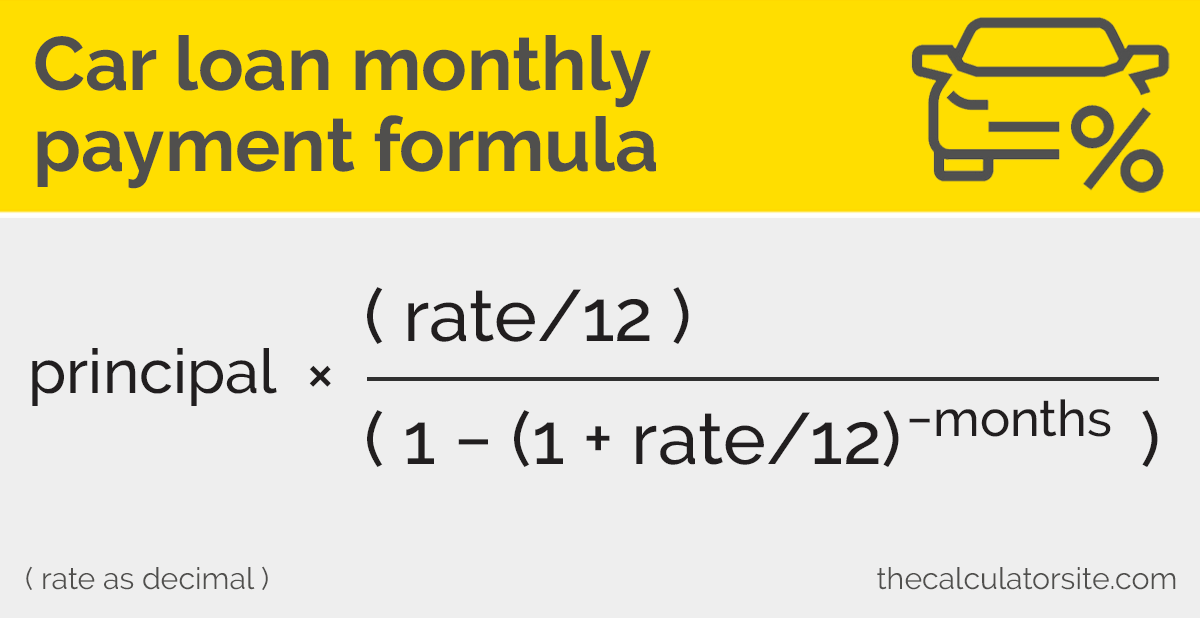
The most common method for calculating loan payments, including car loans, is using the amortization formula. This formula effectively spreads out the principal and interest payments over the loan term, so each month you pay a portion of the principal and the interest accrued on the remaining balance.
The formula looks like this:
M = P [ i(1 + i)^n ] / [ (1 + i)^n – 1]
Where:
- M = Your monthly payment
- P = The principal loan amount (the amount you borrowed after down payment and trade-in)
- i = Your monthly interest rate (your annual interest rate divided by 12)
- n = The total number of payments (your loan term in months)
Understanding each variable is key. For example, if your annual interest rate is 6%, your monthly interest rate (i) would be 0.06 / 12 = 0.005. If your loan term is 60 months, ‘n’ would be 60.
A Step-by-Step Calculation Guide
Let’s walk through an example to illustrate how to use the formula:
Scenario:
- Car Price: $30,000
- Down Payment: $5,000
- Trade-in: $3,000
- Annual Interest Rate (APR): 5%
- Loan Term: 60 months
Steps:
-
Calculate the Principal Loan Amount (P):
$30,000 (car price) – $5,000 (down payment) – $3,000 (trade-in) = $22,000
So, P = $22,000. -
Determine the Monthly Interest Rate (i):
Convert the APR to a decimal: 5% = 0.05
Divide by 12 (months in a year): 0.05 / 12 = 0.00416667
So, i = 0.00416667. -
Find the Total Number of Payments (n):
The loan term is 60 months.
So, n = 60.
-
Plug the Values into the Formula:
M = $22,000 [ 0.00416667(1 + 0.00416667)^60 ] / [ (1 + 0.00416667)^60 – 1]Let’s break down the complex parts:
- (1 + i) = 1.00416667
- (1 + i)^n = (1.00416667)^60 ≈ 1.283359
- i(1 + i)^n = 0.00416667 * 1.283359 ≈ 0.0053473
- (1 + i)^n – 1 = 1.283359 – 1 = 0.283359
Now, substitute these back into the formula:
M = $22,000 * [ 0.0053473 / 0.283359 ]
M = $22,000 * 0.018878
M ≈ $415.32Therefore, your estimated monthly car payment would be approximately $415.32. This calculation provides a precise figure, allowing you to budget effectively and understand exactly where your money is going.
Practical Tools and Strategies for Smarter Decisions
While the amortization formula is powerful, not everyone wants to do complex math by hand. Fortunately, there are numerous tools and strategies to help you calculate and optimize your car payment.
Leveraging Online Calculators and Spreadsheets
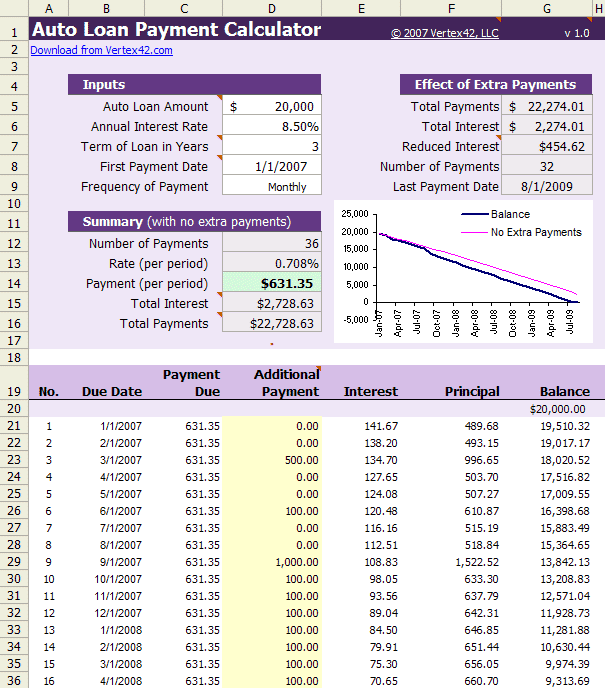
The easiest way to calculate a car payment is by using an online car loan calculator. Websites for banks, credit unions, and reputable automotive resources often feature these tools. You simply input the principal loan amount, interest rate, and loan term, and the calculator instantly provides your monthly payment. These tools are excellent for quickly comparing different scenarios, such as how changing your down payment or extending the loan term affects the monthly figure.
For those who prefer a more hands-on approach or want to perform more detailed financial modeling, spreadsheet software like Microsoft Excel or Google Sheets can be invaluable. Functions like PMT in Excel (=PMT(rate, nper, pv)) can calculate your monthly payment with ease. You can build a custom spreadsheet to adjust variables, calculate total interest paid, and even create an amortization schedule to see how your principal balance decreases over time.
Key Strategies to Reduce Your Payment
Once you understand how the calculation works, you can strategically influence your payment:
- Increase Your Down Payment: As discussed, a larger down payment directly reduces the principal loan amount, leading to a lower monthly payment and less total interest. Aim for at least 10-20% if possible.
- Improve Your Credit Score: A higher credit score signals less risk to lenders, allowing you to qualify for lower interest rates. Before shopping for a car, check your credit report and address any inaccuracies.
- Negotiate the Car Price: The lower the agreed-upon purchase price of the vehicle, the lower your principal loan amount will be. Don’t be afraid to haggle for the best possible deal.
- Opt for a Shorter Loan Term (with caution): While a shorter term means higher monthly payments, it significantly reduces the total interest paid over time. If your budget allows, a shorter term is almost always more financially beneficial.
- Consider a Less Expensive Vehicle: This might seem obvious, but buying a car that is truly within your means from the outset is the most effective way to keep your payments manageable.
When to Consider Refinancing
Even if you’ve already financed a car, you might be able to lower your monthly payment or total interest through refinancing. Refinancing involves taking out a new loan, often with a different lender, to pay off your existing car loan. This strategy is particularly effective if:
- Your Credit Score Has Improved: A better score could qualify you for a significantly lower interest rate than you initially received.
- Interest Rates Have Dropped: If market rates have fallen since you took out your original loan, you might secure a better deal.
- You Want to Adjust Your Loan Term: You could extend your term to lower monthly payments (though this increases total interest) or shorten it to pay off the loan faster.
- You Have a High-Interest Loan: If you originally financed with a high APR, refinancing can save you substantial money.
Always compare the new loan’s terms, including any fees, against your current loan to ensure refinancing truly benefits you financially.
Beyond the Monthly Figure: The True Cost of Car Ownership
While calculating the monthly payment is essential, it’s just one piece of the larger financial puzzle of car ownership. A truly insightful approach considers the full financial impact.
Total Interest: The Long-Term Burden
Focusing only on the monthly payment can be deceptive. A longer loan term with a lower monthly payment might feel more manageable, but it invariably means paying significantly more in total interest over the life of the loan. Always ask your lender or use a calculator to determine the total cost of the car, which includes the principal amount plus all accumulated interest. This figure often reveals the true expense of convenience offered by extended terms.
Depreciation and Ongoing Expenses
Cars are depreciating assets, meaning their value decreases over time. Understanding depreciation—how quickly your car loses value—is critical, especially if you plan to trade it in or sell it in a few years. Additionally, the monthly loan payment is just one of many ongoing expenses. You must also budget for:
- Car Insurance: Mandatory and varies based on your vehicle, driving history, and coverage.
- Fuel Costs: A significant recurring expense that depends on driving habits and gas prices.
- Maintenance and Repairs: Regular servicing, oil changes, tire rotations, and unexpected repairs are inevitable.
- Registration and Licensing Fees: Annual or biennial costs mandated by your state.
Ignoring these additional costs can quickly derail even the most carefully planned budget.
The Big Picture: Budgeting for More Than Just Payments
Calculating your car payment is a vital step in financial planning, but it must be integrated into your broader personal budget. Before committing to a loan, assess your entire financial situation: your income, fixed expenses (rent/mortgage, utilities), variable expenses (groceries, entertainment), and savings goals. A general rule of thumb is that your total car-related expenses (payment, insurance, fuel, maintenance) should not exceed 10-15% of your net monthly income. By taking a holistic view, you can ensure that your car payment is a sustainable part of your financial life, rather than a burden.
In conclusion, understanding how to calculate a car payment empowers you to make informed decisions and avoid common financial pitfalls. By familiarizing yourself with the principal, interest rate, loan term, and the amortization formula, you gain control over one of your most significant monthly expenses. Coupled with strategic planning and a comprehensive view of total ownership costs, this knowledge transforms car buying from a stressful negotiation into a confident financial move.
aViewFromTheCave is a participant in the Amazon Services LLC Associates Program, an affiliate advertising program designed to provide a means for sites to earn advertising fees by advertising and linking to Amazon.com. Amazon, the Amazon logo, AmazonSupply, and the AmazonSupply logo are trademarks of Amazon.com, Inc. or its affiliates. As an Amazon Associate we earn affiliate commissions from qualifying purchases.