
Acquiring Bitcoin, the world’s pioneering cryptocurrency, has become increasingly accessible to individual and institutional investors alike. What began as a niche digital experiment has evolved into a significant asset class, drawing interest from those seeking portfolio diversification, inflation hedges, or exposure to innovative financial technology. However, the process involves more than simply clicking a “buy” button; it requires understanding the financial landscape of digital assets, choosing appropriate investment vehicles, and adhering to sound financial practices to protect your capital. For individuals contemplating an entry into the cryptocurrency market, a structured approach grounded in financial prudence is paramount.
Understanding Bitcoin as a Financial Asset
Before diving into the mechanics of purchase, it’s essential to frame Bitcoin within a broader financial context. Recognizing its characteristics as an investment asset helps in making informed decisions about allocation and risk.
Bitcoin’s Role in a Diversified Portfolio
Bitcoin’s appeal as an investment stems from several unique properties. Its decentralized nature, limited supply cap of 21 million coins, and global accessibility present a compelling narrative distinct from traditional assets like stocks or bonds. Many investors view Bitcoin as “digital gold,” a potential store of value resistant to inflation dueary to its programmed scarcity. Including Bitcoin in a diversified portfolio can, for some, be a strategy to enhance returns or provide a hedge against macroeconomic uncertainties. Its low correlation with traditional markets, though debated and subject to change, historically offers diversification benefits, potentially reducing overall portfolio risk when managed appropriately. However, the exact percentage of allocation is a personal finance decision that should align with an individual’s financial goals and risk tolerance.
The Volatility Factor and Risk Management
Despite its potential, Bitcoin is renowned for its significant price volatility. Sharp price swings, sometimes upwards of 10-20% in a single day, are not uncommon. This high volatility presents both opportunities for substantial gains and risks of considerable losses. Therefore, approaching Bitcoin investment requires a robust risk management strategy. Investors should only allocate capital they can afford to lose without impacting their financial stability. Understanding market cycles, employing stop-loss orders where available, and maintaining a long-term perspective can help mitigate the psychological and financial impact of short-term price fluctuations. It’s crucial not to view Bitcoin as a guaranteed path to quick riches but rather as a high-risk, high-reward component of a well-thought-out investment plan.
Navigating Purchase Platforms and Tools
The digital infrastructure for buying Bitcoin has matured considerably, offering various platforms each with distinct features, fee structures, and levels of security. Choosing the right platform is a critical financial decision impacting convenience, cost, and asset security.
Centralized Cryptocurrency Exchanges (CEXs): The Primary Gateway
Centralized exchanges are the most common and often the simplest way for new investors to acquire Bitcoin. These platforms act as intermediaries, matching buyers and sellers and facilitating transactions. Examples include Coinbase, Binance, Kraken, and Gemini. They offer:
- Ease of Use: User-friendly interfaces, often with mobile apps, making the buying process straightforward.
- Liquidity: High trading volumes ensure efficient price execution for buy and sell orders.
- Funding Options: Typically support multiple fiat funding methods like bank transfers (ACH/SEPA), debit cards, and wire transfers.
- Security Features: Implement various security protocols, including two-factor authentication (2FA), cold storage for a significant portion of assets, and insurance in some cases.
- Regulatory Compliance: Most reputable CEXs adhere to Know Your Customer (KYC) and Anti-Money Laundering (AML) regulations, requiring users to verify their identity. This aspect is crucial for financial transparency and legitimacy but can also feel intrusive to some.
While convenient, CEXs charge various fees, including trading fees, deposit/withdrawal fees, and spreads. It’s essential to compare these costs across platforms to optimize your investment.
Traditional Investment Platforms and Apps
Beyond dedicated crypto exchanges, several popular financial apps and traditional investment platforms have integrated Bitcoin purchasing options. Platforms like PayPal, Cash App, and Robinhood allow users to buy, hold, and sometimes sell Bitcoin alongside other traditional investments.
- Convenience: For users already familiar with these apps, buying Bitcoin becomes an extension of their existing financial activities.
- Simplicity: The process is often streamlined, requiring minimal additional setup.
- Custody Limitations: A key distinction is that these platforms often do not allow users to withdraw Bitcoin to an external wallet, meaning you don’t truly own the private keys. This arrangement can limit your control over the asset and restrict its utility for decentralized finance applications. For pure investors primarily interested in price exposure, this might be acceptable, but it’s a critical financial consideration regarding true ownership.
Peer-to-Peer (P2P) Marketplaces and Bitcoin ATMs
For those seeking alternative methods, P2P marketplaces (e.g., LocalBitcoins, Paxful) and Bitcoin ATMs offer different avenues.
- P2P Marketplaces: These platforms connect buyers and sellers directly, often allowing for a wider range of payment methods and potentially more privacy, though some still require KYC. Transactions are usually secured by an escrow service.
- Bitcoin ATMs: Physical kiosks allow users to insert cash and receive Bitcoin directly to their wallet, or vice-versa. While convenient for smaller sums, they typically charge significantly higher fees (often 5-10% or more) compared to online exchanges. These methods are less about cost efficiency and more about specific needs like cash transactions or privacy preferences.
The Practical Steps to Acquire Bitcoin
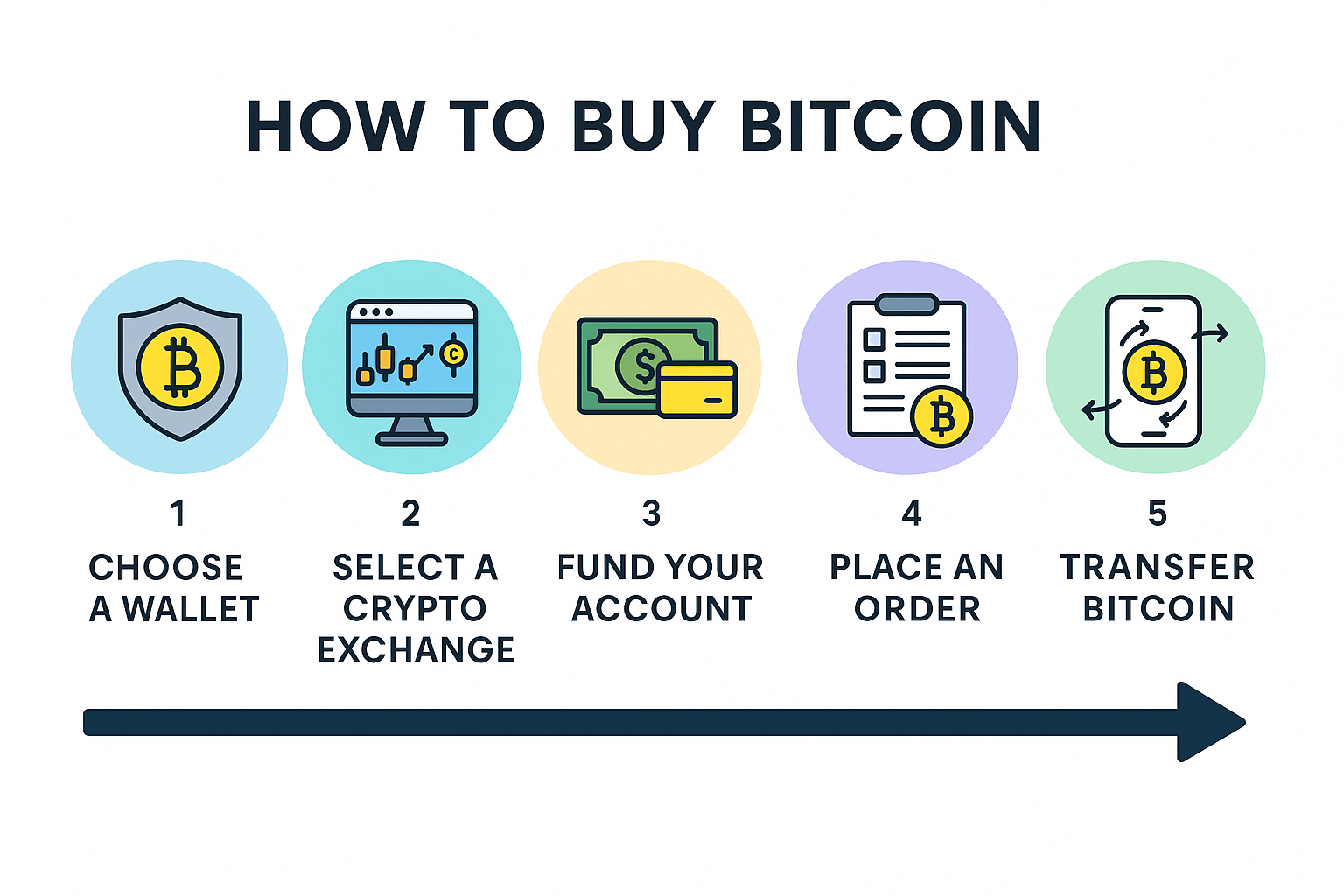
Once you’ve selected a platform that aligns with your financial objectives and risk tolerance, the process of acquiring Bitcoin generally follows a standard set of steps.
Account Creation and Verification
The first step involves creating an account on your chosen exchange. For centralized exchanges and most regulated financial apps, this will necessitate a Know Your Customer (KYC) process. This typically includes:
- Providing Personal Information: Full name, date of birth, address, and contact details.
- Identity Verification: Uploading a government-issued ID (passport, driver’s license) and often a selfie or live video verification.
- Proof of Address: Submitting a utility bill or bank statement.
This verification is a regulatory requirement designed to prevent money laundering and fraud, ensuring the legitimacy of financial transactions within the platform. While it might seem cumbersome, it’s a hallmark of a compliant and trustworthy financial service.
Funding Your Investment Account
After your account is verified, you’ll need to deposit funds. Common funding methods include:
- Bank Transfers (ACH/SEPA): Often the most cost-effective method for larger sums, though processing times can range from 1 to 5 business days.
- Debit/Credit Cards: Offer instant deposits but typically incur higher fees, making them less ideal for substantial investments.
- Wire Transfers: Faster than standard bank transfers but generally have higher minimums and fees.
- Other Cryptocurrencies: If you already hold other digital assets, you can often deposit them and trade directly for Bitcoin.
Choose the method that balances speed, cost, and your personal financial preferences.
Executing Your First Bitcoin Purchase
With funds in your account, you’re ready to buy Bitcoin. Most exchanges offer various order types:
- Market Order: This is the simplest option. You specify the amount of Bitcoin you want to buy (or the fiat amount you want to spend), and the exchange instantly executes the trade at the best available market price. While quick, the final price might slightly differ from what you see due to market volatility.
- Limit Order: This allows you to set a specific price at which you wish to buy Bitcoin. Your order will only execute if the market price reaches your specified limit. This gives you more control over the purchase price but means your order might not fill immediately, or ever, if the price doesn’t hit your target. For strategic investing, limit orders are often preferred.
Securing Your Bitcoin Investment
Once purchased, ensuring the security of your Bitcoin is paramount. While exchanges offer custodial services, many investors opt for self-custody for enhanced security.
- Exchange Wallets (Hot Wallets): When you buy on an exchange, your Bitcoin is typically held in an “exchange wallet.” These are “hot” wallets, meaning they are connected to the internet. While convenient for trading, holding large amounts of Bitcoin on an exchange carries inherent risks, as exchanges can be targets for hackers.
- Hardware Wallets (Cold Wallets): For substantial investments, a hardware wallet (e.g., Ledger, Trezor) is highly recommended. These are “cold” wallets, meaning they store your private keys offline, significantly reducing the risk of cyber theft. This method offers true self-custody, giving you complete control over your assets.
- Software Wallets: Apps or desktop programs that provide a balance between convenience and security. Some are “hot” (internet-connected), while others offer more robust security features.
Crucial Financial Considerations for Bitcoin Investors
Investing in Bitcoin extends beyond the act of buying; it encompasses ongoing financial planning, risk assessment, and adherence to tax regulations.
Dollar-Cost Averaging (DCA) and Budgeting
Given Bitcoin’s volatility, a common financial strategy is Dollar-Cost Averaging (DCA). Instead of making one large lump-sum purchase, DCA involves investing a fixed amount of money at regular intervals (e.g., weekly or monthly), regardless of the current price. This strategy helps mitigate the impact of market fluctuations by averaging out your purchase price over time, reducing the risk of buying at a market peak. It’s a disciplined approach to budgeting your investment in a volatile asset.
Understanding Fees and Spreads
Every transaction incurs costs. Exchanges typically charge trading fees, which can be a percentage of your trade volume or a flat fee. Some platforms also incorporate a “spread” – the difference between the buying and selling price – into their offerings, which acts as an indirect fee. Deposit and withdrawal fees for fiat or other cryptocurrencies also vary. Over time, these fees can significantly impact your overall investment returns. Always review the fee schedule of your chosen platform to understand the true cost of your transactions.
Tax Implications of Cryptocurrency
A frequently overlooked but critical aspect of Bitcoin investment is its tax implications. In many jurisdictions, cryptocurrencies are treated as property for tax purposes. This means:
- Capital Gains Tax: If you sell Bitcoin for a profit, you may owe capital gains tax. The rate can vary depending on how long you held the asset (short-term vs. long-term).
- Income Tax: Earning Bitcoin through mining, staking, or as payment for goods/services may be considered taxable income.
- Reporting Requirements: Most countries require you to accurately report your crypto transactions. Exchanges compliant with KYC/AML often provide tax forms (e.g., 1099-B in the US) or transaction histories to assist with reporting. Consulting with a tax professional specializing in cryptocurrency is highly advisable to ensure compliance and optimize your tax strategy.

Long-Term Strategy and Risk Tolerance
Finally, approach Bitcoin investment with a clear long-term strategy and a realistic understanding of your personal risk tolerance. The cryptocurrency market is still relatively young and continues to evolve. While Bitcoin has demonstrated remarkable resilience and growth over its lifespan, future performance is never guaranteed. A sound financial approach involves:
- Defined Goals: What do you hope to achieve with this investment?
- Exit Strategy: Under what conditions would you sell or take profits?
- Continuous Learning: Stay informed about market developments and regulatory changes.
- Diversification: Do not put all your financial eggs in one basket. Bitcoin should be part of a broader, diversified investment portfolio that aligns with your overall financial plan and capacity for risk.