
Social Security stands as a cornerstone of retirement planning for millions of Americans, providing a vital safety net that often supplements or forms the foundation of their post-career income. Yet, despite its widespread importance, the methodology behind calculating these benefits remains a mystery for many. The question, “how do they figure Social Security?”, is not just one of curiosity; it’s a critical inquiry for anyone looking to understand their financial future, plan for retirement, or simply make informed decisions about when and how to claim their benefits.

The system is designed with a blend of simplicity in principle and complexity in execution, aiming to provide a progressive benefit structure that replaces a higher percentage of pre-retirement earnings for lower-income workers while still offering substantial support for all. Far from being a one-size-fits-all payout, your Social Security benefit is meticulously calculated based on your lifetime earnings, adjusted for inflation, and influenced by a host of personal factors.
This article aims to demystify the process, breaking down the intricate formula used by the Social Security Administration (SSA) to determine your Primary Insurance Amount (PIA)—the benefit you would receive if you start collecting at your full retirement age. By understanding these mechanics, you can gain a clearer picture of what to expect and, more importantly, how to integrate Social Security into your broader financial strategy.
The Foundation: Your Earnings Record and AIME
At the heart of your Social Security benefit calculation lies your earnings history. The SSA maintains a comprehensive record of your “covered earnings”—income on which you paid Social Security taxes throughout your working life. This record is the bedrock upon which all future calculations are built.
The Importance of Covered Earnings
Every dollar you earn up to the annual Social Security wage base limit and on which you pay Social Security (FICA) taxes contributes to your eventual benefit. These are your “covered earnings.” Whether you’re an employee with FICA taxes withheld from your paycheck or self-employed paying SECA taxes, these contributions are meticulously tracked by the SSA. It’s crucial to regularly review your Social Security statement, which you can access via an online account, to ensure your earnings record is accurate. Errors can lead to a lower benefit than you’re entitled to, making timely corrections vital. These covered earnings don’t just count towards your retirement; they also determine eligibility for disability and survivor benefits.
Adjusting for Inflation: Wage Indexing
Raw historical earnings, if used directly, would unfairly penalize older workers whose early career wages, while significant at the time, appear paltry by today’s standards. To ensure equity across generations and account for the general rise in wages over time, the SSA applies a process called “wage indexing.” This adjusts your past earnings to reflect the average wage levels in the economy today. For example, earnings from 1980 are multiplied by an indexing factor to bring them up to a value equivalent to, say, earnings in 2023 (or two years prior to your eligibility for benefits). This ensures that your earliest working years contribute meaningfully to your benefit calculation in real terms. This indexing process is typically applied to earnings up to two years before you turn 62, as this is the earliest age at which you can become eligible for retirement benefits.
Calculating the Averaged Indexed Monthly Earnings (AIME)
Once your earnings have been wage-indexed, the SSA then calculates your Averaged Indexed Monthly Earnings (AIME). This is a crucial step. The SSA takes your 35 highest-earning years (after indexing) from your entire work history. If you have fewer than 35 years of covered earnings, the remaining years will be filled with zeros, which will reduce your overall average. The sum of these 35 highest indexed earnings is then divided by the number of months in 35 years (420 months) to arrive at your AIME. This average forms the direct input for the next stage of the calculation, leading to your primary benefit amount. The focus on the highest 35 years means that periods of unemployment, lower-paying jobs early in a career, or taking time off for family care might not significantly impact your benefit if you have a robust earning history otherwise.
From AIME to Primary Insurance Amount (PIA)
The AIME is not your benefit amount; rather, it’s a specific input into a progressive formula that determines your Primary Insurance Amount (PIA). The PIA is the monthly benefit you would receive if you claim Social Security exactly at your full retirement age (FRA).
The Bend Points Formula
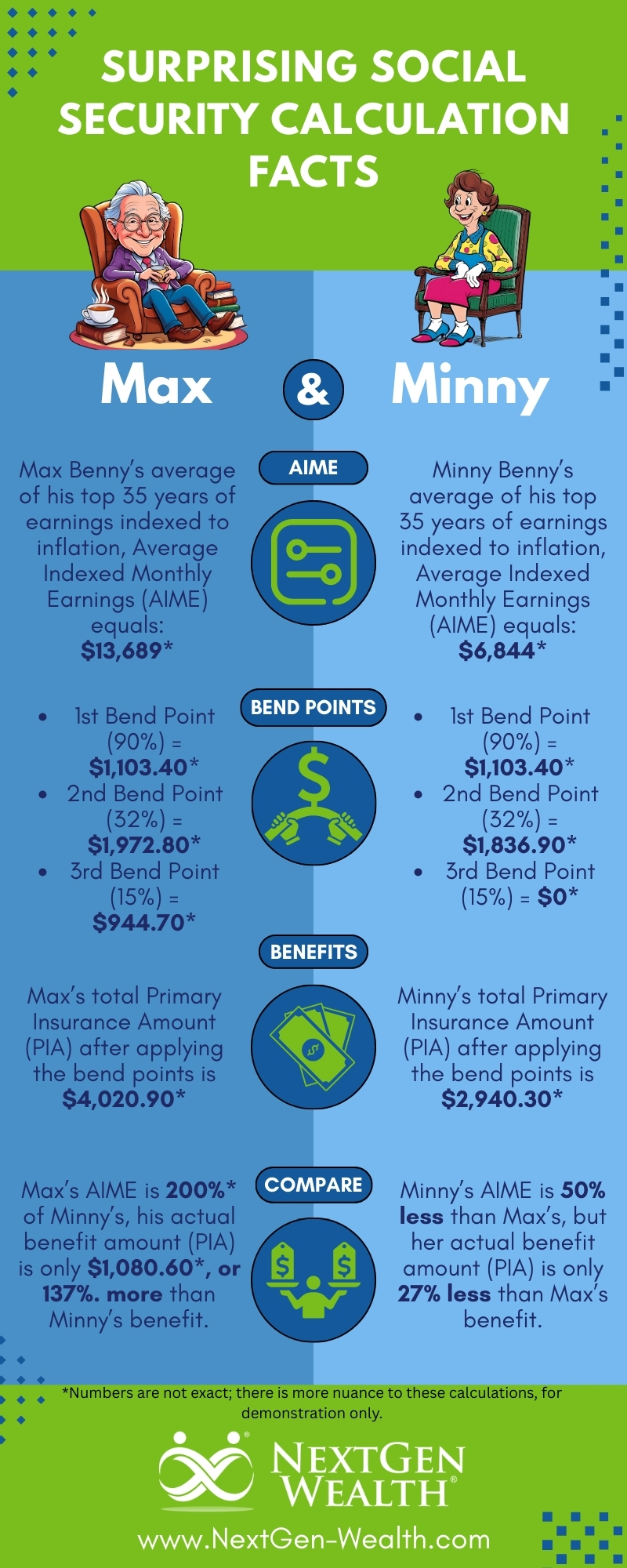
The Social Security benefit formula is inherently progressive, meaning it aims to replace a larger percentage of pre-retirement earnings for lower-income workers compared to higher-income workers. This is achieved through “bend points.” These are specific dollar amounts in the AIME formula where the percentage of earnings replaced decreases. For individuals becoming eligible for retirement benefits in 2024, the formula is:
- 90% of the first $1,174 of your AIME
- 32% of your AIME between $1,174 and $7,078
- 15% of your AIME over $7,078
You sum these three parts to get your PIA. For example, someone with an AIME of $1,000 would get 90% of $1,000, resulting in a PIA of $900. Someone with an AIME of $5,000 would get 90% of the first $1,174, plus 32% of ($5,000 – $1,174), and so on. The bend points themselves are adjusted annually to reflect changes in the national average wage index, ensuring the formula remains relevant over time.
The Goal of Progressivity
This progressive structure is a core tenet of Social Security. It ensures that individuals who earned less over their lifetime still receive a foundational level of support, providing a crucial safety net against poverty in old age. While higher earners receive a larger absolute dollar amount, the proportion of their pre-retirement income replaced by Social Security is lower than for those with more modest earnings. This design reflects Social Security’s dual purpose as both an earned benefit and a social insurance program. It balances the idea that benefits should relate to contributions with the need to provide adequate support across the economic spectrum.
Factors Influencing Your Actual Benefit Amount
While your PIA represents your full benefit at FRA, the actual amount you receive can vary significantly based on when you choose to start collecting benefits and other personal circumstances.
Your Full Retirement Age (FRA)
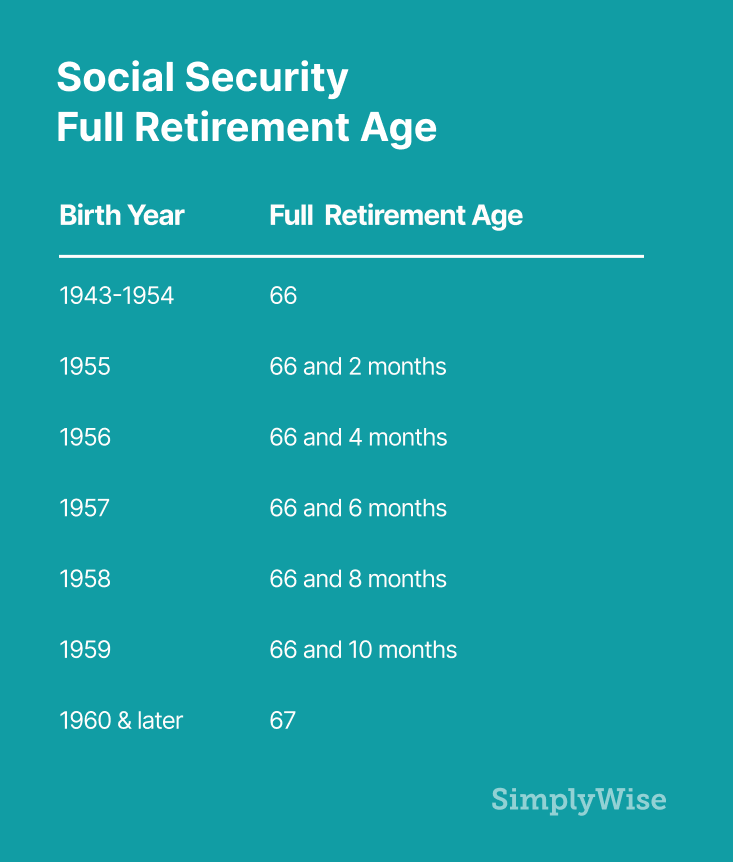
Your Full Retirement Age (FRA) is the age at which you are entitled to receive 100% of your PIA. This age is not universal; it depends on your birth year. For those born in 1937 or earlier, FRA was 65. For those born between 1943 and 1954, it’s 66. For those born in 1960 or later, FRA is 67. Claiming benefits before or after your FRA will directly impact the monthly amount you receive. Understanding your specific FRA is paramount for strategic claiming decisions.
Claiming Benefits Early or Late
You can elect to start receiving Social Security retirement benefits as early as age 62, but doing so will result in a permanent reduction in your monthly payment. For each month you claim before your FRA, your benefit is reduced. The reduction is approximately 5/9 of 1% for each of the first 36 months and 5/12 of 1% for each additional month. This can lead to a reduction of up to 30% if you claim at age 62 with an FRA of 67.
Conversely, delaying benefits beyond your FRA can significantly increase your monthly payment through “Delayed Retirement Credits” (DRCs). For each month you delay claiming past your FRA, up to age 70, your benefit increases by a certain percentage, typically 8% per year for those with an FRA of 66 or 67. This means waiting until age 70 can result in a benefit that is 24% to 32% higher than your PIA, making it a powerful strategy for maximizing lifetime benefits, particularly for those with good health and other income sources.
Spousal and Survivor Benefits
Social Security isn’t just for primary earners; it extends to family members. Spouses, ex-spouses, and dependent children may be eligible for benefits based on the primary earner’s work record. A spouse can receive up to 50% of their partner’s PIA if they claim at their own FRA, or a lesser amount if claimed earlier. Survivor benefits provide crucial financial support to widows, widowers, and eligible children after a worker’s death. The amount received is typically a percentage of the deceased worker’s PIA, with varying rules for different family members and claiming ages. These benefits are complex and often require careful planning to maximize.
Taxation of Social Security Benefits
It’s a common misconception that Social Security benefits are tax-free. In reality, a portion of your benefits may be subject to federal income tax if your “combined income” exceeds certain thresholds. Combined income is calculated as your adjusted gross income (AGI) plus non-taxable interest plus one-half of your Social Security benefits. If your combined income is between $25,000 and $34,000 for an individual ($32,000 to $44,000 for a married couple filing jointly), up to 50% of your benefits may be taxable. If your combined income exceeds $34,000 ($44,000 for married filing jointly), up to 85% of your benefits may be taxable. Several states also tax Social Security benefits, though most do not. This taxation can significantly impact your net benefit, making it an essential consideration in retirement income planning.
Tools and Strategies for Estimating Your Benefits
While the formula might seem complex, the Social Security Administration provides excellent tools to help you understand your specific situation and plan effectively.
The Social Security Administration (SSA) Online Account
The most valuable resource for anyone concerned about their Social Security benefits is their personal my Social Security online account. Creating an account is free and secure, offering instant access to your:
- Earnings Record: Verify that all your covered earnings are accurately reported.
- Personalized Benefit Estimates: Get estimates for your retirement, disability, and survivor benefits based on your actual earnings history, displayed at different claiming ages.
- Social Security Statement: Access your annual statement, which was previously mailed, containing a summary of your benefits and earnings.
This account is indispensable for tracking your progress and making informed decisions.
Using the SSA’s Benefit Calculators
Beyond your personalized account, the SSA website offers a suite of online calculators. These tools allow you to model various scenarios, such as:
- Retirement Estimator: Offers quick estimates based on different claiming ages.
- Life Expectancy Calculator: Helps you consider how long you might need benefits.
- Benefit Calculators for Specific Situations: Tools for disability benefits, survivor benefits, and even detailed calculators that allow for more precise “what-if” planning.
These calculators can be particularly useful for those still working, allowing them to project how future earnings might impact their benefits.
Incorporating Social Security into Your Financial Planning
Understanding your estimated Social Security benefits is a critical first step in comprehensive retirement planning. It allows you to:
- Determine Your Income Gap: Compare your estimated Social Security income with your projected retirement expenses to identify any shortfalls.
- Strategize Claiming Age: Decide when to claim benefits (early, at FRA, or late) based on your health, other retirement savings, and need for income.
- Coordinate with Other Retirement Accounts: Integrate Social Security with your 401(k), IRA, and other investments to create a holistic retirement income stream.
- Tax Planning: Factor in the potential taxation of benefits to estimate your net retirement income accurately.
Social Security should be viewed as one pillar of your retirement income, alongside personal savings, pensions, and other investments.
Common Misconceptions and Future Considerations
Social Security is a dynamic system, constantly under discussion and subject to various economic and demographic pressures. Addressing common myths and understanding its future outlook is part of fully comprehending its role.
Debunking Myths About Social Security’s Solvency
Concerns about Social Security’s long-term solvency are frequent, often leading to fears that the system will run out of money. While the program does face long-term funding challenges due to demographic shifts (lower birth rates, increased longevity) and slower wage growth, it is not on the brink of collapse. Social Security is primarily funded by ongoing payroll taxes, meaning as long as people are working and paying taxes, benefits will continue to be paid. Trust fund reserves are projected to be depleted by the mid-2030s, at which point continuing tax revenues would be sufficient to pay about 80% of promised benefits. This scenario means benefits might be reduced if no legislative action is taken, not that they would cease entirely. Various proposals, such as modest tax increases, adjustments to the FRA, or changes to the benefit formula, could address these shortfalls.
The Role of Social Security in a Comprehensive Retirement Plan
It’s vital to recognize that Social Security was never intended to be the sole source of retirement income for most Americans. For many, it provides a base level of income, often replacing about 40% of pre-retirement earnings for average wage earners. For lower earners, it might replace closer to 60%, while for high earners, it could be closer to 20%. The vast majority of financial advisors recommend a diversified approach to retirement planning, with Social Security acting as a foundational element, supplemented by personal savings, investments, and potentially other income streams. Relying solely on Social Security can lead to a significant drop in living standards in retirement.
Understanding “how they figure Social Security” is more than just learning a formula; it’s about gaining clarity on a vital component of your financial well-being. By demystifying the calculation process, exploring the factors that influence your benefits, and utilizing the tools available, you empower yourself to make informed decisions that can profoundly impact your financial security in retirement. Social Security, while complex, is an earned benefit designed to provide foundational support, and a clear understanding of its mechanics is a powerful asset in your long-term financial planning toolkit.
aViewFromTheCave is a participant in the Amazon Services LLC Associates Program, an affiliate advertising program designed to provide a means for sites to earn advertising fees by advertising and linking to Amazon.com. Amazon, the Amazon logo, AmazonSupply, and the AmazonSupply logo are trademarks of Amazon.com, Inc. or its affiliates. As an Amazon Associate we earn affiliate commissions from qualifying purchases.