
In the landscape of personal and business finance, the promissory note serves as a foundational instrument for debt management and capital flow. Whether you are lending a significant sum to a family member for a down payment on a home, or providing a bridge loan to a burgeoning startup, the handshake agreement is rarely sufficient to protect the interests of either party. A promissory note is a legally binding document that outlines the terms of a loan, acting as a bridge between an informal IOU and a complex bank loan agreement. Understanding how to draft this document effectively is essential for maintaining financial clarity, ensuring legal recourse, and preserving professional or personal relationships.
Understanding the Role of Promissory Notes in Financial Strategy
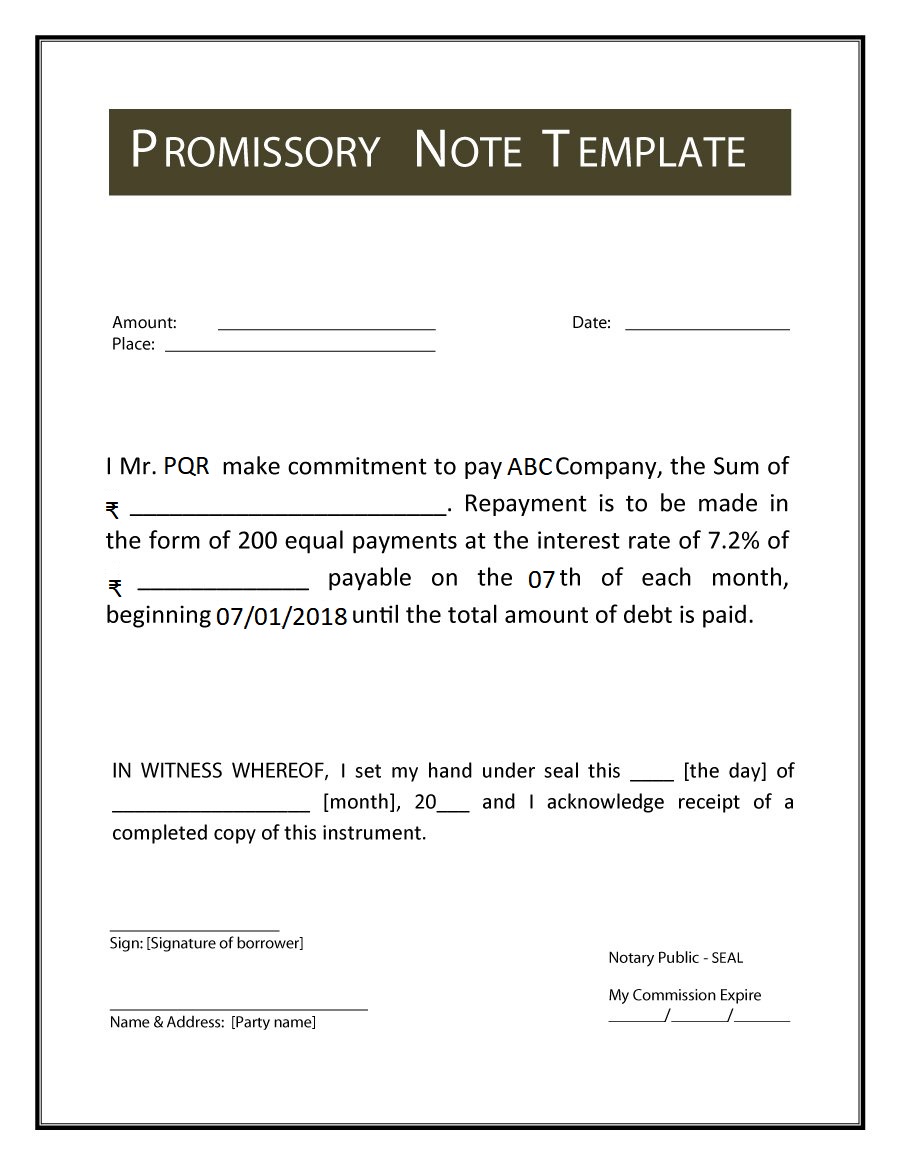
A promissory note is more than just a piece of paper; it is a sophisticated financial tool that formalizes a debt obligation. At its core, it represents a written promise by one party (the issuer or maker) to pay another party (the payee or lender) a definite sum of money, either on demand or at a specified future date.
Promissory Notes vs. Loan Agreements
While the terms are often used interchangeably, there are distinct differences between a promissory note and a standard loan agreement. A promissory note is typically less complex and focuses primarily on the borrower’s promise to repay. It is often a unilateral document signed by the borrower. In contrast, a loan agreement is bilateral, detailing the responsibilities of both the lender and the borrower, and often includes extensive covenants and conditions precedent. For most private lending scenarios—such as side-hustle funding or peer-to-peer personal loans—a well-drafted promissory note provides the necessary legal weight without the administrative burden of a full-scale loan contract.
The Strategic Value of Documentation
From an investment perspective, a promissory note turns a simple transfer of cash into an asset. For the lender, the note represents a right to future cash flows, often including interest that exceeds the rates offered by traditional savings vehicles. For the borrower, it provides a structured path to capital that might not be available through institutional channels. By documenting the transaction, both parties mitigate the risk of “memory drift,” where the specifics of the repayment schedule or interest rate become a point of contention months or years down the line.
Essential Components of a Legally Binding Promissory Note
To be enforceable in a court of law, a promissory note must contain specific elements. Omitting even one of these can lead to disputes regarding the validity of the debt or the terms of its recovery.
Identifying the Parties Involved
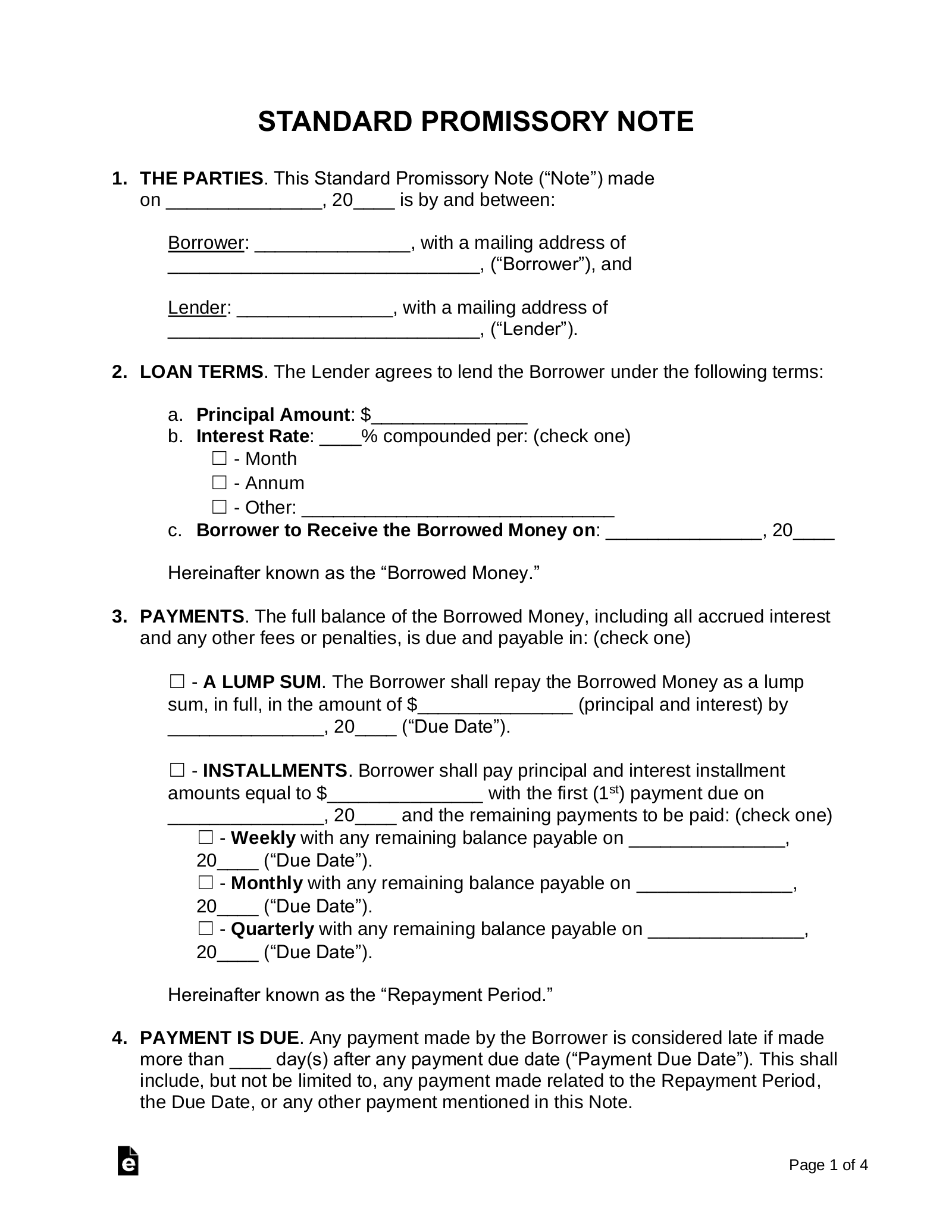
The document must clearly identify the borrower and the lender. Use full legal names and current residential or business addresses. This ensures there is no ambiguity regarding who is responsible for the debt and who is entitled to receive the payments. If the borrower is a business entity (like an LLC or Corporation), ensure the individual signing the note does so in their capacity as an officer of that company to clarify that the business, not the individual, is the primary debtor.
The Principal Amount and Interest Rate
The “Principal” is the original amount borrowed. This must be stated clearly in both numerical and written forms (e.g., $10,000 and “Ten Thousand Dollars”).
Beyond the principal, the interest rate is a critical component of any financial instrument. In private lending, you must determine whether the interest will be:
-
Fixed Rate: The interest stays the same throughout the life of the loan.
-
Variable Rate: The interest fluctuates based on an index, such as the Federal Prime Rate.
Lenders must be cautious of “usury laws,” which are state-specific regulations that cap the maximum interest rate one can charge on a loan. Exceeding these limits can result in the note being declared void or the lender being penalized.
Repayment Terms and Schedules
How and when the money will be returned is the heart of the document. Common structures include:
-
Lump Sum (Bullet) Payments: The entire principal and accrued interest are paid back in one single payment on a specific date.
-
Installment Payments: Regular payments (monthly, quarterly, or annually) that cover interest and a portion of the principal.
-
Interest-Only Payments: The borrower pays only the interest for a set period, with a “balloon payment” of the full principal due at the end of the term.
Collateral and Security
A promissory note can be either secured or unsecured.
-
Unsecured Notes: These are backed only by the borrower’s “full faith and credit.” If the borrower defaults, the lender must sue for a judgment to collect.
-
Secured Notes: These are backed by an asset, such as a vehicle, real estate, or business equipment. If the borrower fails to pay, the lender has a legal right to seize the collateral to satisfy the debt. This significantly reduces the lender’s risk profile.
Step-by-Step Guide to Drafting Your Promissory Note
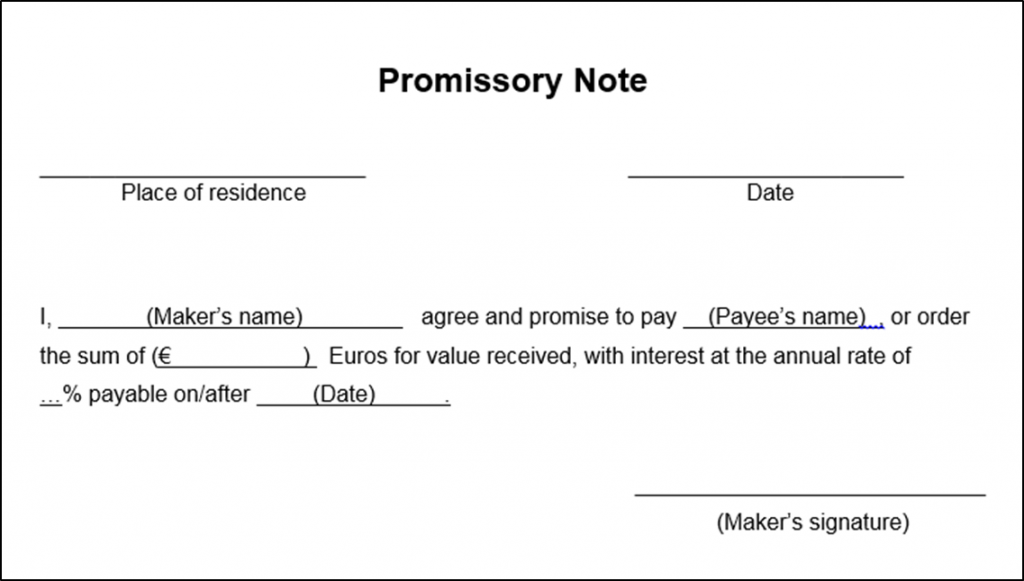
Writing the note requires precision. Following a structured approach ensures that no vital clauses are overlooked.
Defining the Maturity Date and Demand Clauses
Every note should have a “Maturity Date,” which is the date the final payment is due. Alternatively, some notes are “Demand Notes,” meaning the lender can request payment at any time, usually with a specified notice period (e.g., 30 days). For personal finance management, a fixed maturity date is generally preferred as it provides both parties with a clear timeline for budgeting and cash flow planning.
Incorporating Default and Acceleration Clauses
One of the most important protective features for a lender is the “Acceleration Clause.” This clause states that if the borrower misses a payment or violates another term of the note, the lender can declare the entire remaining balance due immediately. Without this clause, a lender might have to sue the borrower for every individual payment as it falls due, rather than the whole sum.
Furthermore, define what constitutes a “Default.” Is it one missed payment? A payment that is 15 days late? Clearly outlining the grace period and any late fees associated with a default will provide clarity and leverage if the relationship sours.
Provisions for Prepayment
Can the borrower pay the loan off early to save on interest? In many private lending scenarios, lenders allow for “Prepayment without Penalty.” However, if a lender is counting on a specific interest yield over a set timeframe, they may include a prepayment penalty clause. This is common in business finance where the lender wants to ensure a minimum return on their capital deployment.
Execution: Signatures and Witnesses
A promissory note is not fully effective until it is signed. While some jurisdictions only require the borrower’s signature, it is a best practice for both parties to sign. In many cases, having the document notarized adds an extra layer of protection, as a Notary Public verifies the identity of the signers, making it much harder for a borrower to later claim that their signature was forged or that they signed under duress.
Legal and Tax Implications for Lenders and Borrowers
Entering into a debt agreement has ramifications that extend beyond the simple exchange of cash. Both parties must be aware of the regulatory and tax landscape.
Tax Obligations on Interest Income
For the lender, the interest earned on a promissory note is considered taxable income. This must be reported to the IRS (or the relevant national tax authority). Lenders should provide borrowers with a Form 1099-INT if the interest paid during the year exceeds a certain threshold (currently $60 in the U.S.). For the borrower, depending on the use of the funds (such as for business operations or real estate investment), the interest paid might be tax-deductible.
The “Gift Tax” Trap
In personal finance, particularly with intra-family loans, the IRS monitors “Below-Market Loans.” If you lend money at 0% interest or at a rate significantly lower than the Applicable Federal Rate (AFR), the IRS may categorize the “foregone interest” as a gift. If the total gift amount exceeds the annual exclusion limit, it could trigger gift tax reporting requirements. To avoid this, ensure your promissory note uses an interest rate at least equal to the current AFR.
Common Pitfalls to Avoid in Private Lending
Even with a written document, certain errors can undermine the effectiveness of your promissory note and lead to financial loss.
Vague Language and Ambiguity
Phrases like “repayment will happen when the borrower’s business is profitable” or “as soon as possible” are unenforceable in court. Legally sound notes rely on specific dates and clear dollar amounts. If a payment is due on the first of the month, state that clearly. If there is a five-day grace period, define it.
Neglecting State-Specific Regulations
Financial laws vary significantly by jurisdiction. Some states have specific requirements for the size of the font used in certain disclosures, while others have strict rules on how collateral can be repossessed. If the loan involves a significant amount of money or is tied to real estate, it is often wise to have the final draft reviewed by a legal professional to ensure compliance with local statutes.
Failure to Track Payments
A promissory note is only part of the equation. Lenders must maintain a detailed “ledger” of all payments received, broken down by principal and interest. This is crucial for calculating the remaining balance and provides necessary evidence if legal action for recovery ever becomes necessary.
Conclusion: Securing Your Financial Future
Writing a promissory note is a vital skill for anyone navigating the worlds of personal finance or business investment. By formalizing a loan, you transform a potentially volatile verbal agreement into a structured financial instrument. This process protects the lender’s capital and provides the borrower with clear expectations and obligations. Whether you are funding a friend’s side hustle or formalizing a loan to a family member, a well-crafted promissory note ensures that the terms of the engagement are transparent, professional, and, most importantly, legally enforceable. Taking the time to include essential clauses regarding interest, repayment schedules, and default protections is an investment in your own financial security and peace of mind.
aViewFromTheCave is a participant in the Amazon Services LLC Associates Program, an affiliate advertising program designed to provide a means for sites to earn advertising fees by advertising and linking to Amazon.com. Amazon, the Amazon logo, AmazonSupply, and the AmazonSupply logo are trademarks of Amazon.com, Inc. or its affiliates. As an Amazon Associate we earn affiliate commissions from qualifying purchases.