
Embarking on the journey of stock market investing can seem daunting, a complex world often depicted with flashing screens and hurried traders. Yet, for the everyday individual, it’s one of the most accessible and powerful avenues for building long-term wealth. Understanding how to put your money into stocks is the first critical step toward securing your financial future, leveraging the growth potential of successful companies, and potentially outperforming inflation. This guide will demystify the process, equipping you with the knowledge and confidence to take your first informed steps into the world of investing.

Understanding the Fundamentals Before You Invest
Before you commit your hard-earned capital, it’s imperative to grasp the basic concepts that underpin stock market investing. A solid foundation will not only help you make informed decisions but also navigate the inevitable ups and downs of the market with greater resilience.
What Exactly is a Stock?
At its core, a stock (or share) represents a fractional ownership in a company. When you buy a stock, you become a part-owner of that business. This ownership stake grants you certain rights, primarily the potential to profit from the company’s success. As the company grows, innovates, and increases its profitability, the value of its shares typically rises, benefiting shareholders. Some companies also distribute a portion of their profits to shareholders in the form of dividends, providing a regular income stream. Understanding this direct link between a company’s performance and your investment is crucial.
Why Invest in Stocks?
The primary allure of stock investing lies in its potential for significant long-term wealth creation. Historically, the stock market has offered returns that substantially outpace inflation and other more conservative investment vehicles like savings accounts or bonds. Over decades, compounding returns can transform even modest initial investments into substantial sums. Investing in stocks allows your money to work for you, participating in the economic growth of innovative companies and entire industries. It’s a proactive strategy for building financial independence and achieving significant life goals.
Key Risks and Considerations
While the rewards can be substantial, it’s equally important to acknowledge the inherent risks. Stock prices are subject to volatility, meaning they can fluctuate significantly in the short term due to economic news, company performance, industry trends, or broader market sentiment. There’s no guarantee that a stock will always go up, and you could lose money, including your entire principal, if a company performs poorly or goes bankrupt. This is why diversification — spreading your investments across different companies, sectors, and asset classes — is often cited as the golden rule of investing. Additionally, understanding your own capacity for risk (your risk tolerance) is paramount to avoid making impulsive, fear-driven decisions during market downturns.
Preparing for Your Investment Journey
Successful investing isn’t just about picking the “right” stock; it’s about meticulous preparation, a clear understanding of your personal financial landscape, and a commitment to ongoing education. Laying this groundwork will set you up for sustainable success.
Define Your Financial Goals
Before you even think about which stocks to buy, ask yourself: “Why am I investing?” Are you saving for retirement, a down payment on a house, your child’s education, or simply aiming to grow your wealth over time? Your financial goals will dictate your investment horizon (how long you plan to invest) and, consequently, your asset allocation and risk strategy. Short-term goals typically call for less risky investments, while long-term goals allow for greater exposure to stocks and their growth potential, providing ample time to recover from market dips.
Assess Your Risk Tolerance
Your risk tolerance is your emotional and financial capacity to handle potential losses in your investments. Are you comfortable with significant fluctuations in your portfolio’s value in pursuit of higher returns, or do you prefer a more stable, albeit potentially slower, growth trajectory? Factors like your age, income stability, existing savings, and personality all play a role. Many online brokerage platforms offer questionnaires to help you assess your risk profile, guiding you toward an appropriate investment strategy.
Build an Emergency Fund First
This step cannot be overstressed. Before investing in the stock market, you must have an emergency fund — typically 3-6 months’ worth of living expenses — held in an easily accessible, liquid account (like a high-yield savings account). This fund acts as a financial safety net, preventing you from being forced to sell your investments at an inopportune time (e.g., during a market downturn) to cover unexpected expenses like job loss or medical emergencies. Investing money you might need in the short term is a high-risk gamble.
Educate Yourself Continuously
The world of finance is dynamic and ever-evolving. Commit to lifelong learning. Read reputable financial news sources, books on investing, company reports, and educational blogs. Understand basic financial ratios, market cycles, and economic indicators. The more you know, the better equipped you’ll be to make independent decisions, critically evaluate advice, and avoid common pitfalls. Learning about different investment strategies, such as value investing, growth investing, or dividend investing, can also help you refine your approach.
Choosing the Right Investment Vehicle
Once you’re prepared, the next step is deciding how you will access the stock market. There are several popular avenues, each with its own advantages, catering to different levels of investor experience and involvement.
Brokerage Accounts: The Gateway to Stocks
A brokerage account is the most common way to buy and sell stocks, ETFs, mutual funds, and other securities. These accounts are offered by financial institutions (brokers) that facilitate transactions on stock exchanges. When choosing a brokerage, consider factors such as:
-
Fees: Look for low-cost or commission-free trading for stocks and ETFs.
-
Tools and Research: Does the platform offer robust research tools, analytical charts, and educational resources?
-
User Experience: Is the platform intuitive and easy to navigate?
-
Customer Service: Is reliable support available when you need it?
-
Account Minimums: Some brokers require a minimum deposit to open an account, though many now offer $0 minimums.
You’ll typically link your bank account to your brokerage account to transfer funds.
Robo-Advisors: Automated Investing for Beginners

For those who prefer a hands-off approach, robo-advisors offer automated, algorithm-driven financial planning services. After you answer a series of questions about your financial goals and risk tolerance, the robo-advisor will build and manage a diversified portfolio of low-cost ETFs tailored to your profile.
-
Pros: Low fees, automatic rebalancing, diversification, great for beginners or those with limited time.
-
Cons: Less personalized advice than a human advisor, limited control over individual stock selections.
Popular robo-advisors include Betterment, Wealthfront, and Vanguard Digital Advisor.
Mutual Funds and Exchange-Traded Funds (ETFs): Diversification Made Easy
If buying individual stocks feels too risky or time-consuming, mutual funds and ETFs offer instant diversification.
-
Mutual Funds: Professionally managed portfolios of stocks, bonds, or other securities. When you invest in a mutual fund, you buy shares of the fund itself, which then owns a basket of underlying assets.
-
ETFs (Exchange-Traded Funds): Similar to mutual funds but trade like individual stocks on an exchange throughout the day. They typically have lower expense ratios than actively managed mutual funds and offer significant tax advantages.
Both allow you to own a piece of many companies with a single purchase, reducing the risk associated with any one company’s performance. Index funds, a type of mutual fund or ETF, are particularly popular as they aim to replicate the performance of a specific market index (like the S&P 500) rather than trying to beat it, often at very low costs.
Retirement Accounts: Tax-Advantaged Investing
For long-term goals like retirement, utilizing tax-advantaged accounts is highly recommended. These accounts offer significant tax benefits that can accelerate your wealth growth.
-
401(k)s: Employer-sponsored plans, often with matching contributions, which are essentially free money. Contributions are usually pre-tax, growing tax-deferred until retirement.
-
IRAs (Individual Retirement Accounts): Personal retirement accounts you open yourself.
-
Traditional IRA: Contributions might be tax-deductible, and growth is tax-deferred.
-
Roth IRA: Contributions are made with after-tax money, but qualified withdrawals in retirement are entirely tax-free.
-
These accounts are not investment types themselves but rather wrappers that hold your investments, such as stocks, mutual funds, or ETFs, shielding them from annual taxation.
The Mechanics of Buying Your First Stock
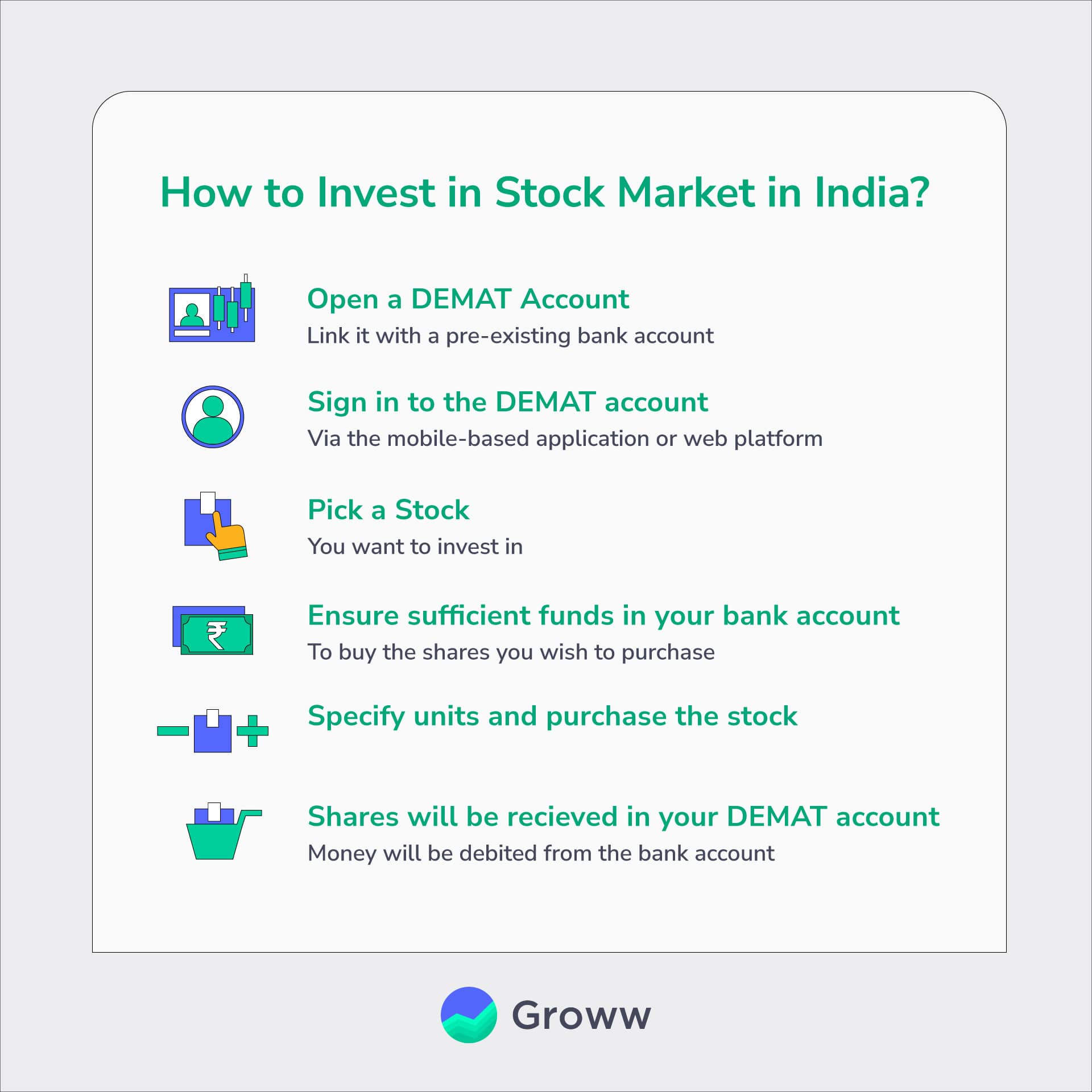
Once you’ve chosen your investment vehicle and prepared your finances, it’s time to execute your first trade. This process has become remarkably straightforward thanks to modern online brokerage platforms.
Opening and Funding Your Account
The first practical step is to open your chosen investment account (brokerage, robo-advisor, or retirement account). This typically involves an online application where you provide personal information for identity verification (KYC – Know Your Customer regulations). You’ll usually need your Social Security Number, address, and employment details. Once approved, you’ll link your bank account to the investment account. Funds can then be transferred via electronic transfers (ACH), wire transfers, or sometimes even by mailing a check. Be aware of transfer limits and processing times.
Researching Individual Stocks
If you’re opting for individual stocks, thorough research is non-negotiable. Don’t simply buy a stock because a friend recommended it or it’s been in the news. Look into the company’s financial health (revenue, earnings, debt), its competitive landscape, management team, industry trends, and future growth prospects. Utilize the research tools provided by your brokerage, financial news websites (e.g., Wall Street Journal, Bloomberg), and public company filings (e.g., 10-K reports on the SEC website). Focus on understanding the business behind the stock. For beginners, it’s often wise to stick to companies you understand and whose products/services you use.
Placing an Order: Market vs. Limit Orders
When you’re ready to buy, you’ll place an order through your brokerage platform. There are two primary types of orders:
-
Market Order: Instructs your broker to buy or sell shares immediately at the best available current price. While offering immediate execution, the exact price might fluctuate slightly from what you see on screen, especially for volatile stocks.
-
Limit Order: Specifies the maximum price you’re willing to pay to buy a stock (or the minimum price to sell). Your order will only execute if the stock reaches that price or better. This gives you more control over the price but there’s no guarantee the order will execute if your specified price isn’t met. For new investors, a limit order can often provide more peace of mind.
Dollar-Cost Averaging: A Smart Strategy
To mitigate the risk of investing a large sum at an unfortunate market peak, consider dollar-cost averaging. This strategy involves investing a fixed amount of money at regular intervals (e.g., $100 every month), regardless of the stock price. When prices are high, your fixed amount buys fewer shares; when prices are low, it buys more. Over time, this averages out your purchase price and reduces the impact of short-term market volatility. It’s a disciplined approach that removes emotion from investing and is particularly effective for long-term investors.
Long-Term Strategies and Ongoing Management
Investing in stocks is not a “set it and forget it” endeavor, nor should it be a source of daily anxiety. It requires a long-term perspective and periodic adjustments to stay aligned with your goals.
Diversification: Don’t Put All Your Eggs in One Basket
We’ve mentioned it before, but diversification is paramount. Beyond spreading your investments across various companies, consider diversifying across different industries, geographic regions, and asset classes (stocks, bonds, real estate). This helps cushion your portfolio against poor performance in any single area. For instance, if tech stocks are struggling, industrials or consumer staples might be performing well, balancing your overall returns.
Rebalancing Your Portfolio
Over time, the weight of different assets in your portfolio will shift due to varying performance. For example, if your stock investments significantly outperform your bonds, stocks will represent a larger percentage of your portfolio than initially intended, increasing your overall risk. Rebalancing involves periodically selling some of your outperforming assets and buying more of your underperforming ones to bring your portfolio back to your target asset allocation. This disciplined approach helps maintain your desired risk level and ensures you’re buying low and selling high.
Stay Informed, Not Obsessed
While continuous education is vital, obsessively checking stock prices every day can lead to emotional and often detrimental decisions. Focus on the long-term fundamentals of your investments. Market noise and short-term fluctuations are normal. Unless there’s a significant change in the underlying business fundamentals of a company you own, resist the urge to react to every headline. Develop a clear investment thesis for each holding and review it periodically.
Consider Professional Guidance
For those with complex financial situations, high net worth, or simply a desire for personalized expertise, consulting a qualified financial advisor can be invaluable. A fiduciary advisor (one legally bound to act in your best interest) can help you define your goals, create a comprehensive financial plan, choose appropriate investments, optimize your taxes, and provide objective guidance, especially during challenging market conditions. While there’s a cost involved, the peace of mind and potential for optimized returns can often outweigh the fees.
Putting money in stocks is a journey that begins with education, thoughtful preparation, and a clear understanding of your financial objectives. By starting with the fundamentals, choosing the right vehicles, executing trades strategically, and maintaining a disciplined long-term approach, you can harness the power of the stock market to build substantial wealth and achieve your financial aspirations. The market awaits, and with this guide, you’re now better equipped to step in with confidence and intention.
aViewFromTheCave is a participant in the Amazon Services LLC Associates Program, an affiliate advertising program designed to provide a means for sites to earn advertising fees by advertising and linking to Amazon.com. Amazon, the Amazon logo, AmazonSupply, and the AmazonSupply logo are trademarks of Amazon.com, Inc. or its affiliates. As an Amazon Associate we earn affiliate commissions from qualifying purchases.