
The transition from college life to the professional world is marked by many milestones, but few are as significant—or as potentially daunting—as the start of student loan repayment. While “FAFSA loans” is the common shorthand used by many borrowers, it is important to clarify that FAFSA (the Free Application for Federal Student Aid) is the gateway to obtaining federal financial aid, not the loan itself. The debt you are repaying typically consists of William D. Ford Federal Direct Loans.
Managing these loans effectively is a cornerstone of personal finance. How you handle this debt will influence your credit score, your ability to secure a mortgage, and your overall long-term wealth. This guide provides a detailed roadmap for navigating the federal repayment system, selecting the right plans, and employing strategies to minimize interest and maximize financial freedom.
Understanding the Landscape: Servicers, Portals, and the Grace Period
Before you can send your first dollar to a lender, you must understand who holds your debt and when your obligations begin. Federal student loans are unique because the entity that originated the loan (the U.S. Department of Education) is rarely the entity that manages your monthly billing.
Identifying Your Loan Servicer
The Department of Education assigns federal loans to private companies known as “loan servicers.” These organizations, such as Nelnet, Mohela, Aidvantage, and Edfinancial, are responsible for handling your billing, processing your payments, and assisting you with repayment plan changes.
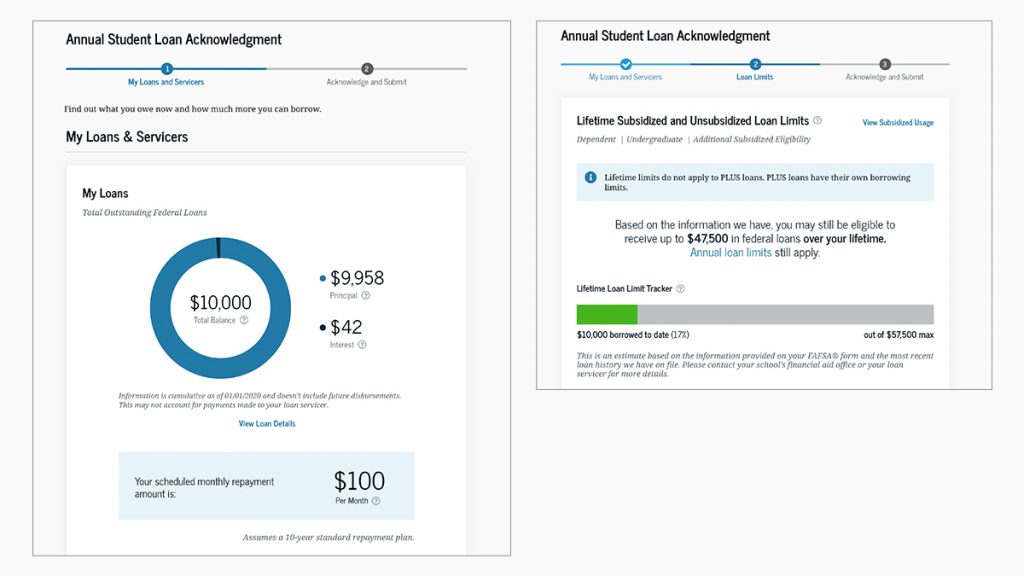
To find out who your servicer is, your first stop should be the Federal Student Aid (FSA) website, StudentAid.gov. By logging in with your FSA ID, you can view your “Dashboard,” which provides a comprehensive breakdown of your total balance, the types of loans you hold (Subsidized vs. Unsubsidized), and the contact information for your assigned servicer. It is essential to keep your contact information updated on both the FSA portal and your servicer’s website to ensure you never miss a critical notice.
Navigating the Six-Month Grace Period
Most federal student loans come with a built-in “grace period.” This is a six-month window that begins the moment you graduate, leave school, or drop below half-time enrollment. During this time, you are not required to make monthly payments.
However, the grace period is not just a time to relax; it is a strategic window. For Direct Unsubsidized Loans and PLUS Loans, interest continues to accrue during the grace period. If you have the financial means, making interest-only payments during these six months can prevent “capitalization”—the process where unpaid interest is added to your principal balance once repayment officially begins. Capitalization increases the total amount on which future interest is calculated, potentially adding thousands of dollars to the lifetime cost of the loan.
Selecting the Optimal Repayment Plan for Your Budget
One of the greatest advantages of federal student loans over private debt is the flexibility of repayment options. The government offers several plans designed to fit different income levels and financial goals.
The Standard Repayment Plan
By default, most borrowers are placed on the Standard Repayment Plan. This plan features fixed monthly payments over a 10-year period. While the monthly payments are often higher under this plan compared to others, it is the most cost-effective way to pay off your debt. Because the term is shorter, you pay significantly less in total interest over the life of the loan. If your income allows for it, staying on the Standard Plan is the fastest route to debt freedom.
Income-Driven Repayment (IDR) Plans
If the Standard Plan payment is too high relative to your entry-level salary, Income-Driven Repayment (IDR) plans are a vital safety net. These plans calculate your monthly payment based on your discretionary income and family size rather than the total amount owed.
-
The SAVE Plan (Saving on a Valuable Education): Replacing the former REPAYE plan, SAVE is currently the most generous IDR option. It increases the income exemption, meaning more of your earnings are protected from the payment calculation. Notably, if your calculated payment doesn’t cover the monthly interest, the government waives the remaining interest for that month, preventing your balance from growing.
-
Income-Based Repayment (IBR) and PAYE: These older plans generally cap payments at 10% to 15% of discretionary income. They are particularly useful for those who may not qualify for SAVE or who have specific tax-filing strategies.
-
Income-Contingent Repayment (ICR): This is often the only IDR option available for Parent PLUS borrowers who have consolidated their loans.
The most significant benefit of IDR plans is the potential for loan forgiveness. If you remain on an IDR plan for 20 or 25 years (depending on the plan and loan type), any remaining balance is forgiven. However, it is crucial to note that this forgiven amount may be treated as taxable income under current federal laws.
Graduated and Extended Repayment
For those who expect their income to rise steadily, the Graduated Repayment Plan starts with lower payments that increase every two years. This is a 10-year plan. Alternatively, if you have more than $30,000 in debt, you may qualify for the Extended Repayment Plan, which stretches the term to 25 years, lowering the monthly requirement but significantly increasing the total interest paid.

Mastering the Payment Process: Automation and Strategic Contributions
Once you have selected a plan, the mechanics of payment become the priority. Managing student loans is not just about meeting the minimum requirement; it is about utilizing the tools provided by servicers to reduce costs.
The Power of Autopay
Almost every federal loan servicer offers a 0.25% interest rate deduction if you enroll in automatic debit. While a quarter of a percentage point may seem negligible, on a large balance over a decade, it can save hundreds of dollars. Beyond the financial savings, autopay ensures you are never hit with late fees and that your payment history remains pristine, which is vital for maintaining a strong credit score.
Strategic Principal Payments
If you find yourself with extra cash—perhaps from a tax refund, a bonus, or a side hustle—you can make “extra” payments. However, you must be specific with your servicer. By default, many servicers will apply extra funds to “advance the due date,” essentially pushing your next required payment further into the future.
To maximize the impact of extra money, you should instruct your servicer to apply the overage to your principal balance while keeping your regular due date. This reduces the base amount upon which interest is calculated. Within this strategy, the “Debt Avalanche” method is highly recommended: apply any extra funds to the loan with the highest interest rate first, regardless of the balance. This mathematically minimizes the total interest you will pay over time.
The Role of Employer Assistance
In recent years, more companies have begun offering student loan repayment assistance as an employee benefit. Under current tax laws (such as those extended by the SECURE Act 2.0), employers can contribute up to $5,250 per year toward an employee’s student loans on a tax-free basis. If you are job hunting or negotiating a raise, inquire about these programs. It is essentially “free money” that can shave years off your repayment timeline.
Navigating Challenges: Forbearance, Deferment, and Consolidation
Life is rarely a straight line, and there may be periods where making your student loan payments is impossible due to unemployment, illness, or other financial hardships. Federal loans offer protections that private loans do not, but they must be used carefully.
Deferment vs. Forbearance
Both deferment and forbearance allow you to temporarily stop making payments, but they treat interest differently.
-
Deferment: If you have Subsidized Loans and qualify for a deferment (such as during graduate school or a period of unemployment), the government may pay the interest for you during that period.
-
Forbearance: This is typically easier to obtain but more costly. Interest continues to accrue on all loan types during forbearance. If you do not pay the interest as it accrues, it will capitalize at the end of the forbearance period.
These should be viewed as last resorts. Often, switching to an IDR plan is a better move, as your payment could be as low as $0 per month while still counting toward loan forgiveness.
Direct Loan Consolidation
If you have multiple federal loans with different servicers or different payment dates, you can apply for a Direct Consolidation Loan. This rolls all your federal debts into a single loan with a single monthly payment. The interest rate on a consolidated loan is the weighted average of the rates on the loans being consolidated, rounded up to the nearest one-eighth of a percent.
Consolidation is often a prerequisite for accessing certain repayment plans (like ICR for Parent PLUS loans) or for qualifying for Public Service Loan Forgiveness (PSLF). However, be cautious: consolidating can sometimes reset your progress toward forgiveness if not handled under specific “waiver” rules, and it may result in the loss of certain niche benefits associated with older loan types.
Building a Long-Term Financial Strategy Around Student Debt
Paying off your federal student loans is not a process that happens in a vacuum. It must be balanced with other financial priorities, such as building an emergency fund, contributing to a 401(k), and managing high-interest consumer debt like credit cards.
Prioritizing Your Debts
In the hierarchy of personal finance, student loans are generally considered “medium-interest” debt. They are rarely as expensive as credit cards but more expensive than a modern mortgage. If you have credit card debt with a 20% APR, it makes more sense to pay the minimum on your student loans and redirect all extra capital toward the credit cards. Once high-interest debt is eliminated, you can then accelerate your student loan payments.

The Psychological Aspect of Debt
Finally, it is important to recognize the psychological weight of student debt. For some, the peace of mind that comes from being debt-free is worth more than the mathematical advantage of investing that money in the stock market. If your student loan interest rate is low (e.g., 3-4%), you might technically earn more by investing in a diversified index fund. However, if the debt causes significant stress, there is immense value in an aggressive repayment strategy.
By staying organized, choosing the repayment plan that aligns with your current cash flow, and taking advantage of federal protections and subsidies, you can turn your student debt from an overwhelming burden into a manageable part of your broader financial success story. Whether your goal is to pay off the balance as quickly as possible or to manage payments until you qualify for forgiveness, the key is to remain proactive and informed.
aViewFromTheCave is a participant in the Amazon Services LLC Associates Program, an affiliate advertising program designed to provide a means for sites to earn advertising fees by advertising and linking to Amazon.com. Amazon, the Amazon logo, AmazonSupply, and the AmazonSupply logo are trademarks of Amazon.com, Inc. or its affiliates. As an Amazon Associate we earn affiliate commissions from qualifying purchases.