
Social Security stands as a cornerstone of financial security for millions across the globe, providing a safety net for retirement, disability, and survivorship. For many, it’s a fundamental part of their financial planning, often without a full understanding of how their contributions work. Far from being an optional savings account, Social Security is a mandatory federal program, funded primarily through dedicated payroll taxes. Understanding “how do I pay into Social Security” is not just about compliance; it’s about recognizing the foundation of future benefits, empowering individuals to plan effectively for their financial well-being. This comprehensive guide will demystify the mechanisms of Social Security contributions, shedding light on who pays, how payments are made, and the critical role these contributions play in securing your future.

Understanding Social Security: A Foundation of Financial Security
Before delving into the mechanics of payment, it’s crucial to grasp the essence of Social Security itself. It’s more than just a government program; it’s an intergenerational social insurance scheme designed to provide economic stability across various life stages.
What is Social Security?
At its core, Social Security is a federal program in the United States that provides monetary benefits to retirees, the disabled, and survivors of deceased workers. It operates on a “pay-as-you-go” system, meaning current workers’ contributions largely fund the benefits of current retirees and other beneficiaries. It’s not a private savings account where your exact contributions sit awaiting your retirement. Instead, your payments contribute to a vast trust fund that ensures the continuous flow of benefits. The program aims to alleviate poverty among the elderly, provide income stability for those unable to work due to disability, and offer financial support to families after the loss of a breadwinner. Its broad reach and fundamental purpose make it an indispensable part of the nation’s social contract and a key component of personal finance for nearly every working American.
Who Pays into Social Security?
Virtually every working individual in the U.S. contributes to Social Security, though the method and responsibility differ based on employment status. The vast majority of workers fall into one of three categories:
- Employees: These individuals work for an employer and receive a regular paycheck. Their contributions are automatically deducted from their wages.
- Employers: Businesses that hire employees are also required to contribute a matching amount on behalf of their workers.
- Self-Employed Individuals: Those who work for themselves, such as freelancers, contractors, or small business owners, are responsible for paying both the employee and employer portions of the tax.
These contributions are generally mandatory for anyone earning above a minimal threshold, ensuring a broad base of support for the system. Certain exceptions exist, such as specific religious groups, non-resident aliens, or some government employees covered by different retirement systems, but for the overwhelming majority, participation is a given.
The Mechanics of Contribution: How Your Payments Are Made
The method by which you contribute to Social Security is largely determined by your employment status. While the end goal is the same—funding the Social Security and Medicare trust funds—the path to contribution varies significantly.
Employee Contributions: Payroll Deductions Explained
For most American workers, paying into Social Security is a seamless, almost invisible process. When you receive your paycheck, you’ll notice deductions for “FICA” taxes. FICA stands for Federal Insurance Contributions Act, and it encompasses both Social Security and Medicare taxes.
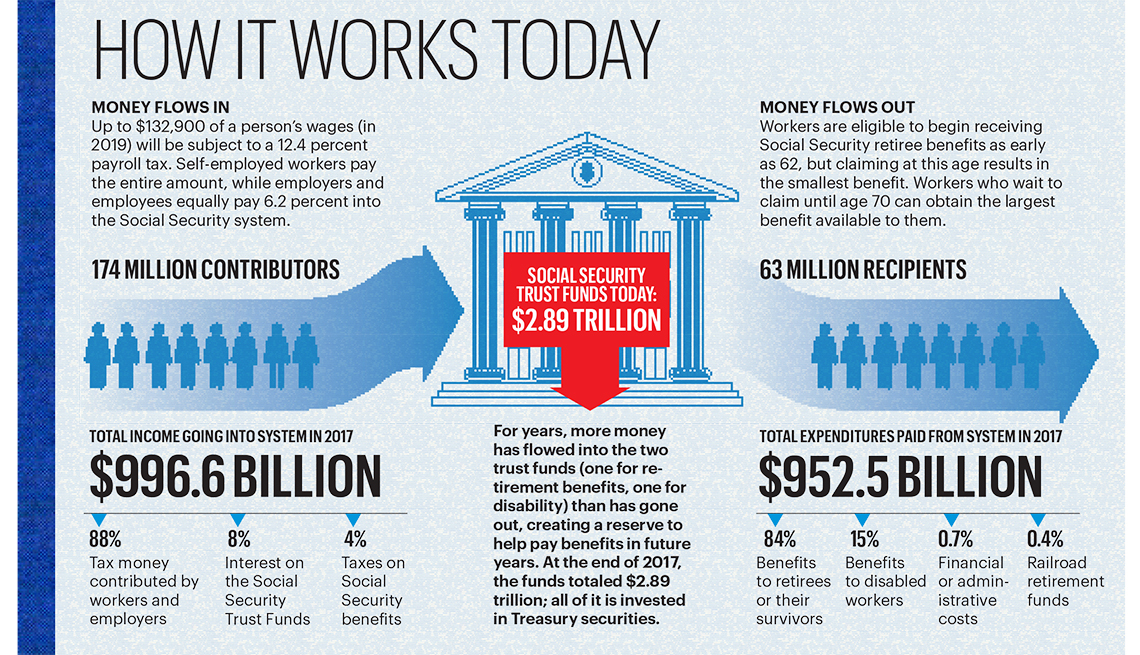
- FICA Taxes: This combined tax rate is 15.3% of your gross earnings. However, as an employee, you’re only directly responsible for half of this amount, or 7.65%. This 7.65% is split between Social Security (6.2%) and Medicare (1.45%). Your employer pays the other half.
- OASDI and Medicare: The 6.2% portion goes towards Old-Age, Survivors, and Disability Insurance (OASDI), which funds the main Social Security benefits. The 1.45% portion goes towards Medicare, which provides health insurance for eligible individuals.
- Wage Base Limit: It’s critical to note that there’s an annual wage base limit for Social Security taxes. For example, in 2024, the maximum amount of earnings subject to Social Security tax is $168,600. This means that any earnings above this limit are not subject to the 6.2% Social Security tax. However, there is no wage base limit for the Medicare tax; all earned income is subject to the 1.45% Medicare tax.
These deductions are handled automatically by your employer, who is responsible for withholding the correct amount from your pay and remitting it to the IRS.
Employer Responsibilities: Matching Contributions and Reporting
Employers play a dual role in Social Security contributions. Not only do they withhold the employee’s portion of FICA taxes, but they also contribute an equal matching amount from their own funds. This means that for every dollar an employee contributes to Social Security and Medicare, the employer contributes another dollar.
- Matching Contributions: Employers pay 6.2% for Social Security and 1.45% for Medicare, mirroring the employee’s share. This effectively doubles the total contribution rate to 12.4% for Social Security (up to the wage base limit) and 2.9% for Medicare, for a total of 15.3% on an employee’s wages.
- Reporting: Employers are legally obligated to accurately report employee wages and the FICA taxes withheld and paid on their behalf to the IRS. This reporting is crucial because it’s how the Social Security Administration (SSA) keeps track of your earnings record, which eventually determines your eligibility and benefit amounts. Incorrect reporting can lead to discrepancies in your earnings record, potentially impacting your future benefits.
Self-Employed Contributions: SECA Tax Essentials
For the self-employed, the responsibility of paying FICA taxes shifts entirely to the individual. Instead of FICA, self-employed individuals pay the Self-Employment Contributions Act (SECA) tax.
- How to Calculate: As a self-employed individual, you are essentially both the employee and the employer. Therefore, you are responsible for paying the full 15.3% (12.4% for Social Security and 2.9% for Medicare) on your net earnings from self-employment. This is calculated on 92.35% of your net earnings from self-employment.
- Quarterly Payments: Since there’s no employer to withhold taxes, self-employed individuals must pay their SECA taxes, along with income taxes, through estimated tax payments made quarterly to the IRS. Failure to do so can result in penalties.
- Deductions: A significant advantage for the self-employed is that they can deduct one-half of their self-employment tax from their gross income when calculating their adjusted gross income (AGI). This deduction helps to offset the burden of paying both halves of the FICA tax.
What If You Have Multiple Jobs or Gaps?
Life isn’t always linear. Many individuals hold multiple jobs concurrently, or experience periods of unemployment or reduced work.
- Multiple Jobs: If you work for more than one employer and your combined earnings exceed the Social Security wage base limit, you might accidentally overpay your Social Security taxes. Each employer will withhold Social Security taxes up to the limit, unaware of your earnings from other employers. The good news is that any overpayment is usually credited back to you when you file your annual income tax return.
- Gaps in Employment: Periods of unemployment or underemployment mean fewer or no contributions to Social Security. While this doesn’t disqualify you from benefits, it can impact the number of “work credits” you accumulate and potentially lower your average indexed monthly earnings (AIME), which is used to calculate your benefit amount. The SSA requires a certain number of work credits to qualify for benefits, typically 40 credits (10 years of work) for retirement.
The Benefits of Your Contributions: What Social Security Provides
Your consistent contributions to Social Security are not merely taxes; they are investments in a vital social insurance program that offers significant protections and benefits across your lifetime and for your loved ones. Understanding these benefits reinforces the importance of your payments.
Retirement Benefits: Planning for Your Golden Years
The most widely recognized benefit of Social Security is retirement income. These benefits are designed to replace a portion of your pre-retirement earnings, providing a steady income stream in your later years.

- Eligibility (Work Credits): To qualify for retirement benefits, you need to accumulate “work credits.” You can earn up to four credits each year. In 2024, one credit is earned for every $1,730 of earnings, and you need 40 credits (equivalent to 10 years of work) to be fully insured for retirement benefits.
- Full Retirement Age (FRA): Your full retirement age (FRA) is the age at which you are entitled to 100% of your primary insurance amount (PIA). This age varies depending on your birth year, ranging from 66 to 67.
- Early vs. Delayed Claiming: You can start receiving retirement benefits as early as age 62, but your monthly benefit will be permanently reduced. Conversely, if you delay claiming benefits beyond your FRA (up to age 70), you’ll receive delayed retirement credits, resulting in a higher monthly benefit for the rest of your life. Strategic planning around claiming age can significantly impact your total lifetime benefits.
Disability Benefits: A Safety Net for Unexpected Challenges
Life is unpredictable. Should you become unable to work due to a severe medical condition, Social Security Disability Insurance (SSDI) can provide crucial financial support.
- Eligibility: To qualify for SSDI, you must have worked long enough and recently enough under Social Security to have accumulated sufficient work credits. The specific number of credits required depends on your age at the time your disability began. Your medical condition must also meet the SSA’s strict definition of disability, meaning it must prevent you from doing any substantial gainful activity and be expected to last for at least a year or result in death.
- Support: These benefits provide a critical income stream when you are unable to earn a living, offering financial stability during a challenging period.
Survivor Benefits: Protecting Your Loved Ones
In the tragic event of your death, Social Security provides survivor benefits to eligible family members, offering a vital financial cushion during a difficult time.
- Eligible Family Members: This can include your spouse, children (under 18 or disabled), and even dependent parents. The specific criteria for eligibility vary based on the relationship and other factors.
- Financial Support: These benefits are particularly important for families with young children or a surviving spouse who may have lost their primary source of income. They help ensure that dependents can maintain some level of financial stability.
Medicare: Healthcare Support in Retirement
While technically separate from the direct cash benefits of Social Security, your FICA contributions also fund Medicare, the federal health insurance program for people age 65 or older, certain younger people with disabilities, and people with End-Stage Renal Disease.
- Part A (Hospital Insurance): Most people don’t pay a monthly premium for Medicare Part A if they or their spouse paid Medicare taxes through work for a specified period. These contributions ensure you have access to inpatient hospital care, skilled nursing facility care, hospice care, and some home health care.
- Seamless Transition: The payroll deductions you make throughout your working life ensure that you’re eligible for this crucial healthcare coverage when you need it most, particularly in retirement.
Monitoring Your Social Security Record and Planning for the Future
Understanding how you pay into Social Security is only part of the equation. Equally important is actively monitoring your contributions and integrating Social Security into your broader financial plan.
Checking Your Earnings Record: The Importance of My Social Security Account
Errors can happen, and an accurate earnings record is paramount for ensuring you receive the correct benefits.
- Online Account: The most effective way to monitor your contributions is by creating a “My Social Security” account on the SSA’s official website. This secure online portal allows you to access your personal Social Security statement, review your earnings history, and get estimates of your future benefits.
- Verification: Regularly checking your earnings record helps you verify that your employers are correctly reporting your wages and that all your contributions are being credited to your account. If you find any discrepancies, it’s crucial to contact the SSA promptly to correct them.
Understanding Your Statement: Estimated Benefits and Gaps
Your Social Security statement is a powerful financial planning tool. It provides personalized estimates of the benefits you could receive at various ages (e.g., age 62, full retirement age, and age 70), as well as disability and survivor benefits.
- Benefit Estimates: These estimates are based on your reported earnings history and provide a realistic projection of your future income from Social Security.
- Identifying Gaps: The statement can also highlight periods where you had no reported earnings, which might indicate gaps in employment or unreported income. Understanding these gaps allows you to adjust your financial planning accordingly.
Strategic Financial Planning: Integrating Social Security with Other Investments
While Social Security provides a vital foundation, it’s generally not designed to be your sole source of retirement income. It’s a component of a multi-faceted financial plan.
- Diversification: Integrating your expected Social Security benefits with other retirement savings vehicles, such as 401(k)s, IRAs, and personal investments, is crucial for a comfortable retirement.
- Other Retirement Accounts: Understanding how much Social Security will provide allows you to calculate how much more you need to save through these other accounts to meet your financial goals.
- Consulting a Financial Advisor: A professional financial advisor can help you develop a holistic retirement plan that effectively incorporates your Social Security benefits, optimizes your claiming strategy, and maximizes your overall financial security.
Common Questions and Misconceptions About Social Security
Despite its ubiquitous nature, Social Security is often misunderstood. Addressing common questions and misconceptions is vital for public confidence and accurate planning.
Is Social Security Running Out of Money?
This is a frequent concern. While the Social Security system faces long-term financial challenges, often driven by demographic shifts (more retirees, fewer workers), it is not “running out of money.” Current projections indicate that the trust funds have sufficient reserves to pay 100% of promised benefits for several more years. After that, without congressional action, it might only be able to pay about 80% of scheduled benefits. This does not mean it will disappear entirely, but rather that adjustments may be needed to ensure its long-term solvency. These adjustments could include modest tax increases, changes to benefit formulas, or adjustments to the full retirement age.
Can I Opt Out of Social Security?
For the vast majority of workers, participation in Social Security is mandatory. There are very limited exceptions, such as members of certain religious groups who have a conscientious objection to public insurance, or some non-resident aliens. Additionally, some state and local government employees may be covered by alternative retirement plans instead of Social Security. However, for most private-sector employees and self-employed individuals, contributing to Social Security is a legal requirement.
What if I Didn’t Work Enough Years?
To qualify for most Social Security benefits, you generally need to have accumulated a certain number of work credits, typically 40 credits for retirement benefits (equivalent to 10 years of work). If you haven’t met this threshold, you may not be eligible for benefits based on your own work record. However, you might still be eligible for spousal or survivor benefits if your spouse or former spouse worked enough to qualify. It’s always best to check your earnings record and contact the SSA directly for personalized information.
Understanding how you pay into Social Security is more than just navigating tax regulations; it’s about recognizing your contribution to a collective safety net and appreciating the profound benefits it offers for individuals and families. From the automatic payroll deductions for employees to the quarterly estimated payments for the self-employed, every contribution plays a crucial role. By actively monitoring your earnings, understanding your statement, and integrating Social Security into your broader financial plan, you empower yourself to build a more secure and predictable financial future. Social Security, while complex, remains an indispensable pillar of financial stability, deserving of careful attention and proactive planning.
aViewFromTheCave is a participant in the Amazon Services LLC Associates Program, an affiliate advertising program designed to provide a means for sites to earn advertising fees by advertising and linking to Amazon.com. Amazon, the Amazon logo, AmazonSupply, and the AmazonSupply logo are trademarks of Amazon.com, Inc. or its affiliates. As an Amazon Associate we earn affiliate commissions from qualifying purchases.