
Creating a monthly budget is often mischaracterized as an exercise in restriction—a financial diet designed to strip away the joys of life. In reality, a well-constructed budget is the ultimate tool for personal freedom. It is a strategic roadmap that transforms your relationship with money from one of passive observation to active management. By defining where your capital goes before the month begins, you transition from reactive spending to intentional wealth building. Mastering the monthly budget is the foundational step toward achieving significant financial milestones, whether that involves liquidating debt, purchasing a home, or securing an early retirement.
Building Your Financial Blueprint: Tracking Income and Expenses
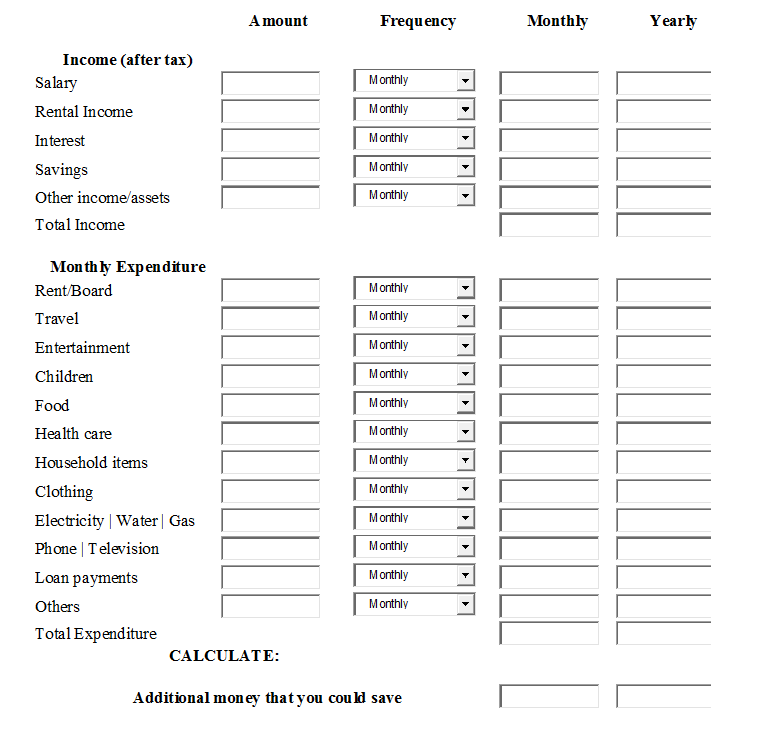
Before you can direct your money, you must understand its current flow. The first phase of budgeting is an audit of your financial reality. This involves a cold, hard look at two primary streams: what is coming in and what is going out. Without accurate data, any budget you create will be based on fiction, leading to inevitable failure when real-world costs arise.
Identifying Your True Net Income
Most individuals focus on their gross salary, but for budgeting purposes, that number is irrelevant. Your budget must be built on your “take-home pay” or net income. This is the amount that actually hits your bank account after taxes, health insurance premiums, 401(k) contributions, and other payroll deductions.
If you are a freelancer or a gig economy worker, this step requires more nuance. You should calculate an average of your last six to twelve months of income to establish a conservative baseline. When income is volatile, it is safer to budget based on your lowest-earning month and treat any surplus as a “bonus” for savings or debt reduction.
Categorizing Your Outflows: Fixed vs. Variable
Once your income is established, you must track your expenses. To do this effectively, categorize your spending into two distinct groups: fixed and variable.
Fixed Expenses are the non-negotiables that remain relatively constant each month. These include rent or mortgage payments, car notes, insurance premiums, and subscription services like internet or gym memberships. Because these are predictable, they are the easiest to account for in a budget.
Variable Expenses are the fluctuating costs that often derail financial plans. This category includes groceries, utility bills, dining out, entertainment, and fuel. Tracking these requires a retrospective look at bank statements from the last 90 days. This historical data reveals patterns and “leakage”—small, unnoticed expenditures that aggregate into significant monthly sums. Identifying these leaks is the first step toward reclaiming your purchasing power.
The Importance of Sinking Funds
A common mistake in monthly budgeting is failing to account for non-monthly expenses. Annual car registrations, holiday shopping, or semi-annual insurance premiums often arrive as “surprises” that break the budget. To combat this, implement “sinking funds.” Calculate the annual cost of these items, divide by twelve, and treat that amount as a monthly fixed expense. By setting this money aside incrementally, you ensure that “unexpected” costs never compromise your financial stability.
Selecting a Budgeting Methodology That Works for Your Lifestyle
There is no one-size-fits-all approach to financial management. The best budget is the one you can consistently follow. Depending on your personality, your goals, and your level of financial discipline, you might choose one of several established frameworks.
The 50/30/20 Rule: The Balanced Approach
For those who find granular tracking overwhelming, the 50/30/20 rule offers a high-level framework for balanced living. In this model, your net income is divided into three buckets:
- 50% for Needs: This covers your essential living expenses, such as housing, utilities, basic groceries, and minimum debt payments.
- 30% for Wants: This is your discretionary spending—dining out, hobbies, travel, and non-essential shopping.
- 20% for Financial Goals: This portion is strictly reserved for debt overpayments, emergency fund contributions, and long-term investments.
The beauty of this system is its simplicity. It ensures that you are prioritizing your future (the 20%) while still allowing for a quality of life that prevents burnout.
Zero-Based Budgeting: Giving Every Dollar a Job
Popularized by financial experts like Dave Ramsey, zero-based budgeting is a method where your income minus your expenses equals exactly zero. This does not mean you have zero dollars in your bank account; rather, it means every single dollar is assigned a specific task.

If you earn $5,000 a month, you must allocate all $5,000 across your categories, including savings and investments. If you have $200 left over after covering your bills and lifestyle, that $200 is intentionally moved into a “debt repayment” or “vacation fund” category. This level of intentionality eliminates “lazy money” and forces you to make conscious decisions about every cent you earn.
The Envelope System: Controlling Impulse Spending
If overspending in specific categories like “entertainment” or “dining out” is your primary challenge, the envelope system provides a physical barrier to impulse. You withdraw a set amount of cash for these variable categories and place it in marked envelopes. Once the cash in the “Dining Out” envelope is gone, you cannot spend any more in that category until the following month. For the digitally inclined, many apps now offer “digital envelopes” or “vaults” that mimic this behavior, providing a psychological nudge to stop spending when a specific limit is reached.
Strategic Asset Allocation and Debt Management
A budget is not merely a tool to track spending; it is an engine for wealth creation. Once you have established your framework, you must strategically allocate your surplus to maximize your net worth. This involves a hierarchy of financial priorities.
Prioritizing the Emergency Fund
Before aggressively investing or paying down low-interest debt, you must build a liquidity cushion. Financial advisors typically recommend an emergency fund of three to six months of essential living expenses. This fund acts as your personal insurance policy against job loss, medical emergencies, or major home repairs. Having this cash in a high-yield savings account prevents you from having to take on high-interest credit card debt when life becomes unpredictable.
Tackling Debt: Snowball vs. Avalanche
For many, a monthly budget is the primary weapon against debt. There are two main strategies for allocating extra funds toward liabilities:
- The Debt Snowball: You pay off your smallest debts first, regardless of interest rates. This builds psychological momentum through quick wins.
- The Debt Avalanche: You focus all extra payments on the debt with the highest interest rate. This is the mathematically superior method, as it minimizes the total interest paid over time.
Your budget should clearly define which strategy you are using and exactly how much “extra” capital is being funneled toward these debts each month.
Automating Your Wealth Growth
The most successful budgeters remove human error from the equation. Automation is the “secret sauce” of financial mastery. Set up automatic transfers so that on the day you receive your paycheck, a portion is immediately moved to your 401(k), IRA, or brokerage account. By “paying yourself first,” you ensure that your long-term wealth is prioritized over short-term consumption. If you wait until the end of the month to save what is “left over,” you will likely find that nothing remains.
Monitoring, Adjusting, and the Psychology of Consistency
A budget is not a static document; it is a living entity that must evolve as your life changes. The final piece of the budgeting puzzle is the maintenance required to keep the system functioning.
The Monthly Review: The “State of the Union”
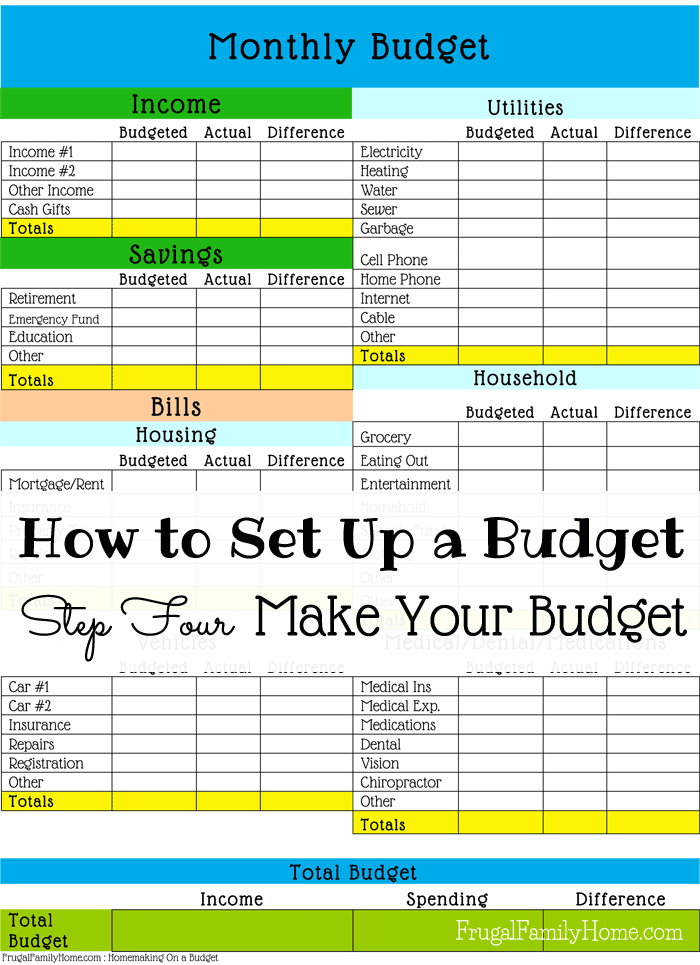
At the end of each month, dedicate 30 minutes to a “budget review.” Compare your actual spending against your planned allocations. Did you overspend on groceries? Was the utility bill higher than expected? Use this data to calibrate the next month’s budget. This iterative process is where the real learning happens. You begin to recognize the difference between “aspirational budgeting” (what you wish you spent) and “realistic budgeting” (what you actually spend).
Managing “Budget Burnout”
Financial discipline is a marathon, not a sprint. If your budget is too restrictive, you will eventually rebel against it, often through a period of “revenge spending.” To avoid this, ensure your budget includes a “fun money” category—a small, guilt-free allowance that you can spend on anything you wish without justification. This small concession to your current happiness makes the long-term discipline sustainable.
The Role of Financial Tools
While a simple spreadsheet or a legal pad can suffice, modern financial tools can significantly reduce the friction of budgeting. Aggregation platforms that link to your bank accounts can categorize transactions in real-time, providing a dashboard view of your financial health. However, be wary of becoming a passive observer. The value of a tool lies in the action it prompts. Whether you use a high-tech app or a manual ledger, the goal remains the same: complete awareness and total control over your capital.
In conclusion, making a monthly budget is an act of taking ownership of your future. It requires honesty, discipline, and a willingness to prioritize long-term security over immediate gratification. By accurately tracking your cash flow, choosing a methodology that suits your temperament, and strategically allocating your resources, you transform your income into a powerful engine for building the life you desire. Financial freedom is not a result of how much you earn, but how well you manage what you keep.
aViewFromTheCave is a participant in the Amazon Services LLC Associates Program, an affiliate advertising program designed to provide a means for sites to earn advertising fees by advertising and linking to Amazon.com. Amazon, the Amazon logo, AmazonSupply, and the AmazonSupply logo are trademarks of Amazon.com, Inc. or its affiliates. As an Amazon Associate we earn affiliate commissions from qualifying purchases.