
In the ever-evolving digital landscape, having a reliable and up-to-date operating system is paramount. Whether you’re building a new PC, troubleshooting a stubborn system, or simply looking for a fresh start, installing Windows 10 from a USB drive is an efficient and widely adopted method. This guide will walk you through the entire process, from preparing your bootable USB to the final setup of your new Windows 10 environment. We’ll cover the essential tools, steps, and considerations to ensure a smooth and successful installation, empowering you to take control of your computing experience.
The ability to install Windows from a USB drive offers significant advantages over traditional optical media. USB drives are faster, more durable, and readily available. This method is especially crucial for modern laptops that often lack DVD drives. Furthermore, a bootable USB allows for clean installations, which can resolve performance issues, remove malware, and provide a stable foundation for your digital life.
Preparing Your Windows 10 Installation Media
Before you can embark on the journey of installing Windows 10, the first crucial step is to create a bootable USB drive containing the Windows 10 installation files. This process involves downloading the official Windows 10 Media Creation Tool from Microsoft and using it to prepare your USB.
Downloading the Windows 10 Media Creation Tool
The most straightforward and recommended way to obtain the necessary installation files is by using Microsoft’s official Media Creation Tool. This free utility is designed to download the latest version of Windows 10 and create a bootable USB drive or an ISO file for burning to a DVD.
- Navigate to the Official Microsoft Download Page: Open your web browser and go to the official Microsoft Windows 10 download page. A quick search for “Download Windows 10” will lead you to the correct page.
- Download the Tool: Look for the “Download tool now” button. Clicking this will download the Media Creation Tool executable file to your computer.
- Run the Tool: Once the download is complete, locate the downloaded file (usually named
MediaCreationToolxxxx.exe, wherexxxxrepresents the version number) and double-click it to run the program. You may need administrator privileges to proceed. - Accept License Terms: The tool will display the Microsoft license terms. Read them carefully and click “Accept” to continue.
- Choose “Create installation media (USB flash drive, DVD, or ISO file) for another PC”: On the “What do you want to do?” screen, select this option and click “Next.” This is the crucial step that allows you to create the bootable media.
Creating the Bootable USB Drive
With the Media Creation Tool running and the correct option selected, you’re ready to prepare your USB drive.
- Select Language, Edition, and Architecture: The tool will typically suggest the recommended options for your current PC. However, if you’re creating media for a different computer, you’ll need to uncheck the “Use the recommended options for this PC” box and select the appropriate Language, Edition (e.g., Windows 10 Home, Windows 10 Pro), and Architecture (32-bit or 64-bit). For most modern computers, 64-bit is the standard.
- Choose “USB flash drive”: On the “Choose which media to use” screen, select “USB flash drive” and click “Next.”
- Select Your USB Drive: The tool will list all connected USB drives. It is critically important to select the correct USB drive. Ensure you have a USB flash drive with at least 8GB of storage space. All data on the selected USB drive will be erased during this process, so back up any important files beforehand.
- Download and Creation Process: Click “Next.” The Media Creation Tool will now begin downloading the necessary Windows 10 files and then format your USB drive to make it bootable. This process can take a considerable amount of time, depending on your internet speed and the speed of your USB drive.
- Completion: Once the process is finished, you will see a confirmation message stating that your USB flash drive is ready. Click “Finish.” You now have a bootable Windows 10 installation USB drive.
If you prefer, you can also choose to create an ISO file instead of a USB flash drive. This ISO file can then be used with other tools to create a bootable USB later or to burn to a DVD.
Booting From Your USB Drive and Starting the Installation
With your bootable USB drive prepared, the next phase involves configuring your computer to boot from it and initiating the Windows 10 installation process. This often requires adjusting your computer’s BIOS or UEFI settings.
Accessing Your Computer’s BIOS/UEFI Settings
The BIOS (Basic Input/Output System) or UEFI (Unified Extensible Firmware Interface) is firmware that initializes your hardware during the boot process. You need to access these settings to change the boot order.
- Restart Your Computer: Insert the bootable Windows 10 USB drive into a USB port on your computer.
- Press the BIOS/UEFI Key: As your computer restarts, you’ll see a message on the screen indicating which key to press to enter the BIOS/UEFI setup. Common keys include
Del,F2,F10,F12, orEsc. This key is often displayed briefly during the initial boot sequence. If you miss it, restart your computer again and watch closely. - Navigate the BIOS/UEFI Menu: Once you’re in the BIOS/UEFI settings, use your keyboard’s arrow keys to navigate. The interface can vary significantly between manufacturers, but you’re generally looking for a section related to “Boot,” “Boot Order,” or “Boot Priority.”
Configuring the Boot Order
Within the BIOS/UEFI settings, you need to set your USB drive as the primary boot device.
- Locate Boot Options: Find the “Boot Order” or “Boot Priority” setting.
- Set USB as First Boot Device: You’ll typically see a list of bootable devices. Use the on-screen instructions (usually the
+and-keys orPage Up/Page Downkeys) to move your USB drive (it might be listed by its brand name, as “USB HDD,” “Removable Device,” or “UEFI USB Device”) to the top of the list. - Save and Exit: Once you’ve set the USB drive as the first boot device, navigate to the “Save and Exit” option. This is often a dedicated menu or can be accessed by pressing a specific function key (e.g.,
F10). Confirm that you want to save the changes.
Your computer will now restart. If you’ve configured the boot order correctly, it should boot from the Windows 10 USB drive. You might see a prompt like “Press any key to boot from USB…” – if so, press any key on your keyboard to proceed.
Initiating the Windows 10 Setup

Once the computer successfully boots from the USB drive, the Windows 10 setup wizard will appear.
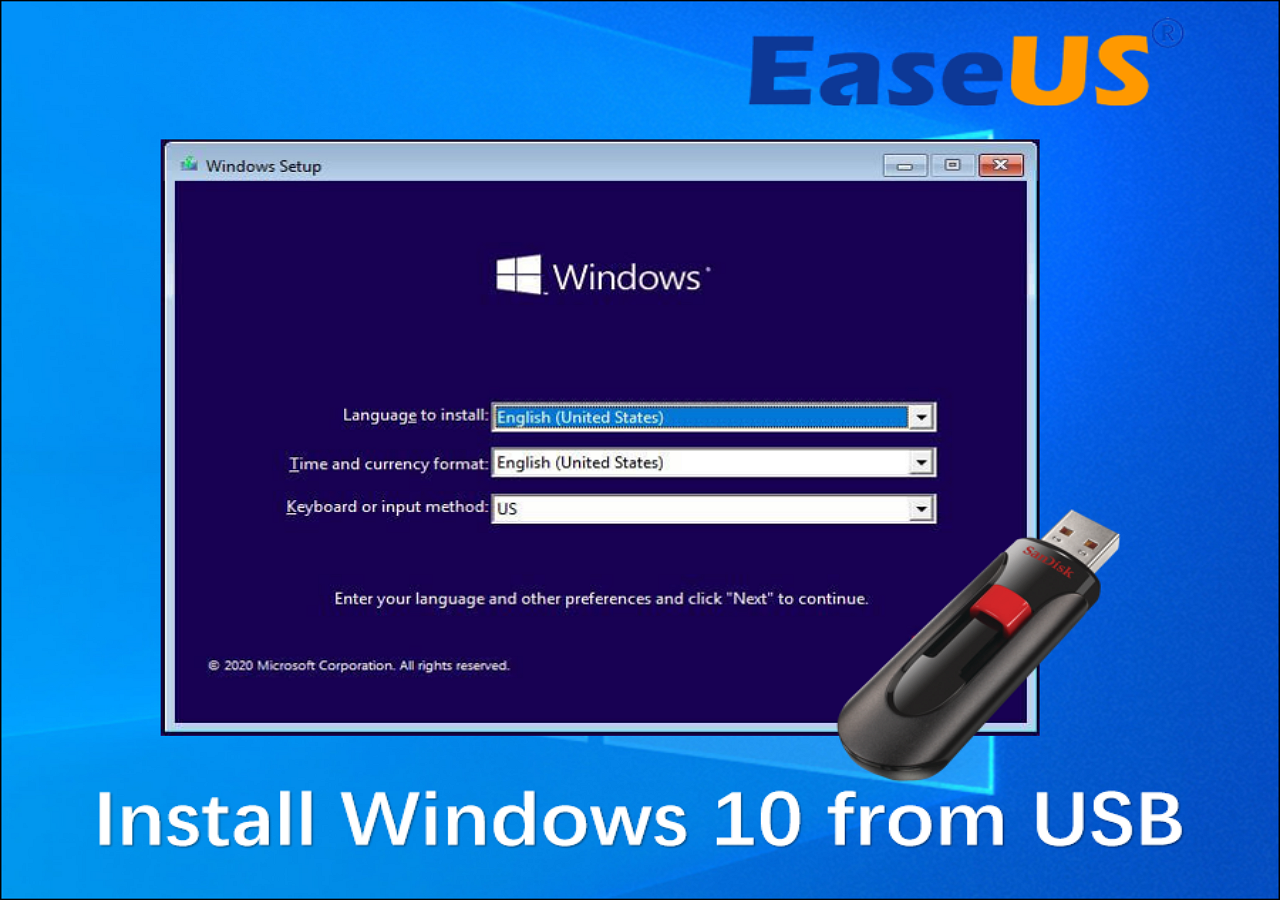
- Windows Setup Screen: The first screen you’ll see is the “Windows Setup” window. Here, you can select your language, time and currency format, and keyboard layout. Choose the options that best suit your needs and click “Next.”
- Install Now: Click the prominent “Install now” button.
- Product Key (Optional): You’ll be prompted to enter your Windows product key. If you’re reinstalling Windows on a computer that was previously activated, you can often skip this step by clicking “I don’t have a product key.” Windows will automatically activate later once it detects your hardware configuration.
- Select Operating System Edition: If you skipped the product key, you’ll be asked to select the edition of Windows 10 you want to install (e.g., Windows 10 Home, Windows 10 Pro). Ensure this matches the edition you previously had activated.
- Accept License Terms: Again, review and accept the Microsoft license terms to proceed.
Installing Windows 10: Partitioning and Customization
With the initial setup steps completed, you’re now at the core of the installation process: choosing where to install Windows. This involves managing disk partitions, which is a critical step that requires careful consideration.
Choosing the Installation Type: Upgrade vs. Custom
At this stage, you’ll be presented with two main options:
- Upgrade: This option allows you to install Windows 10 while keeping your files, settings, and applications. It’s a good choice if you’re upgrading from a previous version of Windows and want to maintain your current setup. However, it’s not always recommended for resolving significant system issues.
- Custom: Install Windows only (advanced): This is the option you’ll want to choose for a clean installation. A clean installation formats the drive and installs Windows from scratch, ensuring a fresh, uncorrupted system. This is the recommended method for troubleshooting performance problems, removing malware, or starting with a completely clean slate.
Managing Disk Partitions for a Clean Installation
If you select “Custom,” you’ll be presented with a screen showing your existing disk drives and partitions. This is where you can manage how Windows will be installed.
- Identify Your Target Drive: Carefully examine the list of drives and partitions. If you’re installing Windows on a new, unformatted drive, it will likely appear as “Unallocated Space.” If you’re reinstalling on an existing drive, you’ll see partitions like “Primary,” “System Reserved,” “Recovery,” etc.
- Delete Existing Partitions (for a clean install): To ensure a truly clean installation, it’s generally best to delete all existing partitions on the drive where you intend to install Windows. Select each partition one by one and click the “Delete” option. Be absolutely sure you are deleting partitions from the correct drive, as this action is irreversible and will erase all data on those partitions.
- Create New Partitions: After deleting, you will have “Unallocated Space” on your drive. Select this unallocated space and click “New” to create a new partition. Windows setup will automatically suggest a size. You can choose to create multiple partitions if desired (e.g., a small system partition and a larger partition for your files), or simply let Windows create a single large partition for the operating system and your data. Windows will also automatically create necessary system partitions (like the System Reserved partition).
- Format the Partition: Select the newly created primary partition and click “Format.” This prepares the partition to receive the Windows installation files.
- Select the Primary Partition: With the partition formatted, select it and click “Next” to begin the installation.
The Installation Process
Once you’ve selected the partition and clicked “Next,” Windows will begin copying files and installing itself. This process involves several stages:
- Getting files ready for installation: Windows copies the installation files from your USB drive to your hard drive.
- Installing features and updates: The installer applies the core Windows features and may download necessary updates.
- Finishing up: The system will restart several times during this phase.
Important Note: During the installation process, your computer will restart. Crucially, you may need to remove the USB drive or adjust your BIOS/UEFI boot order again after the initial file copying to prevent the computer from booting back into the USB installer and restarting the setup. If the computer boots back into the USB, simply restart it again, and it should continue from the hard drive installation.
Initial Windows 10 Setup and Configuration
After the core installation is complete and your computer has restarted a few times, you’ll be guided through the initial setup of your Windows 10 environment. This is where you personalize your experience and connect to your network.
Personalizing Your Experience
The setup wizard will guide you through several personalization options:
- Region and Keyboard Layout: Confirm your region and keyboard layout. You may be prompted to add a second keyboard layout if desired.
- Connect to a Network: You’ll be asked to connect to a Wi-Fi network or a wired Ethernet connection. This is important for downloading updates and signing into your Microsoft account.
- Account Setup: You have two primary options:
- Sign in with a Microsoft Account: This is the recommended option for most users. It allows you to sync settings across devices, access the Microsoft Store, and use cloud-based services like OneDrive. You can sign in with an existing Microsoft account or create a new one.
- Use an offline account (Local Account): If you prefer not to use a Microsoft account, you can choose to create a local account. This limits some syncing capabilities but gives you a traditional user account. You’ll be prompted to create a username and password.
- Cortana and Privacy Settings: You’ll be asked whether you want to enable Cortana (Microsoft’s virtual assistant) and configure your privacy settings. It’s recommended to review these settings carefully and choose options that align with your comfort level regarding data collection and personalized experiences. You can choose to allow or deny location services, diagnostic data, tailored experiences, and advertising.
- Final Touches: Windows will then apply your settings, and you’ll see a “Getting ready for you” or similar screen. This may take a few minutes.

Post-Installation Essentials
Once you’ve reached the Windows 10 desktop, your installation is complete, but there are a few essential steps to ensure your system is fully functional and secure:
- Check for Windows Updates: The first and most important step is to check for and install all available Windows updates. Go to
Settings > Update & Security > Windows Updateand click “Check for updates.” Install all available updates, as these often include critical security patches and driver updates. Your computer may need to restart multiple times. - Install Device Drivers: While Windows Update often installs basic drivers, it’s a good practice to manually install drivers for your specific hardware, especially for your graphics card, sound card, and motherboard chipset. You can usually find these drivers on the manufacturer’s website.
- Install Your Essential Software: Now you can begin installing your preferred applications, such as web browsers, office suites, media players, and any other software you use regularly.
- Activate Windows (if necessary): If you skipped the product key during installation, ensure Windows is activated. Go to
Settings > Update & Security > Activationto check its status. If it’s not activated, you may need to enter your product key or troubleshoot the activation process. - Run a Full System Scan with Antivirus Software: Even with a clean install, it’s wise to run a full system scan with your preferred antivirus software to ensure your system is completely free of any potential threats.
By following these comprehensive steps, you can successfully install Windows 10 from a USB drive, ensuring a clean, stable, and up-to-date operating system for your computing needs. This process, while detailed, is a rewarding way to gain full control over your PC’s foundation.
aViewFromTheCave is a participant in the Amazon Services LLC Associates Program, an affiliate advertising program designed to provide a means for sites to earn advertising fees by advertising and linking to Amazon.com. Amazon, the Amazon logo, AmazonSupply, and the AmazonSupply logo are trademarks of Amazon.com, Inc. or its affiliates. As an Amazon Associate we earn affiliate commissions from qualifying purchases.