
In the intricate world of finance, from managing personal budgets to steering large corporate investments, percentages serve as an indispensable tool. They offer a universal language to express proportions, changes, and relationships, providing a clear lens through which to view financial health, growth, and risk. Whether you’re trying to understand the discount on a purchase, the interest rate on a loan, the return on an investment, or your business’s profit margin, grasping how to calculate and interpret percentages is not just useful—it’s absolutely essential. This guide will demystify percentage calculations, illustrating their critical applications across various financial scenarios, and empowering you with the knowledge to make more informed money decisions.

The Fundamental Formulas: Unlocking Percentage Calculations
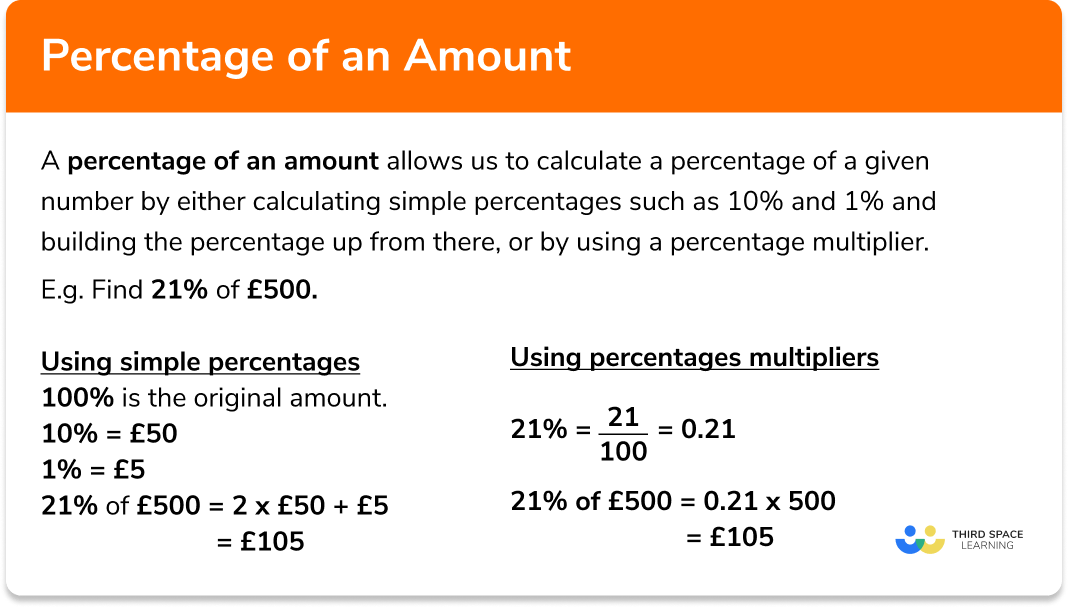
At its core, a percentage is a way to express a number as a fraction of 100. The word “percent” literally means “per hundred.” Understanding the basic formulas is the first step toward mastering financial analysis.
Basic Percentage Calculation: Part of a Whole
The most common application of percentages involves determining what proportion a “part” represents of a “whole.” This is fundamental for understanding everything from budget allocations to market share.
The formula is straightforward:
$$ text{Percentage} = left( frac{text{Part}}{text{Whole}} right) times 100 $$
Let’s look at a few financial examples:
-
Calculating a Discount: Imagine an item is priced at $200, and it’s on sale for $150. You want to know the percentage discount.
- Discount amount (Part) = $200 – $150 = $50
- Original Price (Whole) = $200
- Discount Percentage = ($50 / $200) * 100 = 0.25 * 100 = 25%
Knowing this helps you compare deals or understand savings.
-
Determining Budget Allocation: If your monthly income is $4,000, and you spend $1,200 on rent, what percentage of your income goes to housing?
- Rent (Part) = $1,200
- Income (Whole) = $4,000
- Housing Percentage = ($1,200 / $4,000) * 100 = 0.30 * 100 = 30%
This helps in budgeting, ensuring your expenses align with recommended financial guidelines, such as the 50/30/20 rule.
Percentage Increase/Decrease: Measuring Financial Change
Beyond static proportions, percentages are invaluable for measuring change over time. This is critical for assessing investment growth, inflation, or the depreciation of assets.
The formula for percentage change is:
$$ text{Percentage Change} = left( frac{text{New Value} – text{Old Value}}{text{Old Value}} right) times 100 $$
- If the result is positive, it’s a percentage increase.
- If the result is negative, it’s a percentage decrease.
Consider these financial scenarios:
-
Investment Growth: You invested $10,000, and a year later, its value grew to $11,500. What was the percentage increase?
- New Value = $11,500
- Old Value = $10,000
- Percentage Increase = (($11,500 – $10,000) / $10,000) * 100 = ($1,500 / $10,000) * 100 = 0.15 * 100 = 15%
This provides your annual return on investment (ROI), a key metric for evaluating investment performance.
-
Price Reduction: A stock you own was trading at $50 per share and dropped to $45 per share. What was the percentage decrease?
- New Value = $45
- Old Value = $50
- Percentage Decrease = (($45 – $50) / $50) * 100 = (-$5 / $50) * 100 = -0.10 * 100 = -10%
Understanding these changes is crucial for making timely buying or selling decisions.
Navigating Personal Finance with Percentages
For individuals, percentages are the compass that guides them through the complexities of personal finance, from day-to-day spending to long-term wealth building.
Budgeting and Expense Analysis
Effective budgeting relies heavily on percentages to categorize spending and ensure financial stability.
- The 50/30/20 Rule: A popular budgeting guideline suggests allocating 50% of your after-tax income to Needs (housing, utilities, groceries), 30% to Wants (entertainment, dining out), and 20% to Savings & Debt Repayment. By calculating the percentage of your income that goes into each category, you can quickly assess if your spending aligns with this rule or if adjustments are needed. For instance, if your rent alone consumes 40% of your income, you might be over-budgeted on housing, potentially impacting your ability to save or cover other needs.
- Identifying Overspending: Tracking your expenses and converting them into percentages of your total spending or income can highlight areas where you might be overspending. If 15% of your income goes to dining out, but your savings rate is only 5%, you can see the direct impact and identify where to cut back.
Debt Management
Interest rates, crucial to understanding the cost of borrowing, are expressed as percentages. Managing debt effectively requires a firm grasp of these calculations.
- Understanding Interest Rates (APR vs. APY):
- Annual Percentage Rate (APR): This is the annual rate charged for borrowing or earned through an investment. It’s the simple interest rate for a year. For example, a credit card with a 19.99% APR means you pay nearly 20% of your outstanding balance in interest annually, assuming no compounding.
- Annual Percentage Yield (APY): This reflects the actual rate of return earned on an investment or paid on a loan, taking into account the effect of compounding interest. If your savings account has a 0.5% APY, it means your money is growing at that rate after factoring in how often interest is calculated and added to your principal. Understanding the difference is vital, especially for loans or investments where compounding significantly impacts the total amount paid or earned.
- Debt-to-Income Ratio (DTI): Lenders often use your DTI ratio (monthly debt payments / gross monthly income) to assess your ability to manage monthly payments and repay loans. A DTI of 36% or less is generally considered healthy. Calculating this percentage helps you understand your borrowing capacity and financial risk.
Savings and Investments
Percentages are at the heart of evaluating investment performance and planning for future financial goals.
- Savings Rate: This is the percentage of your income you save. A high savings rate (e.g., 15-20% or more) is a powerful indicator of financial discipline and can dramatically accelerate your path to financial independence.
- Compound Interest Growth: The “eighth wonder of the world,” compound interest, relies entirely on percentage calculations. Your investment returns are calculated as a percentage of your initial principal plus any accumulated interest. Over time, this percentage-based growth can lead to significant wealth accumulation. Understanding how even small percentage differences in annual returns can lead to vastly different outcomes over decades is critical for long-term financial planning.
- Portfolio Allocation: Investors often diversify their assets by allocating specific percentages to different asset classes (e.g., 60% stocks, 30% bonds, 10% cash). This percentage-based strategy helps manage risk and optimize returns based on individual financial goals and risk tolerance.
Percentages in Business Finance and Entrepreneurship
For businesses and entrepreneurs, percentages are the language of performance, profitability, and strategic decision-making. They provide critical insights into operational efficiency, market position, and financial viability.
Profitability Metrics
Businesses rely on various percentage-based metrics to gauge their financial health and operational effectiveness.
- Gross Profit Margin: This vital metric calculates the percentage of revenue left after deducting the cost of goods sold (COGS).
$$ text{Gross Profit Margin} = left( frac{text{Gross Profit}}{text{Revenue}} right) times 100 $$
If a company has $1,000,000 in revenue and $400,000 in COGS, its gross profit is $600,000. The Gross Profit Margin is ($600,000 / $1,000,000) * 100 = 60%. This indicates how efficiently a business is producing its goods or services. - Net Profit Margin: This goes a step further, showing the percentage of revenue left after all expenses, including COGS, operating expenses, interest, and taxes, have been deducted.
$$ text{Net Profit Margin} = left( frac{text{Net Profit}}{text{Revenue}} right) times 100 $$
A higher net profit margin signifies greater efficiency in converting revenue into actual profit, reflecting the overall profitability of the business. Comparing these margins over time or against industry benchmarks helps assess business performance and identify areas for improvement.
Sales and Marketing Performance
Percentages are indispensable for measuring the effectiveness of sales and marketing efforts, informing strategy, and optimizing resource allocation.
- Conversion Rates: This is the percentage of website visitors or leads that complete a desired action, such as making a purchase or signing up for a newsletter. If 1,000 people visit your online store and 20 make a purchase, your conversion rate is (20 / 1,000) * 100 = 2%. Optimizing conversion rates is a core marketing objective.
- Customer Acquisition Cost (CAC) as a Percentage of Revenue: Understanding how much it costs to acquire a new customer relative to the revenue they generate is critical. If your average customer generates $500 in revenue, and your CAC is $100, then your CAC is 20% of the revenue. This helps in budgeting marketing spend and ensuring sustainable growth.
- Market Share: Businesses constantly analyze their market share – the percentage of total sales in an industry generated by a particular company. A growing market share percentage often indicates successful strategies and competitive advantage.
Financial Ratios for Business Analysis
Advanced financial analysis frequently employs percentages in the form of ratios to evaluate a company’s liquidity, solvency, efficiency, and profitability.
- Return on Investment (ROI): A fundamental measure, ROI calculates the profitability of an investment as a percentage.
$$ text{ROI} = left( frac{text{Net Profit from Investment}}{text{Cost of Investment}} right) times 100 $$
If a marketing campaign costs $10,000 and generates an additional $30,000 in profit, the ROI is (($30,000 – $10,000) / $10,000) * 100 = 200%. This helps businesses decide where to allocate capital most effectively. - Debt-to-Equity Ratio: This ratio compares a company’s total liabilities to its shareholder equity, indicating what percentage of financing comes from debt versus ownership. A high percentage can signal financial risk.
- Inventory Turnover Ratio: While not a direct percentage, it often translates into insights about the percentage of inventory sold over a period, reflecting operational efficiency.
Common Pitfalls and Best Practices in Percentage Application
While percentages are powerful, misusing or misinterpreting them can lead to flawed financial decisions. Awareness of common pitfalls is crucial.
The Importance of the ‘Whole’: Misinterpreting the Base Value
The “whole” or the base value in a percentage calculation is paramount. Changing the base can drastically alter the meaning of a percentage.
- Example: Percentage Change on a Fluctuating Base: If a stock drops by 50% from $100 to $50, and then increases by 50% from $50, it does not return to $100. A 50% increase on $50 is an increase of $25, bringing the stock to $75. The base for the percentage change shifted. Always be clear about what the percentage is “of.”
- Inflation vs. Real Returns: When discussing investment returns, it’s essential to consider the impact of inflation. A 5% nominal return might only be a 2% real return if inflation was 3%, because the “whole” (purchasing power) has eroded.
Annualized vs. Actual Rates: Understanding the Time Context
Many financial percentages, especially for investments and loans, are expressed as annual rates (APR, APY). However, the actual period of calculation matters.
- Short-term Returns: If an investment gains 2% in one month, simply multiplying by 12 to get a 24% “annualized” return can be misleading if that growth isn’t sustainable for the entire year. Always clarify the time period a percentage refers to.
- Compounding Frequency: APY accounts for compounding, while APR doesn’t. A loan with a 10% APR compounded monthly will result in a higher effective annual cost than one compounded annually. This difference, though subtle, can have significant financial implications.
Avoiding Percentage Point Confusion: Differentiating Between Percentage and Percentage Point Changes
This is a common source of error, particularly in financial news and analysis.
- Percentage vs. Percentage Point: If an interest rate increases from 5% to 6%, it’s a 1 percentage point increase. However, it’s a ((6-5)/5) * 100 = 20% percentage increase. These are not interchangeable.
- Say a company’s profit margin increases from 10% to 12%. This is a 2 percentage point increase. But it’s a 20% increase in the profit margin itself (from 10 to 12).
Being precise in language and calculation is vital to avoid miscommunication and incorrect conclusions.
- Say a company’s profit margin increases from 10% to 12%. This is a 2 percentage point increase. But it’s a 20% increase in the profit margin itself (from 10 to 12).

Conclusion
The ability to calculate and understand percentages is more than just a mathematical skill; it’s a fundamental financial literacy tool. From navigating personal debt and budgeting wisely to assessing investment growth and dissecting business performance, percentages provide the quantitative foundation for almost every financial decision. By mastering the basic formulas, recognizing their diverse applications across personal and business finance, and staying mindful of common pitfalls, you equip yourself with the power to gain greater financial clarity, exert tighter control over your money, and make truly informed choices that pave the way for a more secure and prosperous future. Embrace the power of percentages – they are the key to unlocking a deeper understanding of your financial world.
aViewFromTheCave is a participant in the Amazon Services LLC Associates Program, an affiliate advertising program designed to provide a means for sites to earn advertising fees by advertising and linking to Amazon.com. Amazon, the Amazon logo, AmazonSupply, and the AmazonSupply logo are trademarks of Amazon.com, Inc. or its affiliates. As an Amazon Associate we earn affiliate commissions from qualifying purchases.