
In the modern financial landscape, accuracy is the currency of trust. For small business owners, aspiring entrepreneurs, and financial professionals, bookkeeping is not merely a task of recording numbers—it is the systematic process of tracking the lifeblood of an enterprise. A bookkeeping certificate serves as a professional benchmark, validating that an individual possesses the technical proficiency to manage ledgers, maintain compliance, and provide the data necessary for strategic financial decision-making. Whether you are looking to launch a high-margin side hustle or climb the corporate ladder within a finance department, obtaining a formal certification is a strategic investment in your earning potential.
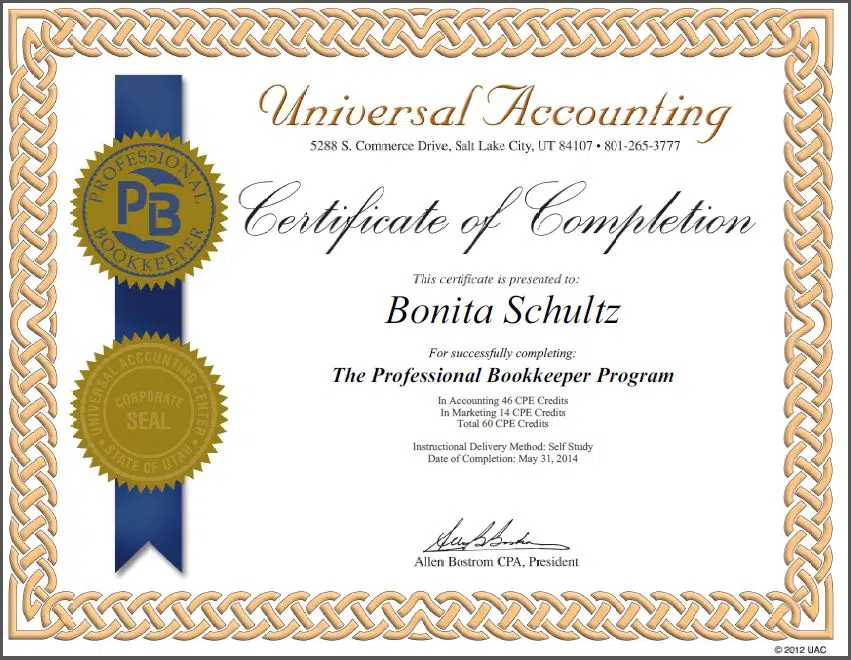
Understanding the Value of Bookkeeping Certification in the Money Market
Before diving into the “how,” it is essential to understand the “why” from a financial perspective. In a volatile economy, businesses prioritize fiscal transparency. A certified bookkeeper provides a level of assurance that an uncertified clerk cannot. This translates directly into higher billable rates for freelancers and better salary packages for employees.
The Distinction Between Bookkeeping and Accounting
While the terms are often used interchangeably in casual conversation, they represent different stages of the financial cycle. Bookkeeping is the foundation; it involves the daily recording of transactions, bank reconciliations, and the maintenance of the general ledger. Accounting is the superstructure, involving the interpretation, classification, and analysis of that data. A bookkeeping certificate proves you can build the foundation upon which all other financial analysis rests.
Market Demand and Income Potential
The demand for skilled bookkeepers remains robust because every legal business entity requires organized financial records for tax compliance and operational clarity. According to current labor market data, certified bookkeepers can command significantly higher hourly rates—often ranging from $40 to $80 per hour as independent consultants—compared to their non-certified counterparts. For those pursuing a career within a firm, certification often acts as a prerequisite for senior roles, providing a clear path to financial stability and professional growth.
Choosing the Right Path: Top Certification Providers
There is no single “universal” bookkeeping license, but several prestigious organizations offer certifications that carry weight in the financial industry. Choosing the right one depends on your career goals, whether you want a broad professional designation or a software-specific credential.
The American Institute of Professional Bookkeepers (AIPB)
The AIPB offers the “Certified Bookkeeper” (CB) designation. This is widely considered the gold standard for professional bookkeepers in the United States. To earn this title, candidates must pass a rigorous four-part examination and provide evidence of at least two years (3,000 hours) of full-time bookkeeping experience. The exam covers complex topics such as adjusting entries, error correction, payroll, depreciation, and internal controls. This path is ideal for those who want to be recognized as elite professionals with a deep understanding of Generally Accepted Accounting Principles (GAAP).
The National Association of Certified Public Bookkeepers (NACPB)
The NACPB offers the “Certified Public Bookkeeper” (CPB) license. Similar to the CPA designation for accountants, the CPB license requires passing a series of exams covering bookkeeping, payroll, and federal taxation. This organization focuses heavily on the small business environment, making it a perfect fit for individuals who intend to start their own bookkeeping practice or work with SME (Small and Medium Enterprise) clients. The NACPB also requires continuing professional education (CPE) to maintain the license, ensuring that your skills remain sharp as financial regulations evolve.
Software-Specific Certifications: QuickBooks and Xero
In the modern era, financial management is inseparable from technology. Most businesses use cloud-based platforms like QuickBooks Online or Xero. Both companies offer “ProAdvisor” or “Advisor” certifications. While these are technically software certifications, they are vital for anyone looking to enter the field. They demonstrate that you not only understand the theory of money management but can also execute those theories efficiently using the industry’s most common tools. These certifications are often free or low-cost to obtain, making them an excellent starting point for beginners.
The Step-by-Step Process to Certification
Getting certified is a structured journey that requires a mix of education, examination, and ethical commitment. Here is the logical progression you should follow to secure your credentials.

Step 1: Foundational Education
While you do not necessarily need a four-year degree to become a certified bookkeeper, you must have a firm grasp of basic math and financial concepts. If you are starting from scratch, consider taking a foundational course in financial accounting. You need to be comfortable with the “accounting equation” (Assets = Liabilities + Equity) and understand the double-entry system of debits and credits. This knowledge is the bedrock of all certification exams.
Step 2: Preparing for the Exams
Once you have selected your certifying body (such as the AIPB or NACPB), you must engage in focused study. These organizations provide workbooks and practice tests. The exams are not merely about memorization; they require you to solve real-world financial problems. You will be tested on how to handle uncollectible accounts, how to calculate various methods of depreciation (such as straight-line vs. double-declining balance), and how to reconcile complex bank statements.
Step 3: Meeting the Experience Requirements
One of the most significant hurdles to professional certification is the experience requirement. For the AIPB, you can take the exams first, but you will not receive the “Certified Bookkeeper” title until you have documented your 3,000 hours of experience. This ensures that the designation represents practical competence, not just the ability to pass a test. If you are new to the field, look for entry-level “clerk” roles or internships to begin accruing these hours.
Step 4: Signing a Code of Ethics
Financial integrity is the core of bookkeeping. Most certifying bodies require you to sign a code of ethics. This is a formal commitment to honesty, confidentiality, and professional conduct. In the world of business finance, your reputation is your most valuable asset. A breach of ethics not only loses you your certificate but can result in legal liabilities.
Mastering Financial Statements and Compliance
A bookkeeping certificate is a testament to your ability to produce the three primary financial statements: the Balance Sheet, the Income Statement, and the Cash Flow Statement. Mastering these is essential for anyone serious about managing business finance.
The Balance Sheet: A Snapshot of Wealth
The balance sheet tells a business owner exactly what they own and what they owe at a specific point in time. During your certification process, you will learn how to accurately classify current assets (like cash and accounts receivable) versus fixed assets (like machinery). You will also learn to manage liabilities, ensuring that the business remains solvent.
The Income Statement: Tracking Profitability
Also known as the P&L (Profit and Loss), this statement summarizes revenues and expenses over a period. A certified bookkeeper ensures that every expense is categorized correctly. This is crucial for tax season, as misclassified expenses can lead to overpayment of taxes or, worse, an audit by the IRS. Your certification will teach you how to identify deductible business expenses versus non-deductible personal costs.
Payroll and Tax Compliance
Perhaps the most high-stakes area of bookkeeping is payroll. Errors in payroll can lead to disgruntled employees and heavy government penalties. Certification courses cover the complexities of federal and state withholdings, FICA taxes, and the filing of Form 941. Understanding the financial mechanics of payroll is often what separates a high-level bookkeeper from a basic data entry clerk.
Building a Profitable Bookkeeping Business
For many, the ultimate goal of getting a bookkeeping certificate is to achieve financial independence by launching a personal brand or firm. A certificate provides the “social proof” needed to attract high-paying clients.
Specializing in Niche Markets
To maximize income, certified bookkeepers often specialize. For example, bookkeeping for a construction company involves complex “job costing,” while bookkeeping for a medical practice involves strict HIPAA compliance and insurance billing. By combining your certificate with niche expertise, you can position yourself as a specialist who commands premium rates.

The Role of Advisory Services
The most successful bookkeepers are moving away from simple data entry toward “Financial Advisory” services. Armed with your certificate and a deep understanding of the numbers, you can help business owners understand their “burn rate,” optimize their cash flow, and plan for future investments. This shifts your role from an expense for the business to a revenue-generating partner, allowing you to scale your income far beyond hourly wages.
Getting a bookkeeping certificate is a clear, actionable path toward a stable and lucrative financial career. It requires a commitment to learning the language of money, but the return on investment—in the form of professional authority and increased earning potential—is one of the most reliable in the business world.
aViewFromTheCave is a participant in the Amazon Services LLC Associates Program, an affiliate advertising program designed to provide a means for sites to earn advertising fees by advertising and linking to Amazon.com. Amazon, the Amazon logo, AmazonSupply, and the AmazonSupply logo are trademarks of Amazon.com, Inc. or its affiliates. As an Amazon Associate we earn affiliate commissions from qualifying purchases.