
Navigating the landscape of personal finance requires a fundamental understanding of the tools and identifiers that keep the global banking system moving. Among these, the routing transit number (RTN) stands as one of the most critical pieces of information for any account holder. Whether you are setting up a direct deposit for a new job, scheduling an automated mortgage payment, or transferring funds between institutions, your routing number serves as the digital address for your financial home. While it may seem like a mere string of digits, it is the backbone of the American clearinghouse system, ensuring that trillions of dollars reach their intended destinations with surgical precision every year.

Understanding how to locate and verify this number is not just a matter of convenience; it is a vital skill in maintaining financial security and operational efficiency. In an era where digital transactions are the norm, knowing exactly where to find your routing number—and understanding what those nine digits represent—empowers you to manage your capital with greater confidence.
Understanding the Role of the Routing Transit Number (RTN)
Before searching for the number, it is essential to understand what you are looking for and why it exists. The routing transit number was developed by the American Bankers Association (ABA) in 1910. Its primary purpose was to simplify the sorting and shipment of paper checks. Over a century later, it has evolved into a sophisticated identifier used for electronic funds transfers, wire transfers, and automated clearing house (ACH) transactions.
What is a Routing Number?
A routing number is a nine-digit code used to identify a specific financial institution within the United States. Think of it as a ZIP code for your bank. Just as a ZIP code tells the postal service which town and neighborhood a letter belongs to, the routing number tells the Federal Reserve and other banks exactly which institution is responsible for a specific transaction. Every bank chartered in the U.S. is assigned at least one routing number, though larger national banks may have several based on the geographic region where the account was opened or the specific type of transaction being processed.
The Anatomy of the Nine-Digit Code
The nine digits of a routing number are not random. They follow a specific formula designed for accuracy and security. The first four digits identify the Federal Reserve symbol, indicating the physical location of the bank’s processing center. The next four digits represent the specific bank’s ABA identifier. The final digit is known as the “check digit.” This last number is calculated using a complex mathematical algorithm based on the first eight digits. When a computer processes a transaction, it runs this calculation to ensure the routing number is valid; if the math doesn’t add up, the transaction is flagged or rejected, preventing costly errors.
Routing Number vs. Account Number
It is a common point of confusion for many consumers to distinguish between their routing number and their account number. While the routing number identifies the bank, the account number identifies you within that bank. You can share your routing number with your employer or a utility company without much risk, as it is public information associated with the institution. However, your account number is private. Together, these two numbers act as a lock and key: the routing number finds the building, and the account number finds the specific vault where your money is kept.
Reliable Methods for Locating Your Routing Number
In the modern banking era, there are multiple ways to retrieve your routing number, ranging from traditional paper methods to high-tech digital solutions. Depending on whether you have your checkbook handy or are currently logged into a mobile app, one of the following methods will be the most efficient path to finding the information you need.
Examining Your Physical Checks
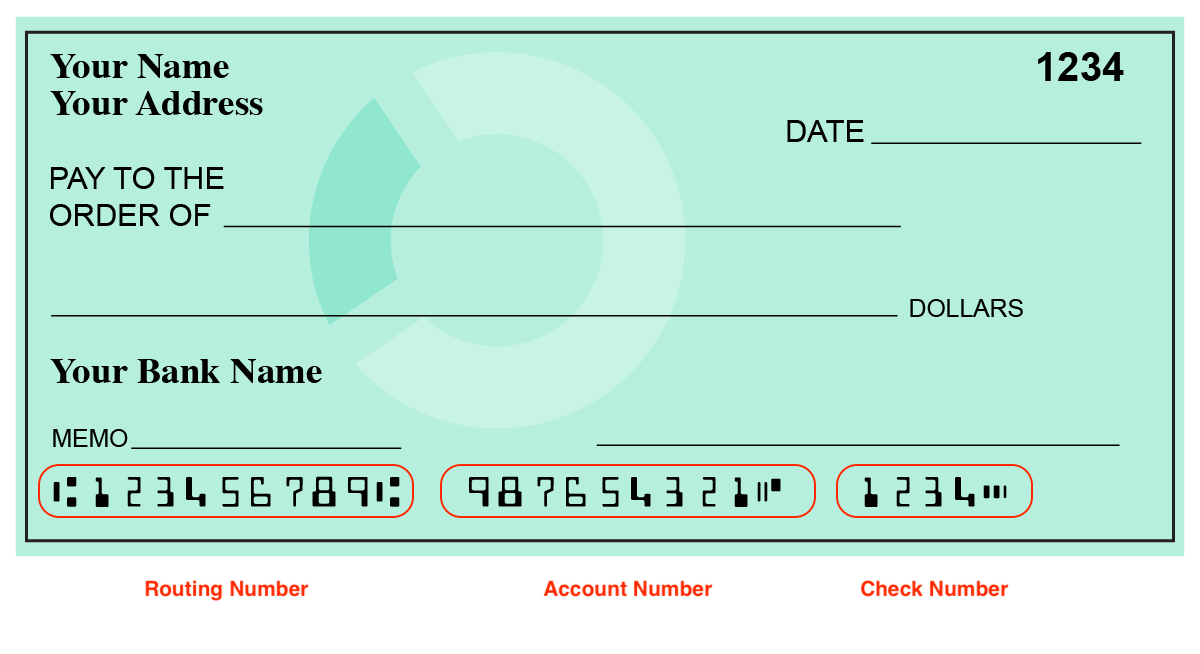
The most traditional and often the easiest way to find your routing number is by looking at a physical check associated with your account. If you look at the bottom of a check, you will see three distinct groups of numbers printed in a specialized font known as MICR (Magnetic Ink Character Recognition).
-
The Routing Number: This is almost always the first set of nine digits on the far left. It is usually flanked by a specific symbol that looks like a vertical bar and a colon.
-
The Account Number: This is typically the middle set of numbers. It can vary in length.
-
The Check Number: This is the shortest set of numbers, usually found on the far right, matching the number printed in the top right corner of the check.
It is important to note that you should use a check, not a deposit slip. Some banks use different routing numbers for deposits than they do for withdrawals or payments, and using the number from a deposit slip for a direct deposit setup can occasionally lead to processing delays.
Using Online Banking and Mobile Apps
As physical checks become less common, digital banking platforms have become the primary resource for account identifiers. To find your routing number via your bank’s website or mobile app, you generally need to:
-
Log in to your secure portal.
-
Select the specific account (checking or savings) you are inquiring about.
-
Look for a link or tab labeled “Account Details,” “Account Features,” or “ACH Information.”
-
The routing number is usually listed clearly alongside your account number and current balance.
Many modern banking apps also feature a “Direct Deposit” section which provides a pre-filled PDF form containing both your routing and account numbers, designed specifically to be handed to an employer’s payroll department.
Checking Bank Statements and Legal Documents
If you do not have access to online banking or checks, your monthly bank statement is a legal document that contains all necessary identifying information. Most statements list the routing number in the header or the footer of the first page. Additionally, if you recently opened the account, the “New Account” paperwork or the terms and conditions agreement you signed will have the routing transit number printed on the summary page.
Searching the Bank’s Official Website or Contacting Customer Service
Because routing numbers are technically public information for the institution, many banks list them directly on their public-facing websites. You can often find them by searching for “[Bank Name] + Routing Number” on a search engine or by visiting the bank’s “Contact Us” or “FAQs” page. However, a word of caution: large national banks often have different routing numbers for different states. Ensure that the number you find corresponds to the state where you originally opened the account. If you are ever in doubt, calling the bank’s customer service line or visiting a local branch is the most foolproof way to verify the information.
Why Your Routing Number Matters for Your Financial Health
The routing number is more than just a logistical requirement; it is a gateway to several financial benefits and necessities. Understanding the applications of this number can help you streamline your cash flow and ensure you never miss a critical payment.
Facilitating Direct Deposits and Payroll
The most common use for a routing number is the setup of direct deposit. By providing your employer with your routing and account numbers, you eliminate the need for physical checks, which can be lost or stolen. Direct deposit also often allows for faster access to funds, with many banks offering “early payday” features for accounts funded via ACH. Furthermore, the IRS requires a routing number for the direct deposit of tax refunds, which is significantly faster than waiting for a Treasury check to arrive by mail.
Managing Automatic Bill Payments and ACH Transfers
Automated Clearing House (ACH) transfers are the standard for paying recurring bills such as rent, utilities, and car insurance. When you provide a service provider with your routing number, you are authorizing an “ACH pull,” where the company’s bank requests funds from your bank. This automation is a cornerstone of modern financial management, helping consumers avoid late fees and maintain high credit scores by ensuring payments are made on time every month.
Domestic Wire Transfers vs. International SWIFT Codes
It is vital to distinguish between a standard ACH routing number and a wire transfer routing number. While many banks use the same nine-digit code for both, some larger institutions have a separate routing number specifically for domestic wire transfers. Wire transfers are processed differently than ACH transfers—they are usually cleared in real-time and are used for high-stakes transactions like real estate closings.
Additionally, if you are receiving money from an international source, a standard nine-digit ABA routing number will not suffice. In those cases, you will need a SWIFT (Society for Worldwide Interbank Financial Telecommunication) code or a BIC (Bank Identifier Code). These are 8 to 11 characters long and identify banks globally.
Security and Best Practices for Handling Bank Identifiers
While a routing number is public information regarding the bank, it should still be handled with care when paired with your account number. Together, these digits are the keys to your liquid assets. Protecting this information is a fundamental aspect of digital security and fraud prevention.
Protecting Your Information from Fraud
Fraudsters can use your routing and account numbers to create “demand drafts,” which are essentially unauthorized checks. To mitigate this risk, never provide your banking details over unsecured email or to unverified callers. Only enter this information on secure, encrypted websites (look for the “https” and the padlock icon in your browser). Regularly monitoring your bank statements for unauthorized ACH transactions is also a critical habit; most banks have a limited window—often 60 days—for you to dispute an unauthorized electronic transfer.
Verifying Numbers During Bank Mergers and Acquisitions
The banking industry is dynamic, and mergers and acquisitions are frequent. When one bank buys another, the routing numbers eventually change as the systems are integrated. Usually, the bank will allow a “grace period” of several months or even years where the old routing number remains active. However, it is your responsibility to update your direct deposit and bill pay information with the new routing number provided by the successor institution to avoid a disruption in service.

Avoiding Common Mistakes in Transaction Entries
A single transposed digit in a routing number can lead to a “Return to Sender” situation where your payment fails or, worse, is sent to the wrong institution. Whenever you are setting up a new transfer, double-check the nine digits against a physical check or your online portal. Many financial software programs and banking apps now include a validation feature that will automatically identify the bank name once the routing number is entered. If the bank name that pops up doesn’t match yours, stop the transaction immediately and verify the code.
By mastering the simple yet essential task of locating and applying your bank’s routing number, you position yourself to navigate the complexities of the modern economy with ease. Whether you are building a side hustle, managing a household budget, or investing for the future, these nine digits are the primary coordinates that ensure your wealth moves exactly where it needs to go.
aViewFromTheCave is a participant in the Amazon Services LLC Associates Program, an affiliate advertising program designed to provide a means for sites to earn advertising fees by advertising and linking to Amazon.com. Amazon, the Amazon logo, AmazonSupply, and the AmazonSupply logo are trademarks of Amazon.com, Inc. or its affiliates. As an Amazon Associate we earn affiliate commissions from qualifying purchases.