
In the intricate world of personal finance, business operations, and investment strategies, a foundational understanding of percentages is not merely an academic exercise—it is an indispensable skill. From deciphering the true cost of a loan to evaluating the performance of an investment portfolio, percentages serve as the universal language of financial comparison and analysis. Yet, for many, the seemingly simple task of “figuring percentage of a number” can feel daunting, shrouded in mathematical mystery.
This guide aims to demystify percentage calculations, transforming them from an intimidating hurdle into a powerful tool for informed decision-making. We will explore the core methodologies for calculating percentages and, more importantly, delve into their myriad practical applications across various financial domains. By mastering these concepts, you will not only gain confidence in your quantitative abilities but also unlock a clearer, more strategic perspective on managing your money, growing your wealth, and navigating the complexities of the modern financial landscape. Prepare to enhance your financial literacy and empower yourself with the clarity that comes from truly understanding the numbers that shape your financial future.

The Indispensable Role of Percentages in Personal Finance
Percentages are the bedrock of personal finance, offering a concise and standardized way to compare values, track progress, and make informed decisions about your income, expenses, and savings. Without a solid grasp of how they work, individuals risk misinterpreting financial statements, overpaying for goods, or underestimating the true cost of debt.
Budgeting and Expense Tracking: Allocating Your Income
One of the most immediate and impactful applications of percentages in personal finance is within budgeting. A budget is essentially a spending plan, and percentages help you visualize how your income is distributed across different categories. For instance, common budgeting rules like the “50/30/20 rule” (50% needs, 30% wants, 20% savings/debt repayment) are entirely percentage-based. Understanding how to calculate what percentage of your income goes to housing, transportation, food, or entertainment provides critical insight into your spending habits. If 40% of your income is consistently allocated to “wants,” you can clearly see where adjustments might be needed to free up funds for savings or debt reduction. Moreover, tracking expenses as a percentage of your total budget over time allows you to identify trends, pinpoint areas of overspending, and make proactive adjustments to stay on track with your financial goals.
Understanding Discounts, Sales Tax, and Tips: Smart Spending
Everyday consumer transactions are rife with percentages. From a “25% off” sale at your favorite store to the “7% sales tax” added at checkout, or the “15-20% tip” expected for good service, these figures directly impact your purchasing power. Knowing how to quickly calculate these percentages can save you money, prevent overpayment, and ensure you’re appropriately rewarding service providers. For example, calculating 25% off a $100 item means subtracting $25, making the item $75. Adding 7% sales tax to that means calculating 7% of $75 ($5.25) and adding it back, totaling $80.25. Similarly, when dining out, estimating a tip as a percentage of your bill ensures you can factor it into your budget before the final bill arrives, avoiding any unpleasant surprises. This practical skill empowers you to be a more discerning and financially savvy consumer.
Interest Rates and Loan Repayments: The Cost of Borrowing
Perhaps nowhere are percentages more critical than in understanding interest rates and loan repayments. Whether it’s the interest rate on a savings account (the return on your money), a credit card (the cost of borrowing), a mortgage, or a personal loan, these percentages dictate how much you either earn or pay. The Annual Percentage Rate (APR) on a loan or credit card significantly influences the total amount you will repay over time. A 15% APR on a credit card balance will accumulate debt far faster than a 5% personal loan. Calculating interest, understanding how it compounds, and knowing how percentages affect your monthly payments are vital for managing debt responsibly and making informed borrowing decisions. It enables you to compare different loan offers accurately, project total repayment costs, and strategize for faster debt elimination, ultimately preserving more of your hard-earned money.
Core Methods for Calculating Percentages
Mastering percentages begins with understanding the fundamental calculations. While various tools can assist, the underlying principles remain constant. These core methods are the building blocks for all more complex financial analyses.
Finding a Percentage of a Number: The Basics
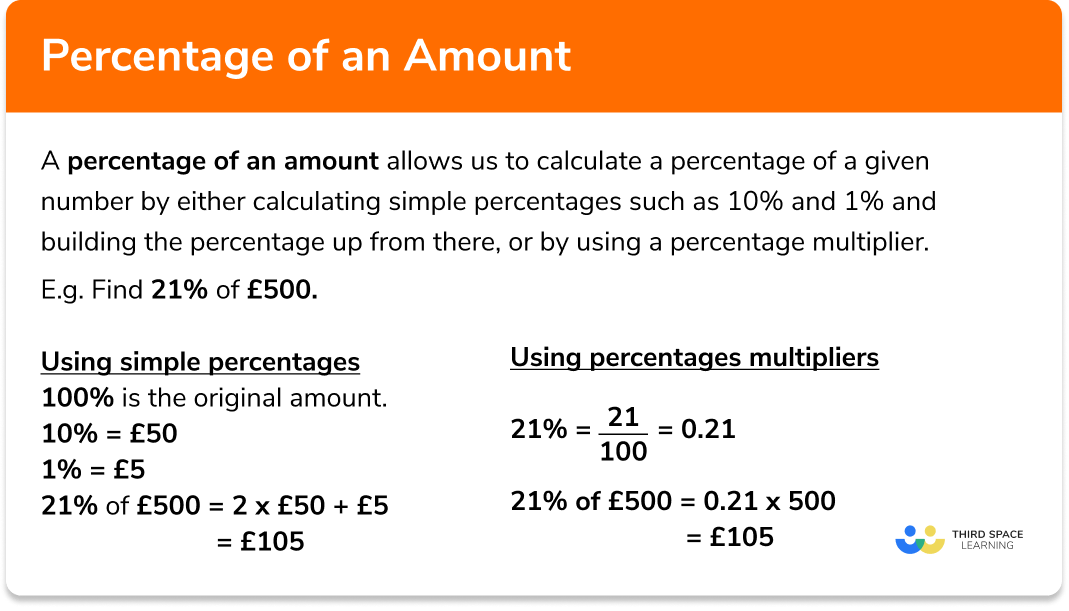
This is arguably the most common percentage calculation. To find a percentage of a number, you convert the percentage to a decimal and then multiply it by the number.
Formula: Percentage (as decimal) × Whole Number = Part
Example: What is 20% of 250?
-
Convert 20% to a decimal: 20 ÷ 100 = 0.20
-
Multiply: 0.20 × 250 = 50
So, 20% of 250 is 50. This method is used when calculating discounts, commissions, sales tax, or specific allocations from a budget. If you want to put 15% of your $4,000 monthly income into savings, you would calculate 0.15 × $4,000 = $600.
Calculating Percentage Change: Growth and Decline
Percentage change is crucial for tracking growth, decline, and performance over time. It tells you how much a value has increased or decreased relative to its starting point. This is indispensable for monitoring investment returns, sales growth, or changes in expenses.
Formula: ((New Value - Old Value) / Old Value) × 100 = Percentage Change
-
If the result is positive, it’s a percentage increase.
-
If the result is negative, it’s a percentage decrease.
Example: Your investment portfolio grew from $10,000 to $12,000. What is the percentage increase?
((12,000 - 10,000) / 10,000) × 100 = (2,000 / 10,000) × 100 = 0.20 × 100 = 20%
Your portfolio increased by 20%. Conversely, if it dropped from $12,000 to $10,000, the calculation would yield a -16.67% decrease. This calculation helps quantify performance and evaluate trends, providing a clear picture beyond just raw numbers.
Determining What Percentage One Number Is of Another: Ratios and Proportions
This calculation helps you understand the proportion of one quantity relative to a total. It’s often used in market share analysis, budget allocation breakdown, or understanding demographic proportions.
Formula: (Part / Whole) × 100 = Percentage
Example: If you spent $300 on groceries from a total monthly income of $4,000, what percentage of your income went to groceries?
($300 / $4,000) × 100 = 0.075 × 100 = 7.5%
So, 7.5% of your income went to groceries. This method provides context, showing the relative significance of a specific part within a larger whole. It’s essential for creating a balanced budget or understanding the composition of any financial aggregate.
Practical Applications of Percentages in Investing and Wealth Building
Beyond personal budgeting, percentages are the backbone of investment analysis. They provide the necessary framework to evaluate performance, manage risk, and make strategic decisions for long-term wealth accumulation.
Measuring Investment Returns: ROI and Yield
When you invest, you want to know how well your money is performing. This is where return on investment (ROI) and various yield calculations come in. ROI is typically expressed as a percentage, indicating the profitability of an investment relative to its cost.
Formula for ROI: ((Current Value - Initial Investment) / Initial Investment) × 100
Example: You invested $5,000 in a stock that is now worth $6,500.
((6,500 - 5,000) / 5,000) × 100 = (1,500 / 5,000) × 100 = 0.30 × 100 = 30%ROI.
Similarly, dividend yield (annual dividends per share as a percentage of the share price) and bond yield (annual interest payment as a percentage of the bond’s current market price) help investors compare income-generating investments. A clear understanding of these percentage metrics allows investors to compare different assets, evaluate past performance, and project potential future returns, crucial for making informed choices about where to allocate capital.
Understanding Portfolio Allocation: Diversification Strategies
A well-diversified investment portfolio spreads risk across various asset classes (stocks, bonds, real estate, cash, etc.). Percentages are fundamental to defining and maintaining this allocation. An investor might decide on a target allocation like “60% stocks, 30% bonds, 10% cash.” As market values fluctuate, these percentages will shift. Knowing how to calculate the current percentage of each asset in your portfolio helps you identify when rebalancing is necessary to bring it back to your desired allocation. If stocks have performed exceptionally well and now comprise 70% of your portfolio, you might sell some stocks to buy more bonds or cash, re-establishing your 60/30/10 target. This disciplined approach, guided by percentage allocation, is key to managing risk and staying aligned with your long-term financial goals.
Analyzing Market Performance and Economic Indicators
Financial news and economic reports are saturated with percentages. From “inflation rising by 3.5%” to “unemployment dropping to 4.2%” or “the S&P 500 gaining 1.8% today,” these figures provide a snapshot of market health and economic trends. Understanding how these percentages are calculated and what they signify allows investors to interpret economic data and make more informed decisions about their investments. For instance, a high inflation rate (percentage increase in prices) might prompt an investor to consider inflation-protected assets. Similarly, significant percentage shifts in GDP growth or consumer spending can signal broader economic trends that impact corporate earnings and stock market performance. Engaging with these percentage-based indicators enriches an investor’s macroeconomic perspective, helping them navigate market cycles more effectively.
Percentages in Business and Side Hustles
For entrepreneurs, small business owners, and those pursuing side hustles, percentages are not just analytical tools; they are operational essentials. They govern pricing, profitability, compensation, and the measurement of business health and growth.
Profit Margins and Markup: Pricing Your Products/Services
Setting the right price for a product or service is critical for business sustainability, and this process is heavily reliant on percentages. Markup is the percentage added to the cost of a product to determine its selling price. If a product costs you $50 to produce and you want a 30% markup, you’d add $15 (30% of $50) to the cost, selling it for $65.
Profit Margin, on the other hand, expresses profit as a percentage of revenue (sales price).
Formula for Profit Margin: ((Revenue - Cost) / Revenue) × 100
Using the previous example: (($65 - $50) / $65) × 100 = ($15 / $65) × 100 ≈ 23.08% profit margin.
Understanding the difference between markup and profit margin is vital for accurate pricing and assessing business profitability. High profit margins indicate efficient operations and strong pricing power, while low margins might signal a need for cost reduction or price adjustments. Accurately calculating these percentages ensures a business can cover its costs, generate sufficient profit, and remain competitive.
Commission Structures and Performance Bonuses
Many sales roles and some side hustles are compensated, in part, through commissions or performance bonuses, which are almost universally percentage-based. A salesperson might earn a “10% commission on all sales,” meaning for every $1,000 in sales, they earn $100. Similarly, an employee might receive a “5% performance bonus” based on achieving certain targets or a percentage of their annual salary. For those involved in such compensation models, understanding how these percentages are calculated is not just academic; it directly impacts their take-home pay. It enables them to set realistic income goals, track their progress, and verify their earnings. For business owners, designing fair and motivating percentage-based compensation structures requires careful calculation to ensure alignment with company profitability and sales targets.
Analyzing Business Growth and Key Performance Indicators (KPIs)
Businesses constantly track various key performance indicators (KPIs) to monitor their health and identify areas for improvement. Many crucial KPIs are expressed as percentages or involve percentage calculations. Examples include:
-
Customer Retention Rate: The percentage of customers a business retains over a period.
-
Conversion Rate: The percentage of website visitors who complete a desired action (e.g., make a purchase).
-
Market Share: A company’s sales as a percentage of total market sales.
-
Growth Rates: Percentage increase in revenue, customer base, or profit over time.
Calculating and tracking these percentages allows businesses to objectively measure performance against goals, benchmark against competitors, and identify areas of strength and weakness. A consistent 15% increase in month-over-month revenue growth signals a thriving business, while a declining conversion rate of 2% might indicate issues with marketing or website usability. These percentage-based insights drive strategic decisions, resource allocation, and continuous improvement initiatives, fundamental for sustainable business success.
Tools and Strategies for Simplifying Percentage Calculations
While a conceptual understanding of percentages is paramount, leveraging appropriate tools and strategies can significantly streamline calculations, reduce errors, and free up mental energy for higher-level financial analysis.
Leveraging Calculators and Spreadsheets
In today’s digital age, manual percentage calculations are often unnecessary for complex or high-volume tasks.
-
Basic Calculators: For quick, one-off calculations (like a tip or a discount), a physical or smartphone calculator is invaluable. Simply input the numbers and the percentage function (
%) or convert the percentage to a decimal manually. -
Spreadsheets (e.g., Excel, Google Sheets): For recurring calculations, financial tracking, or complex scenarios, spreadsheets are indispensable. You can set up formulas that automatically calculate percentages. For example, to find 20% of a number in cell A1, you would type
=A1*0.20or=A1*20%. For percentage change, if your old value is in A1 and new value in B1, the formula would be=(B1-A1)/A1. Spreadsheets allow for scalability, error checking, and clear visualization of data, making them a cornerstone for financial modeling, budgeting, and investment tracking.
Mental Math Shortcuts for Quick Estimates
While precision is crucial for final decisions, the ability to quickly estimate percentages mentally can be incredibly useful for on-the-fly budgeting, checking sales, or gauging rough figures.
-
Finding 10%: To find 10% of any number, simply move the decimal point one place to the left. (e.g., 10% of $450 is $45; 10% of $78.50 is $7.85). This is a fantastic base for estimating other percentages.
-
Finding 5%: Find 10% and then halve it (e.g., 5% of $450 is half of $45, which is $22.50).
-
Finding 20%: Find 10% and then double it (e.g., 20% of $450 is double $45, which is $90).
-
Finding 1%: Move the decimal point two places to the left (e.g., 1% of $450 is $4.50).
These mental shortcuts empower you to make quick, informed judgments without immediately reaching for a calculator, enhancing your financial agility and confidence in everyday situations.
The Importance of Double-Checking and Accuracy
Regardless of the method used (manual, calculator, or spreadsheet), accuracy is paramount in financial calculations. Even small errors in percentages can lead to significant financial miscalculations over time, especially with large sums or compounding effects.
-
Cross-Verification: If possible, perform the calculation using a different method or tool to cross-verify the result.
-
Sense Check: Always ask yourself if the answer makes sense. If you’re calculating a 20% discount on a $100 item and get $80 as the discount amount, you know there’s an error because the discount should be $20.
-
Understanding the Context: Ensure you’re applying the correct percentage to the correct base amount (e.g., calculating sales tax on the discounted price, not the original price).
A disciplined approach to accuracy not only prevents costly mistakes but also builds trust in your financial analyses, which is essential for effective financial management and strategic planning.

Conclusion
Understanding “how to figure percentage of a number” transcends a mere mathematical exercise; it is a fundamental pillar of financial literacy and empowerment. From the minutiae of personal budgeting and daily spending to the complexities of investment analysis and business profitability, percentages serve as the critical language that translates raw numbers into actionable insights.
By mastering the core calculation methods—finding a percentage of a number, calculating percentage change, and determining the percentage one number is of another—you equip yourself with the tools to confidently navigate virtually any financial scenario. These skills are not just about crunching numbers; they are about gaining clarity, making informed decisions, and ultimately, taking greater control over your financial destiny.
Whether you’re leveraging sophisticated spreadsheets for portfolio management or employing mental shortcuts for quick estimates at the checkout counter, the ability to understand and apply percentages will enhance your financial acumen. Embrace these concepts, practice regularly, and watch as your confidence grows, allowing you to unlock new levels of financial understanding and pave a clearer path towards your wealth-building goals.
aViewFromTheCave is a participant in the Amazon Services LLC Associates Program, an affiliate advertising program designed to provide a means for sites to earn advertising fees by advertising and linking to Amazon.com. Amazon, the Amazon logo, AmazonSupply, and the AmazonSupply logo are trademarks of Amazon.com, Inc. or its affiliates. As an Amazon Associate we earn affiliate commissions from qualifying purchases.