
Understanding how to calculate the inflation rate is a fundamental skill for anyone seeking to navigate the complex world of personal finance, make informed investment decisions, or simply comprehend the economic forces shaping their daily lives. Inflation, often described as the silent thief of purchasing power, erodes the value of money over time, making it crucial to grasp its measurement and implications. This article will demystify the process, guiding you through the calculation, its underlying principles, and its profound impact on your financial well-being.
Understanding the Essence of Inflation
Before diving into the numbers, it’s essential to build a solid conceptual foundation of what inflation is and why its accurate measurement is so critical. Inflation isn’t just an abstract economic term; it’s a tangible force affecting everything from your grocery bill to your retirement savings.
What is Inflation and Why Does it Matter?
At its core, inflation is the rate at which the general level of prices for goods and services is rising, and consequently, the purchasing power of currency is falling. Imagine a loaf of bread that cost $2 last year now costs $2.20. That 10% increase is a simple example of inflation. While seemingly small changes might go unnoticed day-to-day, cumulative inflation over years can significantly diminish the value of your savings and investments. If your money isn’t growing at a rate that at least matches inflation, you are effectively losing purchasing power. This erosion impacts individuals by reducing the real value of wages, savings accounts, and fixed income streams, making it harder to afford necessities and achieve long-term financial goals. For businesses, inflation can complicate pricing strategies, supply chain management, and future planning. For governments and central banks, managing inflation is a primary objective, balancing economic growth with price stability.
Different Types and Causes of Inflation
Inflation isn’t a monolithic phenomenon; it can arise from various economic dynamics, each with its own characteristics and policy implications. The most common types include:
- Demand-Pull Inflation: This occurs when aggregate demand in an economy outpaces aggregate supply. Too much money is chasing too few goods. This can happen during periods of strong economic growth, increased consumer spending, or expansionary fiscal and monetary policies that inject more money into the system. When consumers have more money and are eager to spend, businesses can raise prices without fear of losing customers.
- Cost-Push Inflation: This type of inflation stems from an increase in the cost of production. When the cost of raw materials, labor, or energy rises, businesses typically pass these increased costs onto consumers in the form of higher prices. Examples include oil price shocks, wage demands by unions, or disruptions in global supply chains that make imported goods more expensive.
- Built-In Inflation: Also known as “wage-price spiral” inflation, this type is driven by expectations. If workers expect prices to rise, they demand higher wages to maintain their purchasing power. Businesses, facing higher labor costs, then raise prices further, leading to a self-fulfilling prophecy where higher wages lead to higher prices, which in turn lead to demands for even higher wages.
Other factors influencing inflation include government policies (e.g., printing more money), global events (e.g., pandemics, geopolitical conflicts affecting supply), and changes in consumer spending habits. Understanding these underlying causes is crucial for economists and policymakers attempting to control inflationary pressures.
The Core Mechanism: Measuring Price Changes
Calculating the inflation rate relies on tracking how the prices of a representative basket of goods and services change over time. Various indices are used for this purpose, with the Consumer Price Index (CPI) being the most commonly cited.
The Consumer Price Index (CPI) as the Primary Gauge
The Consumer Price Index (CPI) is the most widely used measure of inflation in many countries, including the United States. It measures the average change over time in the prices paid by urban consumers for a market basket of consumer goods and services. This “basket” is meticulously constructed to represent the typical expenditures of households. It includes a broad range of categories such as:
- Food and beverages: Groceries, restaurant meals.
- Housing: Rent, homeowner’s equivalent rent, utilities (electricity, natural gas, water, sewer, garbage collection).
- Apparel: Clothing and footwear.
- Transportation: Gasoline, vehicle purchases, public transportation.
- Medical care: Doctor visits, prescription drugs, hospital services.
- Recreation: Entertainment, hobbies.
- Education and communication: Tuition, textbooks, phone services, internet.
- Other goods and services: Personal care products, tobacco.
Government statistical agencies, such as the Bureau of Labor Statistics (BLS) in the U.S., collect price data on these items from thousands of retail establishments and service providers across various geographical areas. The prices are then weighted according to their importance in the average household’s budget. For example, housing costs typically receive a larger weight than apparel because they constitute a greater portion of consumer spending. The CPI is expressed as an index number, with a base period usually set to 100. A CPI of 120 means that prices have risen 20% since the base period.
Other Key Inflation Indicators
While the CPI is prominent, other indices provide additional perspectives on price changes across different sectors of the economy:
- Producer Price Index (PPI): The PPI measures the average change over time in the selling prices received by domestic producers for their output. It tracks prices at the wholesale level, before they reach the consumer. Changes in the PPI can often foreshadow future changes in the CPI, as increased production costs for businesses are frequently passed on to consumers.
- Personal Consumption Expenditures (PCE) Price Index: The PCE price index is another important measure of inflation, particularly favored by central banks like the U.S. Federal Reserve. It measures price changes for goods and services purchased by consumers. Unlike the CPI, the PCE index accounts for shifts in consumer behavior (i.e., if the price of beef rises, consumers might buy more chicken), and it also covers a broader range of expenditures, including those paid for by third parties on behalf of households (like employer-provided healthcare).
- GDP Deflator: The Gross Domestic Product (GDP) Deflator measures the average price level of all new, domestically produced, final goods and services in an economy. It’s a broader measure than CPI or PCE because it includes investment and government spending in addition to consumer spending. It reflects changes in the prices of all goods and services produced domestically.
Each of these indices offers a unique lens through which to view inflationary trends, providing a more comprehensive picture for economists and policymakers.
Step-by-Step Calculation of the Inflation Rate
With an understanding of the data sources, calculating the inflation rate becomes a straightforward application of a simple formula. The most common approach is to calculate the year-over-year percentage change.
Simple Year-over-Year Calculation
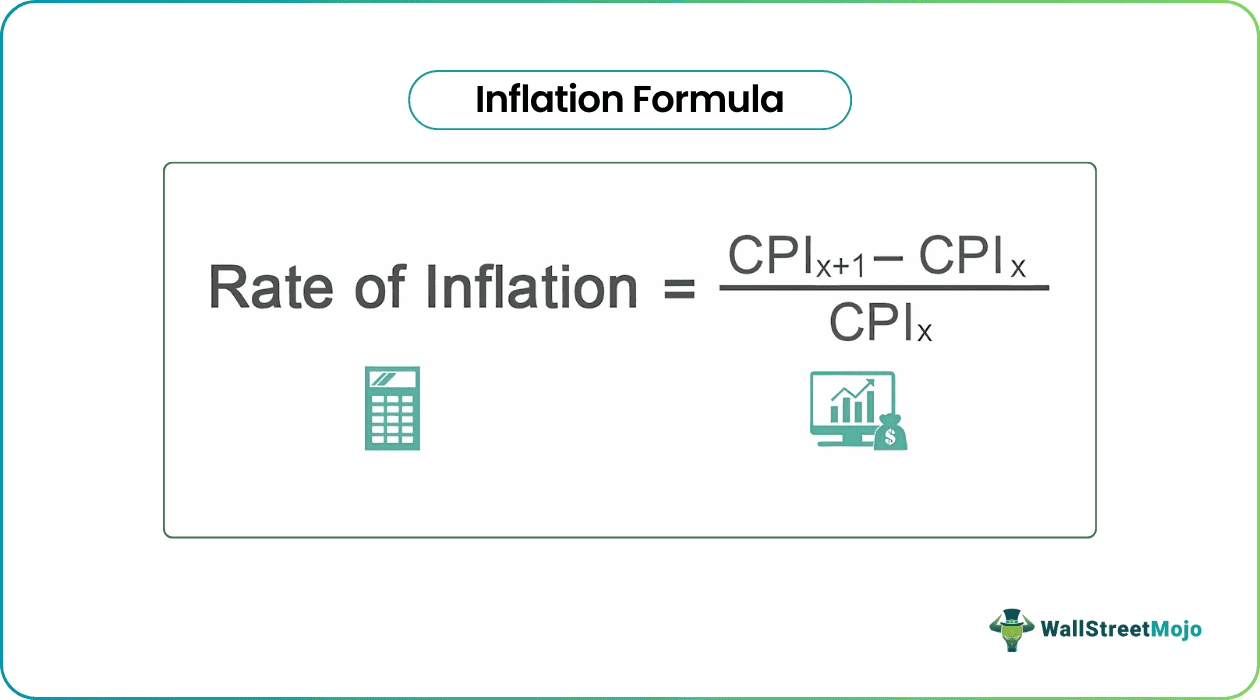
To calculate the inflation rate between two periods, typically a year apart, you use the following formula:
Inflation Rate (%) = [(Current Period Index – Previous Period Index) / Previous Period Index] * 100
Let’s use an example with the Consumer Price Index (CPI):
- Assume the CPI for January 2023 was 300.
- Assume the CPI for January 2024 was 315.
Using the formula:
Inflation Rate = [(315 – 300) / 300] * 100
Inflation Rate = [15 / 300] * 100
Inflation Rate = 0.05 * 100
Inflation Rate = 5%

This means that, on average, the prices of goods and services in the CPI basket increased by 5% from January 2023 to January 2024. This simple calculation provides a clear measure of how quickly prices are rising and how much your purchasing power has diminished over that specific period.
Calculating for Shorter or Longer Periods
While year-over-year inflation is the most common, you might need to calculate inflation for different timeframes:
- Monthly Inflation: You can calculate the month-over-month inflation using the same formula, just substituting monthly CPI values. For example, if CPI in June was 310 and CPI in July was 312, the monthly inflation would be ((312-310)/310)*100 = 0.65%.
- Annualizing Shorter-Period Inflation: Sometimes, you might see a monthly inflation rate annualized to give a sense of what the annual rate would be if that monthly pace continued. This is often done by compounding the monthly rate over 12 months, or simply multiplying by 12 for a rough estimate, but the compounding method is more accurate:
(1 + monthly inflation rate)^12 – 1
For the 0.65% monthly rate: (1 + 0.0065)^12 – 1 = 1.0799 – 1 = 0.0799 or 7.99% annualized. - Longer-Term Inflation: To calculate inflation over several years, you would use the CPI values for the start and end of that multi-year period in the same formula. For example, to find the average annual inflation rate over a 10-year period, you would need to use a slightly more complex formula involving geometric means, or simply find the total percentage increase and divide it by the number of years if an average is sufficient. However, for a precise CAGR (Compound Annual Growth Rate) of inflation, a financial calculator or spreadsheet function is usually employed.
Practical Considerations and Data Sources
To perform these calculations, you need reliable data. The most authoritative source for CPI data in the United States is the Bureau of Labor Statistics (BLS). Their website (www.bls.gov) offers extensive data tables, charts, and releases on the CPI, PPI, and other economic indicators. Similarly, other countries have their own national statistical agencies (e.g., Eurostat for the Eurozone, Office for National Statistics (ONS) for the UK) that publish similar data.
When using CPI data:
- Be consistent: Ensure you are using the same type of CPI (e.g., CPI-U for all urban consumers) and not mixing different indices.
- Understand revisions: Economic data can sometimes be revised, so always refer to the latest published figures.
- Consider seasonal adjustment: CPI data often comes in both seasonally adjusted and unadjusted forms. Seasonally adjusted data removes predictable seasonal patterns (like holiday shopping) to reveal underlying trends, which is often preferred for economic analysis.
The Impact of Inflation on Your Financial Life
Calculating inflation is merely the first step; understanding its pervasive impact on your personal finances is where the real insight lies. Inflation is a critical factor influencing everything from your daily spending habits to your long-term investment strategies and retirement planning.
Erosion of Purchasing Power and Savings
The most immediate and obvious impact of inflation is the erosion of purchasing power. If your income remains stagnant while prices rise, you can simply afford less with the same amount of money. This directly affects your standard of living. Similarly, the value of your cash savings, particularly those held in traditional savings accounts with low-interest rates, diminishes over time. For instance, if you have $10,000 in a savings account earning 0.5% interest, but inflation is 3%, your “real” return (the return after accounting for inflation) is -2.5%. This means your money is effectively losing value at that rate, even though the nominal balance appears to be growing. Inflation disproportionately affects those on fixed incomes, such as retirees, who may see their benefits increase at a slower rate than the cost of living.
Investment Strategies in an Inflated Environment
Inflation necessitates a proactive approach to investing. Passive strategies that don’t consider inflation are likely to underperform in real terms. Savvy investors often adjust their portfolios to include assets that historically perform well or offer protection during inflationary periods:
- Inflation-Protected Securities (e.g., TIPS): Treasury Inflation-Protected Securities (TIPS) are U.S. Treasury bonds whose principal value adjusts with the Consumer Price Index (CPI). When inflation rises, the principal value of TIPS increases, and vice versa. This protects investors from the erosion of purchasing power.
- Real Estate: Real estate is often considered a hedge against inflation. Property values and rental income tend to rise with inflation, providing a tangible asset that retains its value.
- Commodities: Raw materials like gold, oil, and agricultural products often see their prices increase during inflationary periods, as they are the fundamental inputs for goods and services.
- Equities (Stocks): Historically, equities have offered a reasonable hedge against moderate inflation over the long term, as company revenues and profits can often rise with prices. However, high or volatile inflation can introduce uncertainty and impact corporate earnings.
- Diversification: A diversified portfolio across various asset classes remains crucial, as different assets respond to inflation in different ways.
Debt, Wages, and Budgeting Amidst Rising Prices
Inflation has a complex relationship with debt and wages. For borrowers with fixed-rate debt (like a 30-year fixed-rate mortgage), inflation can be beneficial. As prices and wages rise, the fixed monthly payment becomes a smaller portion of their income in real terms, effectively making the debt easier to repay. However, for lenders, inflation erodes the real value of the money they will receive back.
When it comes to wages, the challenge is ensuring that wage growth keeps pace with or exceeds inflation. If your annual raise is 2% but inflation is 4%, your real wage has effectively decreased by 2%. This necessitates advocating for regular salary reviews and considering roles in sectors with strong wage growth potential.
Budgeting becomes even more critical during inflationary times. It requires regular review and adjustment. You might need to re-evaluate discretionary spending, look for cheaper alternatives for essential goods, or adjust your savings goals to account for the increased cost of living. Tracking expenses meticulously can help identify areas where inflation is hitting hardest and where adjustments can be made.
Beyond Calculation: Managing Inflation’s Effects
Simply knowing how to calculate the inflation rate is a good starting point, but true financial acumen involves actively managing its effects. This requires a blend of personal financial planning and an awareness of broader economic policy.
Personal Financial Planning for Inflation
Effective personal financial planning involves building resilience against inflationary pressures. This means:
- Building a Robust Emergency Fund: Ensure your emergency fund is sufficient to cover 3-6 months (or more) of living expenses, and periodically adjust its target amount upwards to account for inflation. Otherwise, the real value of your emergency cushion will dwindle.
- Diversification Across Asset Classes: As mentioned earlier, a well-diversified portfolio that includes a mix of inflation-hedging assets (e.g., real estate, commodities, TIPS) alongside traditional stocks and bonds can help preserve wealth.
- Long-Term Planning and Real Returns: When planning for retirement or other long-term goals, always consider “real returns”—the actual return after inflation. If you aim for a 7% nominal return on your investments and inflation is 3%, your real return is only 4%. Adjust your savings rate and investment strategies accordingly to meet your inflation-adjusted goals.
- Investing in Yourself: Education and skills development can increase your earning potential, providing a hedge against inflation by enabling you to command higher wages.
- Reviewing Insurance Coverage: Ensure your home, auto, and health insurance coverages are adequate and keep pace with the rising costs of repairs, replacement, and medical care.

The Role of Central Banks and Economic Policy
While individual actions are vital, understanding the broader economic landscape and the actions of central banks and governments provides context. Central banks, like the U.S. Federal Reserve, have a dual mandate: to maximize employment and maintain price stability (i.e., control inflation). They primarily use monetary policy tools to achieve these goals:
- Interest Rates: The most common tool is adjusting benchmark interest rates. Raising interest rates makes borrowing more expensive, which slows down economic activity, reduces demand, and typically helps to cool inflation. Conversely, lowering rates stimulates the economy but can risk fueling inflation.
- Quantitative Easing (QE) / Quantitative Tightening (QT): These involve central banks buying or selling government bonds and other securities to inject money into or withdraw money from the financial system. QE can stimulate the economy but risks inflation, while QT aims to reduce inflation by shrinking the money supply.
- Fiscal Policy: While monetary policy is the domain of central banks, governments use fiscal policy (government spending and taxation) to influence the economy. For example, reducing government spending or increasing taxes can help curb demand-pull inflation, though these measures are often politically challenging.
By understanding how these policies work and observing economic indicators, individuals can better anticipate future economic conditions and adjust their financial strategies accordingly. Being able to calculate and comprehend inflation is not just an academic exercise; it’s a critical component of achieving and maintaining financial security in an ever-changing economic environment.
aViewFromTheCave is a participant in the Amazon Services LLC Associates Program, an affiliate advertising program designed to provide a means for sites to earn advertising fees by advertising and linking to Amazon.com. Amazon, the Amazon logo, AmazonSupply, and the AmazonSupply logo are trademarks of Amazon.com, Inc. or its affiliates. As an Amazon Associate we earn affiliate commissions from qualifying purchases.