
For many, the world of stocks and shares can seem like an exclusive club, shrouded in complex jargon and reserved only for the financially elite. Yet, in reality, investing in the stock market is an accessible and powerful pathway to building long-term wealth, open to anyone willing to learn the ropes. Whether you’re saving for retirement, a down payment on a house, or simply looking to grow your capital beyond what a savings account can offer, understanding how to buy stocks and shares is a fundamental skill in modern personal finance.

This guide aims to demystify the process, breaking down the essential steps from understanding what a stock is to executing your first trade and building a resilient portfolio. We’ll navigate the landscape with clarity, offering insights that empower you to begin your investment journey with confidence and a well-informed strategy.
Understanding the Fundamentals: What Are Stocks and Shares?
Before you can even think about buying, it’s crucial to grasp the basic concept of what you’re actually purchasing. Stocks, also known as shares or equities, represent a fractional ownership in a company. When you buy a stock, you become a part-owner of that business.
Demystifying Equities: Ownership and Returns
Each share you own grants you a claim on the company’s assets and earnings. As a shareholder, you typically have certain rights, which can include voting on company matters at annual general meetings (though for most small investors, this is less about influencing decisions and more about exercising a right) and receiving a portion of the company’s profits in the form of dividends.
The primary ways investors profit from stocks are:
- Capital Appreciation: If the company performs well and its value increases, the price of its stock tends to rise. You can then sell your shares for more than you paid for them.
- Dividends: Some companies distribute a portion of their earnings directly to shareholders. These dividend payments can be a source of regular income and, if reinvested, can significantly accelerate your wealth growth through compounding.
Common Stock vs. Preferred Stock
While the term “stock” often refers to common stock, it’s worth noting that there’s another less common type: preferred stock.
- Common Stock: This is what most people refer to when they talk about “stocks.” Common stockholders have voting rights and the potential for higher returns, but they are last in line to receive money if the company goes bankrupt.
- Preferred Stock: Preferred stockholders usually don’t have voting rights, but they receive fixed dividend payments before common stockholders and have a higher claim on assets in case of liquidation. They are generally less volatile but also offer less potential for capital appreciation compared to common stocks. For beginners, common stock is usually the starting point.
The Basics of Market Volatility
It’s vital to understand that stock prices are not static. They fluctuate constantly based on a multitude of factors, including company performance, industry trends, economic news, geopolitical events, and investor sentiment. This fluctuation is known as market volatility. While it can be daunting, volatility is also what creates opportunities for growth. A key principle for long-term investors is to embrace volatility, understanding that short-term dips are often temporary and can even be opportunities to buy more shares at a lower price.
Preparing for Your Investment Journey: Essential Steps Before You Buy
Jumping into the market without preparation is akin to sailing into a storm without a compass. A well-thought-out plan is crucial for navigating the investment landscape successfully.
Defining Your Financial Goals and Risk Tolerance
Before you invest a single penny, ask yourself: Why am I investing?
- Goals: Are you saving for retirement (20+ years away), a down payment on a house (5-10 years), or something else? Your time horizon significantly influences your investment strategy. Longer horizons allow for more aggressive, growth-oriented investments, as you have more time to recover from market downturns.
- Risk Tolerance: How comfortable are you with the idea of your investments losing value temporarily? Everyone has a different comfort level. A high-risk tolerance might mean you’re okay with investing in individual stocks with high growth potential but also higher volatility. A lower risk tolerance might lead you towards more diversified, stable investments like index funds or dividend-paying stocks. Be honest with yourself about this; investing beyond your comfort zone can lead to panic selling at the worst possible times.
Building an Emergency Fund: The Non-Negotiable Foundation
This cannot be stressed enough: do not invest money you might need in the short term. Before you allocate funds to the stock market, ensure you have a robust emergency fund in a separate, easily accessible savings account. This fund should cover 3 to 6 months (or even more, depending on your circumstances) of essential living expenses. Your emergency fund acts as a financial safety net, preventing you from being forced to sell your investments at an inopportune time if an unexpected expense arises, like a job loss or medical emergency.
Researching Investment Platforms: Brokers and Robo-Advisors
Once your financial house is in order, you’ll need a way to actually buy stocks. This is where brokerage accounts come in. You have two primary options for opening an investment account:
- Online Discount Brokers: These platforms (e.g., Fidelity, Charles Schwab, E*TRADE, Vanguard, Interactive Brokers, Robinhood) offer a do-it-yourself approach. They provide the tools and infrastructure for you to research, buy, and sell stocks directly. They typically have low or zero commissions on stock trades and offer a wide range of investment products. This option is best if you want to be actively involved in managing your investments and making your own choices.
- Robo-Advisors: These are automated, algorithm-driven financial advisors (e.g., Betterment, Wealthfront). You answer a series of questions about your financial goals and risk tolerance, and the robo-advisor builds and manages a diversified portfolio for you, often using exchange-traded funds (ETFs) and mutual funds. They rebalance your portfolio automatically and typically charge a small annual management fee (e.g., 0.25% – 0.50% of assets under management). This is an excellent option for beginners or those who prefer a hands-off approach to investing.
When choosing a platform, consider factors like fees, minimum deposit requirements, available investment products, research tools, customer service, and ease of use.
The Mechanics of Buying: How to Execute Your First Trade
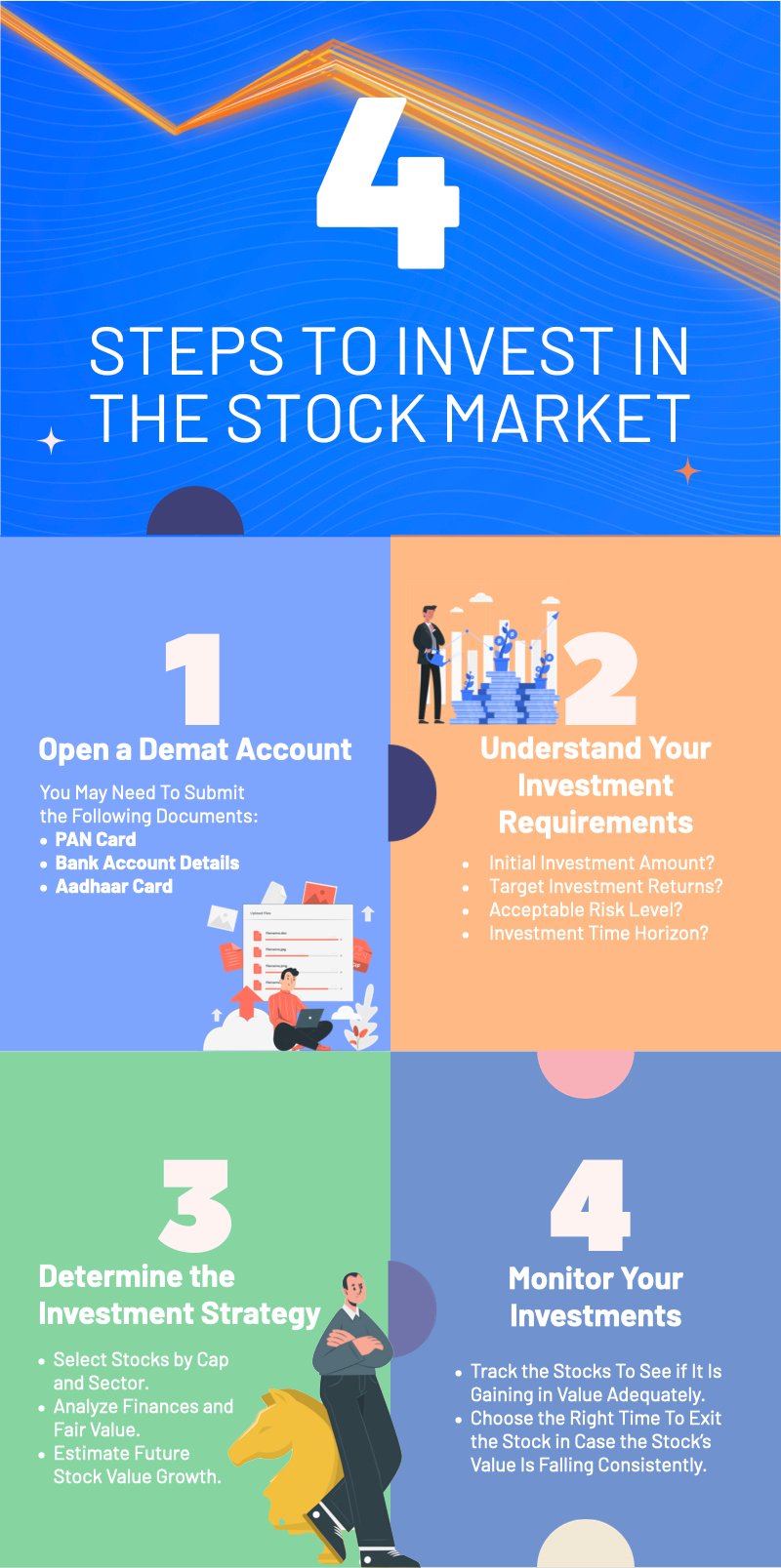
With your goals set and a platform chosen, you’re ready to make your first investment. This section covers the practical steps.
Opening and Funding Your Brokerage Account
The process of opening a brokerage account is similar to opening a bank account:
- Application: You’ll complete an online application, providing personal details such as your name, address, date of birth, Social Security number (or equivalent), and employment information.
- Verification: The broker will verify your identity, often requiring you to upload a photo ID.
- Funding: Once your account is open, you’ll need to transfer money into it. Common funding methods include:
- ACH Transfer: Linking your bank account for electronic transfers (typically takes 1-3 business days).
- Wire Transfer: Faster but often with higher fees.
- Check Deposit: Slower and less common nowadays.
- Rollover: Transferring funds from an existing retirement account (e.g., an old 401(k)).
Ensure you understand any minimum deposit requirements your chosen platform might have.
Navigating the Trading Interface: Placing Buy Orders

Once your account is funded, you can start looking for stocks to buy. Most brokerage platforms have a search bar where you can type in a company’s name or its stock ticker symbol (e.g., AAPL for Apple, MSFT for Microsoft).
When you find the stock you want to buy, you’ll typically see a “Buy” or “Trade” button. Clicking this will take you to an order entry screen where you’ll specify:
- Security: The stock you want to buy.
- Action: Buy.
- Quantity: The number of shares you want to purchase. Some platforms also allow you to buy fractional shares, meaning you can invest a specific dollar amount (e.g., $100) into a stock, even if that doesn’t amount to a whole number of shares. This is great for beginners with smaller capital.
- Order Type: This is crucial and determines how your order is executed.
Understanding Different Order Types (Market vs. Limit)
- Market Order: This is the simplest and most common order type for beginners. A market order instructs your broker to buy or sell a stock immediately at the best available current market price. While it guarantees execution, it doesn’t guarantee a specific price. In fast-moving markets, the actual price you pay might be slightly different from the price you saw a second before placing the order.
- Limit Order: A limit order allows you to specify the maximum price you’re willing to pay for a stock (or the minimum price you’re willing to sell it for). Your order will only be executed if the stock’s price reaches or falls below your specified limit price. This gives you more control over the price, but there’s no guarantee your order will be filled if the stock never reaches your desired price.
For most beginners buying well-known, liquid stocks, a market order is sufficient. However, for less liquid stocks or when you have a specific price target, a limit order offers more precision.
Building a Resilient Portfolio: Strategies for Long-Term Success
Buying your first stock is just the beginning. The real goal is to build a diversified and resilient portfolio that can withstand market fluctuations and grow over time.
Diversification: Spreading Your Risk
The golden rule of investing: “Don’t put all your eggs in one basket.” Diversification means spreading your investments across different assets, industries, and geographies to reduce risk. If one company or sector performs poorly, the impact on your overall portfolio is mitigated by the strong performance of others.
Instead of buying just a few individual stocks, consider:
- Index Funds and ETFs: These are excellent tools for diversification. An index fund or ETF (Exchange Traded Fund) holds a basket of stocks that track a specific market index, like the S&P 500. By investing in one, you instantly gain exposure to hundreds of companies, providing broad market diversification with a single purchase. They are often low-cost and ideal for long-term investors.
- Mutual Funds: Similar to ETFs, but typically actively managed by a fund manager. They can have higher fees but aim to outperform the market.
The Power of Dollar-Cost Averaging
Dollar-cost averaging (DCA) is a simple yet powerful strategy where you invest a fixed amount of money at regular intervals (e.g., $100 every month), regardless of the stock’s price. This approach helps to smooth out the impact of market volatility. When prices are high, your fixed sum buys fewer shares; when prices are low, it buys more shares. Over time, your average purchase price per share tends to be lower than if you tried to time the market. DCA removes emotion from investing and encourages consistent saving.
Reinvesting Dividends: Compounding Your Wealth
Many brokerage accounts offer the option to automatically reinvest any dividends you receive back into the same stock or fund. This is a powerful strategy because it leverages the magic of compound interest. Instead of taking the cash, you use the dividends to buy more shares, which then generate more dividends, which buy even more shares, and so on. Over decades, this snowball effect can significantly amplify your returns.
Monitoring Your Investments and Rebalancing
While a set-it-and-forget-it approach can work for some, it’s wise to periodically review your portfolio.
- Monitoring: Keep an eye on the news, company reports, and economic trends that might affect your investments. However, avoid obsessive daily checking, which can lead to emotional decisions.
- Rebalancing: Over time, some of your investments may grow faster than others, shifting your portfolio’s asset allocation away from your original target. Rebalancing involves selling off some of the overperforming assets and buying more of the underperforming ones to bring your portfolio back to your desired risk profile. This is typically done annually or semi-annually.
Important Considerations and Common Pitfalls to Avoid
As you embark on your investment journey, be mindful of potential challenges and best practices.
The Importance of Continuous Learning
The financial markets are dynamic. Continuously educate yourself by reading reputable financial news, books, and articles. Understand basic economic principles, company analysis, and different investment strategies. The more you learn, the better equipped you’ll be to make informed decisions.
Avoiding Emotional Trading
One of the biggest pitfalls for new investors is allowing emotions like fear and greed to dictate trading decisions.
- Fear: When the market drops, the urge to sell everything to prevent further losses can be strong. However, selling during a downturn often locks in losses and prevents you from participating in the eventual recovery.
- Greed: During bull markets, the temptation to chase hot stocks or take on excessive risk for quick gains can lead to poor choices.
Stick to your long-term plan, focus on your goals, and avoid making impulsive decisions based on short-term market noise.
Understanding Fees and Taxes
- Fees: Be aware of any fees associated with your investments. These can include management fees for funds, trading commissions (though rare for stocks nowadays), and account maintenance fees. Even small fees can significantly erode your returns over decades.
- Taxes: Capital gains (profit from selling an investment) and dividends are subject to taxes. Understanding how capital gains tax works (short-term vs. long-term) and the tax implications of different account types (e.g., taxable brokerage accounts vs. tax-advantaged retirement accounts like IRAs or 401(k)s) is crucial for maximizing your net returns. Consult a tax professional for personalized advice.
When to Seek Professional Financial Advice
While this guide provides a solid foundation, there may be times when professional advice is invaluable. If your financial situation becomes complex, you have significant assets, or you simply prefer personalized guidance, a certified financial advisor can help you create a comprehensive financial plan, optimize your portfolio, and navigate complex tax implications. Ensure any advisor you choose is a fiduciary, meaning they are legally obligated to act in your best interest.
In conclusion, buying stocks and shares doesn’t have to be intimidating. By understanding the basics, preparing diligently, utilizing effective strategies, and committing to continuous learning, you can confidently step into the world of investing. The journey to building wealth is a marathon, not a sprint, and with patience, discipline, and a sound approach, you can achieve your financial aspirations.
aViewFromTheCave is a participant in the Amazon Services LLC Associates Program, an affiliate advertising program designed to provide a means for sites to earn advertising fees by advertising and linking to Amazon.com. Amazon, the Amazon logo, AmazonSupply, and the AmazonSupply logo are trademarks of Amazon.com, Inc. or its affiliates. As an Amazon Associate we earn affiliate commissions from qualifying purchases.