
The financial landscape has undergone a seismic shift over the last decade. What began as an experimental digital currency in 2009 has evolved into a multi-trillion-dollar asset class that commands the attention of Wall Street, sovereign nations, and retail investors alike. For those asking, “How do I buy Bitcoin?” the answer is no longer found in the dark corners of technical forums. Today, entering the Bitcoin market is as streamlined as opening a brokerage account or using a mobile banking app.
However, because Bitcoin operates outside the traditional banking system, the process involves unique considerations regarding security, custody, and strategy. This guide provides a professional roadmap for navigating the acquisition of Bitcoin, focusing on the financial mechanics, platform selection, and long-term management of digital wealth.

1. Understanding the Fundamentals: Is Bitcoin Right for Your Portfolio?
Before executing a trade, a prudent investor must understand the asset’s role within a broader financial strategy. Bitcoin is often described as “Digital Gold” because of its programmed scarcity—there will only ever be 21 million coins. This makes it an attractive hedge against fiat currency inflation and a potential diversifier for a traditional portfolio of stocks and bonds.
The Role of Digital Assets in Wealth Management
In modern personal finance, Bitcoin is increasingly viewed as a “non-correlated” or “asymmetrically correlated” asset. While it can be volatile in the short term, its long-term growth trajectory has outperformed almost every traditional asset class over the last ten years. Financial advisors often suggest a small allocation—ranging from 1% to 5% of a total portfolio—to capture upside potential without exposing the investor to ruinous risk.
Assessing Risk and Volatility
It is vital to recognize that Bitcoin is a high-volatility asset. Price swings of 5% to 10% in a single day are not uncommon. Therefore, the “Money” perspective on buying Bitcoin emphasizes that you should only invest capital that you do not need for immediate liquidity. Before buying, ensure your “financial house” is in order: an emergency fund should be established, and high-interest consumer debt should be managed.
2. Choosing the Right Platform: Exchanges, Brokers, and Apps
The “where” of buying Bitcoin is just as important as the “when.” Depending on your level of financial sophistication and your goals, you have three primary avenues for purchase.
Centralized Exchanges (CEX) vs. Traditional Brokers
Most investors start with a Centralized Exchange like Coinbase, Kraken, or Binance. These platforms are designed specifically for digital assets and offer deep liquidity, meaning you can buy and sell large amounts without significantly moving the price.
Alternatively, traditional financial institutions have entered the fray. Platforms like Fidelity, Robinhood, and Charles Schwab (via Bitcoin ETFs) allow you to gain exposure to Bitcoin within the same interface where you manage your IRAs or brokerage accounts. The advantage here is simplicity and integrated tax reporting, though you may not always be able to “withdraw” the underlying Bitcoin to a private wallet.
Evaluating Fees, Security, and Compliance
When selecting a platform, look closely at the fee structure. Some apps charge a “spread” (the difference between the buy and sell price), while professional exchanges charge a flat percentage per trade. Furthermore, prioritize platforms that are heavily regulated in your jurisdiction. In the United States, for example, look for platforms that are “Money Services Businesses” and compliant with Anti-Money Laundering (AML) regulations. This ensures a level of consumer protection similar to traditional banking.
3. The Step-by-Step Purchase Process
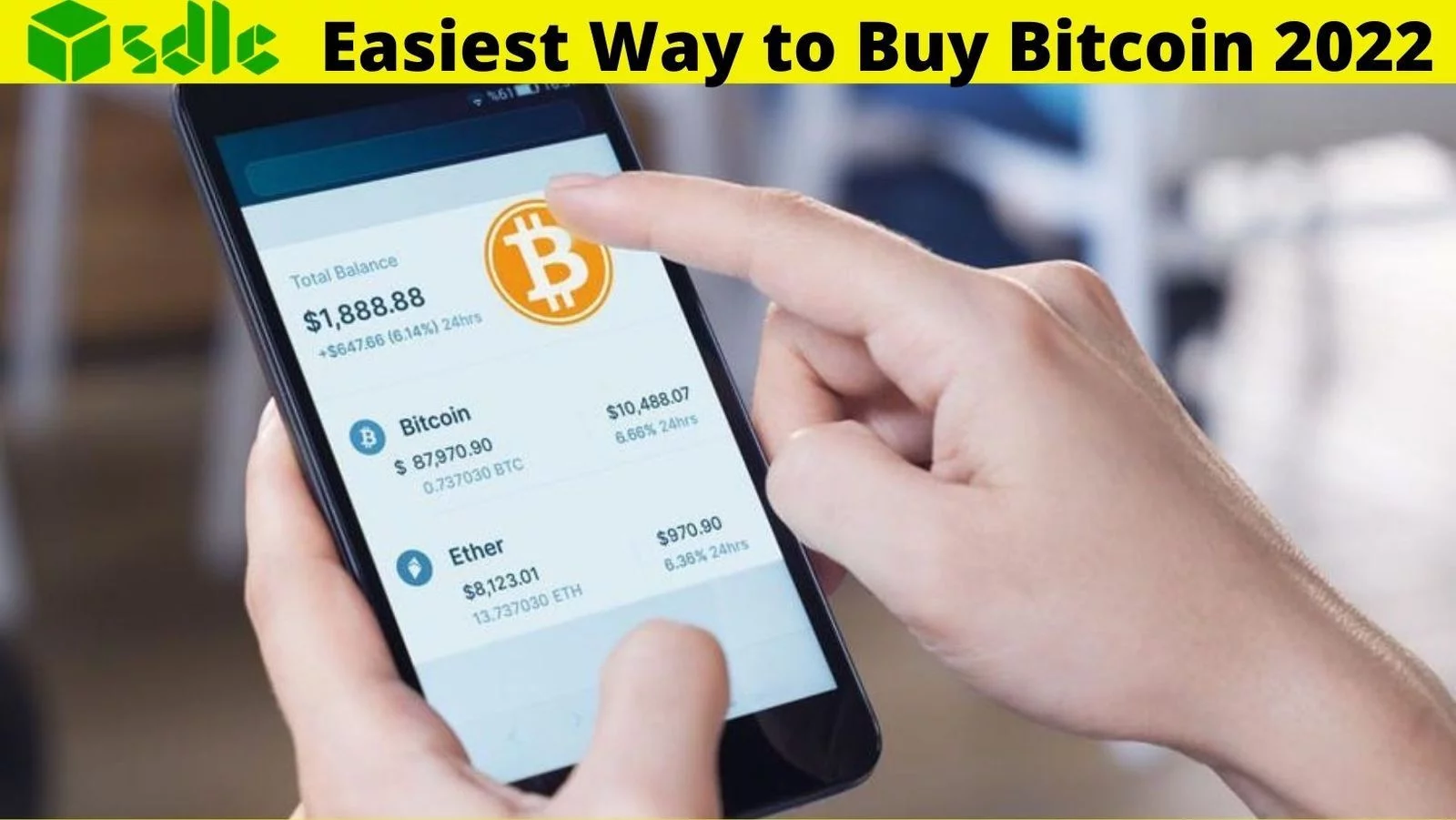
Once you have selected a platform, the actual process of buying is methodical. It follows a standard financial onboarding procedure designed to protect both the investor and the integrity of the financial system.
Creating and Verifying Your Account (KYC)
The first step is “Know Your Customer” (KYC) verification. You will be required to provide a government-issued ID, proof of address, and sometimes a “selfie” to verify your identity. While this may feel invasive compared to the early days of crypto, it is a legal requirement for any platform that touches “fiat” money (USD, EUR, GBP). This process secures your account and prevents fraudulent actors from using your identity to trade.
Funding Your Account: Fiat-to-Crypto Methods
After verification, you must move “real-world” money into the exchange. Most platforms offer several methods:
- ACH Transfers: Usually free but can take 3–5 days to clear.
- Wire Transfers: The fastest way to move large sums, often clearing within hours, though your bank may charge a fee.
- Debit/Credit Cards: Convenient and instant, but often carry the highest fees (sometimes upwards of 3% to 5%).
- Direct Deposit: Some modern fintech apps allow you to divert a portion of your paycheck directly into Bitcoin.
Executing Your First Trade
Once your account is funded, you are ready to buy. You will typically see two options: a “Market Order” and a “Limit Order.”
- Market Order: You buy Bitcoin instantly at the current prevailing price. This is easiest for beginners.
- Limit Order: You set a specific price at which you are willing to buy. The trade only executes if Bitcoin hits that price. This is a more strategic approach for those looking to optimize their entry point.
4. Securing Your Investment: Custody and Storage
In the world of Bitcoin, the phrase “Not your keys, not your coins” is a foundational principle of financial self-sovereignty. When you buy Bitcoin on an exchange, they technically hold it for you. To truly “own” the asset and remove the risk of the exchange being hacked or going bankrupt, you must consider private custody.
Hot Wallets vs. Cold Storage
- Hot Wallets: These are software applications on your phone or computer. They are convenient for frequent trading but are “connected” to the internet, making them slightly more vulnerable to sophisticated malware.
- Cold Storage: This involves using a “Hardware Wallet”—a physical device (like a Ledger or Trezor) that keeps your private keys offline. For any significant amount of money, cold storage is the gold standard for security. It ensures that even if your computer is compromised, your Bitcoin remains safe.
Best Practices for Private Key Management
If you choose to move your Bitcoin to private custody, you will be given a “Seed Phrase” (usually 12 to 24 random words). This phrase is the ultimate key to your funds. If you lose it, your money is gone forever; if someone else sees it, they can steal your funds. Professional investors treat this phrase like a physical deed to a house, storing it in fireproof safes or secure deposit boxes.
5. Long-Term Strategies and Tax Implications
Buying Bitcoin is the beginning of the journey, not the end. To build wealth successfully, you must have an exit strategy or a long-term management plan.
Dollar-Cost Averaging (DCA)
The most successful retail investors in the Bitcoin space rarely try to “time the market.” Instead, they use a strategy called Dollar-Cost Averaging. This involves buying a fixed dollar amount of Bitcoin at regular intervals (e.g., $100 every Friday), regardless of the price. Over time, this smooths out volatility and reduces the emotional stress of watching daily price fluctuations. Most major exchanges allow you to automate this process.
Understanding Capital Gains and Reporting
From a financial perspective, Bitcoin is treated as “property” by most tax authorities (such as the IRS in the US). This means that every time you sell Bitcoin for a profit, or even use it to buy a cup of coffee, you have triggered a taxable event.
- Short-Term Capital Gains: If you hold Bitcoin for less than a year before selling, you are taxed at your ordinary income rate.
- Long-Term Capital Gains: If you hold for more than a year, you qualify for a lower tax rate.
Professional investors keep meticulous records of their “cost basis”—the price they paid for the Bitcoin plus any fees. Many software tools now exist that sync with your exchange accounts to automatically generate tax reports, ensuring you remain compliant with local laws.

Conclusion
Buying Bitcoin is a significant step toward financial modernization. By treating it with the same rigor as any other institutional investment—vetting platforms, securing assets, and planning for taxes—you transition from a spectator to a participant in the future of finance. Whether you are looking for a speculative hedge or a long-term store of value, the key to success lies in education, patience, and a disciplined approach to security. The tools are now in place; the next step is yours to take.
aViewFromTheCave is a participant in the Amazon Services LLC Associates Program, an affiliate advertising program designed to provide a means for sites to earn advertising fees by advertising and linking to Amazon.com. Amazon, the Amazon logo, AmazonSupply, and the AmazonSupply logo are trademarks of Amazon.com, Inc. or its affiliates. As an Amazon Associate we earn affiliate commissions from qualifying purchases.