
In the modern economy, the ability to accept credit card payments is no longer a luxury—it is a fundamental requirement for business viability. Whether you are launching a boutique retail storefront, a consulting firm, or an expansive e-commerce platform, your financial infrastructure dictates your growth potential. Consumers increasingly favor the convenience, security, and rewards associated with credit and debit cards, and businesses that fail to accommodate these preferences risk significant revenue loss.
However, the world of payment processing is often obscured by complex jargon, tiered fee structures, and a variety of technical requirements. Navigating this landscape requires an understanding of how money moves from a customer’s bank account to your business balance sheet. This guide provides a strategic roadmap for business owners to implement a credit card acceptance system that optimizes cash flow while minimizing overhead.

Understanding the Financial Architecture of Payment Processing
To effectively accept credit card payments, a business owner must first understand the financial “plumbing” that happens behind every transaction. A single swipe or tap involves several key entities working in concert within seconds.
The Key Players in the Transaction
Every credit card payment involves a chain of communication. First is the Cardholder, the customer who initiates the payment. Next is the Merchant, the business receiving the funds. Facilitating this exchange are the Issuing Bank (the customer’s bank), the Acquiring Bank (the merchant’s bank), and the Payment Processor. The processor acts as the intermediary, relaying information between the banks and the card networks (such as Visa, Mastercard, or American Express) to authorize and settle the transaction.
The Role of the Payment Gateway
For online or remote transactions, a payment gateway is essential. Think of the gateway as a digital point-of-sale terminal. It encrypts sensitive credit card data and transmits it to the processor. Without a secure gateway, a business cannot legally or safely process “card-not-present” transactions. In many modern financial tools, the gateway and the processor are bundled into a single service, simplifying the setup for the business owner.
Authorization, Clearing, and Settlement
The lifecycle of a payment consists of three phases. Authorization happens at the moment of purchase, verifying the customer has the funds or credit limit available. Clearing is the process where the transaction data is sent to the card networks. Finally, Settlement is when the funds are actually deposited into your business bank account, usually occurring within one to three business days depending on your provider’s policies.
Choosing the Right Merchant Model: Aggregators vs. Dedicated Merchant Accounts
One of the most critical financial decisions you will make is choosing the type of account structure you use to process payments. This decision affects your cost per transaction, your account stability, and your speed of onboarding.
Payment Service Providers (Aggregators)
Payment Service Providers (PSPs), such as Square, Stripe, and PayPal, have revolutionized the “Money” niche by allowing businesses to start accepting payments almost instantly. Under this model, your business is grouped with thousands of other merchants under a single, large merchant account.
Pros:
-
Simple Pricing: Most PSPs offer flat-rate pricing (e.g., 2.9% + $0.30), making it easy to forecast your expenses.
-
Speed: You can often begin accepting payments within minutes of signing up.
-
Integrated Tools: They often provide free software for invoicing and inventory management.
Cons:
- Account Stability: Because they take on higher risk by onboarding users quickly, PSPs are known to freeze or hold funds if they detect a sudden spike in volume or suspicious activity.
Dedicated Merchant Accounts
A dedicated merchant account is a private contract between your business and an acquiring bank. This is the traditional route for established businesses with higher volumes.
Pros:
-
Lower Rates: For businesses processing over $10,000 to $15,000 per month, a dedicated account usually offers “Interchange-Plus” pricing, which is significantly cheaper than flat-rate pricing.
-
Stability: Since the bank performs a full underwriting process before you start, your account is much less likely to face unexpected freezes.
-
Customization: You have more leverage to negotiate terms and fees as your business grows.
Cons:
-
Complexity: The application process is more rigorous, requiring financial statements and credit checks.
-
Contract Terms: These accounts may come with monthly minimums or long-term contracts.
Analyzing the Financial Costs: Fee Structures and Hidden Charges
Accepting credit cards is not free, and the cost of doing business can vary wildly based on the fee structure you choose. Understanding these costs is essential for maintaining healthy profit margins.
Interchange Fees: The Baseline Cost
The interchange fee is the non-negotiable rate set by card networks (Visa, Mastercard). This fee goes to the issuing bank to cover their risk and administrative costs. The interchange rate varies based on the type of card (a basic debit card costs less than a high-rewards premium credit card) and how the transaction is processed (in-person vs. online).
Pricing Models
-
Flat-Rate Pricing: You pay a fixed percentage for every transaction regardless of the card type. This is predictable but can be expensive if you process many low-cost debit card transactions.
-
Interchange-Plus Pricing: The processor charges you the exact interchange rate plus a small, fixed markup (e.g., Interchange + 0.20%). This is widely considered the most transparent and cost-effective model for growing businesses.
-
Tiered Pricing: Transactions are categorized as “qualified,” “mid-qualified,” or “non-qualified.” This model is often opaque and usually results in the highest costs for the merchant, as many transactions get downgraded to higher-priced tiers.
Additional Overhead
Beyond the per-transaction fee, you must account for:
-
PCI Compliance Fees: Fees charged to ensure your business meets security standards.
-
Statement Fees: Monthly charges for account maintenance and reporting.
-
Chargeback Fees: Penalties incurred when a customer disputes a charge. These can range from $15 to $50 per incident, plus the loss of the original sale amount.
Methods of Acceptance: From Physical Terminals to Virtual Gateways
Depending on your business model, you will need different hardware or software solutions to physically or digitally capture card data.
Point of Sale (POS) Systems
For brick-and-mortar retail or hospitality, a POS system is the central hub of your financial operations. Modern POS hardware includes card readers capable of accepting EMV (chip) cards and NFC (contactless) payments like Apple Pay and Google Pay. Choosing an integrated system allows your sales data to sync directly with your accounting software, streamlining your end-of-month reconciliation.
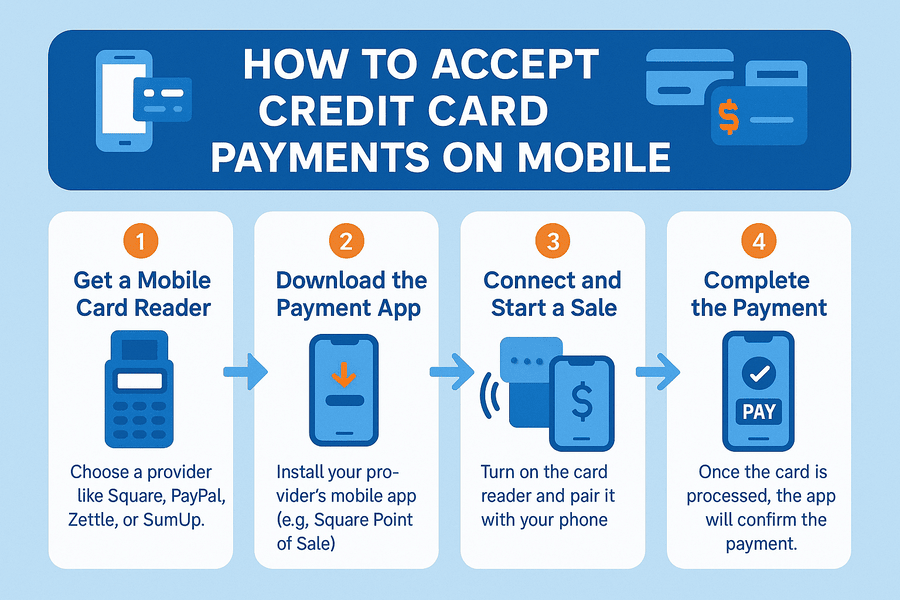
Mobile Payment Solutions
If you operate a service-based business or a mobile shop, mobile card readers that plug into a smartphone or tablet provide ultimate flexibility. These are usually offered by PSPs and allow you to take the business to the customer, whether at a trade show, a client’s home, or an outdoor market.
E-commerce and Virtual Terminals
If you sell goods online, you will integrate a payment gateway into your website’s checkout page. For businesses that take orders over the phone (MOTO—Mail Order/Telephone Order), a “Virtual Terminal” is necessary. This is a secure web-based form where you manually enter the customer’s credit card information. Note that manual entries often carry higher transaction fees due to the increased risk of fraud.
Managing Risks, Security, and Cash Flow
The financial responsibility of accepting credit cards extends beyond the initial sale. Protecting your business from fraud and managing your liquidity are ongoing tasks.
PCI DSS Compliance
The Payment Card Industry Data Security Standard (PCI DSS) is a set of security requirements designed to ensure that all companies that process, store, or transmit credit card information maintain a secure environment. Failure to remain compliant can lead to massive fines and the revocation of your ability to accept cards. Most modern processors handle the bulk of this technical burden, but the business owner remains responsible for following safe data practices.
Mitigating Chargebacks and Fraud
Chargebacks are a significant drain on business revenue. To minimize them, always provide clear receipts, maintain an easy-to-find refund policy, and use descriptors that customers will recognize on their bank statements. Furthermore, utilizing tools like Address Verification Service (AVS) and Card Verification Value (CVV) checks can help flag fraudulent transactions before they are authorized.
Optimizing Settlement Cycles
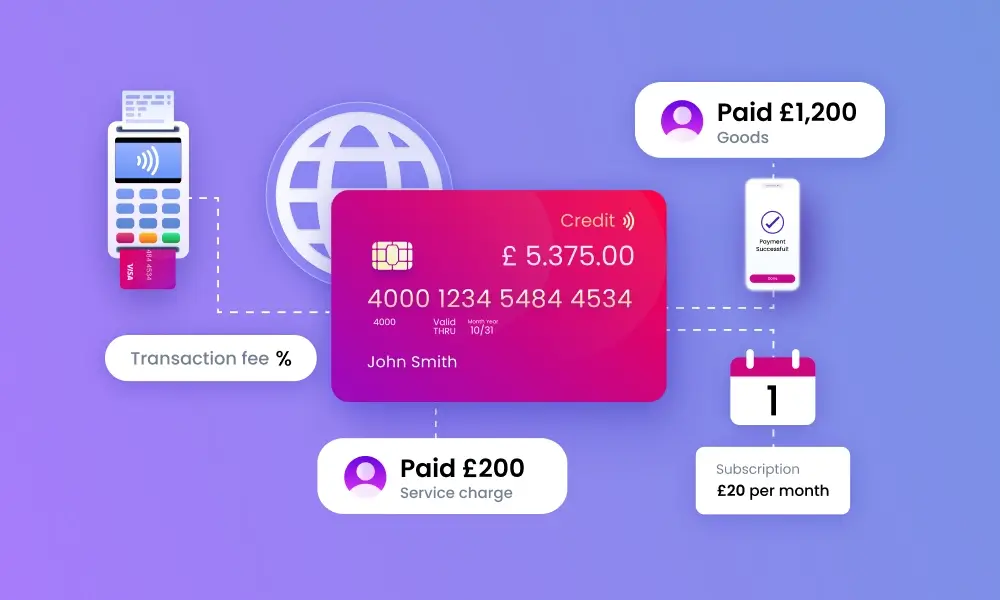
For a business, “cash is king.” Understanding your settlement cycle—the time it takes for processed funds to hit your bank account—is vital for managing payroll, inventory, and rent. While most processors settle in 1-2 business days, some offer “Instant Deposit” for an extra fee. While tempting for quick liquidity, these fees can add up, so they should be used strategically rather than as a standard operating procedure.
By carefully selecting a payment partner, understanding the intricacies of fee structures, and maintaining rigorous security standards, you can transform credit card acceptance from a necessary expense into a streamlined engine for financial growth. Your choice of payment infrastructure is a reflection of your business strategy—choose the tools that provide the best balance of cost, reliability, and scalability.
aViewFromTheCave is a participant in the Amazon Services LLC Associates Program, an affiliate advertising program designed to provide a means for sites to earn advertising fees by advertising and linking to Amazon.com. Amazon, the Amazon logo, AmazonSupply, and the AmazonSupply logo are trademarks of Amazon.com, Inc. or its affiliates. As an Amazon Associate we earn affiliate commissions from qualifying purchases.