
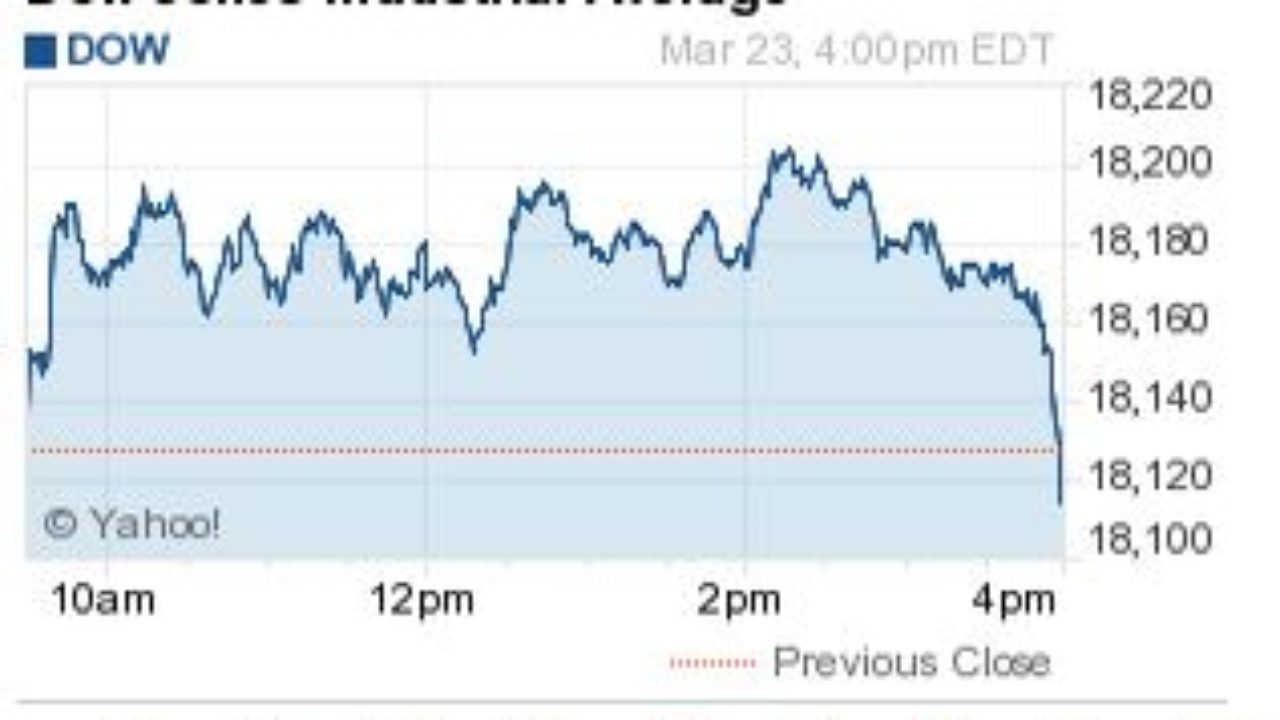
In the fast-paced world of global finance, one question echoes through trading floors, newsrooms, and living rooms alike every afternoon: “How did the Dow do today?” The Dow Jones Industrial Average (DJIA), often simply referred to as “the Dow,” is perhaps the most recognized financial barometer in the world. When the Dow climbs, a sense of optimism permeates the economy; when it retreats, headlines often turn to “market jitters” and “economic uncertainty.”
However, understanding what happened to the Dow today requires more than just looking at a red or green number. It involves understanding the mechanics of the market, the components of the index, and the macroeconomic forces that drive daily fluctuations. For the modern investor, the daily performance of the Dow is a single data point in a much larger narrative of wealth creation and risk management.
Understanding the Dow Jones Industrial Average (DJIA)
To grasp how the Dow performed today, one must first understand what the index actually represents. Unlike the S&P 500, which tracks 500 of the largest U.S. companies, the Dow is a price-weighted index composed of only 30 “blue-chip” companies. These are established, financially sound, and influential firms that represent various sectors of the U.S. economy, excluding utilities and transportation.
The History and Evolution of the Dow
Founded by Charles Dow and Edward Jones in 1896, the index originally contained only 12 industrial companies. It was designed to provide a snapshot of the health of the American industrial sector. Over the decades, as the U.S. economy transitioned from manufacturing to services and technology, the composition of the Dow changed. Today, it includes tech giants like Microsoft and Apple alongside retail leaders like Walmart and financial powerhouses like Goldman Sachs. Understanding this history helps investors realize that the Dow is not a static list; it is an evolving reflection of American corporate dominance.
How the Dow is Calculated: The Price-Weighting Mechanism
One of the most unique—and sometimes criticized—aspects of the Dow is that it is price-weighted. This means that companies with a higher stock price have a greater influence on the index’s movement than those with lower prices, regardless of the company’s actual size or market capitalization. For example, a $1 move in a stock trading at $200 has the same impact on the Dow as a $1 move in a stock trading at $50, even if the latter company is technically “larger” by market cap. This calculation is managed by the “Dow Divisor,” a number that adjusts for stock splits and dividend changes to ensure continuity in the index’s value.
The 30 Blue-Chip Components
The 30 stocks in the Dow are often seen as the “royalty” of the stock market. Because they are selected by a committee at S&P Dow Jones Indices, being added to the Dow is a mark of prestige. These companies are generally less volatile than small-cap stocks and are often viewed as “safe havens” during turbulent times. When you ask how the Dow did today, you are essentially asking how the leaders of the American economy—from Boeing and Coca-Cola to UnitedHealth Group—fared over the last six and a half hours of trading.
Factors Influencing Daily Market Performance
When the Dow moves significantly in a single day, it is rarely a random occurrence. The market is a complex ecosystem reacting to a constant stream of information. Identifying why the Dow moved today involves looking at three primary pillars: macroeconomics, corporate health, and global sentiment.
Macroeconomic Indicators: The Fed and Inflation
In the current economic climate, the most significant driver of the Dow’s daily performance is often the Federal Reserve. Investors hang on every word from Fed officials regarding interest rates. If data shows that inflation is cooling, the Dow may rally on hopes of rate cuts, which lower borrowing costs for companies. Conversely, if a jobs report is “too hot,” suggesting that the economy is overheating, the Dow might drop as investors fear prolonged high interest rates. Daily movements are frequently a reaction to Consumer Price Index (CPI) releases or unemployment figures.
Corporate Earnings Reports
Four times a year, during “earnings season,” the Dow’s performance is heavily dictated by the quarterly reports of its 30 components. If a heavy hitter like Microsoft or Home Depot reports record profits and raises its future guidance, it can lift the entire index. However, if a major component misses its earnings targets or warns of a slowdown in consumer spending, it can drag the Dow down, even if the broader economy seems stable. These reports provide a “boots-on-the-ground” look at how inflation and supply chain issues are impacting actual business operations.
Geopolitical Events and Market Sentiment
The stock market hates uncertainty. Geopolitical tensions, such as conflicts in the Middle East or trade disputes between the U.S. and China, can trigger a “flight to safety,” where investors sell stocks and move into bonds or gold. Beyond hard news, “market sentiment”—the collective psychological state of investors—plays a massive role. Sometimes, the Dow moves based on momentum; if a sell-off starts in the morning, fear can compound, leading to a deeper decline by the closing bell.

Interpreting the Daily Numbers: Points vs. Percentages
When you see a headline screaming that “The Dow dropped 500 points,” it sounds catastrophic. However, seasoned investors know that the raw point total is often less important than the percentage change.
Why Percentage Change Matters More Than Points
In the 1980s, a 500-point drop would have wiped out a massive portion of the market’s value because the Dow was trading at much lower levels. Today, with the Dow frequently trading above 35,000 or 40,000 points, a 500-point move represents a change of only about 1.2% to 1.4%. While significant, it is a far cry from a “crash.” To truly understand how the Dow did today, one must look at the percentage. A 1% move is a standard day; a 3% move is a volatile day; and a 5% or 10% move is a historical event.
Volume and Volatility: Reading Between the Lines
High “volume”—the total number of shares traded—gives weight to a market move. If the Dow rises 200 points on very low volume, it suggests that there isn’t much conviction behind the rally. If it drops 200 points on massive volume, it indicates a widespread exit by institutional investors. Additionally, the VIX, often called the “fear gauge,” measures expected volatility. If the Dow is down and the VIX is up, it suggests that investors are bracing for a bumpy ride in the days ahead.
The Dow’s Role in a Modern Investment Strategy
While the Dow is the most famous index, it is not the only one. For a retail investor, placing today’s Dow performance in context with other indices is vital for a balanced perspective.
Dow vs. S&P 500 vs. Nasdaq: Which Matters More?
Each index tells a different story. The Nasdaq is tech-heavy; if it is up 2% while the Dow is flat, it means tech stocks are soaring while traditional “old economy” stocks are lagging. The S&P 500 is generally considered a better representation of the overall U.S. economy because it is broader and market-cap weighted. However, the Dow remains relevant because its components are the largest employers and dividend payers. A strong Dow often signals that the backbone of the economy is holding firm.
Long-term Investing vs. Daily Noise
For the long-term investor, the answer to “how did the Dow do today?” should generally be treated as “noise.” Market history shows that while daily fluctuations are common, the long-term trajectory of the Dow has been upward. Trying to time the market based on daily swings is a strategy that often leads to underperformance. Instead, investors use the Dow as a benchmark to see how their own diversified portfolios are performing relative to the “titans” of industry.
Tools for Tracking Market Movement in Real-Time
In the digital age, you don’t need to wait for the evening news to see how the market is performing. A plethora of tools can provide second-by-second updates.
Top Financial Platforms and Apps
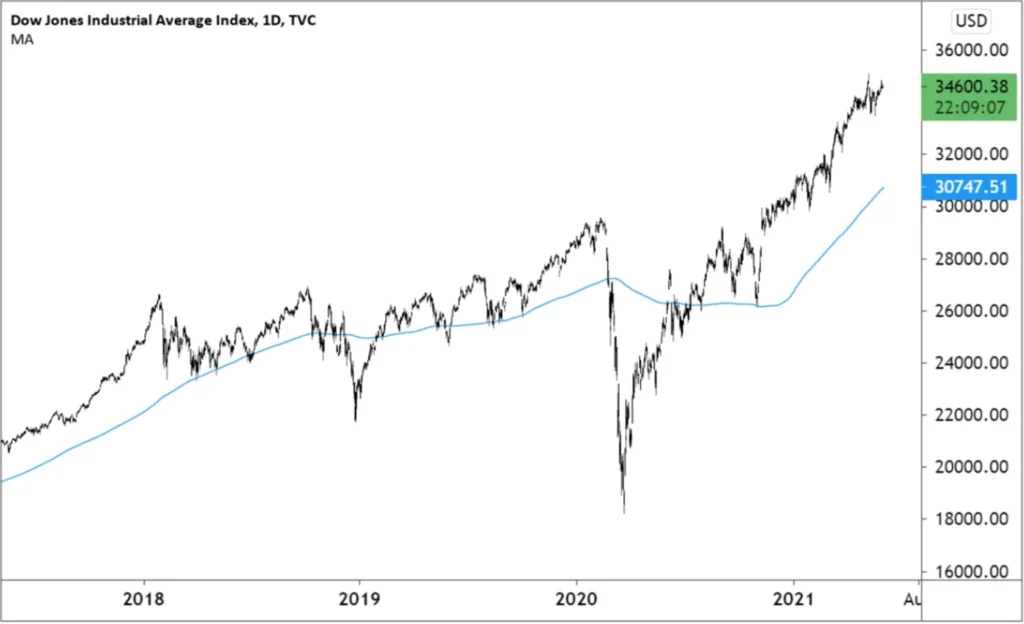
For real-time data, platforms like Yahoo Finance, Google Finance, and Bloomberg offer comprehensive dashboards. These tools allow you to see the “Heat Map” of the Dow, showing which of the 30 companies are up and which are down. Advanced traders might use platforms like Thinkorswim or Interactive Brokers, which provide technical analysis tools, such as moving averages and RSI (Relative Strength Index), to predict where the Dow might head next.
Setting Up Alerts for Key Market Shifts
Most financial apps allow you to set push notifications for significant movements. For example, you can set an alert for when the Dow moves more than 2% in a single day or when it crosses a psychological threshold, such as 40,000. By staying informed through these tools, you can avoid the panic that often comes from seeing a sensationalized headline and instead view the market’s movement through a lens of data and strategy.
In conclusion, “how the Dow did today” is more than just a number; it is a summary of global economic health, corporate profitability, and investor psychology. By understanding the components of the index and the factors that drive its movement, you can transform from a passive observer of the news into a more informed and confident investor. Regardless of whether the Dow is up or down on any given day, the key to financial success remains a focus on the long-term horizon and a disciplined approach to the markets.
aViewFromTheCave is a participant in the Amazon Services LLC Associates Program, an affiliate advertising program designed to provide a means for sites to earn advertising fees by advertising and linking to Amazon.com. Amazon, the Amazon logo, AmazonSupply, and the AmazonSupply logo are trademarks of Amazon.com, Inc. or its affiliates. As an Amazon Associate we earn affiliate commissions from qualifying purchases.