
The story of Amazon is often told through the lens of a garage-based startup, but from a financial perspective, it is a sophisticated study in capital efficiency, long-term investment strategy, and the revolutionary use of cash flow. While many view Amazon’s beginnings as a triumph of retail or technology, its foundation was built on a unique economic model designed by Jeff Bezos—a man who transitioned from the world of high-stakes finance on Wall Street to the burgeoning frontiers of e-commerce. To understand how Amazon began is to understand how a business can prioritize long-term value over short-term earnings, a philosophy that fundamentally changed the way the modern market evaluates corporate success.

The Garage Startup and the Initial Capital Structure
In 1994, Jeff Bezos was a Senior Vice President at D.E. Shaw & Co., a quantitative hedge fund. His background was not in retail, but in the mathematical patterns of growth. When he observed that web usage was growing at 2,300% per year, he didn’t just see a “tech” opportunity; he saw a financial arbitrage opportunity. The beginnings of Amazon were rooted in a calculated risk assessment that favored the scalable nature of digital commerce over the high overhead of traditional brick-and-mortar finance.
Bootstrapping and the “Love Money” Phase
Amazon’s initial capitalization was modest. Bezos used approximately $10,000 of his own money to get the operations running in a Bellevue, Washington, garage. However, the first significant infusion of capital came from his parents, Jackie and Miguel Bezos, who invested roughly $250,000 in 1995. This was a classic “friends and family” round, but with a high-stakes twist: Bezos warned them there was a 70% chance they would lose their entire investment. From a business finance perspective, this early capital was crucial as it allowed Amazon to build its first database and website without the immediate pressure of venture capital oversight, which might have demanded faster profitability.
The Strategic Selection of Seattle for Tax Efficiency
The decision to start the company in Seattle was a deliberate financial maneuver rather than a purely geographic preference. Bezos sought a location with a deep pool of high-tech talent (thanks to Microsoft) but, more importantly, a state with a relatively small population. In the mid-1990s, the “nexus” rule for sales tax meant that a company only had to collect sales tax in states where it had a physical presence. By basing the company in Washington, Amazon could offer tax-free shopping to customers in more populous states like California and New York. This provided an immediate 5% to 10% price advantage over local competitors—a core financial lever that helped drive early customer acquisition.
Scaling the Business Model: The Power of Negative Cash Conversion
One of the most profound aspects of how Amazon began was its mastery of the “Cash Conversion Cycle” (CCC). In traditional retail, a business buys inventory, stores it, sells it, and then eventually collects the cash. This often leads to a cash crunch as capital is tied up in unsold goods. Amazon, however, pioneered a model that flipped this equation on its head.
The Negative Cash Conversion Cycle Explained
From its earliest days, Amazon operated with a negative cash conversion cycle. Because Amazon sold directly to consumers via credit cards, they received payment almost instantly. However, because they were a high-volume buyer, they negotiated payment terms with book distributors (like Ingram) that allowed them to pay for their stock 30, 60, or even 90 days later. Effectively, Amazon was using its suppliers’ money to fund its own growth. This meant that the faster Amazon grew, the more cash it had on its balance sheet. This internal “float” allowed the company to scale aggressively without needing to constantly return to the capital markets for more debt or equity.
Inventory Management as Financial Leverage
In the beginning, Amazon didn’t even hold much inventory. When a customer ordered a book, Amazon would order it from a wholesaler and ship it out. This “virtual inventory” model minimized the capital expenditure (CapEx) required to start the business. As the company scaled, they moved toward a “holding inventory” model to increase delivery speed, but they did so only after they had established the volume necessary to maintain their favorable cash flow position. This transition from a capital-light model to a capital-intensive infrastructure was funded largely by the cash generated from operations, a feat rarely seen in the early days of the internet.
The Path to the Public Markets: Amazon’s 1997 IPO
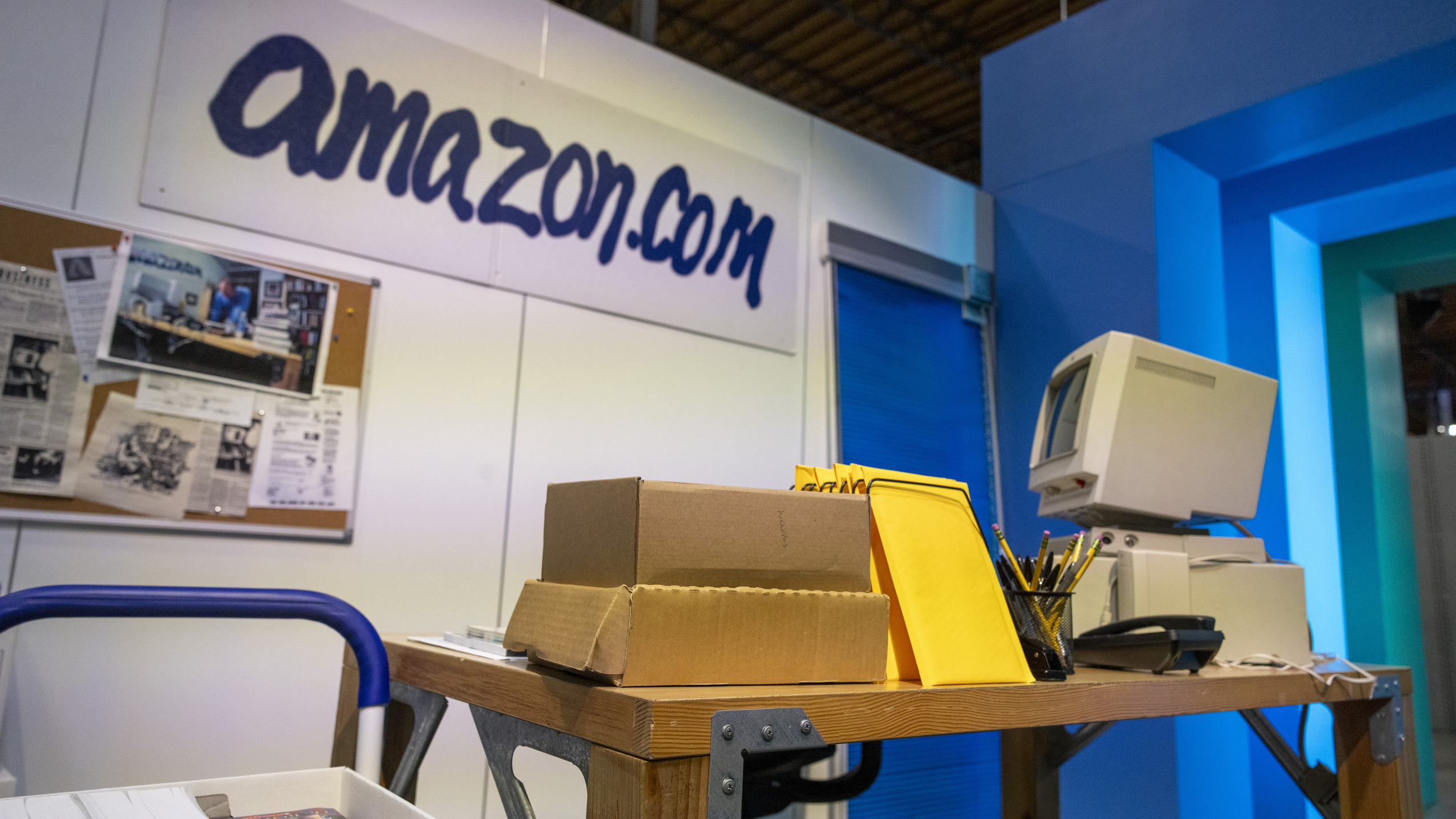
By 1997, Amazon had grown from a niche bookstore into a formidable online presence. To fuel the “Get Big Fast” strategy, Bezos decided to take the company public. The IPO, which took place on May 15, 1997, was a watershed moment for the company’s financial trajectory.
The S-1 Filing and the Vision for Long-term Growth
Amazon’s initial public offering was priced at $18 per share, giving the company a valuation of roughly $438 million. What made this IPO unique was the accompanying letter to shareholders. Bezos famously titled it “It’s All About the Long Term.” In this document, he laid out a financial philosophy that was heresy to many on Wall Street: Amazon would not focus on GAAP (Generally Accepted Accounting Principles) profits or quarterly earnings. Instead, it would focus on free cash flow and long-term market leadership. This transparency allowed Amazon to attract a specific type of investor—those willing to forgo immediate dividends in exchange for exponential future growth.
Reinvesting Profits vs. Short-term Dividends
Unlike its competitors, Amazon did not treat “profit” as the end goal. In the accounting world, profit is what remains after all expenses are paid. Bezos argued that if the company showed a profit, it meant they weren’t reinvesting enough back into the business. Throughout the late 90s, every dollar of “surplus” cash was immediately diverted into building more distribution centers, improving the technology stack, and expanding into new categories like music and DVDs. This “relentless reinvestment” meant the company’s income statement often showed losses, even while its bank account was growing—a nuance that confused many traditional analysts but delighted savvy growth investors.
Weathering the Dot-com Bust: A Lesson in Financial Resilience
The true test of Amazon’s financial beginning came in 2000, when the dot-com bubble burst. Many of Amazon’s peers, such as Pets.com and Webvan, went bankrupt almost overnight. Amazon’s survival was not an accident; it was the result of a timely and strategic capital raise just before the window closed.
Debt Management in 2000
In early 2000, just a month before the market crashed, Amazon issued $672 million in convertible bonds to European investors. This capital raise was criticized at the time as unnecessary dilution, but it proved to be the company’s life raft. When the equity markets dried up and the “easy money” era ended, Amazon had a significant cash cushion that allowed it to continue operating and paying its suppliers while its competitors ran out of runway. This move demonstrated Bezos’s “financial paranoia”—a realization that having cash on hand is more important than having a high stock price during a crisis.
The Shift Toward Diversified Revenue Streams
Post-crash, Amazon had to prove to the markets that its business model was sustainable. This period saw the birth of “Amazon Marketplace,” which allowed third-party sellers to use the Amazon platform. From a financial standpoint, this was a high-margin masterstroke. Amazon would take a commission on every sale without having to own the inventory or take the risk of the product not selling. This diversified the revenue stream and improved the company’s margins, providing the financial stability needed to move into the next phase of its evolution.
The Flywheel Effect: The Financial Logic of Infinite Reinvestment
The culmination of Amazon’s early financial strategy is often described as the “Flywheel Effect.” This is a virtuous cycle where lower prices lead to more customers, which attracts more third-party sellers, which creates economies of scale, which eventually allows the company to lower prices even further.
Lowering Costs to Drive Volume
The flywheel is a capital allocation strategy. Instead of taking the savings from operational efficiencies and giving them to shareholders as dividends, Amazon took those savings and gave them back to the customers in the form of lower prices and faster shipping (Amazon Prime). This unconventional use of capital served as a barrier to entry for any competitor who couldn’t match Amazon’s scale or its willingness to operate on razor-thin margins.
The Birth of AWS as a High-Margin Engine
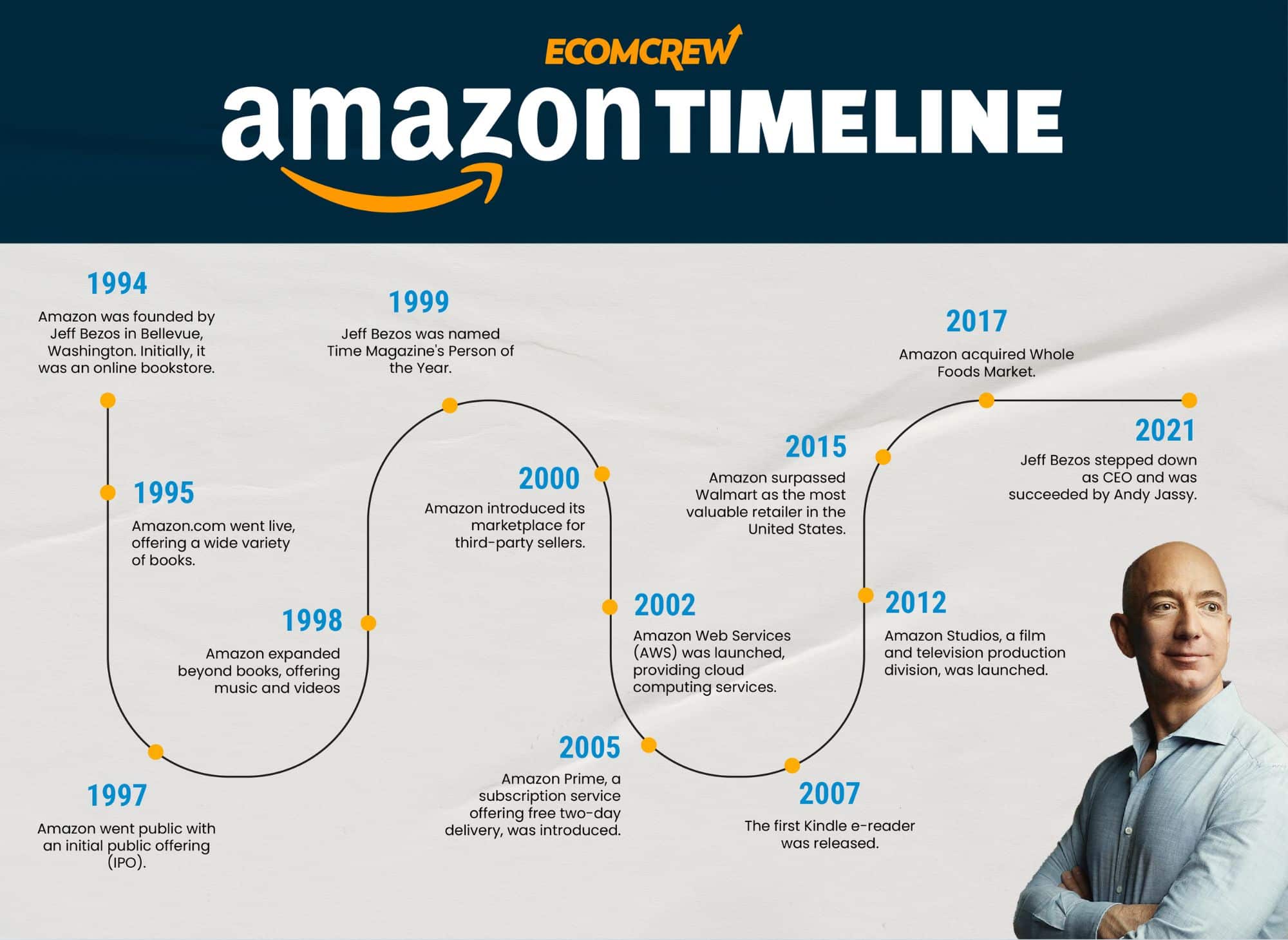
While Amazon began as a retail entity, the financial foundation laid in the early years allowed for the creation of Amazon Web Services (AWS). Originally built to solve Amazon’s internal scaling issues, AWS was commercialized in 2006. In the context of Amazon’s financial history, AWS represents the ultimate diversification. It provided a high-margin, recurring revenue stream that could subsidize the lower-margin retail business. Today, the profits from AWS often fund the “moonshot” projects of the company, proving that the financial discipline established in a Seattle garage in 1994 remains the driving force behind the company’s global dominance.
In summary, Amazon did not begin simply as an online bookstore. It began as a sophisticated financial experiment that challenged the status quo of corporate finance. By prioritizing free cash flow over accounting profits, utilizing a negative cash conversion cycle, and aggressively reinvesting capital into a self-sustaining flywheel, Amazon built a financial fortress that has allowed it to outlast and outperform nearly every other company of its era.
aViewFromTheCave is a participant in the Amazon Services LLC Associates Program, an affiliate advertising program designed to provide a means for sites to earn advertising fees by advertising and linking to Amazon.com. Amazon, the Amazon logo, AmazonSupply, and the AmazonSupply logo are trademarks of Amazon.com, Inc. or its affiliates. As an Amazon Associate we earn affiliate commissions from qualifying purchases.