
Embarking on the journey of stock market investing can initially feel like navigating a complex labyrinth. For many, the very thought conjures images of complicated charts, rapid-fire trading, and an exclusive world understood only by financial gurus. However, the reality is far less intimidating and significantly more accessible. Learning to invest in the stock market is a powerful step towards building long-term wealth, securing your financial future, and achieving financial independence. It’s a skill that, once acquired, can empower you to make informed decisions about your money, understand economic cycles, and leverage the power of growth and compound interest. This comprehensive guide will break down the learning process into manageable steps, demystifying the stock market and equipping you with the knowledge to begin your investment journey with confidence.
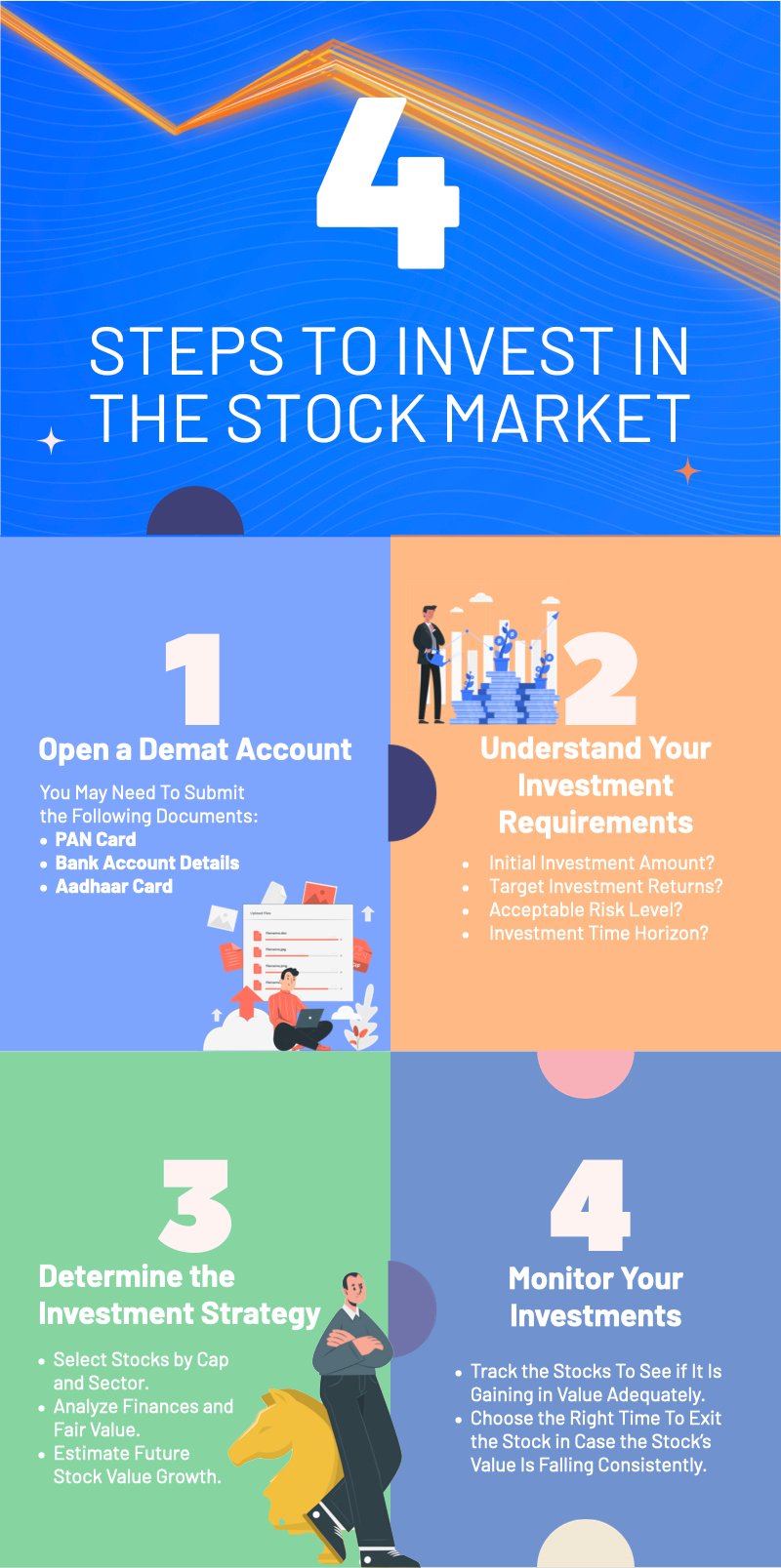
Building Your Foundational Knowledge
Before you even think about buying your first share, it’s crucial to establish a solid understanding of the basic concepts that govern the stock market. Think of this as laying the groundwork for a robust financial house. Without this foundation, any investment strategy you adopt will be built on shaky ground.
Understanding Basic Investment Concepts
At its core, investing involves allocating resources—typically money—with the expectation of generating a profit. In the stock market, these resources are used to purchase shares of publicly traded companies.
- Stocks (Equities): Represent ownership stakes in a company. When you buy a stock, you become a part-owner. The value of your stock can increase (capital appreciation) or decrease, and some companies pay out a portion of their profits as dividends.
- Bonds: Essentially loans made by an investor to a borrower (typically corporate or governmental entities). Bonds pay interest over a set period and return the principal at maturity. They are generally considered less volatile than stocks.
- Mutual Funds: Professionally managed portfolios that pool money from many investors to purchase a diversified collection of stocks, bonds, or other securities. They offer diversification and professional management but come with fees.
- Exchange-Traded Funds (ETFs): Similar to mutual funds, ETFs hold a basket of assets but trade like individual stocks on an exchange throughout the day. They often have lower fees than mutual funds and offer significant diversification.
- Diversification: The strategy of spreading your investments across various assets, industries, and geographies to reduce risk. The adage “don’t put all your eggs in one basket” is central to diversification.
- Risk vs. Reward: A fundamental principle stating that higher potential returns usually come with higher risk. Understanding your personal risk tolerance is paramount.
- Compound Interest: Often called the “eighth wonder of the world,” compound interest is the interest on an initial principal plus the accumulated interest from previous periods. It’s the engine of long-term wealth growth.
Learning Key Market Terminology
The stock market has its own lexicon, and understanding common terms will help you comprehend financial news, analyst reports, and investment discussions.
- Bull Market/Bear Market: A bull market is characterized by rising stock prices and investor optimism, while a bear market signifies falling prices and pessimism.
- Dividends: A portion of a company’s earnings paid out to its shareholders, typically quarterly.
- Market Capitalization (Market Cap): The total value of a company’s outstanding shares, calculated by multiplying the stock price by the number of shares. It indicates a company’s size (e.g., small-cap, mid-cap, large-cap).
- P/E Ratio (Price-to-Earnings Ratio): A valuation measure that compares a company’s current share price to its per-share earnings. It helps investors determine if a stock is overvalued or undervalued.
- Liquidity: The ease with which an asset can be converted into cash without affecting its market price. Highly liquid stocks can be bought and sold quickly.
Exploring Different Investment Philosophies
Investors approach the market with varying strategies and beliefs. Familiarizing yourself with these philosophies can help you identify an approach that aligns with your goals and personality.
- Value Investing: Pioneered by Benjamin Graham and popularized by Warren Buffett, this strategy involves finding undervalued companies with strong fundamentals, believing their market price will eventually reflect their true intrinsic value.
- Growth Investing: Focuses on companies expected to grow at an above-average rate compared to other companies, often reinvesting their earnings back into the business rather than paying dividends.
- Dividend Investing: A strategy centered on investing in companies that regularly pay dividends, providing a steady stream of income.
- Passive Investing (Index Investing): Involves investing in broad market indices (like the S&P 500) through index funds or ETFs. This strategy aims to match market returns rather than trying to beat them, often with lower fees and less active management.
Practical Steps to Get Started
Once you have a grasp of the fundamentals, the next phase involves translating that knowledge into actionable steps. This is where you begin to define your personal investment path and make your first concrete moves.
Setting Clear Financial Goals
Before placing a single trade, articulate why you are investing. Your goals will dictate your investment horizon, risk tolerance, and asset allocation. Are you saving for:
- Retirement: Often a long-term goal, allowing for higher risk tolerance.
- A Down Payment on a House: Mid-term, might suggest a more balanced approach.
- Your Children’s Education: Potentially long-term, but with a specific future need.
- A Large Purchase: Shorter-term, potentially requiring lower-risk investments.
Clear goals provide purpose and discipline to your investing.
Assessing Your Risk Tolerance
This is a critical introspective step. Your risk tolerance is your capacity and willingness to take on investment risk. It’s influenced by your financial situation, investment horizon, personality, and comfort with market volatility. A young investor with decades until retirement might comfortably accept higher risk for greater potential returns, while someone nearing retirement might prefer lower-risk, capital-preserving investments. Be honest with yourself about how you would react to a significant market downturn – panic selling can be detrimental.
Opening a Brokerage Account
To invest in the stock market, you’ll need an investment account with a brokerage firm.
- Choosing a Broker: Consider factors like fees (commissions, annual fees), available investment products, research tools, customer service, and user interface. Popular online brokers include Fidelity, Charles Schwab, Vanguard, E*TRADE, and Robinhood (though Robinhood is known for its commission-free trading, it may not offer the same depth of research tools as traditional brokers).
- Types of Accounts:
- Taxable Brokerage Account: A standard investment account where capital gains and dividends are taxed in the year they are realized.
- Individual Retirement Accounts (IRAs): Tax-advantaged retirement accounts.
- Traditional IRA: Contributions may be tax-deductible, and taxes are paid upon withdrawal in retirement.
- Roth IRA: Contributions are made with after-tax money, and qualified withdrawals in retirement are tax-free.
- 401(k) / 403(b): Employer-sponsored retirement plans. Always prioritize contributing enough to these to get any employer match, as that’s “free money.”
Starting Small and Diversifying
You don’t need a large sum to begin. Many brokers offer fractional shares, allowing you to invest small amounts into high-priced stocks. Crucially, as you start, remember the principle of diversification. Don’t put all your initial capital into one stock. Begin with diversified instruments like an S&P 500 index fund or a total market ETF. This immediately spreads your risk across hundreds or thousands of companies, offering a smoother entry into the market.
Essential Research and Analysis Techniques
As you become more comfortable with the mechanics of investing, you’ll want to delve deeper into how to evaluate potential investments. This involves understanding the health and prospects of companies or broader market sectors.
Fundamental Analysis
This method involves evaluating a company’s intrinsic value by examining its financial statements and economic health. The goal is to determine if a stock is currently trading below its true worth.
- Income Statement: Shows a company’s revenues, expenses, and profit (net income) over a period (e.g., quarter or year). Key metrics include revenue growth, profit margins, and earnings per share (EPS).
- Balance Sheet: A snapshot of a company’s assets (what it owns), liabilities (what it owes), and shareholder equity (the residual value) at a specific point in time. It reveals financial strength and liquidity.
- Cash Flow Statement: Tracks the cash generated and used by a company from its operations, investing activities, and financing activities. It’s crucial for understanding how a company manages its cash.
- Other Factors: Beyond financial statements, fundamental analysts consider management quality, industry trends, competitive landscape, brand strength, and economic conditions.
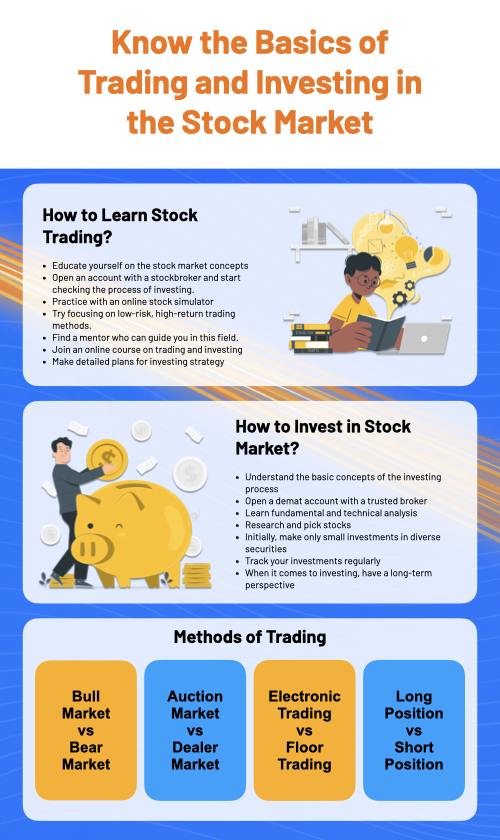
Technical Analysis (Basic Overview)
Technical analysis involves evaluating investments by analyzing statistical trends gathered from trading activity, such as price movement and volume. It primarily uses charts to identify patterns and predict future price movements. While often more suited for short-term traders, a basic understanding can be helpful.
- Candlestick Charts: Visualize price movements (open, high, low, close) over specific time frames.
- Support and Resistance Levels: Price levels where a stock tends to stop falling (support) or stop rising (resistance).
- Moving Averages: Smooth out price data over a period to identify trends.
While fundamental analysis focuses on what a company is worth, technical analysis focuses on when to buy or sell based on market sentiment and historical price action. For beginners, a heavy reliance on technical analysis can be risky.
Utilizing Reputable Resources
The internet is awash with financial information, but discerning credible sources is vital.
- Company Filings: The most accurate information comes directly from the companies themselves, via their filings with the Securities and Exchange Commission (SEC), such as 10-K (annual reports) and 10-Q (quarterly reports).
- Financial News Outlets: Reputable sources like The Wall Street Journal, Bloomberg, Financial Times, Forbes, and Reuters provide in-depth analysis and market news.
- Investment Platforms/Tools: Many brokerage firms offer robust research tools, analyst reports, and screening functions to help you find and evaluate stocks. Websites like Yahoo Finance, Google Finance, and Morningstar also provide extensive data.
- Books and Courses: Classic investment books (e.g., “The Intelligent Investor” by Benjamin Graham, “A Random Walk Down Wall Street” by Burton Malkiel) and online courses can deepen your understanding.
Developing a Long-Term Investor Mindset
Investing is not merely about picking stocks; it’s a psychological game of patience, discipline, and continuous learning. Cultivating the right mindset is often more crucial than identifying the next “hot” stock.
The Power of Patience and Discipline
The stock market rewards patience. Short-term market fluctuations are normal and often unpredictable. Trying to time the market (buying low and selling high perfectly) is notoriously difficult, even for professionals. A disciplined approach means sticking to your investment plan, even during volatile periods, and resisting the urge to make emotional decisions based on fear or greed. Time in the market generally beats timing the market.
Continuous Learning and Adaptation
The financial world is dynamic. New technologies emerge, industries evolve, and economic conditions shift. What worked a decade ago might not work today. Commit to lifelong learning, staying informed about economic trends, and adapting your knowledge and potentially your strategy as circumstances change. This doesn’t mean constantly tinkering with your portfolio, but rather understanding the broader environment.
Automating Your Investments
One of the simplest yet most effective strategies is to automate your investments. Setting up automatic transfers from your bank account to your brokerage account on a regular schedule (e.g., monthly) ensures consistent contributions. This practice, known as dollar-cost averaging, involves investing a fixed amount of money at regular intervals, regardless of the asset’s price. This strategy reduces the risk of investing a large sum at an unfortunate peak, as you buy more shares when prices are low and fewer when they are high, averaging out your purchase price over time.
Understanding Taxes on Investments
Taxes are an unavoidable part of investing and can significantly impact your net returns.
- Capital Gains Tax: Profits from selling an asset for more than its purchase price are subject to capital gains tax.
- Short-term Capital Gains: For assets held for one year or less, taxed at your ordinary income tax rate.
- Long-term Capital Gains: For assets held for more than one year, typically taxed at lower, preferential rates.
- Dividend Tax: Dividends received from stocks are also subject to taxation, often categorized as “qualified” or “non-qualified” dividends, each with different tax treatments.
Understanding these tax implications can help you make more tax-efficient investment decisions, especially when deciding which accounts to use (e.g., Roth IRAs offer tax-free withdrawals in retirement).
Common Pitfalls to Avoid
As you navigate the investment landscape, certain traps can derail even the most well-intentioned investors. Being aware of these common mistakes can help you steer clear of them.
Chasing Hot Tips and Fads
The allure of quick riches is strong, leading many to invest based on “hot tips” from friends, online forums, or news headlines. Often, by the time a stock is widely considered “hot,” much of its potential growth has already been realized. Similarly, investing in speculative fads without understanding the underlying business can lead to significant losses. Focus on sound fundamentals and your own research, rather than herd mentality.
Over-trading and Excessive Fees
Frequent buying and selling (over-trading) not only leads to higher transaction costs (even with commission-free trading, bid-ask spreads exist) but also often results in worse performance. Each trade creates a taxable event and detracts from the power of compounding. For long-term investors, a “buy and hold” strategy, with occasional rebalancing, is generally more effective than active trading. Be mindful of expense ratios in funds, as these can eat into your returns over decades.
Ignoring Diversification
Concentrating all your investments into a single stock, industry, or asset class exposes you to immense risk. If that single investment performs poorly, your entire portfolio suffers. While tempting to go all-in on a company you strongly believe in, a lack of diversification can wipe out years of savings. Always spread your investments across different sectors, company sizes, and asset types to mitigate specific risks.

Investing Money You Can’t Afford to Lose
The stock market, while offering significant growth potential, is not a guaranteed return. There will be periods of volatility and potential losses. Therefore, it is crucial never to invest money that you might need in the short term, such as your emergency fund. Before investing, ensure you have an emergency fund covering 3-6 months of living expenses, and pay off high-interest debt. Investment capital should be money you can comfortably set aside for the long term.
Learning to invest in the stock market is an empowering and continuous journey. It begins with education, progresses through practical application, and matures with a disciplined, long-term mindset. While the initial steps might seem daunting, by building a strong knowledge base, setting clear goals, diversifying your portfolio, and avoiding common pitfalls, you can confidently take control of your financial future. Start small, stay curious, remain patient, and allow the incredible power of compounding to work its magic. Your future self will thank you for taking this proactive step today.
aViewFromTheCave is a participant in the Amazon Services LLC Associates Program, an affiliate advertising program designed to provide a means for sites to earn advertising fees by advertising and linking to Amazon.com. Amazon, the Amazon logo, AmazonSupply, and the AmazonSupply logo are trademarks of Amazon.com, Inc. or its affiliates. As an Amazon Associate we earn affiliate commissions from qualifying purchases.