
The S&P 500 is more than just a stock market index; it’s a barometer of the U.S. economy and a powerful tool for long-term wealth creation. Representing 500 of the largest publicly traded companies in the United States, it offers a diversified snapshot of American corporate prowess across various sectors. For many investors, particularly those new to the market or seeking broad market exposure with a historically strong track record, investing in the S&P 500 is a compelling strategy.
Unlike buying a single stock, investing in the S&P 500 isn’t about picking individual winners and losers. Instead, it’s about owning a small piece of all 500 companies, providing inherent diversification and mitigating the risk associated with any one company’s performance. Over the decades, the S&P 500 has demonstrated impressive average annual returns, making it a cornerstone of many successful investment portfolios. If you’ve been wondering how to tap into this robust segment of the market, this guide will demystify the process and outline the most accessible and effective methods for investing in the S&P 500.
Understanding the S&P 500: A Gateway to Market Performance
Before diving into the “how-to,” it’s essential to grasp what the S&P 500 truly represents and why it’s such a popular investment vehicle. This foundational understanding will help you make informed decisions and appreciate the strategy behind index investing.
What Exactly is the S&P 500?
The S&P 500, short for the Standard & Poor’s 500, is a stock market index maintained by S&P Dow Jones Indices. It’s a market-capitalization-weighted index, meaning companies with larger market values have a greater impact on the index’s performance. The companies included are selected by a committee based on criteria such as market size, liquidity, and sector representation, ensuring it’s a representative cross-section of the U.S. economy. These aren’t just any companies; they are household names and global giants like Apple, Microsoft, Amazon, Google, and Tesla, among hundreds of others. Investing in the S&P 500 means indirectly investing in the collective success of these leading corporations.
Why Consider Investing in the S&P 500?
There are several compelling reasons why the S&P 500 is a favored choice for both novice and seasoned investors:
- Diversification: By investing in 500 companies across 11 major sectors, you automatically achieve a high level of diversification. This reduces the risk inherent in single-stock investing; if one company performs poorly, its impact on your overall portfolio is minimized.
- Historical Performance: Over its history, the S&P 500 has delivered an average annual return of approximately 10-12% (though past performance does not guarantee future results). While there are periods of volatility and downturns, its long-term trajectory has consistently been upward, making it a powerful engine for compound growth.
- Simplicity and Low Cost: For most individual investors, the most common ways to invest in the S&P 500 involve low-cost index funds or ETFs. This means you don’t need to spend hours researching individual stocks or pay high fees to actively managed funds.
- Market Exposure: It offers broad exposure to the U.S. stock market, allowing investors to participate in the growth of the American economy without having to predict which specific companies will thrive.
- Liquidity: The underlying assets (stocks of large companies) are highly liquid, meaning you can typically buy and sell your S&P 500 investments with ease.
Primary Avenues for S&P 500 Exposure
Fortunately, directly buying all 500 stocks in the correct proportions isn’t necessary. Several investment vehicles are specifically designed to mirror the performance of the S&P 500, making it accessible to virtually anyone.
S&P 500 Exchange-Traded Funds (ETFs)
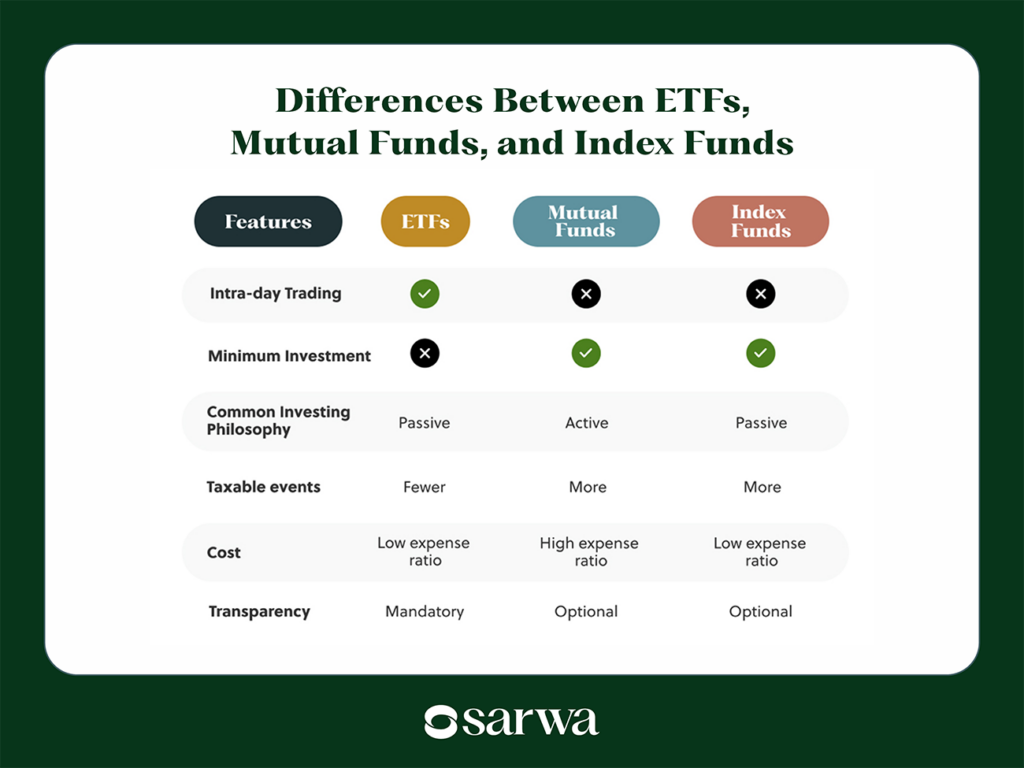
ETFs are arguably the most popular and straightforward way to invest in the S&P 500. An S&P 500 ETF is a type of fund that holds the stocks of the companies in the S&P 500 index in the same proportions as the index itself.
- How they work: ETFs trade like individual stocks on major exchanges throughout the day. When you buy shares of an S&P 500 ETF, you are essentially buying a tiny piece of all 500 companies in one transaction.
- Key advantages: Low expense ratios (the annual fee charged by the fund), high liquidity, and the ability to buy and sell at any time the market is open. They are transparent, showing you exactly what assets they hold.
- Popular examples: SPDR S&P 500 ETF Trust (SPY), iShares Core S&P 500 ETF (IVV), Vanguard S&P 500 ETF (VOO). These are among the largest and most widely used S&P 500 ETFs, known for their competitive expense ratios.
S&P 500 Index Mutual Funds
Index mutual funds are another excellent option, particularly for investors who prefer to invest a fixed amount regularly without worrying about daily price fluctuations.
- How they work: Similar to ETFs, these funds pool money from many investors to buy the stocks in the S&P 500. However, mutual funds are typically bought and sold once per day, after the market closes, at their Net Asset Value (NAV).
- Key advantages: Ideal for dollar-cost averaging (investing a fixed amount regularly), often have very low expense ratios, and some may have no minimum investment if you set up automatic contributions.
- Popular examples: Vanguard 500 Index Fund Admiral Shares (VFIAX), Fidelity 500 Index Fund (FXAIX), Schwab S&P 500 Index Fund (SWPPX). These funds offer institutional-grade diversification to individual investors.
Robo-Advisors: Automated S&P 500 Investing
For those who want a hands-off approach, robo-advisors offer a streamlined path to S&P 500 exposure within a diversified portfolio.
- How they work: Robo-advisors are automated online platforms that use algorithms to build and manage investment portfolios tailored to your financial goals and risk tolerance. Many of these platforms will include S&P 500 ETFs or index funds as core components of their recommended portfolios.
- Key advantages: Low management fees (often lower than traditional human advisors), automatic rebalancing, tax-loss harvesting capabilities, and diversified portfolios based on your profile.
- Examples: Betterment, Wealthfront, Fidelity Go, Schwab Intelligent Portfolios. These services make investing accessible and effortless, even for beginners.
Getting Started: Your Step-by-Step Investment Journey
Once you’ve decided on the investment vehicle that best suits your needs, the actual process of investing in the S&P 500 is relatively straightforward.
Opening a Brokerage Account
This is your first and most crucial step. A brokerage account is a financial account used to hold your investments.
- Choose a reputable broker: Look for brokers with low fees, a user-friendly platform, robust customer service, and a wide selection of investment products. Popular choices include Fidelity, Vanguard, Charles Schwab, E*TRADE, and Merrill Edge.
- Account types: Decide whether you want a taxable brokerage account (general investment account), an Individual Retirement Account (IRA) like a Traditional or Roth IRA (for retirement savings with tax advantages), or a 401(k) if offered by your employer (which might have S&P 500 index fund options).
Funding Your Investment
Once your account is open, you’ll need to transfer money into it.
- Transfer methods: Most brokers allow transfers via electronic funds transfer (EFT) from your bank account, wire transfers, or by mailing a check.
- Initial deposit: Be mindful of any minimum deposit requirements set by your chosen broker or specific mutual funds. ETFs usually don’t have minimums beyond the price of one share.
Making Your First S&P 500 Investment
With funds in your account, you’re ready to make your purchase.
- For ETFs: Search for the ticker symbol (e.g., SPY, IVV, VOO) on your broker’s platform, specify the number of shares you want to buy, and place a market order (to buy at the current price) or a limit order (to buy at a specific price or better).
- For Mutual Funds: Search for the fund’s name or ticker symbol (e.g., VFIAX, FXAIX, SWPPX), specify the dollar amount you wish to invest, and place your order. Remember, mutual fund orders execute at the end of the trading day.
- For Robo-Advisors: Once your account is funded and your risk profile is established, the robo-advisor will automatically invest your money into a diversified portfolio, which will likely include an S&P 500 component, and manage it for you.
The Power of Dollar-Cost Averaging
Consider implementing a dollar-cost averaging strategy. This involves investing a fixed amount of money at regular intervals (e.g., $100 every month), regardless of the S&P 500’s price.
- Benefits: It helps mitigate risk by averaging out your purchase price over time, preventing you from putting all your money in at a market peak. It also promotes disciplined investing and removes emotional decision-making.
Crucial Considerations Before Investing
While investing in the S&P 500 is generally considered a sound long-term strategy, it’s vital to be aware of certain factors that can impact your returns and overall financial health.
Understanding Fees and Expense Ratios
Fees can significantly erode your returns over time.
- Expense ratios: These are annual fees charged by fund providers (ETFs and mutual funds) as a percentage of your investment. S&P 500 index funds and ETFs are known for their extremely low expense ratios (often 0.03% to 0.09%), making them very cost-effective. Compare these carefully.
- Brokerage commissions: Most major online brokers now offer commission-free trading for stocks and ETFs. However, some mutual funds might have transaction fees, especially if you buy them outside their direct provider. Robo-advisors charge a small annual management fee (e.g., 0.25% to 0.50%).
Risk Tolerance and Market Volatility
While diversified, the S&P 500 is still subject to market risk.
- Market fluctuations: The stock market experiences ups and downs. There will be periods when your S&P 500 investment loses value. It’s crucial to have a long-term perspective (5+ years, ideally much longer) to ride out these inevitable downturns.
- Your comfort level: Understand your personal risk tolerance. If market volatility causes you undue stress, you might need to adjust your asset allocation to include more conservative investments, even within an S&P 500-centric portfolio.
Tax Implications of S&P 500 Investing
Taxes are an essential part of your investment strategy.
- Taxable accounts: In a standard brokerage account, you’ll owe taxes on dividends received and capital gains when you sell your investment for a profit. The tax rate depends on how long you held the investment (short-term vs. long-term).
- Tax-advantaged accounts: Investing in the S&P 500 through an IRA or 401(k) allows your investments to grow tax-deferred or even tax-free (in a Roth account), offering significant advantages for retirement planning. Always consult with a tax professional to understand your specific situation.
Long-Term Perspective and Rebalancing
Successful S&P 500 investing is typically a marathon, not a sprint.
- Hold for the long haul: The true power of the S&P 500 lies in compounding returns over many years. Resist the urge to panic sell during market corrections.
- Periodic review and rebalancing: While largely passive, it’s wise to periodically review your portfolio (e.g., annually) to ensure it still aligns with your goals. If the S&P 500 component has grown significantly and now represents too large a portion of your overall portfolio, you might consider rebalancing to maintain your desired asset allocation.
Beyond the Basics: Advanced S&P 500 Strategies
While the core methods of investing in S&P 500 ETFs or index funds are sufficient for most, there are more nuanced considerations for those seeking deeper engagement or specific strategic advantages. These are generally for more experienced investors.
Individual Stock Selection vs. Indexing
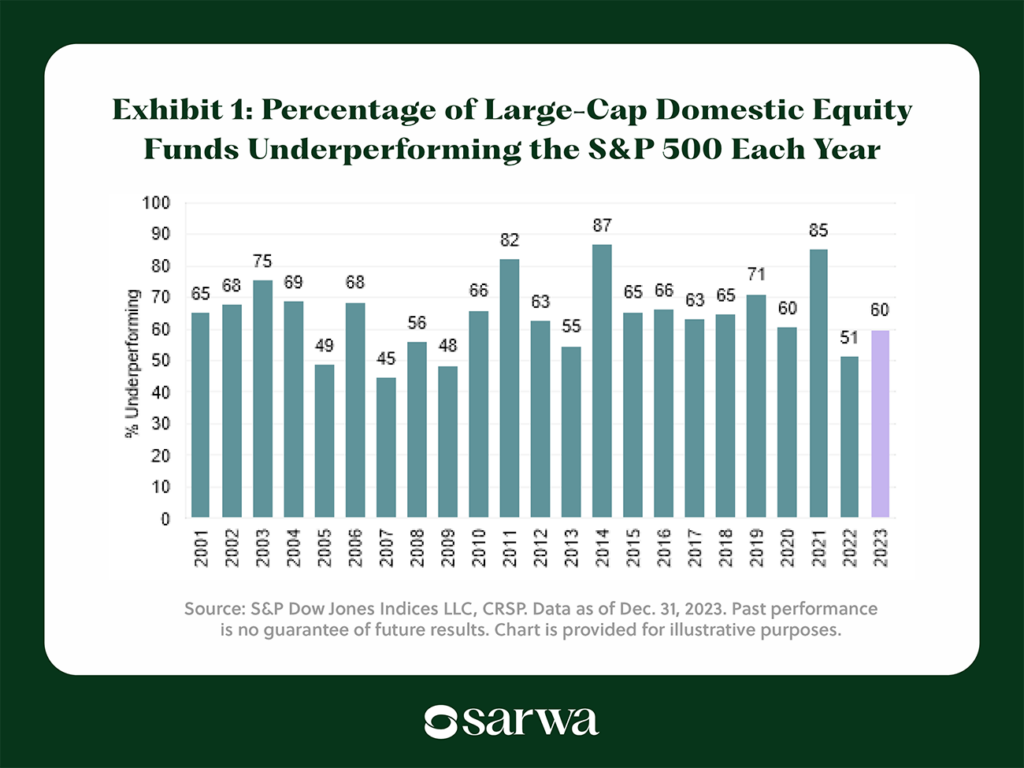
Some investors might consider buying individual stocks of S&P 500 companies. While this gives you direct ownership and potential for higher gains if you pick outperformers, it also carries significantly higher risk and requires extensive research. The beauty of S&P 500 indexing is that it removes the burden of stock picking and assumes that the market, as a whole, will grow over time. For the vast majority, indexing is a superior strategy.
Options and Futures (Cautionary Note)
For highly experienced traders, options and futures contracts can be used to speculate on the future movement of the S&P 500 index (e.g., through E-mini S&P 500 futures). These are complex, high-risk, and high-reward instruments that are absolutely not recommended for beginners or long-term investors. They involve significant leverage and can lead to rapid, substantial losses. Stick to index funds and ETFs for reliable, long-term S&P 500 exposure.
By understanding the available avenues, following the practical steps, and keeping critical considerations in mind, you can confidently integrate the S&P 500 into your investment strategy. It stands as a testament to the power of broad market investing and a cornerstone for building wealth over time.
aViewFromTheCave is a participant in the Amazon Services LLC Associates Program, an affiliate advertising program designed to provide a means for sites to earn advertising fees by advertising and linking to Amazon.com. Amazon, the Amazon logo, AmazonSupply, and the AmazonSupply logo are trademarks of Amazon.com, Inc. or its affiliates. As an Amazon Associate we earn affiliate commissions from qualifying purchases.