
The share market is often perceived through two starkly different lenses: a high-stakes casino for the reckless or a sophisticated engine for long-term wealth creation. For those who approach it with discipline, education, and a clear strategy, the latter is the reality. Earning money from the stock market is not about “getting rich quick”; it is about understanding how businesses grow, how capital is allocated, and how patience translates into compounding returns. Whether you are looking for a secondary income stream through dividends or significant capital appreciation over decades, the share market provides a versatile platform to achieve financial independence.
1. Understanding the Fundamentals of Equity Investing
Before committing capital, one must understand the vehicle they are driving. Investing in the share market essentially means buying a piece of a business. When you own a “share,” you are a part-owner of that corporation, entitled to a portion of its profits and assets.
What is the Stock Market?
The stock market is a centralized marketplace where shares of publicly held companies are issued, bought, and sold. It serves as a bridge between companies needing capital to grow and investors looking for a return on their savings. By providing liquidity—the ability to quickly turn shares into cash—the market ensures that commerce remains fluid.
Primary vs. Secondary Markets
To earn money, you must know where you are buying. The Primary Market is where companies first issue shares to the public through an Initial Public Offering (IPO). Here, the money goes directly to the company for expansion. The Secondary Market is what most people refer to as the “stock market,” where investors trade previously issued shares among themselves. Most of your earnings will come from navigating the price fluctuations and corporate actions within this secondary space.
Key Financial Metrics for Beginners
To identify profitable opportunities, you must look beyond the ticker symbol. Concepts such as Market Capitalization (the total value of a company’s shares) help you understand the size and stability of a firm. Earnings Per Share (EPS) tells you how much profit is allocated to each outstanding share, while the Price-to-Earnings (P/E) Ratio helps determine if a stock is overvalued or undervalued relative to its peers.
2. Core Strategies for Generating Income
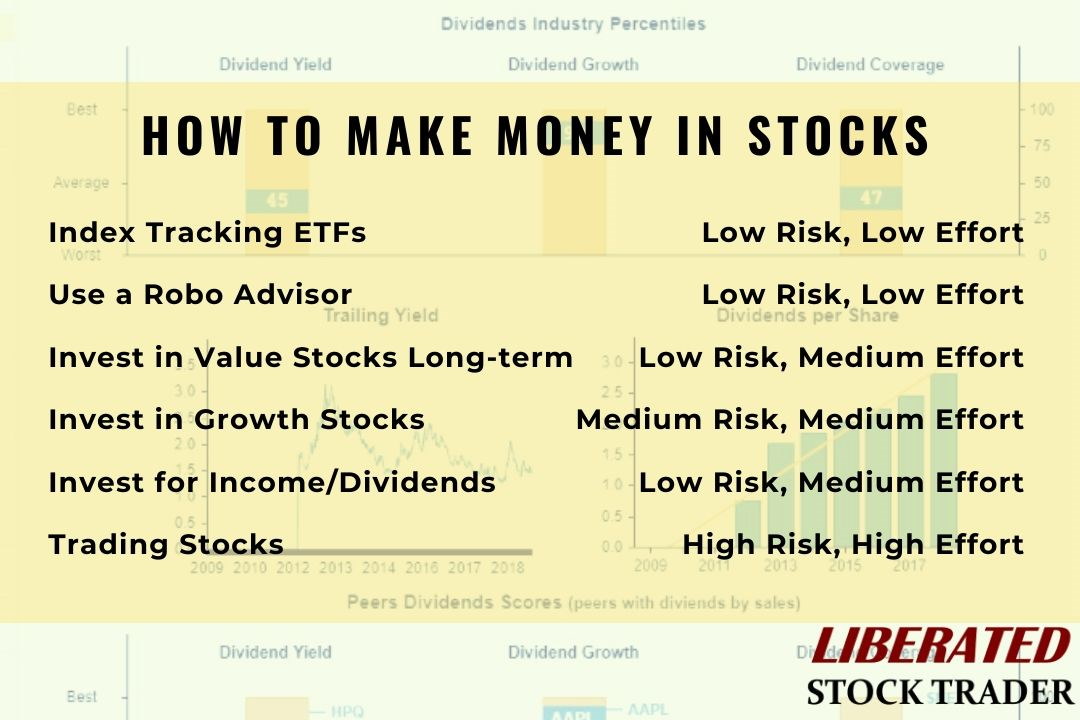
Earning money in the share market typically happens through two primary avenues: Capital Gains and Dividends. Depending on your risk tolerance and financial goals, you might lean toward one of the following proven strategies.
Long-term Value Investing
Popularized by Benjamin Graham and Warren Buffett, value investing involves identifying companies that are trading for less than their “intrinsic value.” The goal is to buy high-quality businesses when the market is pessimistic and hold them until the market recognizes their true worth. This strategy requires deep patience but is historically the most reliable way to generate massive wealth.
Dividend Growth Investing
For those seeking a regular “paycheck” from the market, dividend investing is the gold standard. Some mature companies distribute a portion of their profits back to shareholders in the form of dividends. By reinvesting these dividends to buy more shares, you trigger the “snowball effect,” where your income grows exponentially over time regardless of whether the stock price moves up or down.
Growth Investing
Growth investors focus on companies that are expected to grow at an above-average rate compared to the rest of the market. These companies often reinvest all their profits into research and development rather than paying dividends. While riskier, the capital appreciation from a “ten-bagger” (a stock that increases ten times in value) can redefine your financial future.
Momentum and Swing Trading
While more labor-intensive, some investors earn money by capitalizing on short-to-medium-term price trends. Swing trading involves holding stocks for days or weeks to capture a specific price “swing.” This requires a strong grasp of technical analysis—reading charts and patterns—and a strict adherence to stop-loss limits to protect capital.
3. Building and Managing a Robust Investment Portfolio

Earning money is only half the battle; keeping it and growing it requires a structural approach to portfolio management. Successful investors do not put all their eggs in one basket.
The Importance of Asset Allocation
Your portfolio should be a reflection of your age, income, and risk appetite. A younger investor might have 80% of their capital in high-growth equities, while someone nearing retirement might pivot toward stable, dividend-paying “Blue Chip” stocks and bonds. Proper allocation ensures that a downturn in one sector doesn’t liquidate your entire net worth.
Diversification: Your Only Free Lunch
Diversification involves spreading your investments across various industries (Tech, Healthcare, Finance, Energy) and even different geographies. If the technology sector faces a regulatory hurdle, your holdings in consumer staples or energy can act as a buffer. Diversification reduces “unsystematic risk”—the risk associated with a specific company or industry.
Fundamental vs. Technical Analysis
To earn consistently, you must choose an analytical framework. Fundamental Analysis involves looking at financial statements, management quality, and competitive advantages (moats). It answers the question, “What should I buy?” Technical Analysis involves studying historical price movements and volume to predict future trends. It answers the question, “When should I buy?” Combining both provides a holistic view of the market.
4. Essential Steps to Start Your Investment Journey
The transition from a saver to an investor requires a practical roadmap. The share market rewards those who are prepared and punishes those who leap without a plan.
Choosing the Right Brokerage and Demat Account
To trade, you need a Demat (Dematerialized) account to hold your shares and a Trading account to execute orders. In the modern era, you have a choice between “Full-Service Brokers” who provide research and advice, and “Discount Brokers” who offer lower fees for a DIY approach. For most beginners, low-cost discount brokers are the most efficient way to maximize net returns.
Setting Financial Goals and Risk Tolerance
Are you investing for a house deposit in three years, or for retirement in thirty? Your timeline dictates your strategy. Furthermore, you must honestly assess your “stomach” for volatility. If a 10% market dip causes you to panic-sell, your portfolio should be weighted toward more stable, less volatile assets.
The Power of Compounding and Consistency
The most significant factor in share market earnings is not the amount of money you start with, but the amount of time you stay invested. Through the power of compounding, even small, monthly contributions—often referred to as a Systematic Investment Plan (SIP)—can grow into substantial sums. Consistency removes the need to “time the market,” which is a feat even professionals struggle to achieve.
5. Risk Management and Avoiding Common Pitfalls
The share market is a psychological battlefield. Most investors who lose money do so not because of the market itself, but because of their reactions to it.
Emotional Decision Making and Market Noise
Fear and greed are the two greatest enemies of the investor. Greed leads people to buy at the peak of a bubble, while fear leads them to sell at the bottom of a crash. To earn money, you must learn to ignore the daily “noise” of financial news cycles and stick to your long-term thesis.
The Danger of Over-Leveraging
Trading with “margin”—borrowed money from your broker—can amplify your gains, but it can also wipe out your entire capital in a single afternoon. For those focused on sustainable wealth, avoiding excessive leverage is paramount. It is better to grow wealth slowly than to lose it all trying to grow it quickly.

Why Continuous Learning is Mandatory
The market is a living organism that changes with technology, policy, and global events. What worked in the 1990s might not work today. Earning money in the share market requires a commitment to lifelong learning—reading annual reports, following economic trends, and constantly refining your strategy.
In conclusion, earning money from the share market is a journey of discipline and strategic thinking. By understanding the fundamentals, choosing a strategy that fits your personality, diversifying your holdings, and managing your risks, you can transform the stock market from a place of uncertainty into a powerful tool for financial freedom. Success does not go to the smartest person in the room, but to the one who can control their emotions and remain focused on the horizon.
aViewFromTheCave is a participant in the Amazon Services LLC Associates Program, an affiliate advertising program designed to provide a means for sites to earn advertising fees by advertising and linking to Amazon.com. Amazon, the Amazon logo, AmazonSupply, and the AmazonSupply logo are trademarks of Amazon.com, Inc. or its affiliates. As an Amazon Associate we earn affiliate commissions from qualifying purchases.