
For millions of graduates and current students, student loans represent one of the most significant financial commitments of their lives. Yet, despite the magnitude of this debt, a surprising number of borrowers are unsure of their exact balance, who their servicer is, or how much interest is accruing daily. Understanding how to check your student loan balance is more than just a clerical task; it is the foundational step in a comprehensive personal finance strategy. Whether you are looking to qualify for forgiveness, planning a budget, or preparing for a major purchase like a home, knowing your numbers is essential.
Monitoring your student debt requires navigating a complex ecosystem of federal agencies, private lenders, and third-party servicers. Because the landscape of student lending is prone to administrative shifts—such as the frequent transferring of accounts between servicing companies—staying updated requires proactive engagement. This guide provides a detailed roadmap for locating every dollar you owe, understanding the mechanics behind your balance, and utilizing the best financial tools to keep your repayment plan on track.
Understanding the Landscape of Student Debt
Before you can effectively check your balance, you must distinguish between the two primary types of student loans: federal and private. These categories operate under different rules, are managed through different portals, and offer different levels of transparency and protection.
Federal vs. Private Loans: Why the Source Matters
Federal loans are funded by the U.S. Department of Education. They typically offer fixed interest rates and unique benefits, such as Income-Driven Repayment (IDR) plans and Public Service Loan Forgiveness (PSLF). Because these loans are centralized under the federal government, there is a primary digital “hub” where you can view them. However, the government often hires private companies—known as loan servicers—to handle the billing and administrative aspects of these loans.
Private loans, on the other hand, are issued by banks, credit unions, and online lenders like SoFi, Sallie Mae, or Discover. These loans are not part of the federal system. They often have variable interest rates and lack the flexible repayment options found in federal programs. Tracking these requires a different approach, often involving credit reports or direct communication with the lending institutions.
The Importance of Regular Monitoring
Checking your balance once a year is rarely enough. Interest on student loans typically accrues daily, and if you are on a plan where your monthly payment does not cover the interest, your balance may actually be growing—a phenomenon known as negative amortization. By checking your balance monthly, you can see how much of your payment is going toward the principal versus interest. This visibility allows you to make informed decisions, such as making extra “principal-only” payments to shorten the life of the loan.
How to Check Your Federal Student Loan Balance
If you have federal loans, the process is centralized, but it requires a specific set of credentials. The federal government has made significant strides in consolidating data to make it easier for borrowers to see their total debt profile in one place.
Navigating StudentAid.gov
The primary resource for any federal borrower is the Federal Student Aid (FSA) website, StudentAid.gov. To access your information, you will need an FSA ID, which consists of a username and password. If you haven’t logged in since you graduated, you may need to recover your account or create a new one, which can take a few days for identity verification.
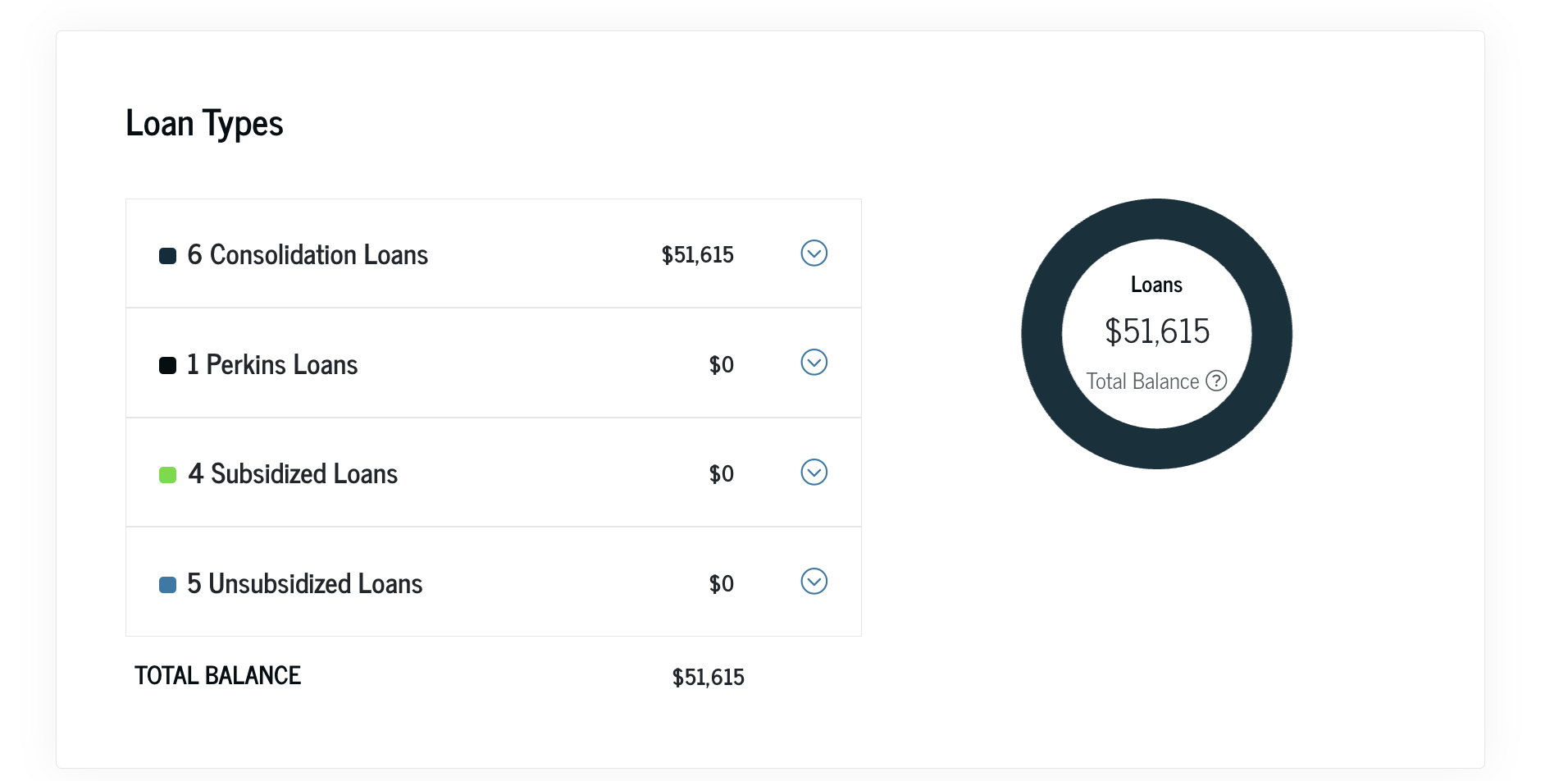
Once logged in, the “Dashboard” provides a comprehensive overview of your federal debt. This includes:
-
Total Outstanding Balance: The combined amount of principal and interest across all federal loans.
-
Loan Breakdown: A list of each individual loan (e.g., Direct Subsidized, Direct Unsubsidized, Parent PLUS loans).
-
Interest Rates: The specific percentage assigned to each loan.
-
Servicer Information: The name and contact details of the company assigned to manage your payments.
Identifying Your Loan Servicer
While the FSA dashboard provides the “what,” your loan servicer provides the “how” of repayment. Companies like Nelnet, Mohela, Aidvantage, and Edfinancial are common servicers. It is critical to create an account on your specific servicer’s website. While the federal dashboard is updated periodically, your servicer’s portal provides real-time data, including:
-
The exact payoff amount for today’s date.
-
Payment history and upcoming due dates.
-
Tax documents (1098-E) for claiming student loan interest deductions.
If your loans were recently transferred, you should have received a notification via mail or email. If you are unsure who your servicer is, the StudentAid.gov dashboard remains the definitive source for finding that information.
Using the National Student Loan Data System (NSLDS)
The NSLDS is the central database for student aid. While much of this information is now integrated into the StudentAid.gov dashboard, the NSLDS history is what lenders look at when you apply for a mortgage. It tracks the entire “lifecycle” of your loans, from disbursement to payoff. Accessing this level of detail can be helpful if you believe there is an error in your loan history or if you are trying to reconstruct a timeline of your borrowing for legal or accounting purposes.
How to Check Your Private Student Loan Balance
Private student loans are more fragmented than federal ones. There is no single government website that tracks money borrowed from private banks. If you have lost track of your private lenders, you will need to utilize credit-based tools to find them.
Reviewing Credit Reports
The most effective way to find “missing” private student loans is to pull your credit report. Because student loans are a form of installment debt, lenders report them to the three major credit bureaus: Equifax, Experian, and TransUnion.
By visiting AnnualCreditReport.com, you can obtain a free copy of your credit report. Within the “Account Information” section, you will see a list of all open credit accounts. Each entry will show the lender’s name, the original loan amount, the current balance, and your payment status. This is the most reliable way to ensure you haven’t forgotten a loan taken out years ago with a co-signer.
Contacting Individual Lenders
Once you have identified the lenders via your credit report, you must contact them directly or log into their proprietary portals. Private lenders often offer “auto-pay” discounts, usually a 0.25% interest rate reduction. When you log in to check your balance, verify that these discounts are applied and that your contact information is current. Unlike federal loans, private loans rarely offer “forgiveness” programs, so your focus here should be on the interest rate and potential refinancing opportunities.
Utilizing Financial Aggregator Tools
For borrowers who want a high-level view of both federal and private debt in one place, financial aggregator tools are invaluable. Services like Monarch Money, Empower (formerly Personal Capital), or YNAB (You Need A Budget) allow you to link your various financial accounts via encrypted connections. These tools pull your balance data daily, providing a “Net Worth” view that helps you see your student debt in the context of your savings and investments.
Digital Tools and Apps for Streamlining Debt Management
In the modern financial era, checking your balance manually is just the beginning. Advanced tools can help you model different repayment scenarios and track your progress toward “Debt Freedom Day.”
Budgeting Apps with Debt Integration
Most premium budgeting apps now feature dedicated debt-tracking modules. These modules do more than just display a balance; they calculate the impact of extra payments. For example, by inputting your balance and interest rate into a debt snowball or debt avalanche calculator, you can see exactly how much interest you would save by adding an extra $50 to your monthly payment. This gamification of debt repayment can provide the psychological boost needed to stay disciplined.
Spreadsheet Templates for Custom Tracking
For those who prefer a “hands-on” approach to personal finance, custom spreadsheets remain a gold standard. By creating a monthly tracker in Excel or Google Sheets, you can record your balance on the first of every month. This allows you to visualize the downward trend of your debt over time. A simple spreadsheet should include columns for:
-
Loan Name
-
Principal Balance
-
Accrued Interest
-
Interest Rate
-
Monthly Payment
-
Target Payoff Date
Strategic Next Steps After Finding Your Balance
Once you have the numbers in front of you, the next phase is analysis. A balance is just a data point; a repayment strategy is a financial plan.
Evaluating Repayment Plans
If your federal balance is higher than your annual income, you may want to investigate the new SAVE (Saving on a Valuable Education) plan or other IDR options. These plans can lower your monthly obligation to a percentage of your discretionary income and, in some cases, prevent interest from ballooning if your payment doesn’t cover the monthly accrual. Knowing your exact balance is required to use the “Loan Simulator” tool on the FSA website, which helps you compare the total cost of different plans.
Considering Consolidation and Refinancing
If you discover that you have multiple federal loans with varying interest rates, consolidation might simplify your life by combining them into a single loan with a weighted-average interest rate.
Conversely, if you have private loans with high interest rates (7% or higher) and you have a solid credit score, you might consider refinancing. Refinancing involves taking out a new loan with a private lender at a lower interest rate to pay off your old ones. However, be cautious: refinancing federal loans into private ones means losing federal protections like IDR plans and forgiveness programs.

The Role of Interest Accrual
Finally, pay close attention to how your interest is handled. Many borrowers are surprised to find their balance is higher than the amount they originally borrowed. This is often due to interest capitalization, where unpaid interest is added to the principal balance, increasing the amount upon which future interest is calculated. Understanding this mechanic emphasizes the importance of paying off interest during periods of deferment or forbearance if you have the financial means to do so.
Checking your student loan balance is the first step toward reclaiming control of your financial future. By utilizing StudentAid.gov for federal debt, credit reports for private debt, and modern aggregation tools for ongoing monitoring, you move from a state of uncertainty to a state of empowerment. Financial clarity is the prerequisite for financial freedom.
aViewFromTheCave is a participant in the Amazon Services LLC Associates Program, an affiliate advertising program designed to provide a means for sites to earn advertising fees by advertising and linking to Amazon.com. Amazon, the Amazon logo, AmazonSupply, and the AmazonSupply logo are trademarks of Amazon.com, Inc. or its affiliates. As an Amazon Associate we earn affiliate commissions from qualifying purchases.