
Understanding your potential Social Security benefits is a cornerstone of effective retirement planning. For many Americans, these benefits will form a significant, if not primary, component of their post-employment income. However, the calculation process isn’t a simple one-size-fits-all formula, nor is it static. It involves a complex interplay of your earnings history, age at retirement, and various other factors that can significantly alter the final amount you receive.
Navigating the intricacies of Social Security can feel daunting, but breaking down the key components of the calculation will empower you to make informed decisions about your financial future. This article will demystify the process, guiding you through the critical elements the Social Security Administration (SSA) uses to determine your monthly benefit and highlighting the tools available to help you estimate your own.

Understanding the Pillars of Social Security Benefit Calculation
At its core, your Social Security benefit is based on your lifetime earnings. The system is designed to provide a safety net, replacing a percentage of your pre-retirement income. Two fundamental concepts underpin this calculation: your Average Indexed Monthly Earnings (AIME) and your Primary Insurance Amount (PIA).
Your Earning History: The Foundation of Your Benefits
The most crucial factor in determining your Social Security benefit is your earnings record. The SSA doesn’t simply look at your total earnings; it calculates an “Average Indexed Monthly Earnings” (AIME).
- Average Indexed Monthly Earnings (AIME): This is a key metric derived from your highest 35 years of indexed earnings. Why “indexed”? Because a dollar earned in 1980 had more purchasing power than a dollar earned today. The SSA adjusts, or “indexes,” your past earnings to account for changes in the national average wage over time. This process ensures that your earlier earnings reflect their relative value compared to current wage levels. The years with the lowest earnings (or no earnings) are dropped from the calculation, focusing on your most productive working years. If you’ve worked fewer than 35 years, zero-earning years will be included, which can reduce your AIME. It’s imperative to regularly check your Social Security Statement to ensure your earnings record is accurate, as any discrepancies could negatively impact your future benefits.
Primary Insurance Amount (PIA): Your Baseline Benefit
Once your AIME is calculated, the SSA uses a formula to determine your Primary Insurance Amount (PIA). The PIA is the monthly benefit you would receive if you start collecting benefits exactly at your Full Retirement Age (FRA).
-
How PIA is Derived: The PIA formula is progressive, meaning it replaces a higher percentage of earnings for lower-income workers than for higher-income workers. This is achieved through what are known as “bend points.” These are dollar amounts set by the SSA that divide your AIME into segments. Different percentages are applied to each segment to arrive at your PIA. For example, for benefits becoming payable in 2024:
- 90% of the first $1,174 of your AIME.
- 32% of your AIME between $1,174 and $7,078.
- 15% of your AIME above $7,078.
These bend points are adjusted annually. The resulting sum from these calculations is your PIA, which represents your full, unreduced monthly benefit at FRA.
Navigating Full Retirement Age (FRA) and Claiming Strategies
While your PIA is your baseline benefit, the age at which you choose to start receiving Social Security benefits significantly impacts the actual monthly amount you collect. This decision revolves around your Full Retirement Age (FRA).
Defining Your Full Retirement Age (FRA)
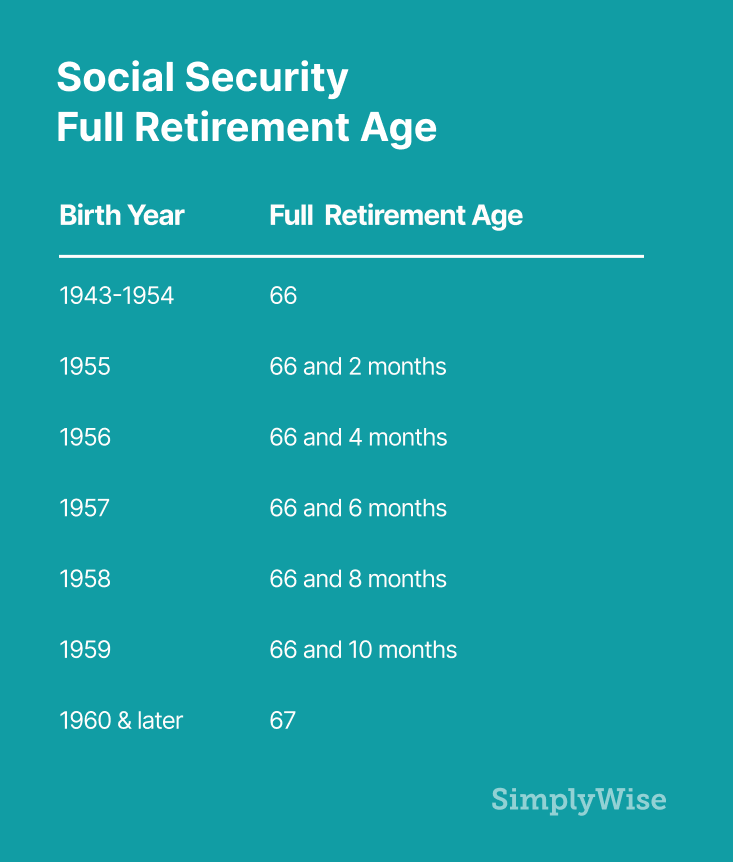
Your Full Retirement Age (FRA) is the age at which you are entitled to 100% of your Primary Insurance Amount (PIA). It’s not a universal age for everyone; rather, it depends on your birth year.
- FRA by Birth Year:
- Born 1937 or earlier: FRA is 65
- Born 1943-1954: FRA is 66
- Born 1955: FRA is 66 and 2 months
- Born 1956: FRA is 66 and 4 months
- Born 1957: FRA is 66 and 6 months
- Born 1958: FRA is 66 and 8 months
- Born 1959: FRA is 66 and 10 months
- Born 1960 or later: FRA is 67
Knowing your FRA is crucial because it serves as the benchmark for calculating adjustments to your PIA based on when you claim benefits.
The Impact of Claiming Early vs. Late
The most critical decision you’ll make regarding your Social Security benefits is when to claim them. This choice has a permanent effect on your monthly payment.
- Claiming Early (Age 62): You can start receiving Social Security benefits as early as age 62. However, claiming before your FRA results in a permanent reduction of your monthly benefit. The reduction is approximately 5/9 of 1% for each month before FRA, up to 36 months. If you claim more than 36 months early, the reduction is an additional 5/12 of 1% per month. For someone with an FRA of 67, claiming at 62 means a reduction of about 30% of their PIA. While it provides income sooner, it also means a significantly smaller check for the rest of your life.
- Claiming at FRA: If you wait until your Full Retirement Age, you receive 100% of your calculated PIA. This is the sweet spot for many, offering the full benefit without reduction or the need to wait longer.
- Claiming Late (Up to Age 70): If you delay claiming benefits past your FRA, your monthly payment will increase. For each month you delay, up to age 70, you earn Delayed Retirement Credits (DRCs). These credits increase your PIA by 2/3 of 1% per month, or 8% per year. This means someone with an FRA of 67 who waits until age 70 would receive 124% of their PIA – a substantial permanent increase. After age 70, no further DRCs are earned, so there’s no financial benefit to waiting past this age.
Spousal and Survivor Benefits Considerations
The decision of when to claim also extends to spousal and survivor benefits, which can be a critical component of family financial planning.
- Spousal Benefits: If you are married, divorced, or widowed, you might be eligible for benefits based on your spouse’s (or ex-spouse’s) earnings record. A spouse can receive up to 50% of the worker’s PIA. The amount they receive is also affected by their own FRA and whether they claim early.
- Survivor Benefits: After a worker’s death, eligible family members (e.g., widow(er)s, children) may receive survivor benefits. A widow(er) can receive up to 100% of the deceased worker’s PIA if they claim at their own FRA (or more if the deceased had earned DRCs). Early claiming rules also apply, leading to reductions. Strategic claiming decisions for survivor benefits can be particularly complex and often require careful consideration of individual circumstances.
Practical Tools and Resources for Calculation
While understanding the mechanics is crucial, you don’t have to calculate your benefits manually. The Social Security Administration (SSA) provides a suite of invaluable online tools and resources to help you estimate your future payments.
The Social Security Administration (SSA) Website: Your Primary Resource
The official SSA website (www.ssa.gov) is your go-to source for all Social Security-related information and benefit estimation.
- My Social Security Account: Creating a “my Social Security” account is arguably the most important step in understanding your benefits. This secure online portal allows you to:
- View your complete earnings record to ensure accuracy.
- Access your personalized Social Security Statement, which provides estimated benefits at various ages (62, FRA, 70).
- Get instant estimates of your future retirement, disability, and survivor benefits.
- Review the status of your application or appeal.
- Print an official benefit verification letter.
- Benefit Calculators: The SSA offers several types of calculators to suit different needs:
- Quick Calculator: This provides a rough estimate of your benefits based on your current earnings and planned retirement age. It’s good for a preliminary idea.
- Retirement Estimator: This tool is much more comprehensive. It uses your actual earnings record from the SSA database and allows you to input various retirement ages and future earnings scenarios to get a more precise estimate. This is the recommended tool for most individuals.
- Detailed Calculator (or “Online Calculator”): For those with complex situations (e.g., non-covered earnings, WEP/GPO scenarios), the detailed calculator can help, though it may require more input and understanding.
Understanding Your Annual Social Security Statement
The Social Security Statement is a vital document, regardless of whether you access it online or receive it by mail (if you’re over 60 and not receiving benefits, and haven’t opted for online-only).
- What it Contains: Your statement outlines your annual taxed earnings throughout your career, provides estimated benefits for retirement (at age 62, FRA, and 70), and estimates for disability and survivor benefits. It also includes information about Medicare.
- Why it’s Crucial to Review It Regularly: Discrepancies in your earnings record can occur due to employer errors, unreported wages, or clerical mistakes. If you find any errors, contact the SSA immediately to rectify them, as correcting your record is essential for maximizing your future benefits.
Third-Party Calculators and Financial Advisors
While the SSA’s tools are authoritative, other resources can also be helpful.
- Third-Party Calculators: Many financial planning websites offer Social Security benefit calculators. These can provide a good “second opinion” or offer different scenario-planning functionalities. However, always remember that these are based on general formulas and may not have access to your exact, indexed earnings record like the SSA’s tools do. Always verify any critical information with the official SSA website.
- Financial Advisors: For individuals with complex financial situations, such as significant other assets, multiple income streams, or intricate family structures (e.g., divorced spouses, multiple marriages), consulting a qualified financial advisor who specializes in retirement planning can be highly beneficial. They can help integrate Social Security benefits into a broader retirement strategy, consider tax implications, and navigate optimal claiming strategies for couples.
Key Factors That Can Influence Your Benefits
Beyond your earnings history and claiming age, several other factors can affect the amount of Social Security benefit you ultimately receive. Understanding these nuances is vital for accurate planning.
Cost-of-Living Adjustments (COLAs)
Once you start receiving Social Security benefits, your payments are not static. They are subject to annual Cost-of-Living Adjustments (COLAs).
- How COLAs Work: COLAs are designed to help Social Security benefits retain their purchasing power in the face of inflation. Each year, if the Consumer Price Index for Urban Wage Earners and Clerical Workers (CPI-W) increases, your benefits are adjusted upward accordingly. These adjustments are typically announced in the fall and take effect in December, influencing benefits paid starting in January of the following year.
The Earnings Test (If Claiming Early and Still Working)
If you claim Social Security benefits before your Full Retirement Age (FRA) and continue to work, your benefits may be reduced due to the earnings test.
- How It Works: The SSA has annual earnings limits for those collecting benefits before their FRA. If your earnings exceed these limits, a portion of your benefits will be withheld.
- Before the year you reach FRA: $1 in benefits is withheld for every $2 you earn above the annual limit (e.g., $22,320 in 2024).
- In the year you reach FRA: $1 in benefits is withheld for every $3 you earn above a higher annual limit (e.g., $59,520 in 2024) until the month you reach your FRA.
- Once you reach FRA: The earnings test no longer applies, and you can earn any amount without your benefits being reduced.
- What Happens to Withheld Benefits: Importantly, benefits withheld due to the earnings test are not lost forever. When you reach your FRA, your monthly benefit will be recalculated to account for the months benefits were withheld, effectively increasing your future payments.
Taxation of Social Security Benefits
While often perceived as tax-free, a portion of your Social Security benefits may be subject to federal income tax, depending on your “provisional income.” Some states also tax Social Security benefits.
- Federal Taxation: Your provisional income is the sum of your adjusted gross income (AGI), any tax-exempt interest (like municipal bond interest), and one-half of your Social Security benefits.
- Single filers: If your provisional income is between $25,000 and $34,000, up to 50% of your benefits may be taxable. Above $34,000, up to 85% may be taxable.
- Married filing jointly: If your provisional income is between $32,000 and $44,000, up to 50% of your benefits may be taxable. Above $44,000, up to 85% may be taxable.
- State Taxation: Currently, several states also tax Social Security benefits, though many offer exemptions or deductions based on income levels. It’s essential to check your specific state’s rules.
Government Pension Offset (GPO) and Windfall Elimination Provision (WEP)
These two provisions can significantly impact benefits for individuals who also receive a pension from employment not covered by Social Security (e.g., some government jobs, foreign employment).
- Windfall Elimination Provision (WEP): WEP can reduce the Social Security benefit you receive based on your own work record if you also receive a pension from non-covered employment. It primarily affects the progressive PIA formula, reducing the 90% factor applied to the lowest bend point.
- Government Pension Offset (GPO): GPO can reduce the spousal or survivor benefits you receive if you also receive a pension from non-covered government employment. Generally, your Social Security spousal/survivor benefit will be reduced by two-thirds of the amount of your non-covered government pension.
These provisions are complex and can have a substantial impact, necessitating careful planning if they apply to your situation.

Conclusion
Calculating your Social Security benefits is not just an exercise in numbers; it’s a vital component of securing your financial stability in retirement. By understanding how your earnings history translates into your Primary Insurance Amount, recognizing the pivotal role of your Full Retirement Age, and strategically weighing the implications of claiming early versus late, you gain control over a significant aspect of your future income.
Leverage the powerful, personalized tools available on the Social Security Administration’s website, particularly your “my Social Security” account and the Retirement Estimator. Review your annual statement diligently to ensure your earnings record is accurate. And remember that factors like COLAs, the earnings test, and potential taxation will also shape your final take-home amount.
While the system can appear intricate, taking the time to educate yourself and utilize the available resources will empower you to make well-informed decisions, optimize your claiming strategy, and confidently integrate your Social Security benefits into a robust and sustainable retirement plan.
aViewFromTheCave is a participant in the Amazon Services LLC Associates Program, an affiliate advertising program designed to provide a means for sites to earn advertising fees by advertising and linking to Amazon.com. Amazon, the Amazon logo, AmazonSupply, and the AmazonSupply logo are trademarks of Amazon.com, Inc. or its affiliates. As an Amazon Associate we earn affiliate commissions from qualifying purchases.