
In the modern financial landscape, travel is often viewed as a luxury expense that can quickly deplete a personal savings account. However, for the financially savvy individual, booking a cheap flight is not merely a matter of luck or “searching on a Tuesday.” It is a sophisticated exercise in market analysis, geographic arbitrage, and the strategic deployment of financial tools. By treating airfare acquisition as a form of asset management, travelers can significantly reduce their overhead, allowing capital to be reallocated toward investments, retirement funds, or high-value experiences.
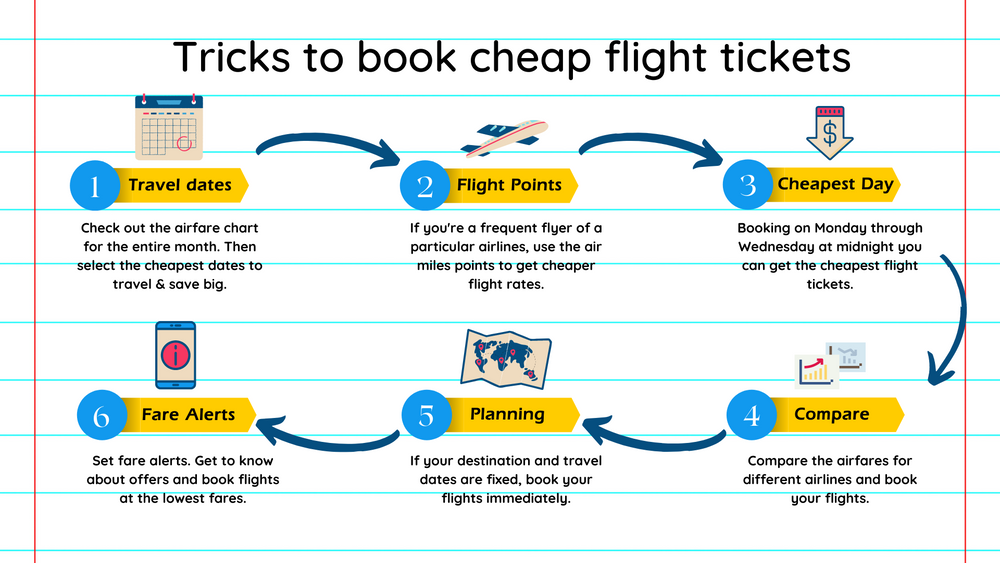
This guide explores the intersection of personal finance and the aviation industry, providing a blueprint for mastering the economics of airfare to ensure your next journey is as cost-effective as it is rewarding.
Decoding the Economics of Airfare: Why Timing and Market Intelligence Matter
To book a cheap flight, one must first understand how airlines price their inventory. Airlines utilize complex algorithms known as “yield management systems” to ensure every seat is sold at the highest possible price the market will bear at any given millisecond. This dynamic pricing means that the cost of a ticket can fluctuate based on demand, seasonality, and even the browsing history of the consumer.
The Myth of the “Magic Day” vs. Real-Time Data
For years, the prevailing wisdom in personal finance circles was that booking on a Tuesday afternoon would yield the lowest prices. In the era of Big Data and AI-driven pricing, this “rule” is largely obsolete. Modern airfare pricing is reactive. Instead of searching for a specific day of the week to buy, travelers should focus on the “Goldilocks window”—the timeframe where airlines begin to offload unsold inventory before the final price spike for business travelers. For domestic flights, this is typically 1-3 months in advance; for international routes, the window shifts to 2-8 months.
Understanding Yield Management and Dynamic Pricing
Airlines categorize seats into “fare buckets.” There may be ten seats available at the lowest price tier; once those are sold, the system automatically moves to the next, more expensive tier. Understanding this helps a financially minded traveler realize that “last minute” deals are a rarity in the current economy. Strategic booking requires early intervention and the use of tracking software to identify when a fare bucket is being discounted to stimulate demand.
Leveraging Digital Financial Tools for Maximum Savings
In the realm of personal finance, information is currency. Utilizing the right digital tools allows you to outsource the labor of monitoring market fluctuations, ensuring you never overpay for a flight. These tools act as a financial dashboard for your travel planning, providing transparency in an otherwise opaque market.
Utilizing Price Tracking and AI-Driven Forecasting
Platforms like Google Flights, Skyscanner, and Hopper have revolutionized the way we approach travel budgeting. Google Flights, in particular, offers a “Price Graph” and “Date Grid” that allow you to see how shifting your departure by a single day can save hundreds of dollars. By setting “Price Alerts,” you are essentially setting a “limit order” on your travel, much like you would in stock trading. You wait for the market to hit your target price before executing the transaction.
Error Fares: Identifying High-Reward/Low-Cost Opportunities
Occasionally, a technical glitch or human error results in an “error fare”—a ticket sold for a fraction of its intended price (e.g., a $1,200 flight to Tokyo listed for $200). Identifying these requires being part of specialized financial-travel communities or using services like Scott’s Cheap Flights (Going) or Secret Flying. From a money-management perspective, error fares represent a high-alpha opportunity. However, they require liquidity and the ability to act instantly, as these “flash sales” rarely last more than a few hours.

Credit Card Rewards and Point Optimization
Perhaps the most powerful tool in the arsenal of a financially literate traveler is the strategic use of credit card rewards. This is often referred to as “travel hacking,” but from a professional finance perspective, it is simply the optimization of “rebate capital.” By leveraging sign-up bonuses and category spend multipliers, you can effectively subsidize your travel through everyday expenses.
The Role of Sign-Up Bonuses in Reducing Out-of-Pocket Costs
The fastest way to secure “cheap” (or nearly free) flights is through the acquisition of credit card sign-up bonuses. Many premium cards offer 60,000 to 100,000 points after a specific spending threshold is met. If managed responsibly—meaning the balance is paid in full every month to avoid interest—these points represent a massive return on investment. A single sign-up bonus can often cover the cost of a round-trip international flight, reducing your out-of-pocket travel expense to just the taxes and fees.
Transfer Partners: Converting Points into High-Value Flights
A common mistake in personal finance is redeeming points through a bank’s travel portal at a fixed rate (e.g., 1 cent per point). To maximize the value of your “financial points,” one should utilize transfer partners. By moving points from a flexible currency (like Chase Ultimate Rewards or Amex Membership Rewards) to a specific airline loyalty program, you can often achieve a value of 2 to 5 cents per point. This strategic move can turn $1,000 worth of points into $5,000 worth of business-class travel, representing a significant optimization of your financial assets.
Geographic and Tactical Arbitrage in Travel Planning
Arbitrage—the simultaneous purchase and sale of an asset in different markets to exploit price differences—is a foundational concept in finance. It can be applied to airfare through “positioning flights” and “currency arbitrage,” allowing travelers to circumvent the high prices of their local markets.
Using Hidden-City Ticketing and Positioning Flights
“Hidden-city ticketing” involves booking a flight with a layover in your actual destination and simply skipping the second leg of the journey because the multi-city route was cheaper than a direct flight. While this requires careful execution (no checked bags and an understanding of airline terms of service), it is a classic example of exploiting market inefficiencies. Alternatively, “positioning flights” involve taking a cheap budget flight to a major hub (like New York or London) to catch a significantly discounted long-haul flight. By decoupling your journey into two separate bookings, you can often save 30-50% on the total fare.
Currency Arbitrage: Booking in Foreign Denominations
Because airlines operate globally, they often price their tickets differently depending on the “Point of Sale” (the country where the ticket is purchased). By using a VPN or visiting the regional version of an airline’s website (e.g., the Colombian version of an airline site instead of the US version), you may find the price is lower when quoted in the local currency. When paired with a credit card that has no foreign transaction fees, this allows you to benefit from favorable exchange rates and regional pricing strategies.

Conclusion: Integrating Travel Savings into Your Broader Financial Strategy
Booking a cheap flight is not an isolated event; it is a discipline that fits into a larger framework of financial health. Every dollar saved on airfare is a dollar that can be put to work in a high-yield savings account, a brokerage account, or a burgeoning side hustle.
By treating the search for airfare as a data-driven investment process—leveraging AI tools, optimizing credit card rewards, and utilizing geographic arbitrage—you transform travel from a “drain” on your finances into a manageable, high-value component of your lifestyle. True financial freedom is not about deprivation; it is about the intelligent allocation of resources. Master the mechanics of the aviation market, and the world becomes not only more accessible but more affordable.
aViewFromTheCave is a participant in the Amazon Services LLC Associates Program, an affiliate advertising program designed to provide a means for sites to earn advertising fees by advertising and linking to Amazon.com. Amazon, the Amazon logo, AmazonSupply, and the AmazonSupply logo are trademarks of Amazon.com, Inc. or its affiliates. As an Amazon Associate we earn affiliate commissions from qualifying purchases.