
In the modern financial landscape, the ability to accept credit card payments is no longer a luxury reserved for large corporations; it is a fundamental requirement for any business aiming for growth, sustainability, and professional credibility. Whether you are launching a side hustle, managing a growing e-commerce platform, or operating a brick-and-mortar storefront, your payment processing strategy directly impacts your bottom line. Transitioning from a cash-only model or a limited payment structure to a robust credit card acceptance system involves more than just selecting a piece of hardware. It requires a deep understanding of financial tools, fee structures, and the impact on your business’s overall cash flow.
Understanding the Financial Architecture of Payment Processing
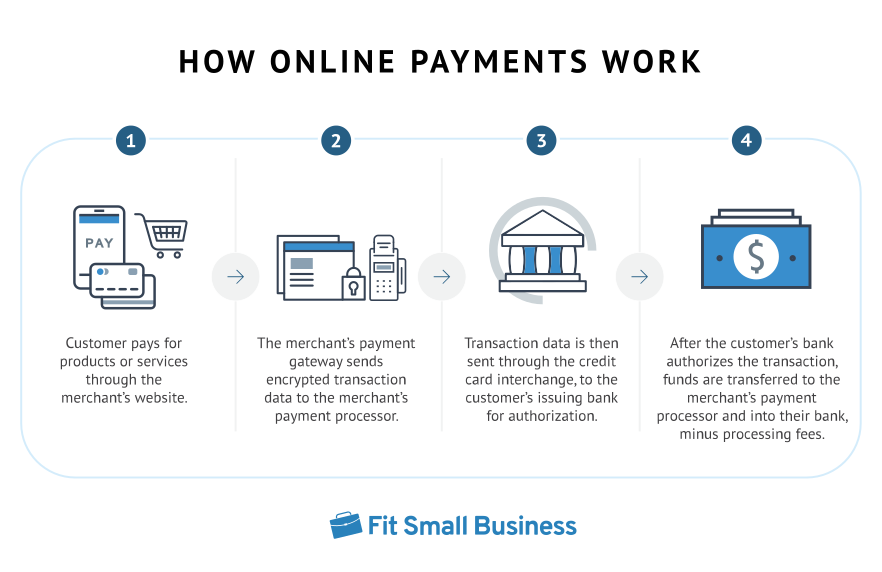
Before integrating a payment solution, it is essential to understand the underlying financial mechanisms that move money from a customer’s bank account to your business treasury. Payment processing is a multi-layered ecosystem involving the merchant (you), the customer, the issuing bank, the acquiring bank, and the payment processor. Navigating this architecture is the first step in making an informed financial decision.
The Role of Merchant Accounts vs. Payment Aggregators
When deciding how to accept credit card payments, you generally have two financial paths: opening a dedicated merchant account or using a payment aggregator.
A dedicated merchant account is a specialized bank account established specifically for your business. It offers greater stability and often lower transaction rates for high-volume businesses. However, it usually involves a more rigorous underwriting process and monthly maintenance fees.
On the other hand, payment aggregators—such as Square, Stripe, or PayPal—allow businesses to process payments under a “master” merchant account. This is the preferred route for many startups and small businesses because of the ease of setup and the absence of monthly contracts. From a financial management perspective, aggregators offer simplicity but may carry higher per-transaction costs. Choosing between these two depends on your projected monthly revenue and your long-term financial scaling goals.
Navigating Transaction Fees and Hidden Costs
One of the most critical aspects of business finance is understanding the cost of goods sold (COGS) and operational overhead. Payment processing fees are a significant part of this equation. Typically, these fees are broken down into three components: interchange fees (paid to the issuing bank), assessment fees (paid to the card network like Visa or Mastercard), and the processor’s markup.
Financial tools generally offer three types of pricing models:
- Flat-Rate Pricing: You pay a fixed percentage for every transaction (e.g., 2.9% + $0.30). This is predictable and excellent for small businesses with lower volumes.
- Interchange-Plus Pricing: This is often the most transparent model, where the processor charges the actual interchange fee plus a small fixed markup. This is typically the most cost-effective for high-volume businesses.
- Tiered Pricing: Transactions are categorized as “qualified,” “mid-qualified,” or “non-qualified.” While it can look cheaper on paper, it often ends up being the most expensive due to hidden markups on certain types of cards (like corporate or rewards cards).
Selecting the Right Financial Tools for Your Revenue Model
The “how” of accepting credit card payments is largely determined by your business model. The tools you choose must align with your operational needs to ensure that you are not overpaying for features you don’t use or losing sales due to a friction-filled checkout process.
Point-of-Sale (POS) Systems for Physical Commerce
For businesses with a physical presence, such as retail stores or service providers, a Point-of-Sale (POS) system is the primary financial hub. Modern POS systems do more than just process cards; they integrate inventory management, employee hours, and sales analytics into a single financial tool.
When evaluating POS hardware, consider the “Money” aspect: how much will the hardware cost upfront versus the long-term savings on transaction fees? Mobile readers that plug into a smartphone are excellent for side hustles or temporary pop-up shops, whereas sophisticated countertop terminals are better suited for high-traffic environments. High-end POS systems also allow for “offline” processing, ensuring that a temporary internet outage doesn’t result in lost revenue—a critical feature for maintaining consistent cash flow.
Online Payment Gateways for Digital and E-commerce Income
If your business operates online, your “terminal” is a payment gateway. This is the digital equivalent of a card reader, securely authorizing transactions on your website. For those focused on online income and side hustles, the ease of integration with e-commerce platforms like Shopify or WooCommerce is paramount.
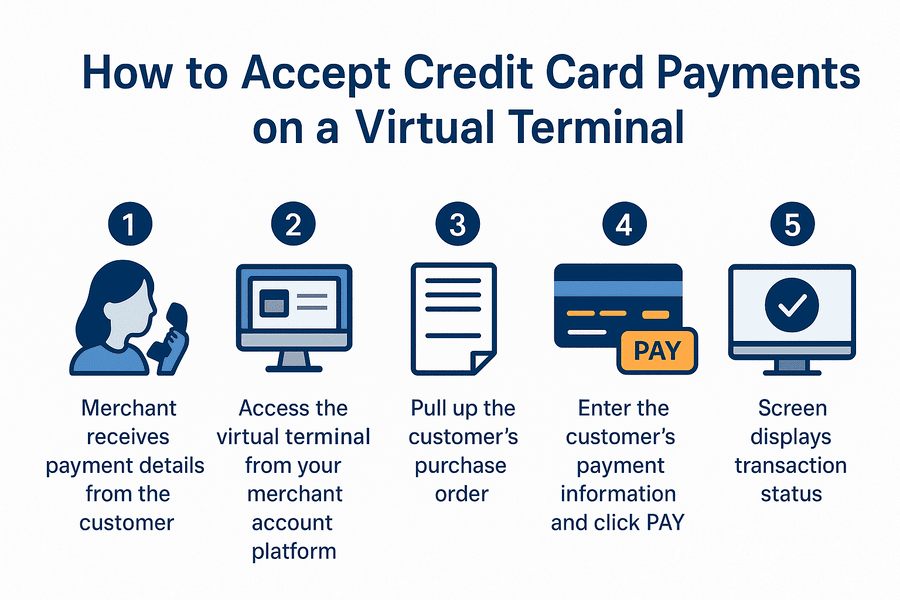
The financial strategy here involves optimizing for “cart abandonment.” If your payment gateway doesn’t support modern digital wallets (like Apple Pay or Google Pay) or doesn’t feel secure, you lose money. Furthermore, for international businesses, selecting a gateway that supports multi-currency settlement is vital to avoid excessive currency conversion fees, which can quietly erode profit margins.
Optimizing Cash Flow and Financial Security
Accepting credit cards is not just about the moment of sale; it’s about what happens to that money afterward. Efficiently managing the lifecycle of a transaction is a pillar of sound business finance.
Managing Settlement Times and Liquidity
A common challenge for new businesses is the “settlement delay.” When a customer swipes their card, the funds are not immediately available in your bank account. Depending on the processor and the type of account you have, it can take anywhere from 24 hours to seven business days for funds to clear.
For a business focused on liquidity, selecting a processor with “Next-Day Funding” is a strategic financial move. Poor liquidity can hinder your ability to pay vendors or cover payroll, even if your sales figures are high. Therefore, when choosing how to accept payments, prioritize the speed of capital access to ensure your business remains agile.
Chargeback Management and Fraud Prevention Strategies
In the realm of business finance, chargebacks are a significant risk to your bottom line. A chargeback occurs when a customer disputes a transaction with their bank, leading to the funds being forcibly withdrawn from your account, often accompanied by a penalty fee.
To protect your side hustle or business income, you must implement robust fraud prevention tools provided by your processor. This includes Address Verification Services (AVS) and Card Verification Value (CVV) requirements. From a financial perspective, high chargeback rates can lead to your merchant account being terminated or being placed in a “high-risk” category with much higher fees. Monitoring your chargeback-to-transaction ratio is a vital part of maintaining a healthy financial profile.
Integrating Payments into Your Broader Financial Strategy
The ultimate goal of accepting credit card payments is to facilitate the growth of your business and personal wealth. This requires looking beyond the transaction and seeing how payment data fits into your overall financial ecosystem.
Scaling from Side Hustle to Scalable Business
For those generating online income or working on a side hustle, the transition to a professional payment processor marks a turning point in business maturity. Moving away from “peer-to-peer” apps (like personal Venmo or CashApp accounts) toward a legitimate business processor is essential for tax compliance and financial auditing.
As your revenue scales, your bargaining power with processors increases. Once your business hits a certain volume—typically $100,000 or more in annual card sales—you can often negotiate lower rates. This “found money” in the form of reduced fees can then be reinvested back into the business or moved into investment accounts to grow your net worth.
Tax Implications and Automated Accounting Integration
Efficiency is the key to maximizing profit. Manually entering every credit card transaction into a spreadsheet is a waste of valuable time that could be spent on income-generating activities. Most modern payment tools offer direct integration with accounting software like QuickBooks, Xero, or FreshBooks.
This integration serves two major financial purposes. First, it provides a real-time view of your business’s financial health, allowing for better-informed investing and spending decisions. Second, it simplifies tax season. Payment processors are required by the IRS to report gross unadjusted sales via Form 1099-K once certain thresholds are met. Having an automated system ensures that your internal records match the reports sent to the government, reducing the risk of audits and financial penalties.
In conclusion, learning how to accept credit card payments is a journey through the heart of business finance. By choosing the right merchant model, understanding the nuances of fee structures, and integrating these tools into a broader financial strategy, you position your business for long-term success. The right payment setup does more than just process sales; it provides the data, liquidity, and professional foundation necessary to turn a simple idea into a thriving, profitable enterprise.
aViewFromTheCave is a participant in the Amazon Services LLC Associates Program, an affiliate advertising program designed to provide a means for sites to earn advertising fees by advertising and linking to Amazon.com. Amazon, the Amazon logo, AmazonSupply, and the AmazonSupply logo are trademarks of Amazon.com, Inc. or its affiliates. As an Amazon Associate we earn affiliate commissions from qualifying purchases.