
For many, the process of securing a mortgage feels like a mysterious journey into a black box of financial jargon and shifting numbers. You check the news one morning and see rates are climbing; you speak to a lender the next week and find they have dipped. But mortgage rates are not arbitrary figures pulled out of thin air by banks. Instead, they are the product of a complex, interconnected ecosystem of global economics, government policy, and individual risk assessment.
Understanding how mortgage rates are determined is essential for any savvy homeowner or investor. It allows you to time your purchase more effectively, choose the right financial products, and understand the “why” behind the monthly payment on your largest asset. This article explores the primary drivers of mortgage rates, from the high-level influence of the Federal Reserve to the granular details of your personal credit profile.
1. The Macroeconomic Landscape: The Role of the Federal Reserve and the Bond Market
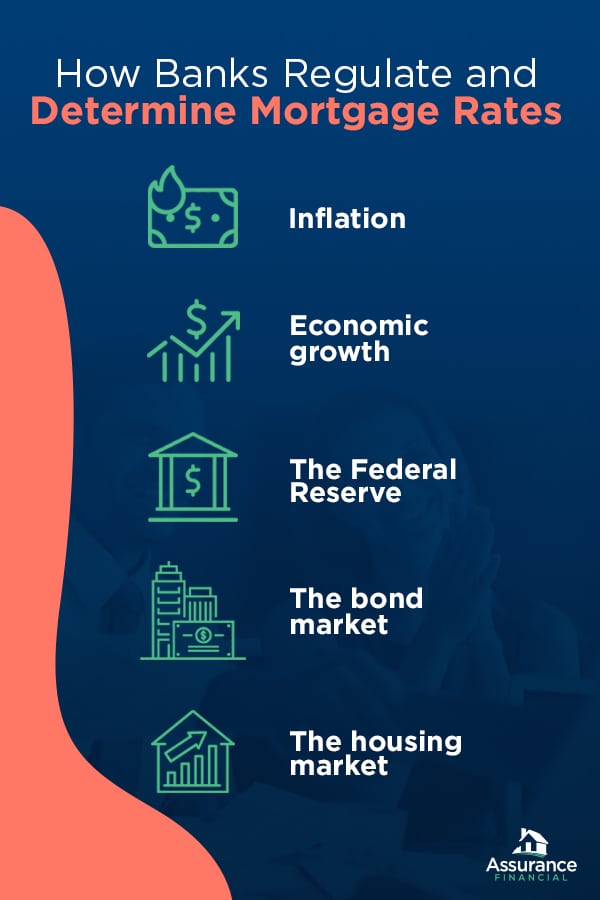
To understand mortgage rates, one must first look at the broader economic environment. While no single entity “sets” the mortgage rate for the entire country, certain institutional forces exert a massive gravitational pull on the cost of borrowing.
The Federal Funds Rate vs. Mortgage Rates
A common misconception is that the Federal Reserve (the Fed) directly dictates mortgage rates. In reality, the Fed sets the “Federal Funds Rate,” which is the interest rate banks charge each other for overnight loans. While this doesn’t directly change mortgage rates, it creates a “ripple effect.” When the Fed raises the funds rate to combat inflation, it becomes more expensive for banks to borrow money. To maintain their profit margins, banks pass these costs on to consumers in the form of higher interest rates for credit cards, auto loans, and—eventually—mortgages.
The 10-Year Treasury Yield Connection
If you want to know where mortgage rates are headed today, don’t look at the Fed; look at the 10-year Treasury bond yield. Mortgage rates track the 10-year Treasury yield more closely than almost any other economic indicator. This is because investors view both mortgages and Treasuries as “long-term” fixed-income investments. Since Treasury bonds are backed by the “full faith and credit” of the U.S. government, they are considered the safest investment possible. Mortgages are slightly riskier. Therefore, mortgage rates typically stay about 1.5% to 3% higher than the 10-year Treasury yield to compensate investors for that extra risk.
Inflation and Its Impact on Lending
Inflation is the silent enemy of the mortgage market. Because mortgages are long-term loans paid back over 15 to 30 years, lenders are highly sensitive to the purchasing power of the dollar. If inflation is high, the “real” value of the interest the lender collects decreases over time. To protect themselves against this loss of purchasing power, lenders raise mortgage rates when inflation expectations rise. Conversely, when inflation is low and stable, mortgage rates tend to settle into more affordable ranges.
2. Financial Market Dynamics and the Role of Mortgage-Backed Securities (MBS)
Once a bank or mortgage company originates your loan, they rarely keep it on their books for 30 years. If they did, they would eventually run out of cash to lend to new customers. Instead, they sell these loans on the “secondary market.”
What are Mortgage-Backed Securities?
Most mortgages are packaged into bundles called Mortgage-Backed Securities (MBS). These bundles are sold to investors, such as pension funds, insurance companies, and international sovereign wealth funds. When you pay your mortgage every month, that money (minus a small servicing fee) goes to the investors who bought the MBS. The “mortgage rate” is essentially the yield that these investors demand in exchange for their capital.
Investor Appetite and Yield Spreads
The price of MBS—and by extension, mortgage rates—is driven by supply and demand. If the stock market is volatile or the global economy is in turmoil, investors often flee to the safety of bonds and MBS. This high demand drives up the price of these securities, which allows lenders to offer lower interest rates. However, if the economy is booming and investors can make higher returns in the stock market, demand for MBS drops. To attract buyers, the yield (interest rate) on those mortgages must rise.
Secondary Market Liquidity
Liquidity refers to how easily an asset can be bought or sold without affecting its price. In a highly liquid market, mortgage rates remain stable. However, during periods of financial stress (like the 2008 financial crisis or the early days of the COVID-19 pandemic), the secondary market can become “clogged.” If investors stop buying MBS, lenders are forced to raise rates significantly or stop lending altogether until stability returns.
3. Borrower-Specific Variables: How Your Profile Influences Your Rate
While the bond market determines the “baseline” rate, your personal financial health determines the “markup” you will pay. Lenders use a process called “risk-based pricing” to decide how much interest to charge you.
Credit Scores and Risk Assessment
Your FICO score is perhaps the single most influential factor in your individual mortgage rate. Lenders view the credit score as a prediction of how likely you are to default on your loan. A borrower with a score of 760 or higher is considered low-risk and will likely receive the lowest available market rate. A borrower with a score of 620, however, represents a higher risk of default. To compensate for this risk, the lender will charge a higher interest rate, often referred to as a “Loan Level Price Adjustment” (LLPA).
Loan-to-Value (LTV) Ratios and Down Payments
The amount of “skin in the game” you have also affects your rate. The Loan-to-Value (LTV) ratio is the percentage of the home’s value that you are borrowing. For example, if you put 20% down, your LTV is 80%. Generally, the lower your LTV (the more money you put down), the lower your interest rate will be. This is because a large down payment provides a “buffer” for the lender; if the house has to be foreclosed upon and sold, the lender is much more likely to recover their investment if you already own a significant portion of the equity.
Debt-to-Income (DTI) and Financial Stability
Lenders also look at your Debt-to-Income ratio, which is the percentage of your gross monthly income that goes toward paying debts. While DTI is primarily used to determine if you qualify for a loan, a very high DTI can sometimes lead to higher interest rates or the requirement for more expensive loan products. A lower DTI signals to the lender that you have the financial “breathing room” to handle a mortgage payment even if your income fluctuates.
4. Loan Specifics and Lender Competition
Not all mortgage products are created equal. The type of loan you choose and the specific business model of your lender can also sway the final percentage on your closing documents.
Fixed-Rate vs. Adjustable-Rate Mortgages
The structure of the loan dictates how the lender prices the interest. In a 30-year fixed-rate mortgage, the lender is taking on the risk that interest rates might rise significantly over the next three decades. Because they are locking in a rate for a long time, fixed rates are usually higher than the initial rates on Adjustable-Rate Mortgages (ARMs). An ARM typically offers a lower rate for the first 5, 7, or 10 years because the borrower is agreeing to take on the risk of future rate fluctuations after that initial period ends.
Loan Terms and Amortization Schedules
The length of the loan also matters. A 15-year mortgage almost always carries a lower interest rate than a 30-year mortgage. Why? Because the lender is exposed to the risk of default and inflation for a shorter period. Additionally, 15-year mortgages pay down the principal much faster, which reduces the lender’s total exposure more quickly.
Lender Overheads and Regional Competition
Finally, there is the human element of business finance. Different lenders—whether they are big banks, credit unions, or online mortgage companies—have different overhead costs and profit margins. A local credit union might offer lower rates because they are a non-profit member-owned institution. An online lender might offer lower rates because they don’t have the cost of physical branches. Competition in your specific geographic region can also drive rates down as lenders fight for a limited pool of qualified buyers.
5. Navigating the Market: Strategies for Securing a Lower Rate
Because mortgage rates are determined by so many moving parts, they are rarely static. As a borrower, you have more control than you might think when it comes to securing a favorable rate.
Timing the Market vs. Long-Term Planning
While it is tempting to try and “time the bottom” of the interest rate market, this is notoriously difficult even for professional economists. A more effective strategy is to focus on your “lock period.” Once you find a rate you are comfortable with, most lenders allow you to “lock” that rate for 30 to 60 days while your loan is processed. This protects you from sudden market volatility.
The Importance of Shopping Around
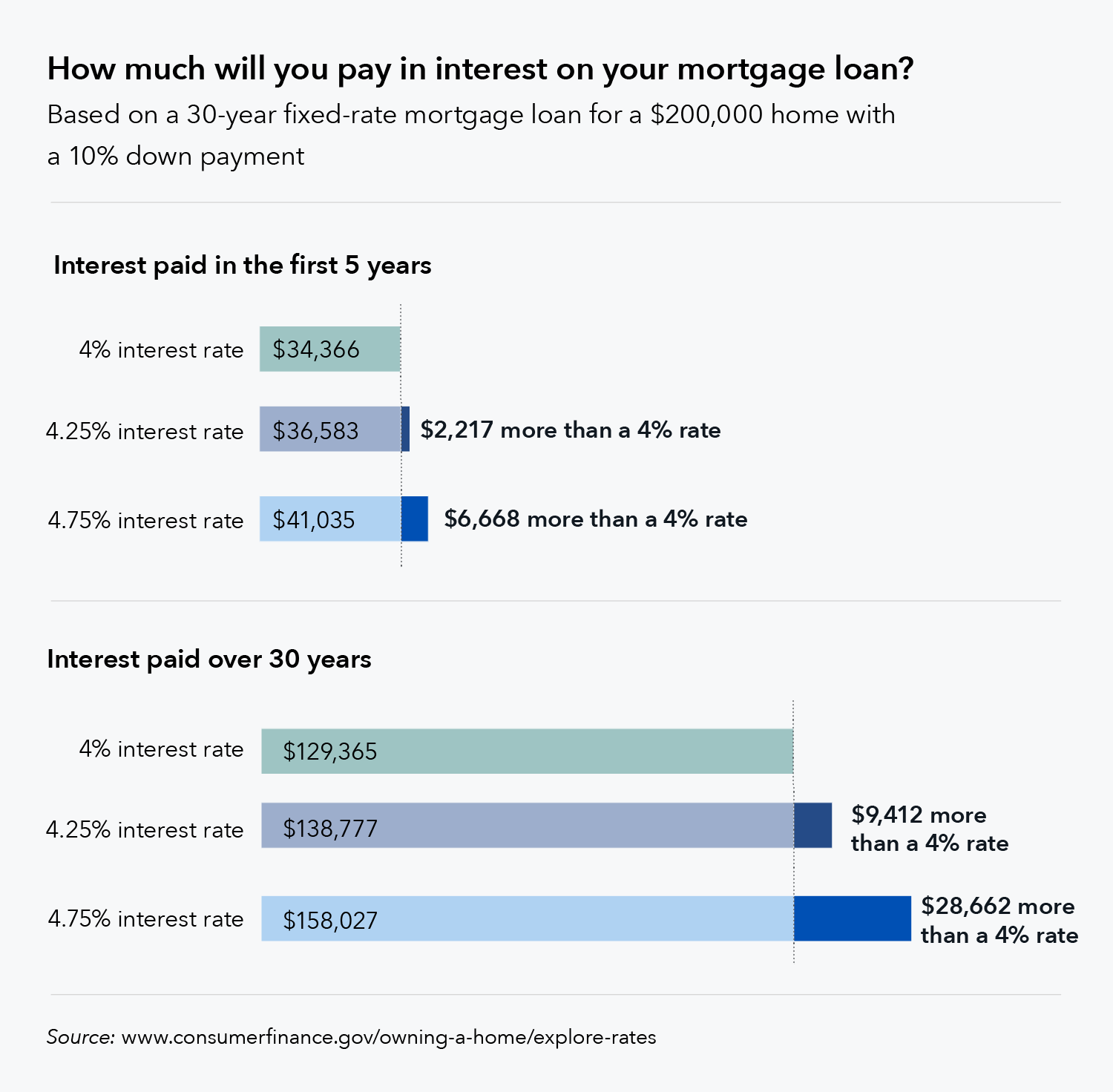
Because different lenders have different appetites for risk and different overhead costs, the “spread” between the highest and lowest rate offered to the same borrower can be as much as 0.5% or more. Over the life of a 30-year loan, even a 0.25% difference can save you tens of thousands of dollars. It is imperative to get “Loan Estimates” from at least three different sources—including a mortgage broker, a traditional bank, and an online lender.
Improving Your Financial “Fundability”
If you aren’t in a rush to buy, the best way to lower your mortgage rate is to improve your financial profile. This involves paying down high-interest credit card debt (to lower your DTI and raise your credit score) and saving a larger down payment. By moving yourself into a higher “credit tier,” you can effectively bypass the macro-economic pressures of high interest rates by qualifying for the most competitive “prime” rates available in the market.
In conclusion, mortgage rates are the pulse of the housing market, reflecting a delicate balance between global bond yields, federal monetary policy, and the individual financial choices of the borrower. While you cannot control the Federal Reserve or the 10-year Treasury yield, understanding these forces empowers you to make informed decisions, negotiate with confidence, and ultimately secure the most cost-effective financing for your home.
aViewFromTheCave is a participant in the Amazon Services LLC Associates Program, an affiliate advertising program designed to provide a means for sites to earn advertising fees by advertising and linking to Amazon.com. Amazon, the Amazon logo, AmazonSupply, and the AmazonSupply logo are trademarks of Amazon.com, Inc. or its affiliates. As an Amazon Associate we earn affiliate commissions from qualifying purchases.