
The emergence of cryptocurrency has redefined the concept of value in the digital age. Unlike traditional fiat currencies, which are issued and regulated by central banks through monetary policy, cryptocurrencies are “made” through decentralized protocols, cryptographic puzzles, and economic incentives. For the modern investor or entrepreneur, understanding the genesis of these assets is not merely a technical curiosity; it is a fundamental requirement for assessing the intrinsic value, scarcity, and long-term viability of a digital investment.
The creation of a cryptocurrency is a multi-faceted process that involves the intersection of capital, energy, and game theory. From the industrial-scale mining operations of Bitcoin to the yield-generating staking models of Ethereum, the “manufacturing” of digital money is a sophisticated financial operation.
The Economic Foundation: Mining and Proof of Work
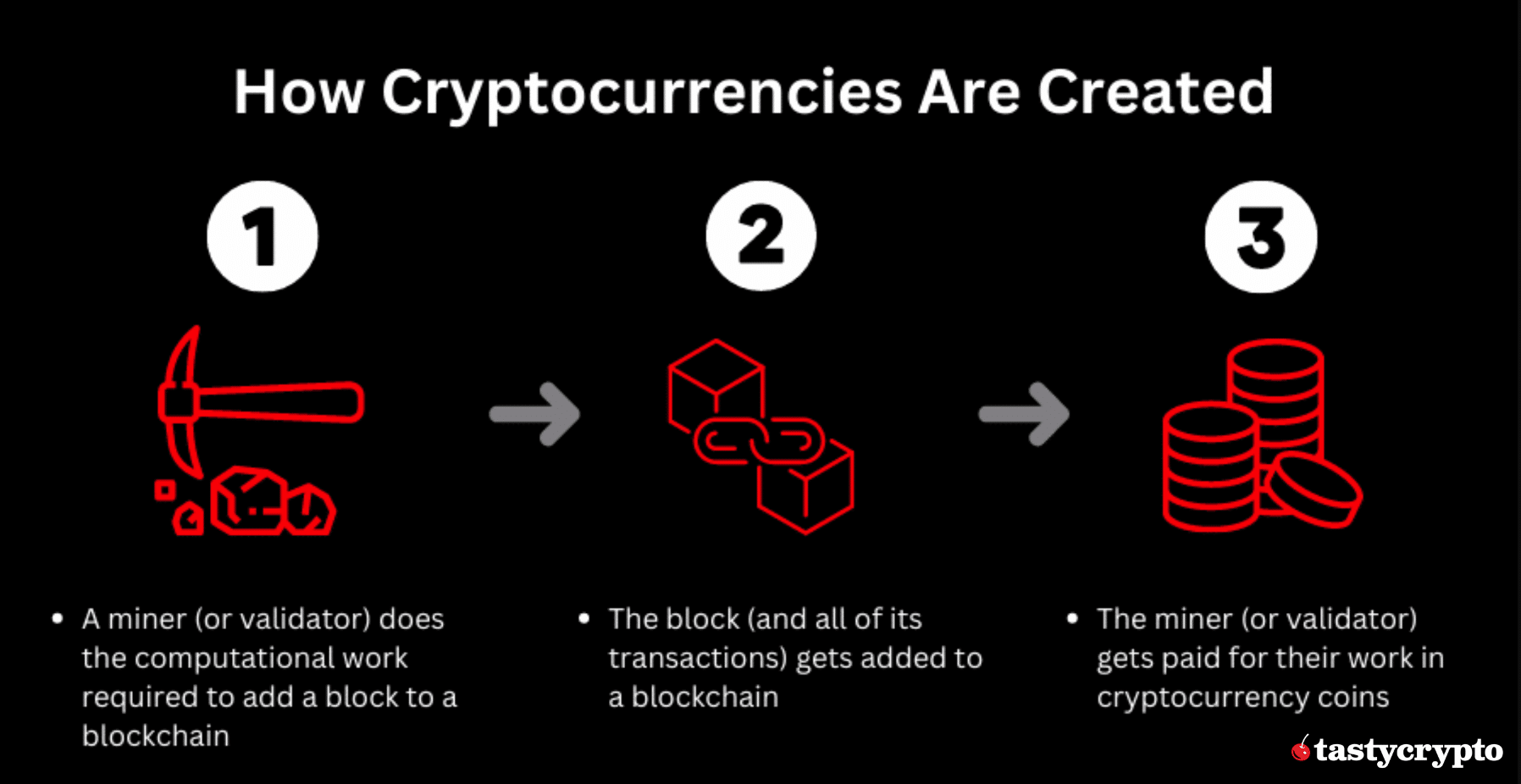
The original method of cryptocurrency creation, pioneered by Bitcoin, is known as Proof of Work (PoW). From a financial perspective, PoW is a mechanism that converts raw energy and hardware depreciation into a digital asset with a verifiable cost basis. This process is commonly referred to as “mining.”
The Capital Expenditure of Mining
Mining is less about “finding” coins and more about providing a service to the network in exchange for a reward. To create new units of a PoW cryptocurrency, participants must invest in specialized hardware known as ASICs (Application-Specific Integrated Circuits). These machines are designed to solve complex mathematical problems that secure the blockchain.
For an investor, the creation of cryptocurrency through mining represents a significant capital expenditure (CapEx). Beyond the initial purchase of hardware, there are ongoing operational expenses (OpEx), primarily in the form of electricity. The “production cost” of a single Bitcoin is often used by analysts as a floor for its market price, as miners are generally unwilling to sell their newly created coins below the cost of the energy used to produce them.
Mining Pools and Institutional Competition
In the early days of Bitcoin, an individual could “make” cryptocurrency using a home computer. Today, the process has become a high-stakes institutional race. Because the difficulty of creating new coins adjusts based on the total computing power of the network, individual miners often join “mining pools.” These pools combine the resources of thousands of participants to increase the frequency of rewards, which are then distributed proportionally. This shift from hobbyist activity to industrial-scale operation has turned cryptocurrency creation into a sector of the broader data center and infrastructure industry.
Proof of Stake: Turning Capital into Governance
As the environmental and financial costs of mining became a point of contention, a new method of cryptocurrency creation gained dominance: Proof of Stake (PoS). In this model, coins are not “mined” through physical labor but are created through the commitment of financial capital.
Staking as a Financial Instrument
In a PoS system, such as Ethereum 2.0, Cardano, or Solana, new coins are issued to “validators” who lock up (or “stake”) a specific amount of the native cryptocurrency. This stake acts as collateral to ensure the validator acts honestly. In return for securing the network and processing transactions, validators are rewarded with newly minted coins and a portion of transaction fees.
From a personal finance perspective, this process is analogous to earning interest on a high-yield savings account or receiving dividends from a stock. However, the “making” of cryptocurrency through staking involves unique risks, such as “slashing,” where a portion of the staked capital is confiscated if the validator fails to maintain uptime or attempts to defraud the network.
The Role of Validators in the Ecosystem
The creation of assets via PoS changes the barrier to entry. While PoW requires access to cheap electricity and hardware supply chains, PoS requires liquid capital. This has led to the rise of “Staking as a Service” (SaaS) providers and exchange-based staking, allowing smaller investors to participate in the creation of new supply without the need for technical expertise. This democratization of the issuance process has significant implications for how liquidity and wealth are distributed within the crypto-economy.
Tokenization and Initial Issuance: The Business of New Assets
Not all cryptocurrencies require a custom-built blockchain. Many of the digital assets traded today are “tokens” built on top of existing networks like Ethereum, Binance Smart Chain, or Polygon. The creation of these assets is a strategic business decision often tied to capital raising or platform utility.

ICOs, IEOs, and Venture Capital
When a new project decides to launch a cryptocurrency, the initial creation of the supply is often handled through an Initial Coin Offering (ICO) or an Initial Exchange Offering (IEO). In these scenarios, the developers “mint” a fixed supply of tokens—sometimes billions of units—at virtually zero cost.
The financial value of these tokens is then established through a public or private sale. For entrepreneurs, this is a powerful alternative to traditional venture capital. Instead of selling equity in a company, they create a digital asset that represents utility or governance within their ecosystem. For the investor, participating in the “creation event” of a token is a high-risk, high-reward strategy that requires deep due diligence into the project’s whitepaper and team.
Understanding Tokenomics and Supply Elasticity
The most critical aspect of “making” a cryptocurrency is its “tokenomics”—the economic policy governing its supply. A well-designed cryptocurrency must answer several financial questions at its inception:
-
Total Supply: Will there be a hard cap (like Bitcoin’s 21 million) or an infinite supply (like Dogecoin)?
-
Inflation Rate: How many new coins will be created each year?
-
Burn Mechanisms: Will a portion of the supply be permanently removed from circulation to create deflationary pressure?
These decisions dictate the asset’s scarcity and, by extension, its long-term investment potential. Assets created with “inflationary” models are often intended for use as a medium of exchange, while “deflationary” models are positioned as stores of value.
The Financial Lifecycle of a New Cryptocurrency
Once a cryptocurrency is created—whether through mining, staking, or minting—it must enter the secondary market to gain a stable valuation. This transition from a newly minted digital unit to a liquid financial asset is the most volatile stage of its lifecycle.
Liquidity Provision and Exchange Listings
For a newly created cryptocurrency to have value, it must be tradable. Developers often “make” a market for their coin by providing initial liquidity to Decentralized Exchanges (DEXs) like Uniswap. By pairing their new token with an established asset like Ethereum or a stablecoin (USDC/USDT), they establish an initial price.
Large-scale adoption usually requires a listing on Centralized Exchanges (CEXs) like Coinbase or Binance. These platforms act as the primary gateways for institutional and retail capital. The process of getting a newly made coin listed involves rigorous legal audits and substantial listing fees, serving as a filter for the thousands of new assets created every month.
Market Making and Price Discovery
After issuance, the price of the cryptocurrency is determined by the forces of supply and demand. Market makers—financial firms that provide buy and sell orders—play a crucial role in ensuring that the newly created asset can be traded without massive price swings. This stage of the process is where the “theoretical” value of the cryptocurrency meets the “real-world” market sentiment.
Regulatory Landscapes and the Future of Asset Issuance
The methods by which cryptocurrencies are made have drawn intense scrutiny from global financial regulators. The U.S. Securities and Exchange Commission (SEC) and other bodies are increasingly looking at whether the creation and distribution of certain tokens constitute an unregistered securities offering.
Compliance and Corporate Identity
As the industry matures, the “making” of a cryptocurrency is becoming a highly regulated corporate activity. “Security Tokens” are a burgeoning class of assets that are created specifically to comply with existing financial regulations, representing ownership in real estate, gold, or company shares. This represents a bridge between the wild-west era of crypto creation and the structured world of traditional finance.
Furthermore, Central Bank Digital Currencies (CBDCs) are the ultimate evolution of this trend. Governments are now “making” their own cryptocurrencies to modernize the legacy banking system. While these are technically digital assets, they lack the decentralized and permissionless nature of Bitcoin, highlighting the distinction between “private” digital assets and “sovereign” digital currency.
In conclusion, the creation of cryptocurrency is far more than a technical exercise in coding. It is a sophisticated economic event that involves capital allocation, risk management, and strategic financial planning. Whether through the energy-intensive process of mining, the capital-heavy mechanism of staking, or the entrepreneurial drive of token issuance, the way a cryptocurrency is made dictates its fundamental value proposition to the market. For the modern investor, understanding these “manufacturing” processes is the key to identifying the assets that will define the next generation of the global financial system.
aViewFromTheCave is a participant in the Amazon Services LLC Associates Program, an affiliate advertising program designed to provide a means for sites to earn advertising fees by advertising and linking to Amazon.com. Amazon, the Amazon logo, AmazonSupply, and the AmazonSupply logo are trademarks of Amazon.com, Inc. or its affiliates. As an Amazon Associate we earn affiliate commissions from qualifying purchases.