
The concept of money has evolved dramatically throughout human history, from salt and seashells to gold, paper currency, and now, digital forms. Among the most revolutionary of these digital iterations is Bitcoin, a cryptocurrency that burst onto the global stage in 2009. For many, its existence as a purely digital asset, devoid of physical form or backing by a central government, begs the fundamental question: how are Bitcoins worth money? The answer lies in a confluence of economic principles, technological innovation, market dynamics, and collective human belief, establishing Bitcoin not just as a speculative novelty, but as a legitimate and increasingly recognized financial asset.

The Foundations of Digital Value: Understanding Bitcoin’s Intrinsic Worth
To comprehend Bitcoin’s monetary value, one must first grasp the core characteristics that underpin its economic utility and desirability. These attributes mimic, and in some cases surpass, the qualities historically associated with sound money.
Scarcity and Controlled Supply: A Digital Gold Standard
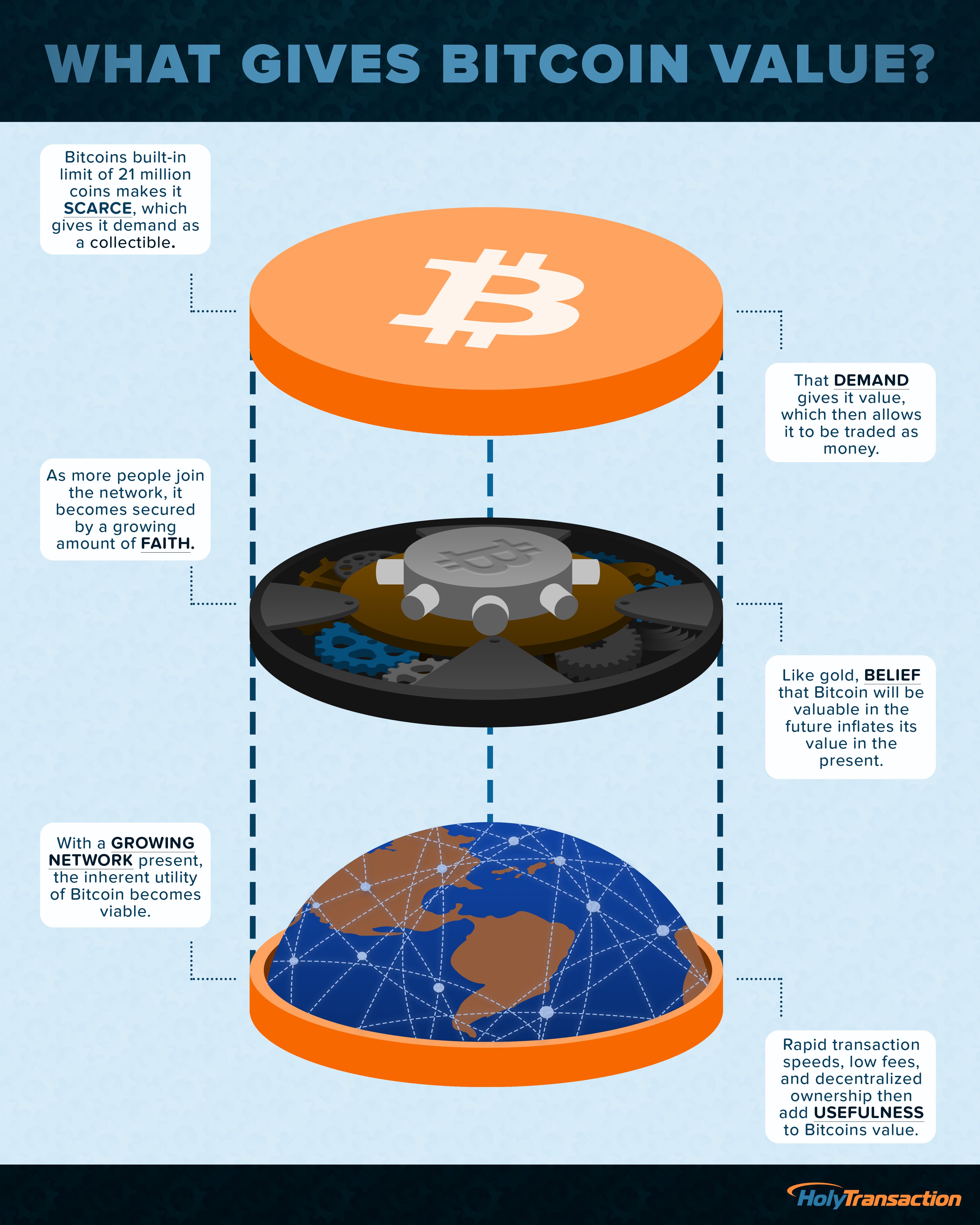
Perhaps the most compelling factor contributing to Bitcoin’s value is its absolute scarcity. Capped at a finite supply of 21 million coins, Bitcoin is designed to be deflationary, meaning its purchasing power theoretically increases over time as demand grows against a fixed supply. This hard cap is enforced by its underlying protocol, making it impervious to the inflationary policies often pursued by central banks that can devalue traditional fiat currencies by printing more money. This predictable and transparent supply schedule, often referred to as “halving” events which reduce the rate of new Bitcoin creation by half approximately every four years, gives it a “digital gold” narrative. Like gold, Bitcoin’s scarcity makes it a potential hedge against inflation and a store of value. The knowledge that no more than 21 million Bitcoins will ever exist instills confidence in its long-term value proposition for investors seeking a safe haven asset.
Decentralization and Trustlessness: Eliminating Intermediaries
Traditional financial systems are built on trust in intermediaries—banks, governments, payment processors. Bitcoin, conversely, operates on a decentralized network, a peer-to-peer system that allows transactions to occur directly between users without the need for a central authority. This “trustlessness” is a critical value proposition. Every transaction is recorded on a public ledger called the blockchain, which is maintained by a global network of computers (miners). This distributed ledger technology makes Bitcoin transactions immutable, transparent, and censorship-resistant. The elimination of intermediaries translates into reduced transaction fees, faster cross-border payments, and enhanced financial autonomy for users. This inherent resilience and resistance to single points of failure contribute significantly to its perceived stability and, thus, its value as an independent monetary system.
Utility and Transactional Efficiency: A Global Payment Rail
Beyond its role as a store of value, Bitcoin also possesses utility as a medium of exchange. While often criticized for its transaction speed and fees compared to traditional payment networks for small retail purchases, Bitcoin excels in specific use cases, particularly for large value transfers and cross-border remittances. Sending Bitcoin across international borders can be significantly cheaper and faster than traditional wire transfers, which can take days and incur substantial fees. As infrastructure improves with solutions like the Lightning Network, Bitcoin’s transactional efficiency for everyday use is also advancing. Furthermore, its programmable nature opens doors for innovative financial applications, smart contracts, and decentralized finance (DeFi) platforms, further enhancing its utility and creating demand within a burgeoning digital economy. The ability to transact globally, instantly, and without permission adds another layer to its fundamental worth.
Market Dynamics: Where Supply Meets Demand in the Crypto Sphere
While the underlying characteristics of Bitcoin provide its intrinsic worth, its day-to-day monetary value, reflected in its price, is largely determined by market forces—the interplay of supply and demand, investor sentiment, and broader economic conditions.
Speculation and Investor Sentiment: The Price Discovery Mechanism
The cryptocurrency market, particularly for Bitcoin, is highly dynamic and often driven by speculation. Early adopters and investors recognized its potential, driving initial demand. As awareness grew, more individuals and institutions entered the market, contributing to price volatility. Positive news, such as institutional adoption, regulatory clarity, or technological advancements, can trigger buying frenzies, driving prices up. Conversely, negative news, regulatory crackdowns, or major hacks can lead to sell-offs. This constant ebb and flow of investor sentiment and speculative trading plays a crucial role in Bitcoin’s price discovery. While some view this volatility as a drawback, it is a natural feature of nascent markets with high growth potential and reflects the ongoing process of determining an appropriate valuation for a new asset class. The liquidity provided by exchanges and the constant trading activity contribute to its market-determined monetary worth.
Adoption and Network Effects: Expanding Utility and Acceptance
The value of a network often increases exponentially with the number of its users—a concept known as Metcalfe’s Law. For Bitcoin, as more individuals, businesses, and even nations adopt it as a payment method, an investment, or a reserve asset, its network effect strengthens. This expanded adoption drives demand, reinforcing its utility and legitimacy. When major payment processors like PayPal or Visa integrate Bitcoin, or when countries like El Salvador adopt it as legal tender, it signals growing mainstream acceptance, encouraging further adoption and deepening its liquidity. This growing ecosystem of users, developers, businesses, and institutions that interact with Bitcoin creates a robust demand side, directly impacting its market value. The broader its acceptance as “money,” the more it behaves like money.
Macroeconomic Factors and Global Financial Landscape: A Hedge or a Risk?

Bitcoin’s value is not entirely isolated from the broader global economic environment. During times of economic uncertainty, high inflation, or geopolitical instability, some investors turn to Bitcoin as a “safe haven” asset, similar to gold. Its decentralized nature makes it appealing to those wary of traditional financial systems or government overreach. Conversely, during periods of economic stability or rising interest rates, investors might shift capital back into traditional assets, potentially impacting Bitcoin’s price. The influx of institutional capital, such as large investment funds and corporations adding Bitcoin to their balance sheets, further intertwines its market performance with global financial trends. As it matures, Bitcoin is increasingly being evaluated in relation to interest rates, inflation data, and economic growth forecasts, much like other major asset classes.
Bitcoin as an Asset Class: Investment Vehicle and Store of Value
From a financial perspective, Bitcoin has evolved beyond a mere payment mechanism to become a recognized, albeit volatile, asset class. Its characteristics make it attractive to investors for various strategic purposes.
Portfolio Diversification and Risk Management
Many financial advisors advocate for diversification across different asset classes to mitigate risk. Bitcoin, with its low correlation to traditional assets like stocks and bonds, can offer a unique diversification benefit within an investment portfolio. Its price movements are often independent of, or even inverse to, those of conventional markets, providing a potential hedge against downturns in other sectors. While its volatility means it carries significant risk, a small allocation to Bitcoin within a diversified portfolio can potentially enhance overall returns, particularly for long-term investors willing to weather market fluctuations. Its inclusion in sophisticated investment strategies underscores its evolving status as a legitimate financial instrument.
Long-Term Store of Value vs. Short-Term Volatility
The debate around Bitcoin’s role as a “store of value” often hinges on its price volatility. While short-term swings can be dramatic, proponents argue that over longer time horizons (multiple years), Bitcoin has demonstrated an upward trend, indicating its potential to preserve and grow wealth. They point to its scarcity, decentralization, and increasing adoption as fundamental drivers for its long-term appreciation. For investors seeking to protect their purchasing power against inflation or monetary debasement, Bitcoin offers an alternative to fiat currencies. However, its high volatility also means it’s not suitable for all investors, especially those with short-term financial goals or low-risk tolerance. Understanding this duality is crucial for anyone considering Bitcoin for their financial planning.
Regulatory Environment and Institutional Adoption: Maturation of the Asset
The maturation of Bitcoin as an asset class is closely tied to its regulatory environment and the increasing participation of institutional investors. As governments globally grapple with how to regulate cryptocurrencies, clearer guidelines can reduce uncertainty and attract more mainstream investment. The approval of Bitcoin ETFs (Exchange-Traded Funds) in various jurisdictions has provided traditional investors with an easier, regulated pathway to gain exposure to Bitcoin without directly owning it. Major financial institutions, hedge funds, and publicly traded companies are increasingly holding Bitcoin on their balance sheets, offering custody services, or integrating crypto into their offerings. This institutional embrace lends significant credibility and liquidity to the market, transforming Bitcoin from a niche digital experiment into a legitimate component of the global financial system.
The Future of Bitcoin’s Monetary Value: Challenges and Opportunities
While Bitcoin has firmly established its monetary worth, its journey is far from over. Ongoing developments and emerging challenges will continue to shape its value proposition.
Scalability and Transaction Costs: Paving the Way for Broader Use
One of Bitcoin’s persistent challenges is its scalability. The original protocol is designed to process a limited number of transactions per second, which can lead to network congestion and higher transaction fees during peak demand. For Bitcoin to achieve widespread use as an everyday currency, these issues need to be addressed. Layer-2 solutions, such as the Lightning Network, aim to enable faster and cheaper transactions off the main blockchain, significantly enhancing Bitcoin’s capacity for micropayments and casual use. Continued development and adoption of these scaling technologies are crucial for increasing Bitcoin’s utility and, consequently, its long-term monetary value.
Competition and Innovation in the Digital Asset Space
Bitcoin operates within a vibrant and rapidly evolving ecosystem of thousands of other cryptocurrencies. While Bitcoin remains the dominant force, new digital assets (altcoins) are constantly emerging, offering different features, technologies, and use cases. Some aim to improve on Bitcoin’s perceived shortcomings, while others target entirely different market niches. This competition drives innovation across the entire crypto space, pushing Bitcoin’s developers to continuously improve its protocol and maintain its relevance. The success of Bitcoin in retaining its “digital gold” narrative and primary store-of-value function amidst this competition will be a key determinant of its future monetary worth.
Evolving Perceptions and Mainstream Integration
Ultimately, the long-term monetary value of Bitcoin will be influenced by its continued integration into the global financial mainstream and the evolving perception of the general public. As education improves, regulatory frameworks solidify, and user-friendly interfaces become commonplace, Bitcoin’s mystique will diminish, giving way to broader understanding and acceptance. Its ability to serve as both a robust store of value and an efficient medium of exchange in a digital-first world will be paramount. The ongoing narrative—whether it’s viewed primarily as a speculative asset, an inflation hedge, a global payment network, or a foundational technology for a new financial paradigm—will dictate its sustained demand and, by extension, its enduring worth.
In conclusion, Bitcoin’s monetary worth is not an arbitrary construct. It is rooted in its inherent scarcity, decentralized and trustless nature, and growing utility. Its value is then expressed and refined through dynamic market forces driven by supply and demand, investor sentiment, and global economic trends. As it continues to mature, navigate regulatory landscapes, and expand its technological capabilities, Bitcoin has undeniably established itself as a significant and increasingly indispensable asset within the modern financial landscape, challenging traditional notions of money and wealth in the digital age.
aViewFromTheCave is a participant in the Amazon Services LLC Associates Program, an affiliate advertising program designed to provide a means for sites to earn advertising fees by advertising and linking to Amazon.com. Amazon, the Amazon logo, AmazonSupply, and the AmazonSupply logo are trademarks of Amazon.com, Inc. or its affiliates. As an Amazon Associate we earn affiliate commissions from qualifying purchases.