
The story of Amazon’s inception is more than just a tale of entrepreneurial grit; it’s a foundational case study in brand strategy, corporate identity, and market disruption. What began in a garage in Bellevue, Washington, in 1994, under the visionary leadership of Jeff Bezos, wasn’t merely a technological experiment but a meticulously planned launch of a brand designed for unprecedented scale and customer centricity. Amazon didn’t just sell products; it sold a new way of shopping, establishing a brand identity rooted in convenience, vast selection, and unwavering customer focus, which would eventually redefine global commerce.

The Incubation of a Visionary Brand
Amazon’s origin story is intrinsically linked to the nascent days of the internet, a wild frontier that Bezos, then a successful hedge fund executive, recognized as a profound opportunity for brand building. His departure from a stable career to chase a revolutionary idea signaled a deep understanding that the digital realm wasn’t just a new channel for sales, but a fertile ground for cultivating an entirely new kind of brand relationship with consumers.
The Internet’s Untapped Potential and Bezos’s Insight
In the early 1990s, the internet was a nascent phenomenon, its commercial potential largely uncharted. Bezos, observing the astronomical growth rate of web usage – estimated at 2,300% per year – meticulously compiled a list of twenty potential product categories that could be sold online. His methodical approach wasn’t just about identifying profitable niches; it was about discerning where a new brand could establish a dominant presence by leveraging the unique advantages of the internet: boundless inventory, direct customer access, and the ability to personalize experiences. This strategic foresight was the first cornerstone of Amazon’s brand development. Bezos understood that to create a brand that resonated in this new digital space, it needed to offer something fundamentally better or different than existing brick-and-mortar alternatives. The internet provided the canvas for a brand that could overcome geographical limitations and offer unparalleled choice.
Strategic Selection: Books as the Initial Brand Anchor
Of the twenty categories Bezos considered, books emerged as the most compelling starting point for Amazon’s brand. This wasn’t a whimsical choice but a highly strategic one, laden with branding implications. Books are a commodity with a vast number of titles globally, making physical stores unable to stock more than a fraction. This allowed Amazon to immediately differentiate its brand by offering an “endless aisle” – a selection impossible for competitors to match. Furthermore, books are relatively standardized products, simplifying logistics and reducing the need for customers to physically examine them before purchase, thus mitigating one of the biggest challenges for early e-commerce brands: trust in buying unseen goods.
By focusing on books, Amazon positioned itself as the definitive online destination for readers, building immediate brand credibility and trust within a specific, passionate customer segment. This narrow initial focus allowed the company to refine its operational model, customer service protocols, and digital interface, all while cultivating a strong, clear brand message: “the world’s largest bookstore.” This initial branding as a specialized, comprehensive bookseller laid the groundwork for future expansion, proving the viability of online retail and establishing a reputation for convenience and selection that would later be applied to a myriad of other products.
Forging an Identity: Name, Logo, and Core Promise
The early days of Amazon were characterized by deliberate choices in shaping its brand identity, from its iconic name to its foundational commitment to customer satisfaction. These elements were not merely aesthetic; they were strategic pillars designed to communicate value, build trust, and set the stage for long-term growth.
From Cadabra to Amazon: Crafting a Memorable Name
The process of naming the company was a critical early branding decision, underscoring Bezos’s meticulous approach. Initially, Bezos considered names like “Cadabra” (as in “abracadabra”), but wisely abandoned it due to its potential mispronunciation and association with “cadaver.” Other considerations included “Relentless.com” – a domain Bezos still owns and redirects to Amazon – which, while reflecting his drive, lacked the broad appeal and sense of scope he envisioned.
The ultimate choice, “Amazon,” was a masterstroke of branding. It evoked the vastness and exoticism of the Amazon River, the largest river in the world, symbolizing the company’s aspiration to become the world’s largest online retailer, offering an immense selection. The name was global, memorable, and easily pronounceable in many languages. It also started with the letter ‘A’, giving it an advantage in alphabetical listings of the era. This powerful symbolic connection to size and abundance became a core part of Amazon’s corporate identity, setting the tone for its ambitious “everything store” vision even before it fully materialized.
The Customer-Centricity Mantra as Brand Differentiator
From its very inception, Amazon committed itself to an almost fanatical degree of customer obsession. This wasn’t just a marketing slogan; it was the brand’s operational philosophy, deeply embedded in every decision and process. Bezos famously left an empty chair in early meetings, designating it as “the customer,” a constant reminder that the customer’s perspective should guide every strategic choice.
This relentless focus on the customer manifested in features like one-click ordering, personalized recommendations, easy returns, and a commitment to competitive pricing and fast delivery. These innovations weren’t technological marvels for their own sake; they were brand-building initiatives designed to create an unparalleled customer experience, fostering loyalty and trust in a new, often skeptical, online retail environment. By consistently prioritizing customer needs and convenience, Amazon built a brand reputation as the most reliable and user-friendly online shopping destination, differentiating itself from competitors and solidifying its place in the nascent e-commerce landscape. This unwavering commitment became Amazon’s most potent brand differentiator, creating a virtuous cycle of positive customer experiences leading to repeat business and strong word-of-mouth promotion.
Early Visual Identity: Simplicity and Trust
Amazon’s early visual identity, though evolving, consistently reflected its core brand values of simplicity, accessibility, and reliability. The initial logos were straightforward, often featuring the name “Amazon.com” with a subtle wave or a simple graphic representing the vastness of the river. The key was to avoid clutter and convey professionalism and trustworthiness at a time when online transactions were still viewed with suspicion by many.
The iconic Amazon logo featuring a smile connecting the ‘A’ to the ‘Z’ was introduced later, powerfully encapsulating the brand’s promise: everything from A to Z, delivered with a smile (customer satisfaction). This design choice was not accidental; it was a deliberate and effective visual representation of the brand’s overarching mission. The use of simple, clean typography and a clear layout on its website further reinforced this commitment to ease of use and transparency. These early design decisions were crucial in building visual recognition and establishing a sense of authority and approachability for a brand operating in an entirely new domain.
Building Trust and Expanding the Brand Narrative
Having established its foundational brand identity with books, Amazon embarked on a strategic expansion, carefully cultivating trust and gradually broadening its brand narrative from a specialized retailer to a universal provider. This process was as much about market expansion as it was about skillfully evolving the brand perception.
Cultivating Customer Loyalty Through Experience
Amazon understood that in the uncharted waters of online retail, trust was paramount. Without the physical presence of a store, the brand had to compensate by delivering an exceptional digital and post-purchase experience. This meant not just selling books but building a community around them through features like customer reviews, which were revolutionary at the time. Allowing customers to openly review products, even negatively, fostered an unprecedented level of transparency and authenticity, directly contributing to Amazon’s brand credibility. It empowered customers, transforming them from passive consumers into active participants in the brand’s ecosystem.

Beyond reviews, the consistency of delivery, the efficiency of its customer service, and the relentless pursuit of making online shopping effortless – through intuitive website design and secure payment gateways – all contributed to a brand experience that cultivated profound customer loyalty. Each positive interaction reinforced the brand’s promise, turning first-time buyers into repeat customers and, crucially, brand advocates who spread positive word-of-mouth.
The “Everything Store” Vision: A Gradual Brand Evolution
While Amazon began as a bookseller, the “everything store” vision was always part of Bezos’s long-term brand strategy. The transition from books to music, then movies, and eventually electronics, toys, and beyond, was a carefully managed brand evolution. Rather than abruptly shifting its identity, Amazon incrementally added product categories, leveraging the trust and operational expertise gained from selling books. Each new category was introduced under the same umbrella of convenience, selection, and competitive pricing that defined its initial brand.
This gradual expansion prevented brand confusion and allowed customers to seamlessly transition their perception of Amazon from a specialized bookstore to a general merchandise retailer. The consistent application of its core brand values across diverse product lines reinforced the idea that Amazon was the go-to destination for anything, building a comprehensive brand narrative that promised universal access and reliability. This careful stewardship of its brand identity during expansion was critical to maintaining customer confidence and avoiding dilution of its core promise.
Initial Marketing and Word-of-Mouth Brand Building
In its nascent stages, Amazon’s marketing efforts were highly strategic, prioritizing efficient channels that amplified its unique brand proposition. While early advertising did exist, a significant portion of its brand building relied on earned media and, most powerfully, word-of-mouth. The novelty of ordering books online from a seemingly infinite catalog, coupled with reliable delivery and customer service, provided an experience so compelling that customers naturally became advocates.
This organic spread of the Amazon brand was more potent than any traditional advertising campaign. Early adopters, often tech-savvy individuals, evangelized the convenience and revolutionary nature of the service, creating a groundswell of interest. Additionally, Amazon cleverly leveraged its digital presence for cross-promotion and partnerships, integrating itself into the broader internet ecosystem. By focusing on creating an inherently shareable and positive customer experience, Amazon effectively turned its users into a powerful marketing force, building brand recognition and trust through authentic testimonials and recommendations.
Navigating Challenges and Solidifying Brand Equity
The journey of Amazon from startup to global behemoth was not without its trials. Economic downturns, technological shifts, and intense competition tested its resolve, yet the brand’s foundational principles and strategic agility allowed it not only to survive but to emerge stronger, solidifying its brand equity in the process.
The Dot-Com Bust: Proving Brand Resilience
The bursting of the dot-com bubble in the early 2000s posed an existential threat to many internet-based companies, wiping out countless aspiring brands. Amazon, too, faced immense pressure, with its stock plummeting and profitability questioned. However, unlike many of its peers, Amazon’s brand resilience was rooted in its fundamental value proposition and deep customer relationships. While other companies relied on speculative growth and unsustainable business models, Amazon had consistently focused on building a durable brand founded on customer trust, operational efficiency, and a long-term vision.
During this tumultuous period, Amazon doubled down on its core brand promises: expanding selection, enhancing customer experience, and investing in infrastructure. Instead of panicking, Bezos famously prioritized free cash flow and customer satisfaction over short-term profits, a move that reinforced the brand’s stability and commitment to its users. This steadfastness during a crisis proved the strength of the Amazon brand, demonstrating its ability to weather storms and reinforcing its image as a reliable and enduring player in the digital economy. It showed the market that Amazon wasn’t just a flash in the pan but a brand built to last.
Scaling Operations While Maintaining Brand Integrity
As Amazon grew, scaling its operations without compromising the quality of its customer experience was a paramount branding challenge. The sheer volume of orders, the increasing complexity of its supply chain, and the expansion into diverse product categories threatened to dilute the personalized touch that defined its early brand. However, Amazon meticulously invested in technology, logistics, and human capital to ensure that its brand promise of convenience and reliability scaled with its size.
Innovations in warehouse automation, sophisticated data analytics for personalized recommendations, and continuous improvements in delivery speed and accuracy were all driven by the imperative to maintain brand integrity. The company understood that a breakdown in any part of the customer journey – a late delivery, a difficult return, or an unhelpful customer service interaction – could erode years of brand building. By consistently investing in the infrastructure and processes necessary to support its growing scale, Amazon ensured that its brand remained synonymous with seamless service, regardless of its ever-expanding complexity.
Legacy of Innovation: Continuously Redefining the Brand
A key element of Amazon’s enduring brand success has been its relentless pursuit of innovation, not just in technology but in redefining what its brand stands for. From its early days as an online bookseller, Amazon continuously pushed boundaries, expanding into cloud computing with AWS, introducing revolutionary devices like the Kindle and Echo, and pioneering new retail formats with Amazon Go. Each of these ventures, while seemingly disparate, served to reinforce and expand the core Amazon brand identity: a company that leverages technology to make life easier, more convenient, and more connected for its customers.
These innovations weren’t random forays; they were strategic moves to anticipate and shape customer needs, solidifying Amazon’s brand as a leader, an innovator, and a company deeply integrated into the fabric of modern life. This continuous redefinition and expansion of its brand identity, always anchored in customer obsession, has allowed Amazon to remain relevant and dominant in an ever-changing technological and commercial landscape, ensuring its brand equity continues to grow.
The Enduring Brand Legacy of Amazon
From a modest online bookstore to a global technology and logistics powerhouse, Amazon’s journey is a testament to the power of visionary brand strategy. Its origins reveal a deliberate, calculated approach to building an identity that was future-proof, customer-centric, and infinitely scalable.
From Bookseller to Global Brand Powerhouse
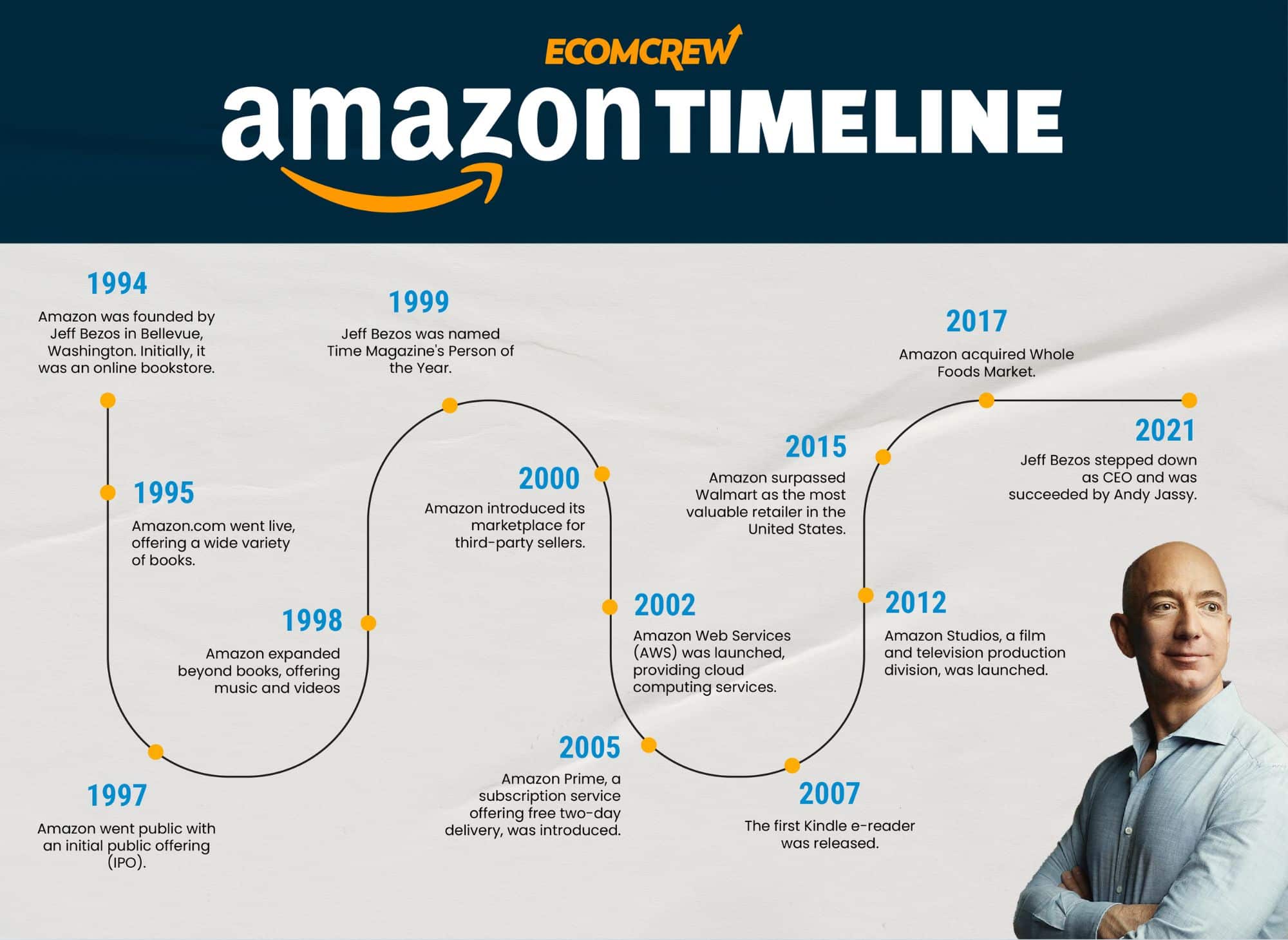
Amazon’s transformation from a niche online bookseller to a multinational conglomerate with a diverse portfolio of businesses – including e-commerce, cloud computing, artificial intelligence, digital streaming, and logistics – is an extraordinary brand narrative. This evolution was not haphazard; it was a carefully executed strategic expansion, where each new venture, whether it was AWS or Prime, was designed to reinforce and extend the core brand promise of convenience, efficiency, and customer satisfaction. The brand’s ability to seamlessly integrate new offerings under its umbrella, maintaining a consistent brand experience across highly disparate services, speaks volumes about the strength and flexibility of its corporate identity. Today, the Amazon brand transcends specific products; it represents a commitment to innovation, customer ease, and technological leadership on a global scale.
The Blueprint for Future Brand Innovators
The story of how Amazon got started offers invaluable lessons for future brand innovators. It underscores the importance of a clear, customer-obsessed vision from day one. It highlights the strategic advantage of starting with a focused product and then methodically expanding, leveraging initial success and trust. Amazon’s journey demonstrates that branding is not merely about logos and advertising; it’s about deeply embedding core values into every operational process, every customer interaction, and every strategic decision. The relentless pursuit of a superior customer experience, coupled with a willingness to innovate and adapt, allowed Amazon to build a brand that is not only recognizable but deeply ingrained in the lives of billions. Its genesis serves as a powerful case study in how strategic brand building, when executed with foresight and consistency, can create an enduring legacy that reshapes industries and defines an era.
aViewFromTheCave is a participant in the Amazon Services LLC Associates Program, an affiliate advertising program designed to provide a means for sites to earn advertising fees by advertising and linking to Amazon.com. Amazon, the Amazon logo, AmazonSupply, and the AmazonSupply logo are trademarks of Amazon.com, Inc. or its affiliates. As an Amazon Associate we earn affiliate commissions from qualifying purchases.