
The story of Amazon’s inception is often told through the lens of technology or finance, but at its heart, the company’s rise is a masterclass in brand strategy and corporate identity. When Jeff Bezos founded the company in 1994, he wasn’t just building a website to sell books; he was architecting a brand designed for infinite scalability. Understanding how Amazon began requires a deep dive into the deliberate branding choices—from naming conventions to consumer psychology—that transformed a garage-based startup into the world’s most recognized “Everything Store.”
Strategic Naming: Crafting a Narrative of Scale
The brand identity we know today was almost entirely different. In the early planning stages, Bezos initially incorporated the company as “Cadabra,” a play on the word “abracadabra.” However, this first attempt at branding was quickly abandoned after a lawyer misheard the name as “cadaver.” This early pivot highlights a crucial lesson in brand strategy: a name must be resilient, phonetically clear, and evoke the right emotional response.

From Cadabra to the Amazon River
In late 1994, Bezos began scouring the dictionary for a name that started with the letter “A,” a strategic move to ensure the company would appear at the top of alphabetized website directories, which were the search engines of the era. He settled on “Amazon” for two distinct reasons that reflect a sophisticated branding mindset. First, the Amazon is the largest river in the world, mirroring his vision for the world’s largest bookstore. Second, the name suggested something “exotic and different,” a key differentiator in a nascent internet market where most brands were still finding their voice.
The Psychology of First Impressions
By choosing a name associated with a force of nature, Amazon immediately established a brand persona of power, vastness, and endurance. This was a move away from the “tech-heavy” names of the 1990s and toward a more organic, lifestyle-oriented identity. The name allowed the company to transcend its initial product category. Had the company been named “OnlineBooks.com,” the brand would have faced significant friction when trying to expand into electronics, apparel, or cloud computing. The “Amazon” brand was built to be a container for any possible future venture.
Customer Obsession: The Core Brand Pillar
While many companies focus their marketing on product features or price points, Amazon’s brand was built on a singular philosophical pillar: customer obsession. This wasn’t just a mission statement; it was the foundation of their corporate identity. In the early days, this commitment was used as a marketing tool to build trust in a medium—the internet—that many consumers still viewed with skepticism.
The “Empty Chair” in the Boardroom
To solidify this brand value internally and externally, Bezos famously left one chair empty in every important meeting. He informed his leadership team that the empty chair was occupied by “the most important person in the room”: the customer. This symbolic gesture became a part of the Amazon brand lore, signaling to the market that the company was a fiduciary for the consumer’s interests. This level of dedication created a “brand halo” that allowed Amazon to win over customers from established brick-and-mortar retailers.
The Flywheel Effect as a Marketing Strategy
Amazon’s brand strategy is famously represented by the “Flywheel” or “Virtuous Cycle.” The logic was simple: a better customer experience leads to more traffic, which attracts more third-party sellers, which leads to a wider selection, which further improves the customer experience. From a branding perspective, this created a narrative of momentum. The marketing message wasn’t “Buy from us because we are big”; it was “Buy from us because our growth allows us to lower prices and increase convenience for you.” This alignment of growth with consumer benefit is one of the most successful marketing frameworks in modern business history.
Visual Language and the Evolution of Corporate Identity
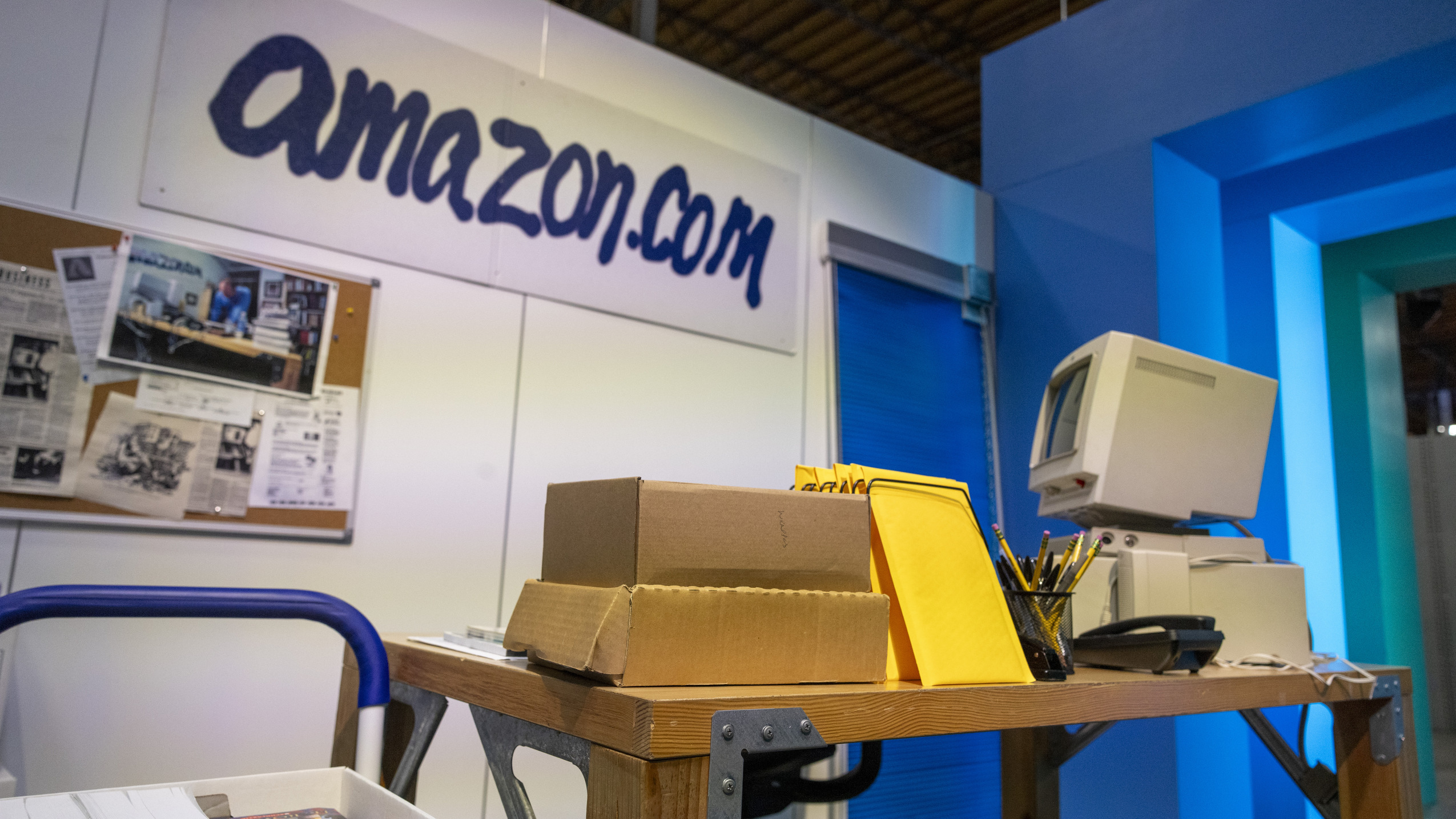
A brand’s visual identity must evolve alongside its business model. Amazon’s visual journey from 1994 to the present day illustrates how a company can use design to communicate a shift in strategy. The early Amazon logos were literal, often featuring water motifs or a stylized “A” with a river running through it. As the company’s ambitions grew, the design needed to become more abstract and more inclusive of various product categories.

The Smile Logo: A Masterstroke of Design
In 2000, Amazon introduced its most iconic brand asset: the “smile” logo. Designed by the agency Turner Duckworth, the logo features an arrow that connects the letter “a” to the letter “z.” This was a brilliant piece of visual storytelling. It communicated the “Everything Store” promise—that they carry everything from A to Z—while simultaneously forming the shape of a smile.
This design shift changed the brand’s perception from a transactional utility to a friendly, approachable service. The smile communicates a positive emotional outcome (satisfaction), while the arrow suggests movement and speed. By placing this logo on every brown shipping box, Amazon turned its logistics network into a massive, mobile marketing campaign. The “smile box” on a neighbor’s doorstep became a more powerful advertisement than any television commercial could ever be.
Consistency Across Touchpoints
Amazon’s corporate identity is characterized by a “low-friction” aesthetic. The website’s design, though often criticized for being cluttered, is meticulously engineered for conversion. The brand identity here is one of efficiency. The “1-Click” ordering button, patented in 1999, became a branded feature that defined the Amazon experience. It told the consumer that the Amazon brand valued their time above all else. This consistency—from the logo to the interface to the delivery—solidified Amazon’s position as a reliable, indispensable part of daily life.
The Marketing of Convenience: Turning Logistics into Brand Equity
For most companies, shipping and fulfillment are back-end operations. For Amazon, they are the primary marketing engine. How Amazon began its logistics journey is a study in how a brand can turn a functional necessity into a competitive advantage.
Reliability as a Brand Promise
In the mid-90s, the primary barrier to e-commerce was a lack of trust regarding delivery. Amazon tackled this by making transparency a core part of its brand identity. They were among the first to send automated order confirmation and shipping notification emails. This proactive communication was a marketing strategy disguised as a service. It built a brand reputation for reliability that made consumers feel safe spending money on the platform.
Amazon Prime: The Ultimate Loyalty Program
The launch of Amazon Prime in 2005 was perhaps the most significant brand move in the company’s history. By charging an upfront fee for “free” shipping, Amazon fundamentally changed the psychology of the consumer. Prime members, having already paid for the service, felt a “sunk cost” incentive to shop exclusively on Amazon.
From a brand perspective, Prime moved the relationship from transactional to membership-based. It created an elite tier of brand advocates. The marketing shifted from “What do you want to buy?” to “How can we make your life easier today?” This transition allowed Amazon to become a lifestyle brand, deeply integrated into the domestic habits of millions of households.
Brand Resilience: The “Day 1” Mentality
Perhaps the most enduring aspect of Amazon’s brand identity is the “Day 1” philosophy. Jeff Bezos maintained that as soon as a company moves to “Day 2,” it begins a slow descent into irrelevance and decline. This philosophy has become a cornerstone of Amazon’s corporate identity, signaling to investors and consumers alike that the brand is perpetually innovative.
The Branding of Innovation
Amazon’s willingness to “fail fast” is a key part of its brand narrative. Whether it was the failure of the Fire Phone or the success of the Kindle, the brand is perceived as a pioneer. This identity allows the company to enter new markets—like grocery with Whole Foods or healthcare with Amazon Clinic—with a level of instant credibility. The brand’s “permission” to innovate comes from its historical consistency in disrupting itself.
Long-Term Thinking as a Brand Value
Amazon’s early years were marked by a lack of profitability, a fact that Bezos used to build a brand identity centered on “long-term thinking.” In his first letter to shareholders in 1997, he laid out this vision clearly. By branding the company as a long-term player, he managed the expectations of the market and attracted a specific type of loyal investor and employee. This commitment to the future became a self-fulfilling prophecy, allowing the brand the breathing room to experiment and dominate new sectors before competitors could react.
In conclusion, Amazon’s beginning was not just the launch of a website; it was the birth of a sophisticated brand ecosystem. Through strategic naming, a relentless focus on the customer, iconic visual design, and the branding of convenience, Amazon created a corporate identity that is both flexible and formidable. The lessons of Amazon’s early years remain a blueprint for any brand looking to scale from a niche player to a global powerhouse.
aViewFromTheCave is a participant in the Amazon Services LLC Associates Program, an affiliate advertising program designed to provide a means for sites to earn advertising fees by advertising and linking to Amazon.com. Amazon, the Amazon logo, AmazonSupply, and the AmazonSupply logo are trademarks of Amazon.com, Inc. or its affiliates. As an Amazon Associate we earn affiliate commissions from qualifying purchases.