
The Core Concept: Understanding Active Speaker Technology
Active speakers represent a fundamental shift in audio system design, integrating amplification directly within the speaker enclosure. Unlike passive speakers, which require an external amplifier or receiver to power them, active speakers are self-powered units. This integrated design means that each speaker cabinet houses not only the drivers (woofers, tweeters, mid-range units) but also the crossover network and one or more dedicated power amplifiers. This architectural choice profoundly impacts performance, setup, and overall user experience, making active speakers a cornerstone of modern audio technology.
Defining Active vs. Passive Speakers
The distinction between active and passive speakers is crucial for understanding their respective merits and applications. Passive speakers rely on an external amplifier to receive an amplified signal. This signal is then routed through a passive crossover network within the speaker, which divides the frequencies and directs them to the appropriate drivers. The quality of the sound, therefore, is heavily dependent on the amplifier’s capabilities and the synergy between the amplifier and the speakers’ impedance and sensitivity.
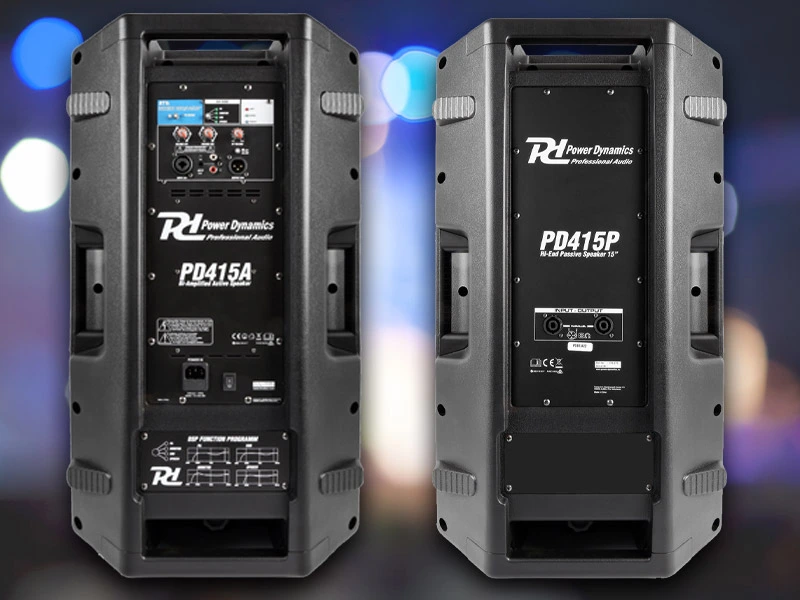
Active speakers, conversely, receive a line-level signal (unamplified) directly from an audio source (e.g., a DAC, preamplifier, or streaming device). This signal then enters the speaker, where it passes through an active crossover network before reaching the built-in amplifiers. Each amplifier is specifically matched and dedicated to powering individual drivers or driver groups (e.g., one amplifier for the tweeter, one for the woofer). This internal optimization is a defining characteristic of active systems, allowing for precision control over the signal path and driver performance.
Integrated Amplification and Its Benefits
The primary advantage of integrated amplification lies in its ability to create a perfectly matched system. When an amplifier is built into the speaker, the manufacturer can precisely tailor its power output, impedance characteristics, and thermal management to the specific drivers and cabinet acoustics. This eliminates the guesswork and potential performance compromises that can arise when pairing separate components in a passive setup. The result is often a more efficient, accurate, and transparent sound reproduction, as the internal components are designed to work in perfect harmony.
Furthermore, active speakers often employ bi-amplification or even tri-amplification, meaning multiple amplifiers are used within a single speaker to power different frequency ranges independently. For instance, a common configuration features one amplifier dedicated to the tweeter and another for the woofer. This allows for greater dynamic range, reduced intermodulation distortion, and improved transient response, as each driver receives a clean, dedicated power supply without interference from other frequency demands. The active crossover, being placed before the amplifiers, also operates at line-level, leading to more precise frequency division and lower distortion compared to passive crossovers which operate at high power levels.
Advantages and Applications of Active Speaker Systems
The architectural benefits of active speaker technology translate into a myriad of practical advantages and diverse application possibilities, making them a compelling choice for various audio enthusiasts and professionals. From simplified home setups to critical studio environments, active speakers offer performance, convenience, and flexibility that passive systems often struggle to match without significant component matching expertise.
Simplified Setup and Optimized Performance
One of the most immediate advantages of active speakers is their ease of setup. With the amplifiers built-in, users only need to connect a power cable and an audio source cable (or establish a wireless connection) to get started. This significantly reduces cable clutter and simplifies system integration compared to passive systems that require separate power amplifiers, preamplifiers, and speaker cables. This plug-and-play simplicity makes them ideal for modern minimalistic setups and for users who prioritize convenience without sacrificing audio quality.
Beyond convenience, the integrated design inherently leads to optimized performance. Since the amplifiers, drivers, and crossovers are designed as a single, cohesive unit by the manufacturer, they are acoustically and electrically matched for peak efficiency and fidelity. This meticulous engineering minimizes signal loss, impedance mismatches, and distortion, ensuring that the speaker’s performance potential is fully realized. Many active speakers also incorporate sophisticated Digital Signal Processing (DSP) to fine-tune frequency response, correct room acoustics, and implement advanced features like dynamic range compression or bass management, leading to a highly controlled and refined audio output.
Versatility Across Diverse Environments
The inherent design of active speakers lends itself to exceptional versatility across a wide range of listening environments and professional applications.
- Home Audio: For general home listening, active speakers offer a streamlined, high-fidelity experience. They are perfect for desktop setups connected to computers, as bookshelf speakers for smaller rooms, or even as main stereo speakers for a clean, modern living room. Many come with integrated streaming capabilities (Wi-Fi, Bluetooth), transforming them into complete, self-contained audio systems.
- Studio Monitoring: In professional recording studios, active monitors are the industry standard. Their precision, flat frequency response, and accurate imaging are crucial for critical listening during mixing and mastering. The optimized amplification ensures that what the engineer hears is as true to the original recording as possible, without coloration from external components.
- DJ Setups: DJs often opt for active speakers for their portability, power, and quick setup times. Integrated amplification means fewer components to transport and connect, making them ideal for mobile gigs or home practice setups where space and time are at a premium.
- Multimedia and Gaming: For immersive gaming experiences or high-quality multimedia consumption, active speakers provide superior soundstaging and dynamic range compared to typical computer speakers, elevating the auditory aspect of digital entertainment.
- Portable and Public Address (PA) Systems: Many smaller PA systems and portable event speakers are active, incorporating not only amplifiers but often mixers and even rudimentary DSP for robust, all-in-one sound solutions suitable for small venues, presentations, or outdoor gatherings.
Enhanced Sound Control and Digital Signal Processing (DSP)
The integration of electronics within active speakers also opens the door to advanced sound control technologies, particularly Digital Signal Processing (DSP). DSP chips can analyze and modify the audio signal with incredible precision before amplification. This allows manufacturers to implement features such as:
- Room Correction: Some active speakers can analyze the acoustic characteristics of a room and apply equalization to counteract detrimental reflections or standing waves, ensuring a more balanced frequency response at the listening position.
- Adaptive EQ: Adjusting the sound profile based on volume levels to maintain tonal balance, preventing “loudness contour” issues.
- Crossover Optimization: Extremely precise digital crossovers that can be implemented with steeper slopes and phase correction, leading to seamless driver integration and improved off-axis response.
- Protection Circuitry: Advanced limiters and protective measures to safeguard drivers from overload, extending the lifespan of the speaker.
- User-Customizable Sound Profiles: Allowing users to switch between different sound modes (e.g., flat, vocal enhance, bass boost) or even create custom EQ settings via companion apps.
These DSP capabilities often push active speakers beyond the sonic capabilities of similarly priced passive systems, offering a level of refinement and adaptability that would otherwise require expensive, separate digital processors.
Key Features and Connectivity Options to Consider
When evaluating active speakers, understanding the range of features and connectivity options is paramount to selecting a model that perfectly aligns with your intended use and existing audio ecosystem. The versatility of modern active speakers is largely defined by their ability to interface with various sources, both wired and wireless, and their internal electronic design.
Wired Connections: Analog, Digital, and Professional Interfaces

The backbone of any robust audio setup remains wired connectivity, and active speakers offer a comprehensive array to accommodate diverse sources:
- Analog Inputs:
- RCA (Phono) Inputs: Ubiquitous for consumer audio, these are standard for connecting CD players, turntables (with a phono preamp), TV audio outputs, and many other devices. Some active speakers offer multiple RCA inputs for greater flexibility.
- 3.5mm Aux Input (Stereo Mini-Jack): Common for connecting portable devices, smartphones, and computers directly.
- XLR Inputs: Predominantly found on studio monitors and higher-end active speakers, XLR connections are balanced, meaning they reject noise over long cable runs. They are essential for professional audio equipment like mixing consoles, audio interfaces, and high-fidelity DACs.
- TRS (Tip-Ring-Sleeve) Inputs: Similar to XLR in their professional application, TRS jacks (either 1/4 inch or 3.5mm) can carry balanced mono or unbalanced stereo signals. Often used for connecting audio interfaces or instruments.
- Digital Inputs:
- Optical (TOSLINK): Ideal for connecting TVs, gaming consoles, or digital media players, optical inputs transmit digital audio signals using light, offering immunity to electrical interference.
- Coaxial (RCA Digital): Similar to optical, coaxial inputs transmit digital audio electrically via an RCA-style connector, often found on higher-end media players and DACs.
- USB Audio (Type A/B/C): Essential for direct connection to computers, laptops, and some smartphones. USB audio bypasses the source device’s internal DAC, allowing the speaker’s potentially superior DAC to process the digital signal, often supporting higher resolution audio formats (e.g., 24-bit/192kHz).
- HDMI ARC/eARC: Increasingly common on soundbars and some stereo active speakers, HDMI ARC (Audio Return Channel) allows a single HDMI cable to transmit audio from a TV back to the speakers, simplifying home theater integration and remote control functionality. eARC offers higher bandwidth for lossless audio formats.
Wireless Connectivity: Bluetooth, Wi-Fi, and Multi-Room Audio
The convenience of wireless audio transmission has become a staple in modern active speakers:
- Bluetooth: The most common wireless standard, Bluetooth allows for direct streaming from smartphones, tablets, and computers. Look for speakers supporting newer Bluetooth versions (e.g., 5.0 or later) and higher-quality codecs like aptX, aptX HD, or LDAC for improved sound quality over standard SBC or AAC codecs.
- Wi-Fi Streaming: Offers significant advantages over Bluetooth, including higher bandwidth for lossless audio streaming, greater range, and the ability to stream without interrupting phone calls or notifications. Wi-Fi enabled active speakers often support:
- Apple AirPlay/AirPlay 2: For seamless streaming from Apple devices and multi-room audio capabilities within the Apple ecosystem.
- Chromecast built-in: Allows streaming from a vast array of Android apps and services, offering multi-room grouping with other Chromecast-enabled devices.
- Proprietary Multi-Room Systems: Brands like Sonos, Bluesound, and Denon HEOS offer their own integrated Wi-Fi multi-room platforms, providing robust control and synchronization across multiple speakers in different rooms.
- DLNA/UPnP: For streaming local music files from a Network Attached Storage (NAS) or media server.
- Ethernet Port: For the most stable and highest-bandwidth network connection, an Ethernet port is ideal, especially for critical listening or large file streaming, circumventing potential Wi-Fi interference.
Driver Configuration, Bi-Amplification, and Acoustic Design
Beyond connectivity, the internal architecture greatly influences sound quality:
- Driver Configuration: Active speakers typically feature two-way (tweeter and woofer) or three-way (tweeter, mid-range, woofer) designs. Each configuration has its acoustic advantages, with three-way systems often offering better clarity and separation across the frequency spectrum, albeit at a higher cost.
- Bi-Amplification/Tri-Amplification: As discussed, this involves dedicated amplifiers for each driver or frequency band, leading to superior dynamic range, lower distortion, and more precise control over the drivers. This is a hallmark of high-performance active speakers.
- Cabinet Material and Design: The enclosure plays a critical role in sound quality, minimizing unwanted resonances and providing a stable platform for the drivers. Materials like MDF, HDF, or even aluminum, combined with bracing and acoustic dampening, contribute to a cleaner sound. Ported (bass-reflex) designs enhance bass response, while sealed enclosures offer tighter, more accurate bass.
- Driver Materials: The materials used for cones and domes (e.g., silk, titanium, aluminum for tweeters; paper, Kevlar, polypropylene for woofers) impact their sonic characteristics, from responsiveness to rigidity and damping.
Smart Features and User Interface
Modern active speakers are increasingly incorporating smart features and user-friendly interfaces:
- Voice Assistant Integration: Built-in Google Assistant or Amazon Alexa allows for voice control over music playback, smart home devices, and information retrieval.
- Companion Apps: Many active speakers come with dedicated smartphone apps for advanced control, EQ adjustments, source selection, firmware updates, and multi-room management.
- IR Remote Control: A traditional but still useful feature for basic playback and volume control.
- Physical Controls: Tactile buttons or knobs for volume, input selection, and sometimes tone control, offering direct interaction with the speaker.
Navigating the Market: Choosing the Right Active Speakers
Selecting the ideal active speakers involves a considered evaluation of your specific needs, the environment they will occupy, and your budgetary constraints. Given the vast array of options, a systematic approach ensures you invest in a system that delivers both satisfaction and long-term value.
Identifying Your Primary Use Case and Budget
The first step in choosing active speakers is to clearly define their primary purpose. This will significantly narrow down the available choices and guide your feature requirements.
- Desktop/Computer Audio: For near-field listening at a desk, compact active speakers with excellent imaging and detail are paramount. USB input is often a key feature for direct computer connection. Look for models under 200W total power, focusing on clarity over sheer volume.
- Home Stereo System: If the speakers are to be the centerpiece of a living room or dedicated listening space, consider larger bookshelf or floor-standing active speakers. Connectivity to TVs (HDMI ARC, optical), streaming services (Wi-Fi, AirPlay/Chromecast), and potentially a turntable (RCA) will be important. Power output and bass extension become more critical here to fill larger rooms.
- Professional Studio Monitoring: Accuracy, neutrality, and a flat frequency response are non-negotiable for studio work. Look for active monitors with XLR inputs, robust DSP for room correction, and transparent sound reproduction, often from specialized pro-audio brands. Portability might be a secondary consideration for mobile studios.
- DJ or Live Performance: High power output, rugged build quality, and strong bass response are essential. XLR inputs and outputs for linking multiple speakers are often required. Portability and ease of setup are also key.
Once the use case is established, set a realistic budget. Active speakers range from under $100 for basic computer speakers to several thousand dollars for high-end audiophile or professional models. Establishing a budget early on helps filter options and prevent overspending on features you don’t need or under-spending on quality that will lead to dissatisfaction. Remember that in an active system, the cost includes both the speakers and the amplification, offering potentially better value compared to purchasing separate components.
Assessing Sound Profile and Room Acoustics
The subjective experience of sound is highly personal, and different active speakers possess distinct sound profiles. Some may emphasize bass, others a neutral response, while some might prioritize vocal clarity.
- Sound Signature: Ideally, audition speakers if possible. Listen for clarity in the highs, richness in the mid-range (vocals and instruments), and tightness/depth in the bass. Studio monitors aim for neutrality, while consumer-oriented speakers might offer a more “fun” or “warm” sound. Read reviews from reputable sources to understand the sonic characteristics.
- Room Size and Placement: The size of your listening room heavily influences the required power and bass extension of your speakers. Small bookshelf speakers might sound constrained in a large living room, while oversized speakers might overwhelm a small bedroom. Consider where the speakers will be placed:
- Near a wall/corner: Can artificially boost bass, sometimes to the detriment of clarity. Some active speakers offer boundary compensation switches or DSP adjustments to mitigate this.
- On stands: Ideal for optimal height and isolation, often leading to better imaging.
- On a desk: Ensure proper isolation (e.g., using isolation pads) to prevent vibrations from coupling with the desk surface.
- Room Acoustics: Hard, reflective surfaces (bare walls, glass, tiled floors) can create echoes and harsh reflections, making even good speakers sound bad. Soft furnishings, carpets, curtains, and acoustic panels can improve room acoustics, allowing the speakers to perform their best. Some active speakers with built-in DSP room correction can partially compensate for challenging acoustics.

Future-Proofing with Advanced Technology
Investing in active speakers means considering how well they will integrate with your future technological landscape.
- Connectivity: Prioritize speakers with a broad range of inputs, especially digital (USB, optical, HDMI ARC) and wireless (Wi-Fi with AirPlay/Chromecast) options, to ensure compatibility with current and future devices. The absence of certain inputs might necessitate external converters or adapters down the line.
- High-Resolution Audio Support: If you plan to delve into high-res audio (e.g., FLAC, DSD files), ensure the speakers’ internal DAC supports the desired bit depth and sample rates (e.g., 24-bit/192kHz or higher).
- Firmware Updates: Look for speakers that support firmware updates, usually via Wi-Fi or USB. This allows manufacturers to add new features, improve performance, or fix bugs, extending the lifespan and relevance of your speakers.
- Multi-Room Ecosystems: If you envision expanding your audio system to multiple rooms, choose speakers that are part of a recognized multi-room platform (e.g., Sonos, HEOS, AirPlay 2, Chromecast built-in) for seamless integration and control.
By meticulously considering these aspects, you can confidently select active speakers that not only meet your immediate needs but also provide a rich, engaging, and adaptable audio experience for years to come.
aViewFromTheCave is a participant in the Amazon Services LLC Associates Program, an affiliate advertising program designed to provide a means for sites to earn advertising fees by advertising and linking to Amazon.com. Amazon, the Amazon logo, AmazonSupply, and the AmazonSupply logo are trademarks of Amazon.com, Inc. or its affiliates. As an Amazon Associate we earn affiliate commissions from qualifying purchases.