
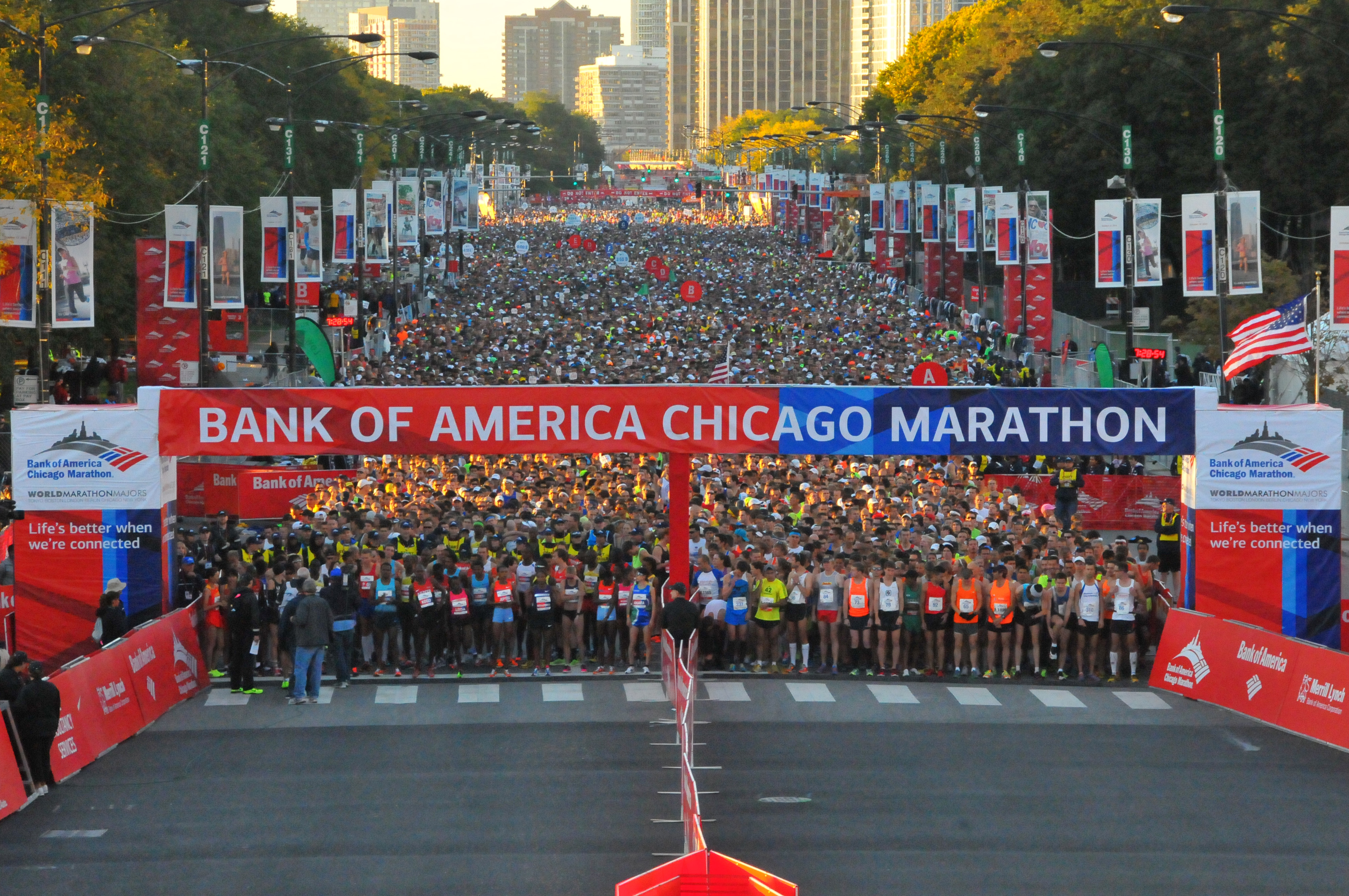
While the question “When is the Chicago Marathon?” is usually met with a calendar date—traditionally the second Sunday in October—the answer for the modern tech enthusiast involves a complex synchronization of GPS satellites, RFID sensors, and cloud computing. The Chicago Marathon is no longer just a physical test of 26.2 miles; it has evolved into a massive, live-streamed data event. To understand the “when” of the race is to understand the millisecond precision required to track 45,000 runners through the urban canyons of the Windy City.
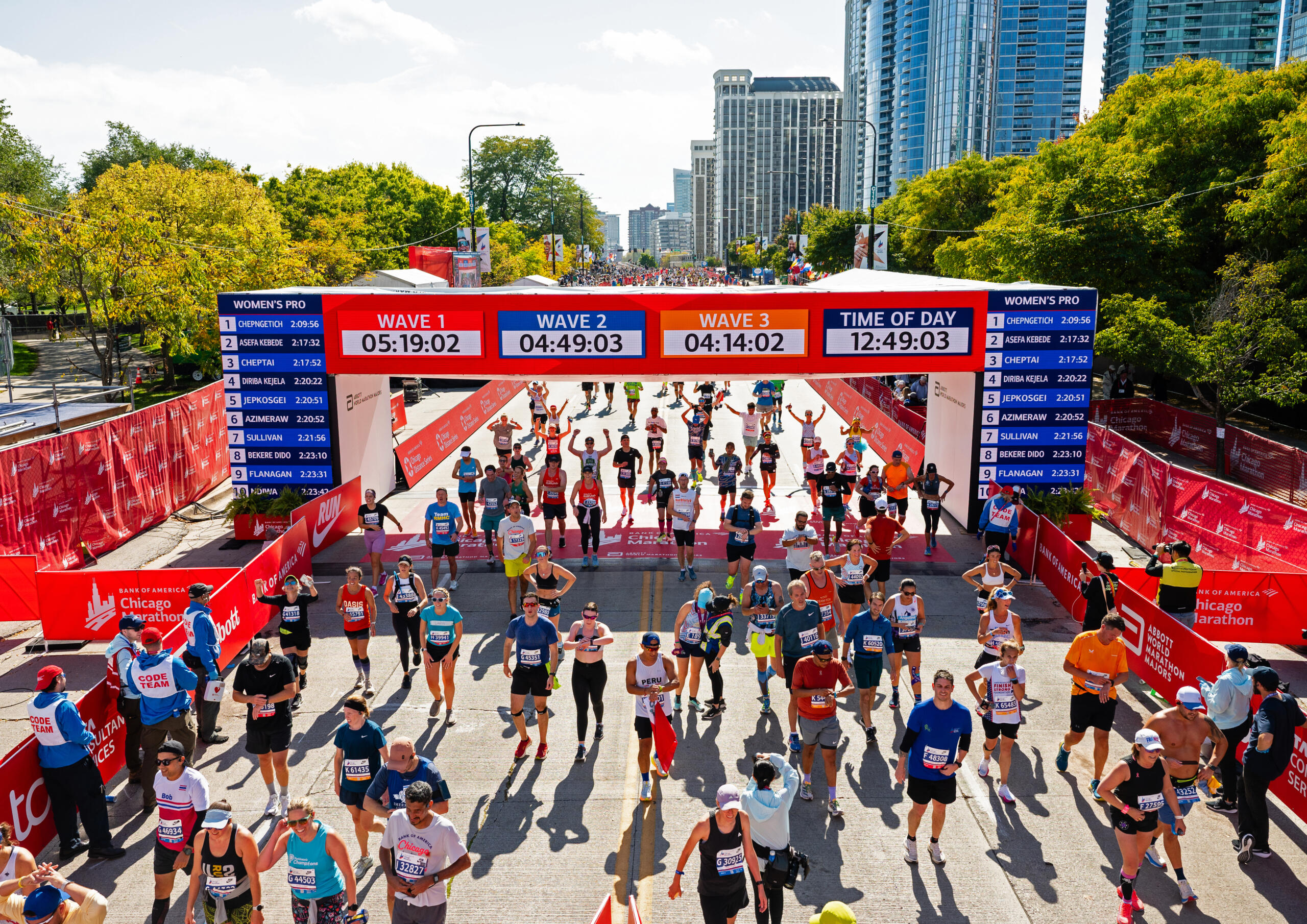
In the digital age, the timing of the marathon is a marvel of software engineering and hardware reliability. From the moment the starting gun fires to the final finisher crossing the line on Columbus Drive, a sophisticated technological ecosystem ensures that every split, every heartbeat, and every geolocation ping is recorded with absolute fidelity.
The Architecture of Precision: Timing and RFID Infrastructure
When thousands of runners cross the start line simultaneously, the “when” becomes a subjective experience. “Gun time” differs from “net time,” and technology is the only bridge between the two. The Chicago Marathon utilizes sophisticated Radio Frequency Identification (RFID) systems to manage this logistical nightmare.
The Mechanics of RFID Mat Technology
The infrastructure of the Chicago Marathon relies on ultra-high frequency (UHF) RFID tags embedded in the runners’ bibs. As a runner crosses the start, various checkpoints (typically every 5 kilometers), and the finish line, they step over specialized electromagnetic mats. These mats act as antennas, waking up the passive chip on the runner’s bib and recording the exact timestamp of the crossing.
The technical challenge here is “anti-collision.” In a dense pack of runners, hundreds of chips may attempt to communicate with a single mat simultaneously. Advanced algorithms within the timing software must sort through these signals, filtering out “noise” and ensuring that every individual’s signal is captured without latency.
Real-Time Data Processing and Cloud Integration
Once a mat captures a runner’s time, the data isn’t just stored locally. It is instantly transmitted via cellular or dedicated fiber networks to a central cloud processing hub. This allows for the “Live Tracking” features found in the official race app. For the tech-savvy spectator, the “when” of the marathon is a live push notification. The software calculates pace projections based on previous splits, using historical data and real-time movement to predict exactly when a runner will reach the next landmark, such as the 13.1-mile halfway point in the West Loop.
Wearable Ecosystems: The Bio-Digital Athlete
For the individual athlete, the Chicago Marathon doesn’t start in October; it starts months earlier in the data logs of their wearables. The “when” of the race is the culmination of thousands of hours of biometric monitoring.
GPS Optimization in Urban Canyons
One of the most significant technological hurdles for Chicago Marathon participants is the “Urban Canyon” effect. As runners pass through the high-rise corridors of downtown Chicago, GPS signals frequently bounce off glass buildings, leading to “GPS drift.” This makes it difficult for gadgets like Garmin, Coros, or Apple Watches to accurately report distance and pace.
To combat this, the latest generation of sports watches utilizes Dual-Band (L1 and L5) GNSS technology. By accessing two different satellite frequencies, these devices can filter out reflected signals, providing a more stable “when” and “where” even under the shadow of the Willis Tower. This hardware evolution has revolutionized how runners execute their “negative split” strategies, allowing for real-time adjustments based on hyper-accurate data.
The Rise of AI-Driven Tapering and Readiness
In the weeks leading up to the marathon, software like TrainingPeaks and Strava use AI algorithms to analyze a runner’s “Chronic Training Load” (CTL) and “Acute Training Load” (ATL). The goal is to identify the precise window—the “when”—that the body reaches peak supercompensation.
Wearables now measure Heart Rate Variability (HRV) and sleep quality to provide a “Readiness Score.” This AI-driven insight tells the athlete if they are overtraining or if their body is perfectly primed for the 26.2-mile effort. By the time race morning arrives, the athlete’s digital twin has already run the race a thousand times in simulation, identifying the optimal power output for every elevation change on the Chicago course.
The Connected Spectator: Apps, API, and Engagement
The Chicago Marathon is a flagship event for the marriage of sports and mobile technology. The “when” of the race is shared globally through an intricate web of APIs and user-facing applications that turn a local footrace into a global digital experience.
Official Race Apps and Geofencing
The official Bank of America Chicago Marathon app is a masterclass in mobile UI/UX design. It integrates multiple data streams—timing chips, weather sensors, and heat maps—into a single interface. One of the most impressive features is the use of geofencing. As a runner enters a specific neighborhood, such as Boystown or Pilsen, the app can trigger location-specific content or alerts for spectators waiting in those areas.
From a developer’s perspective, the app must handle massive concurrent user spikes. On race morning, hundreds of thousands of users are refreshing the app simultaneously. This requires a robust, scalable backend architecture, often utilizing Amazon Web Services (AWS) or Microsoft Azure, to ensure the “Estimated Time of Arrival” (ETA) feature remains responsive and accurate.
Social Integration and the Digital Finish Line
The moment a runner crosses the finish line, a series of automated digital events are triggered. An API call is sent to social media platforms, personalized finishers’ videos are generated using automated editing software, and digital certificates are minted. This instant gratification is powered by high-speed data pipelines that link the physical timing mat to the user’s digital profile. The “when” of the victory is immortalized on the blockchain or in the cloud within seconds of the physical achievement.
Cybersecurity and Data Integrity in Major Marathons
As marathons become more tech-centric, the importance of digital security and data integrity has skyrocketed. When is the Chicago Marathon safe from digital interference? Only when rigorous cybersecurity protocols are in place.
Protecting Athlete Biometrics and Privacy
The Chicago Marathon collects a staggering amount of personal data, from credit card information during registration to sensitive biometric data during the race. Ensuring this data is encrypted and compliant with standards like the GDPR or CCPA is a top priority for race organizers. The “tech stack” of a modern marathon includes robust firewalls and encryption protocols to prevent data breaches that could expose the health metrics of tens of thousands of participants.
Algorithmic Verification and Anti-Cheating
In the competitive world of World Marathon Majors, the integrity of the results is paramount. Technology serves as the ultimate referee. Sophisticated algorithms analyze split times to look for anomalies—sudden bursts of speed that exceed human capability, indicating a runner may have taken a shortcut or hopped on a bicycle.
By comparing a runner’s splits against a “logical gait model,” the software can flag suspicious activity for human review. This ensures that the “when” of the winning time is verified not just by a stopwatch, but by a suite of digital forensic tools designed to uphold the spirit of the sport.
The Future of “When”: Virtual Reality and the Metaverse
As we look toward the future, the question “When is the Chicago Marathon?” might soon refer to a persistent virtual event.
Digital Twins and Augmented Reality
Future iterations of the race may feature “Digital Twins” of the Chicago course, allowing runners from across the globe to compete in real-time using high-end treadmills and VR headsets. Through Augmented Reality (AR) glasses, on-course runners might see “ghosts” of their personal best times or virtual pacers leading them toward a Boston Qualifying time.

The Evolution of Smart Fabrics
We are moving toward a world where the timing chip is obsolete, replaced by smart fabrics with woven sensors that transmit telemetry directly to the cloud. This will turn the entire body into a data-generating hub, providing insights into muscle fatigue, hydration levels, and core temperature in real-time. In this future, the “when” of the marathon is a continuous stream of biological and geographical data points, seamlessly integrated into the Internet of Things (IoT).
The Chicago Marathon is a testament to human endurance, but its modern execution is a triumph of technology. Whether you are a developer looking at the API latency of the timing mats, or a runner checking your dual-band GPS watch, the race is a reminder that in the 21st century, every second is a digital milestone. When is the Chicago Marathon? It is happening every time a sensor pings, an algorithm calculates, and a digital community connects to celebrate the intersection of pulse and pixels.
aViewFromTheCave is a participant in the Amazon Services LLC Associates Program, an affiliate advertising program designed to provide a means for sites to earn advertising fees by advertising and linking to Amazon.com. Amazon, the Amazon logo, AmazonSupply, and the AmazonSupply logo are trademarks of Amazon.com, Inc. or its affiliates. As an Amazon Associate we earn affiliate commissions from qualifying purchases.