
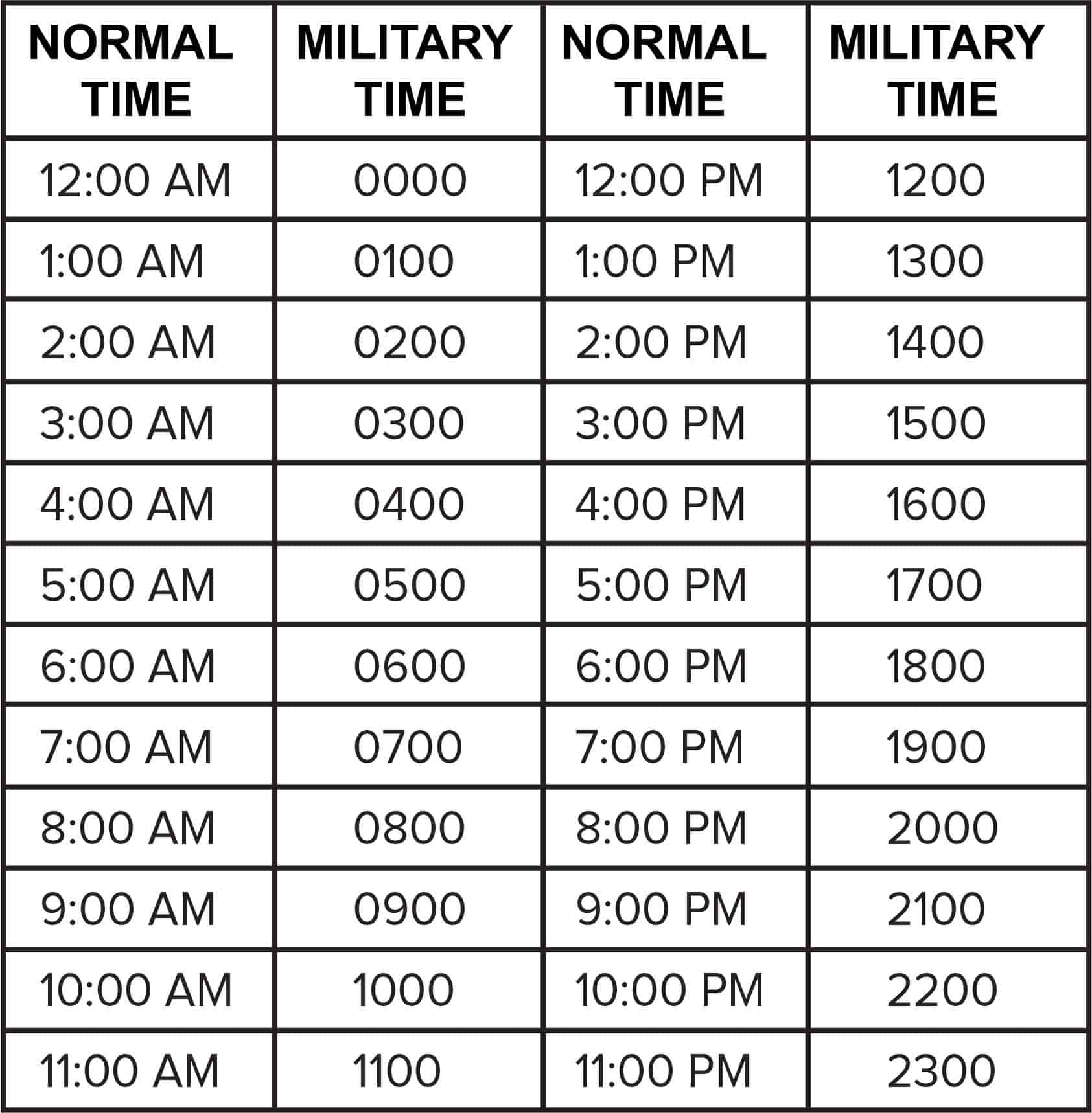
“Army time,” more formally known as the 24-hour clock or military time, is a method of reckoning time in which the day runs from midnight to midnight and is divided into 24 hours. This system avoids the ambiguity of AM and PM by assigning a unique number to each hour of the day. In the digital age, understanding and utilizing the 24-hour format is not merely a niche practice but a fundamental aspect of technology, from software development and data management to cybersecurity and international communication protocols. Its widespread adoption across critical digital infrastructure underscores its importance beyond mere military contexts.
The Foundation of 24-Hour Time in Digital Precision
The clarity offered by the 24-hour clock makes it an indispensable tool for technologists and system architects. Unlike the 12-hour system, which requires additional qualifiers (AM/PM) to distinguish between morning and afternoon, the 24-hour format provides an immediate, unambiguous reference point, crucial for automated systems where human interpretation could introduce errors.
Origins and Evolution for Systematic Use
The concept of dividing the day into 24 hours is ancient, with roots in Egyptian astronomy. However, its modern iteration as the standard for military, aviation, and increasingly, scientific and technological applications gained prominence due to the critical need for precision and universality. The military adopted it to prevent miscommunication during operations, where a single minute’s difference could have dire consequences. This very principle of preventing error translated seamlessly into the digital realm, where computers process time chronologically without human contextual understanding. The International Organization for Standardization (ISO) 8601 standard, which specifies numerical representations for date and time, heavily relies on the 24-hour system, underscoring its role as a global, tech-friendly convention.
Dispelling Ambiguity: AM/PM vs. 24-Hour Clarity
In a world reliant on precise data and automated processes, ambiguity is a critical vulnerability. The 12-hour AM/PM system inherently carries this risk. Is “12:00 AM” the start of the day or the middle of the night before? Is “12:00 PM” noon or midnight? These questions, simple for humans to resolve with context, pose significant challenges for algorithms and global data exchange.
The 24-hour clock eliminates this entirely:
- Midnight at the beginning of the day is 00:00.
- Noon is 12:00.
- Midnight at the end of the day is 23:59 (followed by 00:00 of the next day).
This straightforward progression ensures that every single minute of the day has a unique, sequential identifier, making it ideal for programming, scheduling, and logging events in complex systems where sequence and exact timing are paramount.
“Army Time” in Digital Systems and Software Architecture
The application of 24-hour time extends deeply into the core of how modern technology operates, influencing everything from backend databases to front-end user interfaces. Its inherent structure supports robust and reliable system design.
Precision in Data Logging and Databases
For any application that requires tracking events—be it user actions, system processes, financial transactions, or network activities—accurate timestamps are non-negotiable. Databases, especially those handling high volumes of time-sensitive data, rely almost exclusively on the 24-hour format, often in conjunction with Coordinated Universal Time (UTC), to ensure global consistency. This ensures that logs are universally comparable, regardless of the local time zone where an event occurred or was recorded. Developers and database administrators utilize this standard to sort, filter, and analyze data efficiently, preventing potential discrepancies that could arise from local time zone conversions or AM/PM ambiguities. Accurate logging is crucial for auditing, debugging, and maintaining the integrity of digital records.
User Interface and Configuration
While backend systems predominantly operate on 24-hour time, user interfaces (UIs) offer flexibility. Many operating systems, applications, and web services provide options for users to display time in either 12-hour or 24-hour format. This allows for user preference while maintaining the underlying precision of the system. For developers, designing UIs that support both formats involves careful handling of time conversions and localization settings, ensuring that the displayed time accurately reflects the user’s chosen convention without compromising the system’s internal 24-hour logic. Applications like calendars, scheduling tools, and flight trackers often offer the 24-hour option, catering to a global user base and professional contexts where clarity is paramount.
Internationalization and Localization
In the global digital economy, software must cater to users worldwide. Internationalization (i18n) and localization (l10n) are critical aspects of software development. The 24-hour clock plays a significant role here, as many countries outside North America primarily use the 24-hour format in daily life. By supporting 24-hour time natively, software can seamlessly integrate into diverse cultural contexts, offering a more intuitive and error-free experience for a global audience. This minimizes the need for users to mentally convert times, improving usability and reducing the potential for costly misinterpretations in global operations.

The Role of 24-Hour Time in Digital Security
Beyond mere convenience or precision, the 24-hour clock is a foundational element in cybersecurity, providing critical chronological data for incident response, auditing, and threat analysis.
Timestamps for Forensics and Auditing
Every event in a digital system—a login attempt, a file access, a network packet transmission—is accompanied by a timestamp. These timestamps, almost universally recorded in 24-hour UTC, are the bedrock of digital forensics and auditing. When a security breach occurs, investigators rely on these precise, unambiguous timestamps to reconstruct the sequence of events, identify attack vectors, and determine the scope of compromise. Without the consistent and clear nature of the 24-hour format, correlating events across different systems, logs, and time zones would be a monumental, if not impossible, task, significantly hindering incident response efforts.
Synchronized Operations and Cybersecurity
Many cybersecurity protocols and tools, such as network time protocol (NTP) servers, depend on highly synchronized 24-hour time to function correctly. Accurate time synchronization is crucial for:
- Authentication: Kerberos and other authentication systems rely on tightly synchronized clocks to prevent replay attacks.
- Encryption: Time-based one-time passwords (TOTP) used in multi-factor authentication depend on precise time synchronization between the client and server.
- Intrusion Detection Systems (IDS): These systems analyze event logs for suspicious patterns, and accurate timestamps allow them to correlate events across multiple devices and flag anomalies in real-time.
- Compliance: Regulatory compliance often requires maintaining precise audit trails with verifiable timestamps.
Any deviation in time synchronization, especially if not standardized to a 24-hour format, could create vulnerabilities or invalidate security measures.
Modern Applications and Industry Standards
The principles embodied by “army time” resonate across various high-stakes industries, driven by the need for unambiguous global coordination, making it a critical standard for professionals.
Aviation, Logistics, and Global Coordination
Industries where precise timing and global coordination are paramount have long adopted the 24-hour clock. Air traffic control, global shipping, and logistics operations rely on it to manage complex schedules, track assets across time zones, and ensure safety. Pilots, air traffic controllers, and dispatchers universally use 24-hour time to avoid any misinterpretation of flight plans or arrival/departure times, demonstrating a real-world application of this standard for critical, interdependent systems. This practice directly mirrors the digital need for universally understood timestamps in distributed systems.
Developers and System Administrators
For software developers, network engineers, and system administrators, working with 24-hour time is second nature. They configure servers, write scripts, and develop applications that inherently process and display time in this format. Understanding time zones, UTC, and the 24-hour clock is a fundamental skill for anyone managing digital infrastructure, ensuring that applications behave predictably regardless of where they are deployed or accessed. It is the language of machine-to-machine communication regarding time.
Adopting and Adapting to 24-Hour Time
For individuals interacting with technology, especially in professional or international contexts, understanding and using the 24-hour clock can enhance efficiency and reduce errors.
Setting Your Devices and Software
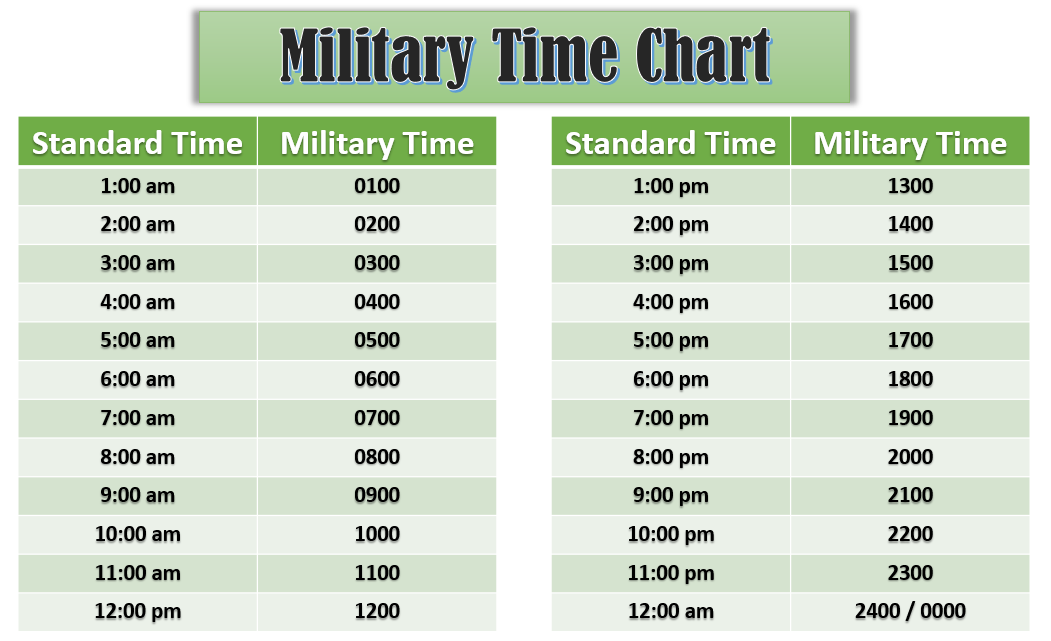
Most modern operating systems (Windows, macOS, Linux, iOS, Android) and many applications offer settings to switch between 12-hour and 24-hour time display. Familiarizing oneself with these options and, perhaps, opting for the 24-hour display, can gradually build familiarity and comfort with the system, making interactions with globally oriented technology more intuitive. This simple configuration change can align your personal digital experience with the underlying precision of the systems you use.
Cultural Nuances and Practical Benefits
While some regions predominantly use the 12-hour system for casual communication, the global nature of technology, travel, and business makes familiarity with 24-hour time increasingly beneficial. It fosters a universal understanding of scheduling, reduces the cognitive load of converting between formats, and aligns with the unambiguous precision favored by digital systems. Adopting “army time” in your digital interactions is a small step that yields significant benefits in clarity, efficiency, and error reduction within our increasingly interconnected technological landscape.
aViewFromTheCave is a participant in the Amazon Services LLC Associates Program, an affiliate advertising program designed to provide a means for sites to earn advertising fees by advertising and linking to Amazon.com. Amazon, the Amazon logo, AmazonSupply, and the AmazonSupply logo are trademarks of Amazon.com, Inc. or its affiliates. As an Amazon Associate we earn affiliate commissions from qualifying purchases.