
The surname Smith, ubiquitous across the English-speaking world, carries a depth of meaning that transcends mere etymology. Far from being a simple descriptor, “Smith” embodies a historical brand identity rooted in skill, utility, and a foundational role in society. Understanding its origins and pervasive presence offers invaluable insights into personal branding, the power of occupational identity, and how a common name can serve as both a heritage and a canvas for individual distinction.
The Etymological Foundation: A Brand Built on Skill
At its core, the name “Smith” derives from the Old English word “smið,” meaning “one who works with metal,” most commonly a blacksmith. This origin story is not just a linguistic footnote; it’s a testament to a powerful, early form of brand recognition and professional identity.

From Ancient Roots to Enduring Recognition
In medieval societies, the blacksmith was an indispensable figure. They forged tools, weapons, armor, and agricultural implements, making them central to a community’s survival, prosperity, and defense. Their workshop, often identifiable by the clang of hammer on anvil, was a hub of critical activity. The skill required – the ability to transform raw metal into functional, durable objects – was highly valued. This direct association with a vital, skilled trade naturally led to the adoption of “Smith” as a distinguishing mark. Individuals were known not just by their given name, but by their profession, which became their familial identifier. This professional designation, “the smith,” evolved into the surname “Smith,” establishing an immediate, recognizable brand of competency and essential service.
The Occupational Brand: Skill, Trust, and Utility
The “smith” epitomized several core brand values that remain relevant today. Firstly, skill and craftsmanship: A blacksmith’s reputation was built on their ability to produce high-quality, reliable goods. Poor workmanship could mean a broken plow or a failed weapon, with serious consequences. This direct link between performance and reputation forged a strong brand of reliability. Secondly, trust and dependence: Communities relied heavily on their smiths. This fostered a deep sense of trust, as the smith was essential for daily life. The name itself, therefore, implicitly carried an aura of dependability. Thirdly, utility and essential service: Blacksmiths provided solutions to fundamental needs. They were problem-solvers, making the name synonymous with practical application and tangible benefit.
In essence, the “Smith” surname was the original occupational brand mark, signifying a lineage of individuals who possessed valuable skills, provided essential services, and earned the trust of their communities through consistent, high-quality work. This historical context reveals how deeply professional identity has been intertwined with personal and familial branding for centuries.
The Ubiquity of “Smith”: A Universal Archetype of the Everyman Brand
The sheer prevalence of “Smith” is a remarkable phenomenon. It is the most common surname in many English-speaking countries, including the United States, Canada, the United Kingdom, and Australia. This widespread distribution is not merely a statistical anomaly; it profoundly impacts the perception and branding potential of the name.
Statistical Dominance: More Than Just a Name, a Societal Marker
The dominance of “Smith” across different cultures and geographies speaks to the universal importance of the blacksmith’s trade in the formation of early societies. As communities grew and specializations emerged, the “smith” was one of the most widespread and fundamental occupations. The resulting proliferation of the surname means that “Smith” represents a broad cross-section of humanity. It isn’t tied to a specific aristocratic lineage or a particular geographic region in the same way some other surnames are. Instead, it signifies a deep connection to the working class, to ingenuity, and to the foundational elements of civilization. It becomes a societal marker of the common person, the backbone of any community, making it a powerful “everyman” brand.
The “Blank Slate” Branding Advantage
While some might view a common surname as a disadvantage in personal branding due to the challenge of standing out, “Smith” offers a unique advantage: the “blank slate.” Unlike names with strong aristocratic connotations or highly specialized historical meanings, “Smith” is relatively neutral. It doesn’t impose a preconceived notion of status, origin, or niche expertise. This neutrality provides immense freedom for individuals named Smith to define their own personal brand.
Without a restrictive historical or cultural baggage, a “Smith” can craft a unique identity entirely based on their achievements, personality, and values. It allows the individual to be the primary architect of their brand narrative, rather than being overshadowed or pigeonholed by their surname. This freedom is particularly valuable in modern personal branding, where authenticity and individual expression are paramount.
Personal Branding with a Common Surname: Distinguishing Your “Smith”
For individuals named Smith, the challenge is not to escape the name, but to leverage its understated strength while forging a distinct personal brand. This requires strategic storytelling and a clear articulation of individual value.
Leveraging Heritage While Forging New Paths
The historical legacy of “Smith” – rooted in craftsmanship, reliability, and essential service – can be a subtle but powerful asset. When communicating their personal brand, a Smith can subtly invoke these qualities. For instance, a “Smith” in a technical field might emphasize precision and meticulous work, echoing the blacksmith’s attention to detail. A “Smith” in customer service might highlight dependability and problem-solving, aligning with the historical role of the smith as a community resource. The key is to acknowledge the historical significance without being defined solely by it, allowing the individual’s unique skills and modern context to shine through. It’s about drawing strength from the roots while cultivating new branches.
Crafting a Unique Narrative: Beyond the Common Denominator
Distinguishing one’s personal brand when sharing the world’s most common surname necessitates a focused effort on narrative development. This involves:
- Highlighting unique differentiators: What are the specific skills, experiences, and passions that make this Smith unique?
- Developing a strong personal story: How have personal journeys, challenges, and successes shaped who they are today? This narrative creates an emotional connection.
- Articulating a clear value proposition: What specific problems do they solve, or what unique benefits do they offer to their audience, clients, or employers?
- Cultivating a strong online presence: In the digital age, a unique personal brand often starts with a distinct online identity. This means professional headshots, well-crafted bios, a consistent voice across platforms, and a portfolio that showcases individual achievements. For a “Smith,” this is even more crucial to ensure search results lead to their unique brand, not just the collective mass of Smiths.
The goal is to move beyond “Smith, the common name” to “Smith, the expert in X,” or “Smith, the innovator of Y,” or “Smith, known for Z.” The name becomes a container for a rich, individual brand story.
Digital Identity and the “Smith” Brand
Navigating the digital landscape with a common surname presents specific branding challenges and opportunities. For a “Smith,” establishing a distinct digital identity is paramount. This often means:
- Securing a unique professional handle or domain name: This might involve using a middle initial, a professional designation, or a clever variation to stand out (e.g., “Dr.JaneSmith.com,” “SmithInnovates.co”).
- Consistent branding across all digital platforms: Ensuring that LinkedIn, Twitter, personal websites, and other online presences reflect a cohesive and unique brand message.
- Strategic content creation: Regularly publishing content that showcases expertise, insights, and unique perspectives helps to define the individual’s brand in the crowded digital space, making them discoverable for their contributions rather than just their name.
The digital realm demands that a “Smith” actively curates and manages their online narrative to ensure their personal brand is distinct, memorable, and aligned with their professional aspirations.
The Corporate “Smith”: Brand Legacy and Modern Adaptations
The influence of the “Smith” legacy extends beyond individuals to corporate entities. Many businesses, from small family operations to global conglomerates, have incorporated the name into their brand, consciously or unconsciously tapping into its historical connotations.
From Family Businesses to Global Corporations
Companies named “Smith & Sons,” “Smith Enterprises,” or even larger entities like “Smith & Wesson” (though here, Smith is one of two founders) often leverage the inherent trustworthiness and tradition associated with the surname. These brands, particularly in their early stages, benefited from the perception of a founder whose name represented reliability and craftsmanship – much like the original blacksmith. The “Smith” in a company name can evoke a sense of heritage, solid foundations, and a commitment to quality that transcends generations. It suggests a brand built on honest work and tangible value, resonating with customers who appreciate stability and proven track record.
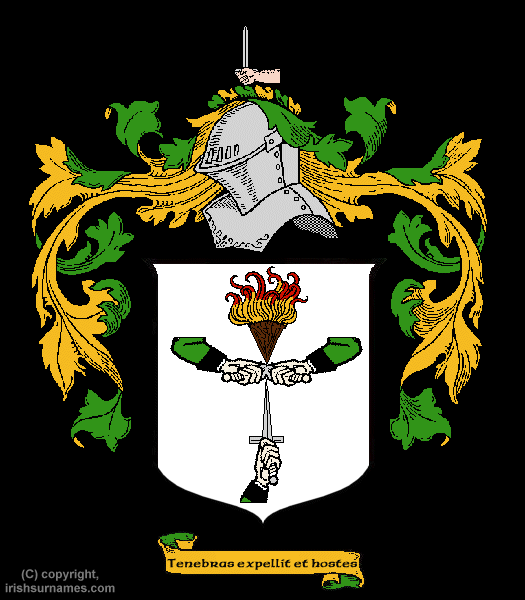
The Allure of Simplicity: Why “Smith & Co.” Endures
The enduring appeal of names like “Smith & Co.” or “Smith Industries” in corporate branding lies in their simplicity and perceived reliability. In a complex market, a straightforward name can communicate transparency and an unwavering focus on core offerings. The unpretentious nature of “Smith” can project an image of a company that prioritizes substance over flash, and dependable products or services over convoluted marketing. This can be a powerful brand strategy, particularly in sectors where trust, longevity, and clear communication are highly valued. The “Smith” name, whether personal or corporate, continues to signify a brand identity rooted in work ethic, essential utility, and a foundational presence that has stood the test of time.
aViewFromTheCave is a participant in the Amazon Services LLC Associates Program, an affiliate advertising program designed to provide a means for sites to earn advertising fees by advertising and linking to Amazon.com. Amazon, the Amazon logo, AmazonSupply, and the AmazonSupply logo are trademarks of Amazon.com, Inc. or its affiliates. As an Amazon Associate we earn affiliate commissions from qualifying purchases.