
The concept of a “bulletproof vest” evokes an image of impenetrable protection, a shield against ballistic threats. While no vest is truly “bulletproof” in every scenario, modern ballistic vests are marvels of materials science and engineering, designed to significantly mitigate the devastating energy of a projectile. Understanding their composition is to delve into the cutting edge of material technology, focusing on energy dispersion, deformation, and absorption.
The Core Principle: Energy Dispersion and Absorption
At its heart, a ballistic vest doesn’t stop a bullet by being harder or thicker in a simplistic sense. Instead, its primary function is to catch, deform, and spread the bullet’s kinetic energy over a larger area, reducing the localized impact force to a non-lethal level. This is achieved through a combination of highly specialized materials that work in concert to slow down, flatten, and eventually stop the projectile. The process involves multiple layers of material that flex and stretch, absorbing the energy that would otherwise penetrate the body.

Soft Armor: Layers of Advanced Fibers
The most common form of personal ballistic protection, soft armor, is typically found in vests worn by law enforcement, security personnel, and military forces in non-frontline roles. It’s designed to protect against handgun rounds and fragmentation, offering flexibility and comfort for extended wear.
Aramid Fibers: Kevlar’s Legacy
Perhaps the most recognized material in ballistic protection, aramid fibers, particularly Kevlar (a DuPont product), revolutionized personal armor in the 1970s. Aramid fibers are synthetic polymers characterized by high strength, heat resistance, and excellent tensile properties.
- Structure and Properties: Kevlar’s strength comes from its highly oriented molecular chains and strong inter-chain hydrogen bonds. When woven into a fabric, these fibers create a dense, tightly interlocked net. Upon impact, the bullet strikes the first layer of fabric, which then transfers the energy to subsequent layers. Each layer stretches and deforms, absorbing more energy, effectively “catching” the bullet.
- Applications: Primarily used in vests for protection against handgun rounds and fragments, Kevlar offers a good balance of protection, flexibility, and weight. It’s also found in helmets, vehicle armor, and structural components requiring high strength-to-weight ratios.
UHMWPE: The Rise of Ultra-High Molecular Weight Polyethylene
Emerging as a formidable alternative, Ultra-High Molecular Weight Polyethylene (UHMWPE) fibers, sold under brand names like Spectra (Honeywell) and Dyneema (DSM), represent a significant advancement. These fibers are exceptionally strong, possessing a higher strength-to-weight ratio than aramid fibers.
- Structure and Properties: UHMWPE is made of extremely long chains of polyethylene, oriented parallel to each other. This alignment allows for incredibly strong inter-molecular forces. Unlike aramid, which relies on molecular “crimps” and fabric weaves, UHMWPE often comes in unidirectional (UD) sheets. In UD fabric, all fibers in a layer run in one direction, and subsequent layers are laid at an angle (e.g., 0/90 degrees) to create a multi-directional net. This maximizes the material’s ability to resist tearing and distribute energy.
- Advantages: UHMWPE is significantly lighter than aramid for equivalent ballistic protection, offers excellent resistance to moisture and UV light (unlike aramid which degrades), and floats in water. These properties make it ideal for marine operations and situations where weight is a critical factor.
Ballistic Fabric Construction
Regardless of the fiber type, the construction of soft armor involves multiple layers. For aramid, these are typically woven fabrics stacked and stitched together. For UHMWPE, the unidirectional sheets are bonded with a resin, creating a flexible laminate. The precise number of layers, their orientation, and the stitching patterns are crucial and proprietary secrets of manufacturers, all aimed at maximizing energy absorption while maintaining flexibility and minimizing bulk.
Hard Armor: Plates for Enhanced Protection
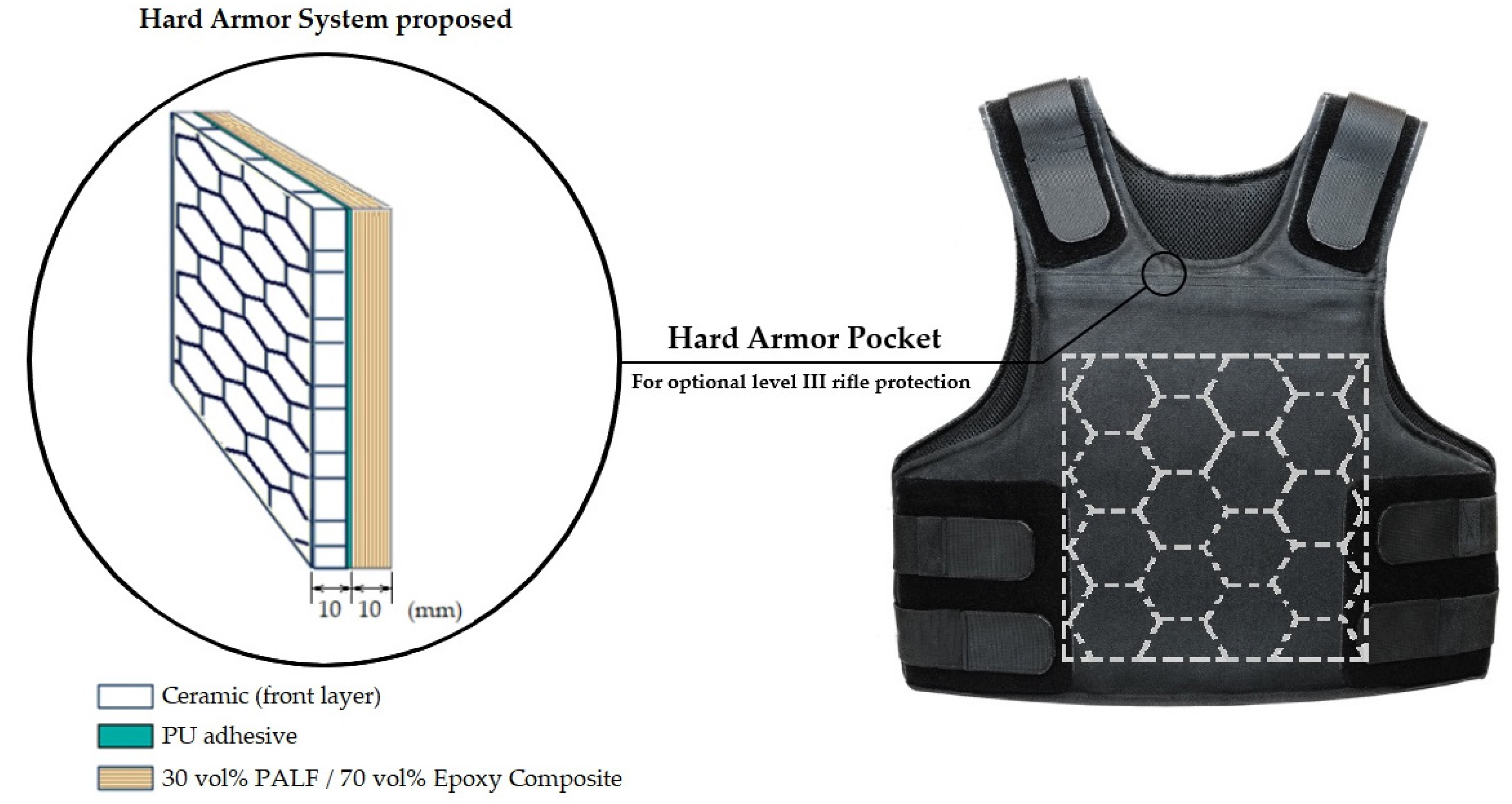
For protection against higher-threat munitions, such as rifle rounds, soft armor alone is insufficient. This is where hard armor plates come into play, often worn in conjunction with soft armor systems. These plates are designed to shatter or deform the projectile upon impact, dramatically reducing its penetrating power.
Ceramic Plates: Alumina, Silicon Carbide, Boron Carbide
Ceramic plates are the most common form of hard armor. Their effectiveness lies in their extreme hardness and ability to distribute the energy of a high-velocity impact.
- Mechanism: When a rifle bullet strikes a ceramic plate, the ceramic material, being harder than the bullet, fragments the projectile. The kinetic energy is then dispersed by the cracking and pulverization of the ceramic material itself. Behind the ceramic strike face, a backing layer (often UHMWPE or aramid) catches any fragments and absorbs the remaining energy.
- Types of Ceramics:
- Alumina (Aluminum Oxide): The most common and cost-effective ceramic, providing good protection for its weight.
- Silicon Carbide: Lighter and harder than alumina, offering superior protection with less bulk.
- Boron Carbide: The hardest and lightest of the commonly used ballistic ceramics, typically reserved for high-threat, weight-critical applications due to its higher cost.
- Multi-Hit Capability: Modern ceramic plates are often designed with segmented or monolithic structures to maintain some level of integrity and multi-hit capability, meaning they can withstand multiple impacts, though typically in different areas of the plate.
Steel and Titanium Plates
While less common for personal body armor due to weight concerns, certain types of steel and titanium are used, particularly in vehicle armor or specialized applications.
- Steel: High-hardened ballistic steel plates can stop rifle rounds. Their advantages include durability, cost-effectiveness, and excellent multi-hit capability. However, their significant weight makes them impractical for most personal body armor. A key challenge is “spall,” where projectile fragments can break off and cause secondary injuries, necessitating anti-spall coatings or layers.
- Titanium: Offers a better strength-to-weight ratio than steel but is considerably more expensive. Like steel, it can be used in some hard armor applications, but ceramic and composite solutions generally offer superior performance for personal vests.
Composite Plates
The most advanced hard armor systems combine ceramics with other materials to optimize performance. A ceramic strike face is almost universally backed by a layers of UHMWPE or aramid fibers. This composite structure leverages the strengths of each material: the ceramic shatters the projectile, and the fiber backing absorbs the remaining energy and prevents fragments from penetrating. This results in plates that are lighter, thinner, and more effective than single-material solutions.
Beyond the Ballistic Materials: Carriers and Coatings
The protective layers are only one part of a ballistic vest system. The carrier and protective coatings are essential for the vest’s functionality, durability, and user comfort.
Carrier Systems and Ergonomics
The outer shell or “carrier” of a ballistic vest is typically made from durable, abrasion-resistant synthetic fabrics like nylon (e.g., Cordura). This carrier serves several crucial functions:
- Holding Ballistic Panels: It securely encases the soft armor panels and provides pockets for hard armor plates.
- Comfort and Fit: Modern carriers are designed with ergonomics in mind, featuring adjustable straps, padded shoulders, and breathable mesh linings to distribute weight and enhance comfort during prolonged wear.
- Modularity: Many carriers incorporate MOLLE (Modular Lightweight Load-carrying Equipment) webbing, allowing users to attach pouches, holsters, and other mission-specific gear, enhancing versatility.
Water and UV Resistance
The ballistic integrity of aramid and some other fibers can be compromised by moisture and UV radiation. To counter this, ballistic panels are often hermetically sealed in waterproof, UV-resistant fabric covers. This encapsulation ensures the materials maintain their performance over time and in various environmental conditions, extending the operational lifespan of the vest.
The Future of Ballistic Protection
Research and development in ballistic materials are constantly pushing boundaries. The goals remain consistent: achieve higher levels of protection while simultaneously reducing weight, increasing flexibility, and improving comfort.
Nanomaterials and Smart Textiles
- Graphene and Carbon Nanotubes: These materials possess extraordinary strength-to-weight ratios and could potentially lead to armor that is both lighter and stronger than current options. Their integration into composite structures is an active area of research.
- Shear-Thickening Fluids (STF): Also known as liquid armor, STFs are non-Newtonian fluids that become rigid almost instantly upon impact. Impregnating fabric layers with STFs could potentially create armor that is extremely flexible in its resting state but rigid enough to stop a bullet upon impact.
- Electrically Reactive Materials: Materials that change properties (e.g., stiffness) in response to an electric current could lead to “on-demand” armor systems.

Lighter, Stronger, More Flexible
The ongoing quest is for armor that feels less like a bulky shield and more like a second skin. Advances in fiber technology, weaving techniques, and composite material science promise continued evolution, leading to ballistic protection that is more integrated, less obtrusive, and ultimately more effective for the individuals who rely on it every day. The journey from medieval chainmail to advanced polymer composites highlights an unrelenting human drive to protect against the ever-evolving threats.
aViewFromTheCave is a participant in the Amazon Services LLC Associates Program, an affiliate advertising program designed to provide a means for sites to earn advertising fees by advertising and linking to Amazon.com. Amazon, the Amazon logo, AmazonSupply, and the AmazonSupply logo are trademarks of Amazon.com, Inc. or its affiliates. As an Amazon Associate we earn affiliate commissions from qualifying purchases.