
The question of “what will happen in 5 billion years” transcends immediate human concerns, pushing the boundaries of scientific inquiry and technological speculation into the realm of the truly cosmic. While our everyday technological innovations focus on incremental improvements and near-term solutions, a 5-billion-year horizon demands a paradigm shift, compelling us to consider technology as the ultimate tool for species survival, cosmic engineering, and perhaps, the redefinition of life itself. At this unimaginable timescale, the fate of our solar system, our galaxy, and potentially, consciousness, hinges entirely on the ultimate capabilities and applications of advanced technology.
The Cosmic Clock and Humanity’s Tech Imperative
Five billion years is not merely a long time; it represents a geological, stellar, and evolutionary epoch so vast it dwarfs the entire history of life on Earth. Yet, within this immense span lies a critical astronomical event: the death of our Sun. Understanding this impending stellar transformation forces us to confront humanity’s (or its technological descendants’) long-term survival imperative through an exclusively technological lens.
The Sun’s Evolution and Existential Threat
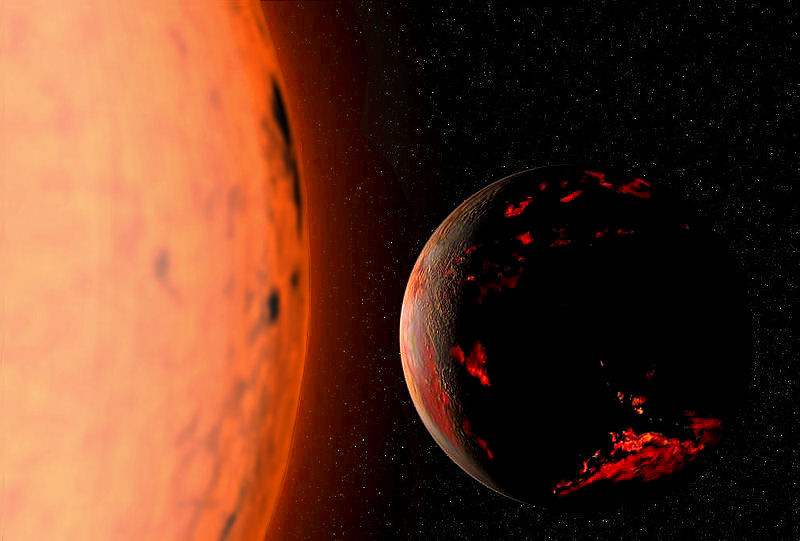
Our Sun, a yellow dwarf star, is currently in the middle of its main sequence lifetime. In approximately 5 billion years, it will exhaust its core hydrogen fuel, beginning a profound metamorphosis. It will swell into a red giant, expanding so dramatically that it will engulf Mercury and Venus, and very likely Earth. The Sun’s luminosity will increase dramatically, boiling away Earth’s oceans and stripping its atmosphere long before it is physically consumed. This event presents the ultimate deadline for biological life on Earth and demands an unparalleled technological response from any sentient civilization that wishes to endure. The challenge is not merely to survive a natural disaster but to migrate, adapt, or fundamentally alter the very fabric of existence to circumvent a stellar catastrophe.
Redefining “Long-Term” in Technological Planning
Current technological roadmaps typically span decades, rarely centuries. The notion of a 5-billion-year technological strategy requires a complete reimagining of planning cycles, resource allocation, and even the definition of “humanity.” It implies a civilization capable of multi-generational, indeed multi-millennial, projects, maintaining coherent goals and technological continuity over timescales that defy our current comprehension. This demands robust, self-repairing, and self-improving AI systems, along with information storage methods that can resist cosmic radiation, gravitational forces, and the simple decay of time. Technology in this context becomes the scaffolding for the indefinite perpetuation of intelligence and purpose.
Engineering Planetary and Stellar Survival
Facing the Sun’s demise, the most immediate technological challenge is to ensure the continued existence of intelligence. This necessitates technological solutions on scales currently confined to science fiction, involving nothing less than stellar engineering and planetary relocation.
Mega-Structures: Dyson Spheres and Stellar Engines
One hypothetical solution to harness the energy of a star for billions of years, or to facilitate migration, is the construction of mega-structures. A Dyson Sphere (or swarm) is a hypothetical construct that encloses a star, capturing a significant percentage of its energy output. Before the Sun becomes a red giant, advanced civilizations might construct such a sphere around it or other stars, not just for energy, but potentially to manipulate the star’s lifecycle or shield inner habitats.
Beyond passive energy capture, Stellar Engines (or Shkadov Thrusters) represent an even more audacious technological concept. These are theoretical mega-structures capable of manipulating a star’s energy output to generate thrust, allowing the entire star system, along with its orbiting planets, to be moved through space. A civilization facing the Sun’s expansion could, in theory, employ such technology to physically relocate the entire solar system to a safer orbital path around a different star, or to flee the expanding red giant Sun. The engineering feats required, from material science to propulsion physics, would be utterly astounding.
Planetary Relocation and Terraforming
Even without moving the entire star, a civilization might opt to relocate planets. Technologies for planetary relocation could involve using gravitational slingshots with other celestial bodies, or direct propulsion systems on a planetary scale. Imagine immense engines attached to Earth, guiding it to a new orbit around a different star, or even an exoplanet. Furthermore, the goal wouldn’t just be to move a planet, but to terraform it—to modify its atmosphere, temperature, and ecology to make it habitable. This could involve manipulating greenhouse gases, seeding atmospheres with specific microorganisms, or even constructing vast orbital mirrors to regulate solar radiation, ensuring a stable environment for complex life or its digital descendants.
The Evolution of Digital Intelligence and Post-Biological Life

The extreme timescales and existential threats suggest that biological human life, as we know it, may not be the primary form of intelligence enduring for 5 billion years. Technology itself offers paths to transcending biological limitations.
Consciousness Uploading and Simulated Realities
The concept of consciousness uploading posits that the contents of a human mind—memories, personality, intelligence—could be scanned and digitally stored, then run on advanced computing hardware. In 5 billion years, this technology could be perfected, allowing minds to exist independent of biological bodies, residing in vast digital networks or even entirely simulated realities. This offers immense advantages: digital intelligences could survive environments lethal to biology, be backed up and restored, travel at light speed as data, and exist in energy-efficient forms. Their existence would be intrinsically tied to the computational infrastructure, demanding robust, self-sustaining technological ecosystems that could endure cosmic timeframes.
AI-Driven Self-Replication and Galactic Expansion
If consciousness is digitized, or if truly sentient artificial general intelligence (AGI) emerges, these entities could develop self-replicating technologies. Swarms of highly advanced, autonomous probes, designed to mine resources, construct new computational substrates, and expand their presence, could traverse the galaxy. These AI-driven entities would not be constrained by biological lifespans or the need for planetary ecosystems. They could colonize new star systems, establish vast computational matrices, and serve as the ultimate vehicle for the spread of intelligence and technological sophistication across cosmic distances. The initial programming and goals of such AI would largely determine what happens to intelligence over billions of years.
Interstellar Civilizations and the Search for Cosmic Significance
A 5-billion-year horizon implies not just survival, but potentially the emergence of interstellar or even intergalactic civilizations, grappling with fundamental questions about their place in the cosmos.
The Fermi Paradox on a Galactic Timescale
The Fermi Paradox asks why, given the vastness and age of the universe, we haven’t encountered other intelligent civilizations. Over 5 billion years, if humanity’s technological descendants thrive and expand, they themselves could become the “aliens” sought by future civilizations. Our distant future could see humanity (or its AI successors) as a Type III civilization on the Kardashev scale, capable of utilizing the energy of an entire galaxy. The challenge then becomes not just survival, but discovery and communication. Advanced technologies for detecting subtle signs of other advanced life, perhaps through gravitational wave astronomy or quantum entanglement communication, would be paramount.
Communicating Across Eons: Tech for Immortality of Information
For any civilization to maintain continuity over billions of years, the preservation and transmission of knowledge are critical. This requires technologies for “immortal” information storage. This could involve encoding data in extremely stable forms, like synthetic DNA, or etching information onto atomic lattices in materials designed to resist decay and radiation over eons. Furthermore, methods for interstellar or intergalactic communication, perhaps through modulated neutrino beams or highly focused laser pulses across vast distances, would be essential to share knowledge and coordinate actions among widely dispersed post-human civilizations. The digital libraries of 5 billion years hence would be cosmic in scale, preserving the entirety of a civilization’s journey.
The Ultimate Horizon: Escaping Galactic Collision and Universal Heat Death
Even after conquering stellar threats and achieving galactic presence, intelligence on a 5-billion-year scale will face larger, even more fundamental cosmic challenges.
Surviving the Milky Way-Andromeda Merger
In approximately 4.5 billion years, our Milky Way galaxy is predicted to collide and merge with the Andromeda galaxy. This isn’t a direct star-on-star collision, but rather a slow, gravitational dance where galaxies pass through each other, eventually coalescing into a new, larger galaxy (often dubbed “Milkomeda”). While the risk of our solar system directly colliding with another star is low, the event will dramatically alter gravitational fields, potentially ejecting star systems into intergalactic space or perturbing planetary orbits. An advanced technological civilization would need mechanisms to either navigate this chaos, stabilize their star systems, or perhaps even actively influence the merger dynamics to their benefit. Mega-engineering on a galactic scale might become a necessity, not just a distant dream.

Technologies to Counter Entropy (Speculative)
Ultimately, on the longest timescales, the universe itself faces a bleak end in the form of “heat death,” where all energy dissipates, and the cosmos approaches a state of maximum entropy, becoming cold, dark, and featureless. While this is billions, if not trillions, of years beyond our 5-billion-year scope, the seeds of technological counter-measures might be sown in that timeframe. Highly speculative technologies, perhaps involving manipulation of spacetime, harvesting vacuum energy, or even exiting our universe into another, represent the ultimate, far-future frontiers. At 5 billion years, the understanding of fundamental physics would be so profound that such concepts might transition from pure speculation to viable, albeit incredibly challenging, engineering problems. The relentless march of technological capability, driven by an inherent desire to preserve intelligence and purpose, would push against the very limits of cosmic destiny.
aViewFromTheCave is a participant in the Amazon Services LLC Associates Program, an affiliate advertising program designed to provide a means for sites to earn advertising fees by advertising and linking to Amazon.com. Amazon, the Amazon logo, AmazonSupply, and the AmazonSupply logo are trademarks of Amazon.com, Inc. or its affiliates. As an Amazon Associate we earn affiliate commissions from qualifying purchases.