
Embarking on a motorhome adventure offers unparalleled freedom, but true self-sufficiency hinges on a reliable power supply. The generator is the heart of this independence, powering everything from your air conditioner to your coffee maker. Choosing the correct size, however, isn’t as simple as picking the biggest one available. It requires a meticulous understanding of your motorhome’s electrical ecosystem and the technical specifications of various generator technologies. This guide delves into the essential considerations to ensure your mobile power solution perfectly matches your nomadic lifestyle.
Deconstructing Motorhome Power Demands
Before selecting a generator, a comprehensive audit of your motorhome’s electrical needs is paramount. This involves more than just listing appliances; it requires understanding their power draw characteristics.
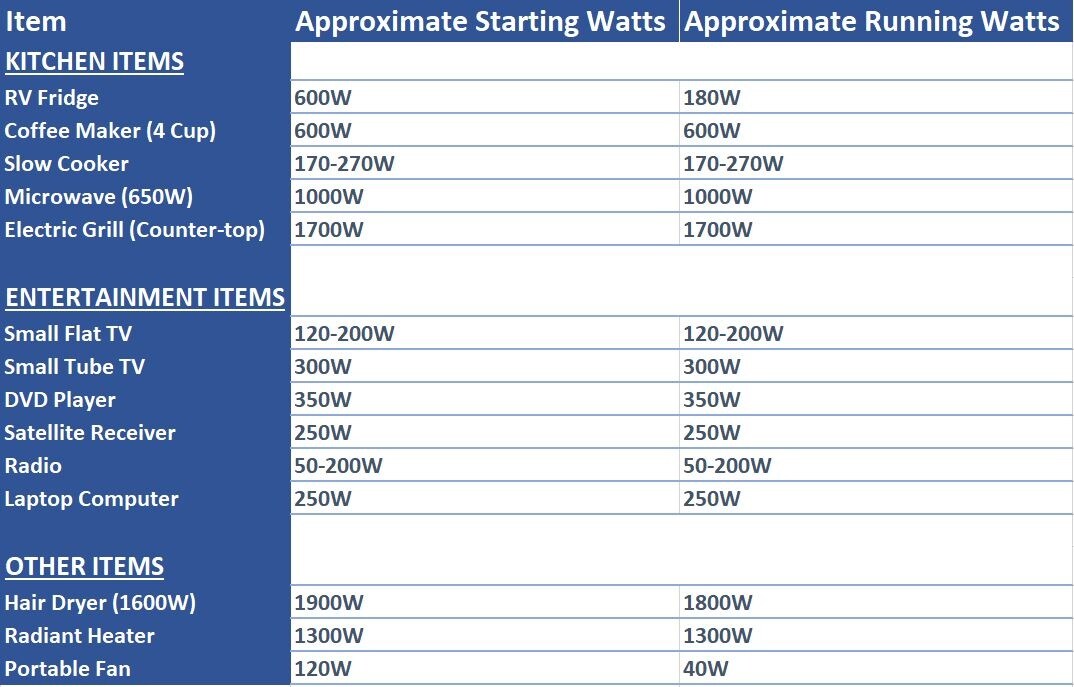
Understanding Watts and Amps
Electrical power is measured in watts (W), which is the product of voltage (V) and current (amperes or amps, A). Most motorhomes operate on 120-volt AC power for their main appliances, similar to residential setups. Generators are typically rated by their continuous running watts and their peak or starting watts. Your motorhome’s main shore power connection will also be rated in amps (e.g., 30-amp or 50-amp service), which dictates the maximum current flow it can handle safely. A 30-amp service at 120V provides a theoretical maximum of 3600 watts (30A * 120V), while a 50-amp service (often two 50A legs at 120V each) can provide a combined 12,000 watts (50A * 2 * 120V). Your generator must align with or exceed the power requirements of the appliances you intend to run.
Differentiating Starting vs. Running Watts
A critical distinction in generator sizing is between starting watts and running watts.
- Running Watts (Rated Watts): This is the continuous power an appliance needs to operate once it’s already on. This is the figure you’ll primarily use for total consumption calculations.
- Starting Watts (Surge Watts): Many motorized appliances, particularly those with electric motors like air conditioners, refrigerators, and microwaves, require a brief surge of extra power to start up. This surge can be two to three times their running wattage. A generator must be able to handle these momentary peaks to prevent overloading and tripping. Failing to account for starting watts is a common pitfall leading to undersized generator purchases.
Identifying Your Motorhome’s Essential Appliances
Create an exhaustive list of every electrical appliance you anticipate using in your motorhome, noting both their running and starting wattages. These figures are usually found on the appliance’s data plate or in its owner’s manual. Prioritize which appliances are “must-haves” for simultaneous operation. For example, you might frequently run your air conditioner, microwave, and lights concurrently. Less critical items, like a hair dryer, might be used only when other major appliances are off. Common high-draw appliances include:
- Air Conditioner (especially rooftop AC units)
- Microwave
- Electric Water Heater Element
- Electric Space Heater
- Refrigerator (AC mode)
- Hair Dryer
- Coffee Maker
- Television/Entertainment Systems
- Medical devices (CPAP, oxygen concentrators)
The Science of Sizing: Calculation and Prioritization
With a clear understanding of your appliances’ demands, the next step is to perform precise calculations to determine your ideal generator size.
Step-by-Step Power Assessment
- List All Appliances: Compile a list of all electrical devices in your motorhome.
- Find Running Watts: For each item, note its running wattage. If not explicitly listed, you can often estimate it by multiplying voltage (120V) by amps.
- Identify Starting Watts: For motor-driven appliances, find their starting wattage. If unavailable, use a common multiplier (e.g., 2-3x running watts) as an estimate.
- Calculate Peak Demand: Identify the single appliance with the highest starting wattage. This will be your primary “surge” factor.
- Sum Running Watts: Add up the running watts of all appliances you intend to use simultaneously.
- Add Peak Starting Watts: Take the total running watts and add the difference between the highest starting wattage and its running wattage (e.g., if AC starts at 3000W and runs at 1500W, add 1500W to your running total, not the full 3000W again). This gives you your estimated peak power requirement.
- Factor in a Buffer: Always add a 10-20% buffer to your calculated peak demand. This accounts for minor discrepancies, potential future additions, or less-than-optimal generator performance at altitude or extreme temperatures.
For instance, if your highest starting appliance is an AC unit at 3000W (running at 1500W) and your other simultaneously running appliances total 1000W, your calculation would be: (1500W + 1000W) + (3000W – 1500W) = 2500W + 1500W = 4000W peak requirement. Add a buffer, and you’re looking at a generator capable of at least 4400-4800 starting watts, with continuous running watts around 2500W.
The 30-Amp vs. 50-Amp Dilemma
Your motorhome’s shore power connection type (30-amp or 50-amp) significantly influences your generator needs.
- 30-Amp Motorhomes: These rigs are designed to draw a maximum of 3600 watts (120V * 30A). A generator with a running wattage of 3000-3600W and a starting wattage of 4000-5000W is typically sufficient to run most appliances, including one air conditioner.
- 50-Amp Motorhomes: These larger RVs often feature two air conditioners and a host of other power-hungry appliances. They utilize two separate 120V, 50-amp circuits, allowing for a total of 12,000 watts. To fully power a 50-amp rig, especially with two AC units, you’ll need a much larger generator, often in the 7000-10000+ running watt range. Alternatively, some owners opt for a smaller generator that can power one AC unit and essential items by using a 50A to 30A adapter and managing power consumption. Understanding this technical limitation is crucial.
Accounting for Simultaneous Use
The key to successful generator sizing isn’t just the sum of all wattages, but the wattages of appliances you’ll operate simultaneously. If you rarely use your microwave and air conditioner at the same time, you don’t necessarily need a generator that can handle both their combined peak starting loads. Develop scenarios:
- “Comfort Mode”: AC, lights, TV, refrigerator.
- “Cooking Mode”: Microwave, lights, water pump.
- “Charging Mode”: Laptop, phone, small appliances.
Your generator should comfortably support your most frequent “comfort mode” scenario, including the highest starting wattage appliance within that group.
Generator Technologies: Choosing the Right Engine for Your Rig
The type of generator you choose is as important as its size, offering distinct technical advantages and disadvantages for motorhome use.
Inverter Generators: The Smart Choice for RVs
Inverter generators utilize advanced electronic circuitry to produce clean, stable AC power, often referred to as “pure sine wave” output. This makes them ideal for sensitive electronics like laptops, smartphones, and medical equipment, which can be damaged by the “dirty power” or harmonic distortion produced by conventional generators.
- Technical Advantage: Produces high-quality, consistent power.
- Efficiency: They can adjust engine speed based on the load, leading to significantly better fuel efficiency and quieter operation.
- Parallel Capability: Many inverter generators can be linked in parallel with a second unit to double their power output, offering modularity.
- Portability: Generally lighter and more compact than conventional generators of similar wattage.
- Connectivity: Often feature USB ports and digital displays for monitoring.
Conventional Generators: Powerhouses for Specific Needs
Traditional open-frame generators produce power directly from the engine’s RPMs, often resulting in less stable power output. While powerful, they are generally louder and less fuel-efficient.
- Technical Advantage: High power output for their size, robust design.
- Cost-Effectiveness: Typically less expensive than inverter generators of comparable wattage.
- Limitations: Less suitable for sensitive electronics without additional surge protectors or power conditioners. Higher noise levels are a significant consideration in many motorhome settings.
Fuel Types and Their Technical Implications
Generators for motorhomes primarily run on:
- Gasoline: Most common, easy to find, but less efficient for extended use.
- Propane (LP Gas): Cleaner burning, longer storage life, often integrated into the motorhome’s existing LP system. However, slightly less power output compared to gasoline for the same engine size. Dual-fuel generators offer flexibility.
- Diesel: Found in larger, often built-in generators, especially in diesel pusher motorhomes. Extremely fuel-efficient, durable, and the same fuel source as the motorhome engine, simplifying logistics.
Each fuel type has specific technical requirements for combustion and storage, impacting emissions, maintenance schedules, and cold-weather starting performance.
Beyond Raw Power: Smart Features and Technical Considerations
Modern generators offer a suite of features that go beyond simply providing electricity, enhancing usability and integration with your motorhome’s systems.
Noise Levels: Decibels and Their Impact
Noise pollution is a significant concern when boondocking or in campgrounds. Generator noise is measured in decibels (dB), and lower numbers are better. Inverter generators typically operate in the 50-65 dB range, comparable to a normal conversation. Conventional generators can exceed 70-80 dB, which is considerably louder and can quickly become a nuisance to you and your neighbors. Advanced muffler systems and sound-dampening enclosures are technical innovations aimed at mitigating this.
Digital Monitoring and Remote Control
Many contemporary generators feature digital displays that provide real-time information such as runtime, fuel levels, voltage output, and maintenance alerts. Remote start/stop functionality, often via a wireless fob or a smartphone app (for built-in units), offers immense convenience, allowing you to manage power without stepping outside. Some systems even integrate with the motorhome’s central control panel, providing a holistic view of energy management.
Installation, Portability, and Integration
- Portable Generators: Offer flexibility in placement and can be moved away from the motorhome to reduce noise. Requires manual connection and refueling.
- Built-in Generators: Permanently installed within the motorhome, often with dedicated fuel lines, exhaust systems, and remote starting. These are typically quieter, more robust, and seamlessly integrated into the motorhome’s electrical grid. Their robust design often includes vibration isolation and advanced cooling.
Consider the physical dimensions, weight, and proper ventilation requirements for any generator, especially built-in units, to ensure safe and efficient operation.
Future-Proofing Your Motorhome’s Power System
The landscape of mobile power is continually evolving. Considering future upgrades and alternative energy sources can enhance your motorhome’s autonomy and reduce reliance on traditional generators.
Solar Integration and Hybrid Solutions
Pairing a generator with a solar power system (panels and charge controllers) creates a powerful hybrid solution. Solar panels provide silent, renewable energy during daylight hours, while the generator can supplement power during peak demand, cloudy days, or for charging battery banks efficiently. Smart solar charge controllers prioritize solar input, only engaging the generator when necessary, optimizing fuel consumption.
Battery Bank Augmentation
Upgrading your motorhome’s battery bank (e.g., transitioning from lead-acid to lithium-ion) significantly increases energy storage capacity. This allows you to run more appliances for longer periods without starting the generator, especially when paired with an adequate inverter. High-capacity battery banks, combined with efficient inverters, can often handle many transient peak loads, allowing for a slightly smaller generator that primarily focuses on charging the batteries or running the AC.
Software for Energy Management
Advanced motorhomes are increasingly incorporating sophisticated energy management systems and software. These systems can monitor power consumption in real-time, prioritize loads, automatically switch between shore power, generator, and battery inverter, and even predict energy needs based on usage patterns. Investing in a generator that can integrate with such systems provides optimal control and efficiency over your entire mobile energy infrastructure.
aViewFromTheCave is a participant in the Amazon Services LLC Associates Program, an affiliate advertising program designed to provide a means for sites to earn advertising fees by advertising and linking to Amazon.com. Amazon, the Amazon logo, AmazonSupply, and the AmazonSupply logo are trademarks of Amazon.com, Inc. or its affiliates. As an Amazon Associate we earn affiliate commissions from qualifying purchases.