
The modern world, particularly in fields like healthcare and scientific research, relies on precision, reliability, and safety. A seemingly simple yet profoundly impactful innovation that underpins much of this critical work is the Luer lock. Far from a mere curiosity, the Luer lock is a standardized connection system that has revolutionized how fluids are managed in countless devices, ensuring secure, leak-free, and often sterile, transfers. Understanding this ubiquitous connector is key to appreciating the engineering brilliance in everyday specialized “gadgets” and systems.
The Genesis of a Standard Connection
Before the widespread adoption of standardized connectors, medical and laboratory professionals often grappled with incompatible syringes, needles, and tubing. Connections were haphazard, prone to leaks, accidental disconnections, and contamination, posing significant risks to patient safety and experimental integrity. The need for a universal, robust, and intuitive system became undeniable.

Origins and Necessity
The concept of the Luer fitting dates back to the early 20th century, credited to Hermann Luer, a German instrument maker. Initially, these connections were simple friction-fit designs, known as Luer slip connections. They relied on a tight conical fit between two components – typically a male taper on a syringe tip and a female receptacle on a needle hub. While an improvement over previous ad-hoc methods, these slip connections still had limitations, particularly under pressure or with accidental tugs, where they could disconnect, leading to spills, air embolisms, or lost samples.
From Friction-Fit to Secure Lock
The critical evolution came with the introduction of the Luer lock. This enhanced design added a threaded collar to the female fitting, which screws onto corresponding threads on the male fitting. This innovation transformed a simple push-and-twist connection into a secure, mechanically locked joint. The Luer lock effectively eliminated the risk of accidental disconnection and significantly reduced leakage, making it an indispensable component in high-stakes environments. This evolution wasn’t just about convenience; it was a leap forward in reliability and safety for critical fluid management systems.
Anatomy and Functionality
To grasp the full significance of the Luer lock, it’s essential to understand its design principles and how these elements work in concert to create a dependable connection. It’s a testament to minimalist design achieving maximum functionality.
Key Components of a Luer Lock
A typical Luer lock connection involves two primary parts:
- Male Luer: This component features a tapered tip designed to fit snugly into the female counterpart. Crucially, it also has external threads that engage with the internal threads of the female Luer lock collar.
- Female Luer Lock: This component has an internal tapered opening designed to receive the male Luer tip. Surrounding this opening is a rotating collar with internal threads, which, when twisted, secures the male Luer in place.
Both male and female Luer components are precisely engineered to specific angles and dimensions to ensure a consistent, tight seal when properly engaged. Materials used can vary widely, from medical-grade plastics (polypropylene, polycarbonate) to stainless steel, depending on the application’s requirements for sterility, chemical resistance, and pressure tolerance.
How the Connection Works
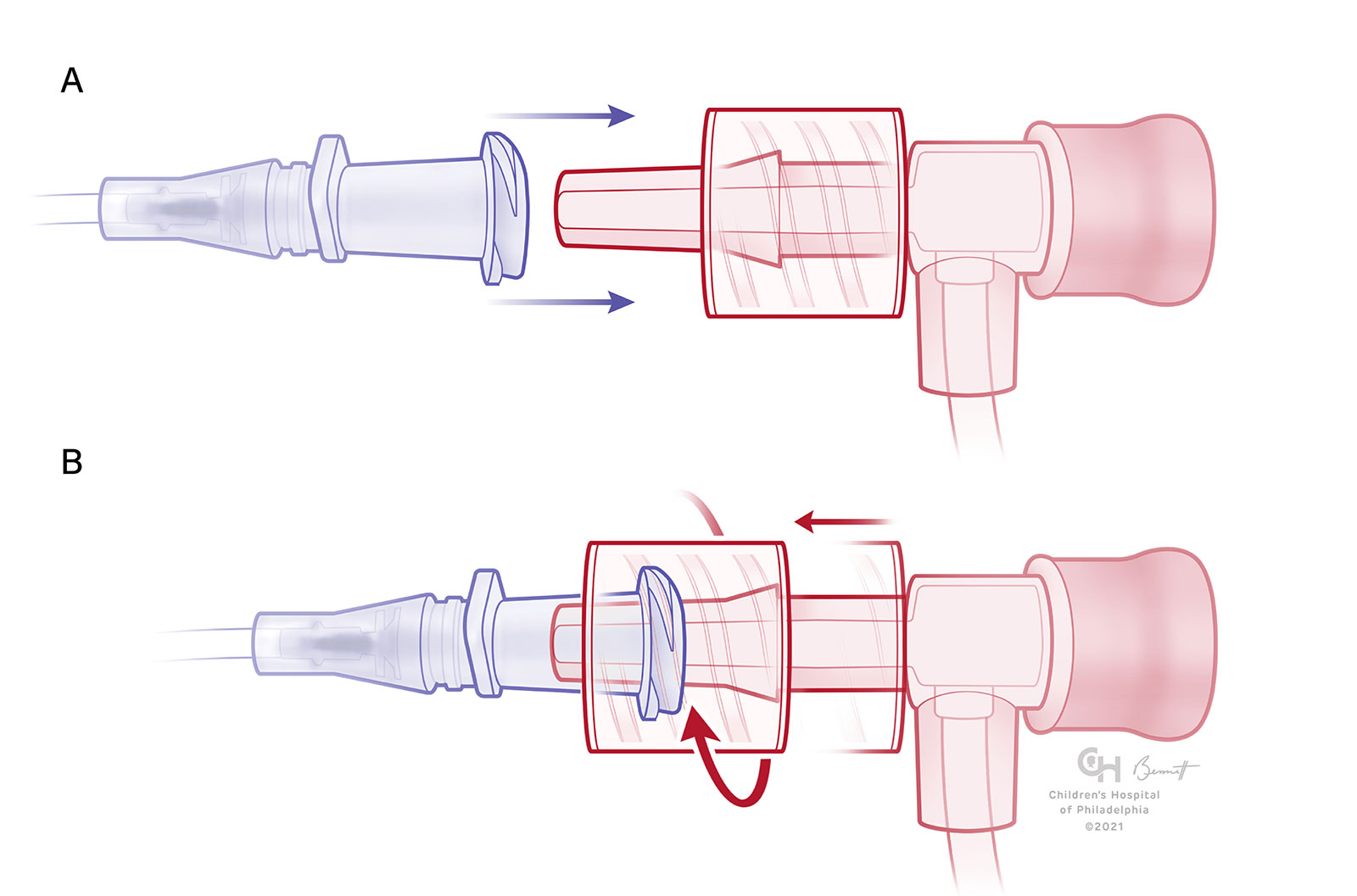
Making a Luer lock connection is a straightforward, two-step process:
- Push: The male Luer tip is inserted into the female Luer opening. The conical shapes create an initial, tight, friction-fit seal (similar to a Luer slip).
- Twist: The collar on the female Luer lock is then rotated, screwing onto the threads of the male Luer. This action draws the male and female tapered surfaces together with increasing force, creating a highly secure, leak-proof seal that resists dislodgment even under significant pressure or movement.
Disconnection is equally simple: unscrew the collar and pull the components apart. This intuitive design makes Luer locks incredibly user-friendly, minimizing training requirements and the potential for error.
Types of Luer Connections: Slip vs. Lock
While the Luer lock is often discussed, it’s important to distinguish it from its predecessor, the Luer slip:
- Luer Slip: This connection relies purely on the frictional fit of the tapered surfaces. A simple push provides a connection that is easy to make and break. It’s suitable for low-pressure applications where quick changes are frequent and the risk of accidental disconnection is low, or where a disconnection would not be catastrophic.
- Luer Lock: As described, this provides a much more secure, threaded connection. It is the preferred choice for high-pressure applications, long-term connections, or situations where leakage or disconnection would pose a significant risk (e.g., intravenous lines, critical laboratory sample transfers).
The choice between Luer slip and Luer lock depends entirely on the specific application’s requirements for security, pressure, and ease of disconnection.
Critical Applications Across Industries
The reliability and standardization of the Luer lock system have made it indispensable across a vast array of technical and scientific fields, particularly where fluid management is paramount. Its impact extends far beyond simple connectors, forming a foundational element in complex “gadgets” and systems.
Medical Devices: Ensuring Patient Safety

Nowhere is the Luer lock’s importance more evident than in healthcare. It is the default connection for a myriad of medical devices, directly impacting patient care and safety:
- Syringes and Needles: Virtually all modern hypodermic syringes and needles utilize Luer connections, enabling secure attachment for injections, drawing blood, and administering medications.
- IV Therapy: Luer locks are crucial for connecting IV bags, administration sets, catheters, and other infusion devices. The secure connection prevents accidental disconnections that could lead to air embolisms, blood loss, or medication spillage.
- Catheters and Tubing: From urinary catheters to central venous lines and drainage systems, Luer locks ensure that fluid pathways remain intact and sterile.
- Monitoring Equipment: Many diagnostic and monitoring devices that require fluid sampling or delivery (e.g., blood pressure transducers, dialysis machines) incorporate Luer connections.
The standardization provided by the Luer lock means that devices from different manufacturers can be reliably interconnected, streamlining clinical workflows and reducing the risk of costly or dangerous incompatibilities.
Laboratory Equipment: Precision and Purity
In research and analytical laboratories, the Luer lock is equally vital for maintaining the integrity of experiments and the purity of samples:
- Chromatography Systems: Luer connections are used in high-performance liquid chromatography (HPLC) and gas chromatography (GC) for connecting sample loops, columns, and detectors, ensuring leak-free flow of mobile phases and samples.
- Filtration and Sample Preparation: Syringe filters, microfluidic devices, and various sample preparation apparatuses frequently feature Luer connections for quick, secure attachment of syringes to drive fluids through filters or into small reaction vessels.
- Biotechnology and Cell Culture: In sterile environments, Luer locks facilitate the aseptic transfer of cell media, reagents, and samples, preventing contamination and supporting the growth of sensitive cultures.
- Spectroscopy and Analytics: When precise fluid handling is required for sample delivery to spectrophotometers, mass spectrometers, or other analytical instruments, Luer locks provide the necessary tight seal.
The ability to quickly and securely connect different components is invaluable in dynamic lab settings, improving efficiency and the reproducibility of results.
Beyond Healthcare: Diverse Implementations
While medical and laboratory applications are paramount, the principles of the Luer connection have found their way into other technical fields requiring secure fluid handling:
- Industrial Dispensing: Precise dispensing of glues, lubricants, or other fine chemicals often utilizes Luer-tipped syringes and nozzles for controlled application.
- Inkjet and Printing Systems: In some specialized printing systems, Luer connections can be found in ink delivery and maintenance mechanisms.
- Hydroponics and Aquaponics: Small-scale fluid delivery systems in advanced gardening or aquaculture sometimes leverage Luer fittings for controlled nutrient or water distribution.
- DIY and Hobbyist Electronics: For specific micro-fluidic projects or specialized cooling systems in electronics, the availability and ease of use of Luer components make them an attractive choice.
These diverse applications underscore the Luer lock’s versatility and its status as a foundational “gadget” component for fluid management technology.
Advantages and Standardization
The ubiquitous adoption of the Luer lock is a direct consequence of its inherent advantages and the critical role played by international standardization efforts. Without these, the widespread benefits observed today would be impossible.
The Benefits of Luer Lock Technology
The Luer lock system offers several compelling advantages that make it a cornerstone of modern fluid handling:
- Security: The primary benefit is the mechanically locked connection, which virtually eliminates accidental disconnections under normal operating conditions. This is crucial for patient safety and preventing costly spills of reagents or samples.
- Leak-Proof Seal: The precise conical fit combined with the threaded collar ensures a tight, leak-proof seal, even under moderate pressure. This is vital for maintaining sterility, accurate dosing, and preventing cross-contamination.
- Ease of Use: Despite its robust security, connecting and disconnecting Luer locks is quick, intuitive, and requires minimal force or special tools, improving efficiency in fast-paced environments.
- Versatility: The standardized design allows for interoperability between components from various manufacturers, offering flexibility in assembling custom fluidic systems.
- Sterility Maintenance: Many Luer lock components are designed for single-use and can be sterilized, which is critical in medical and sterile laboratory applications to prevent infection and contamination.
- Cost-Effectiveness: The mass production of standardized Luer components makes them relatively inexpensive and readily available, contributing to overall system affordability.
ISO Standards and Global Adoption
The true power of the Luer system lies in its standardization. The International Organization for Standardization (ISO) has developed specific standards, primarily ISO 80369-7 for Luer connections and ISO 80369 series for small-bore connectors for liquids and gases in healthcare applications. These standards meticulously define the dimensions, performance requirements, and testing methods for Luer fittings.
The purpose of these standards is multi-fold:
- Interchangeability: They ensure that any Luer lock syringe will connect securely to any Luer lock needle or catheter that also conforms to the standard, regardless of the manufacturer.
- Safety: By defining precise dimensions, the standards prevent incompatible connections that could lead to leaks or disconnections, thereby enhancing patient safety.
- Risk Reduction: The ISO 80369 series specifically addresses the risk of misconnections between different medical delivery systems (e.g., connecting an IV line to an enteral feeding tube). While the Luer lock (ISO 80369-7) is general purpose, other parts of the standard define unique, non-interconnectable connectors for specific applications to prevent such errors.
This global adherence to a single standard has solidified the Luer lock’s position as the benchmark for secure, reliable fluid connections in countless technical devices and systems.
Maintenance and Best Practices
While Luer locks are designed for reliability, proper handling and maintenance are essential to ensure their continued performance, especially in critical applications. Adherence to best practices is not just about extending component life but primarily about guaranteeing safety and accuracy.
Proper Handling and Connection Techniques
Even with a robust design, user technique plays a crucial role in maximizing the Luer lock’s effectiveness:
- Inspect Before Use: Always visually inspect both male and female Luer components for any damage, cracks, or debris before making a connection. Damaged fittings can compromise the seal.
- Align Properly: Ensure that the male and female parts are aligned correctly before pushing them together. Forcing a misaligned connection can damage the threads or the conical surfaces.
- Secure Firmly, Don’t Overtighten: Push the male Luer firmly into the female Luer, then twist the collar until it is finger-tight. Overtightening can strip the threads, crack plastic components, or deform the conical seal, making disconnection difficult or compromising future connections. A firm, hand-tight connection is sufficient to achieve a secure seal.
- Avoid Cross-Threading: When engaging the threads, ensure they catch smoothly. If resistance is felt immediately, stop, realign, and try again to avoid cross-threading, which can permanently damage the components.
- Check for Leaks: After connection, especially in critical applications, a quick visual check for any fluid leakage around the joint is a good practice.
- Proper Disconnection: To disconnect, unscrew the collar completely before pulling the components apart. Forcing them apart while the collar is still engaged can damage both pieces.
Ensuring Sterility and Integrity
In medical and laboratory settings, maintaining sterility is paramount. Luer locks contribute to this by providing a secure, closed system, but users must also play their part:
- Use Sterile Components: Always use Luer lock components that are sterile and packaged appropriately for their intended use. Do not use components if their sterile packaging is compromised.
- Aseptic Technique: When connecting or disconnecting Luer fittings in a sterile field, follow established aseptic techniques to prevent contamination of the fluid path. This includes proper hand hygiene, using gloves, and avoiding touching critical surfaces.
- Single-Use Protocols: Many Luer lock devices are designed for single use only. Reusing them can compromise sterility, lead to degradation of materials, and increase the risk of infection or failure. Always adhere to manufacturer guidelines and institutional protocols regarding single-use items.
- Protection of Ports: When not actively in use, Luer ports should be capped or protected with sterile caps to prevent ingress of contaminants.
- Storage: Store Luer lock components in clean, dry conditions, away from direct sunlight or extreme temperatures, to maintain their material integrity and sterility until use.
By understanding the principles behind the Luer lock and adhering to these best practices, users can leverage this essential technology to its full potential, ensuring the safety, efficiency, and reliability of fluid transfer across a myriad of critical “gadgets” and systems.
aViewFromTheCave is a participant in the Amazon Services LLC Associates Program, an affiliate advertising program designed to provide a means for sites to earn advertising fees by advertising and linking to Amazon.com. Amazon, the Amazon logo, AmazonSupply, and the AmazonSupply logo are trademarks of Amazon.com, Inc. or its affiliates. As an Amazon Associate we earn affiliate commissions from qualifying purchases.