
Navigating the landscape of tax preparation can be a daunting task, with various software options promising simplicity and savings. Among the most widely recognized is TurboTax, an industry leader that frequently advertises a “Free Edition.” For many taxpayers, the prospect of filing their federal and state taxes at no cost is highly appealing, offering a significant saving that can be redirected toward other financial goals. However, the term “free” in the world of tax software often comes with specific stipulations, meaning not every taxpayer will qualify for the complimentary version. Understanding these criteria is crucial for individuals seeking to manage their personal finances effectively and avoid unexpected costs during tax season.

This article delves into the precise qualifications for TurboTax Free Edition, outlining the simple tax situations it’s designed to accommodate and highlighting common scenarios that necessitate an upgrade to a paid version. By understanding these distinctions, individuals can make informed decisions about their tax preparation strategy, ensuring they utilize the most appropriate and cost-effective tools available for their unique financial circumstances.
Understanding TurboTax Free Edition: More Than Just a Name
The allure of “free” tax filing is powerful, especially for those managing tight budgets or simply looking to optimize their personal finance outflows. TurboTax Free Edition is positioned as a solution for millions of Americans with straightforward tax situations. However, it’s essential to understand the scope of this offering and how it fits into the broader spectrum of tax preparation services.
The Basic Premise of Free Tax Filing
At its core, TurboTax Free Edition is designed to facilitate the filing of IRS Form 1040 and basic related schedules for taxpayers whose financial lives do not involve complex income streams, deductions, or credits. The intention is to provide a no-cost avenue for individuals and families whose tax returns are simple enough to be processed without the need for advanced features or extensive tax advice typically associated with more intricate financial profiles. This aligns with a broader industry push, and indeed an IRS initiative, to make basic tax filing accessible to all, particularly lower- and middle-income individuals. For those who meet the specific requirements, the Free Edition can be a valuable financial tool, saving upwards of $60 to $120 or more that would otherwise be spent on paid software or professional preparers.
Differentiating “Free” Offerings
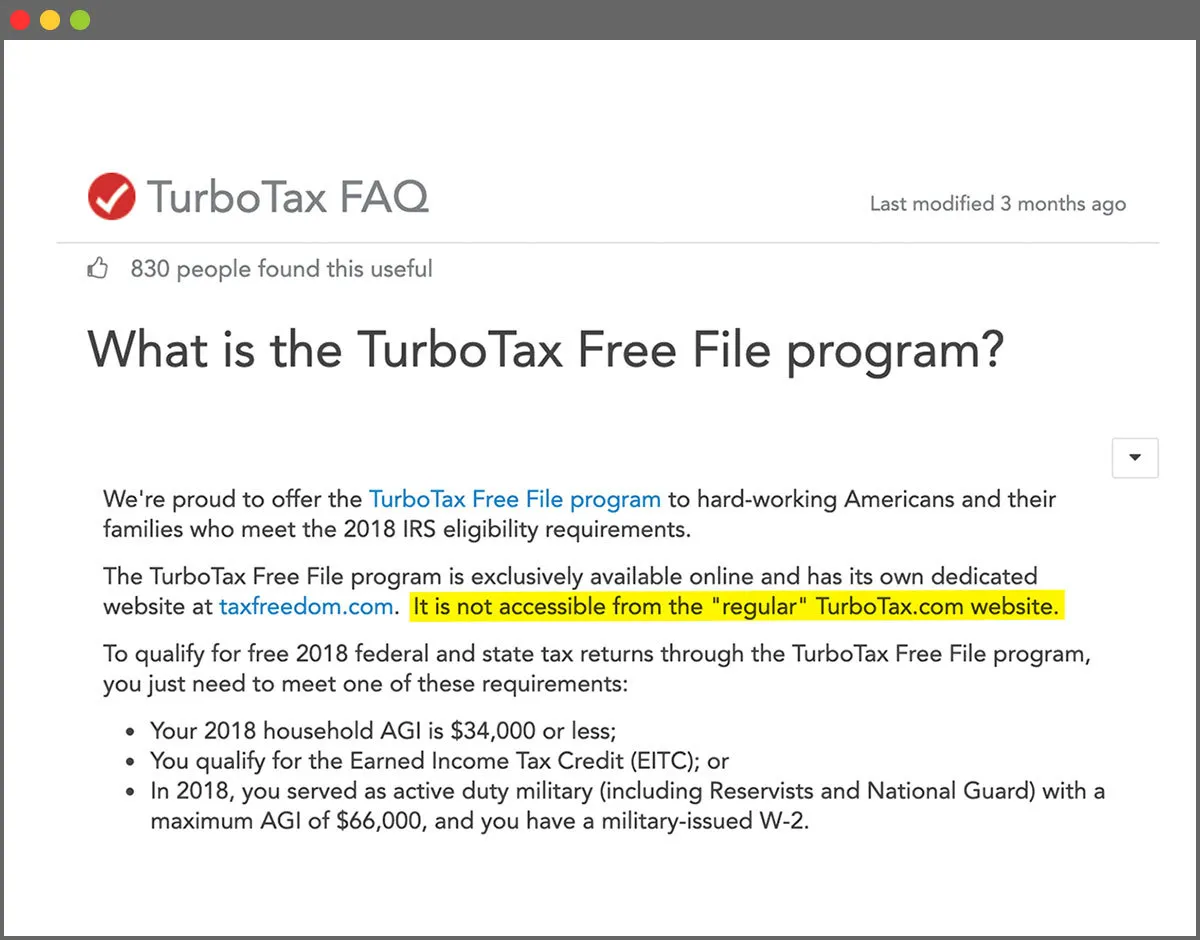
It’s important to distinguish between the TurboTax Free Edition and the IRS Free File Program. While TurboTax is a participant in the IRS Free File Program, its proprietary Free Edition is a separate product. The IRS Free File Program provides a suite of guided tax preparation products, offered by various tax software companies (including TurboTax under certain income thresholds), that allow eligible taxpayers to file their federal tax returns for free. These eligibility rules are set by the IRS, usually based on Adjusted Gross Income (AGI).
TurboTax Free Edition, on the other hand, is a specific product offered directly by Intuit (the maker of TurboTax) for simple tax returns, regardless of AGI, provided the taxpayer’s situation fits the strict criteria for “simple.” This distinction is critical because some taxpayers might qualify for the IRS Free File Program through TurboTax (or another provider) even if their tax situation technically exceeds the strict limits of the TurboTax Free Edition. Understanding which “free” option applies to your situation can prevent unnecessary frustration and unexpected charges.
Key Qualification Criteria for TurboTax Free Edition
The core of qualifying for TurboTax Free Edition revolves around having a “simple tax situation.” While this term might seem subjective, TurboTax has clearly defined what it means in practical terms, specifying the types of income, deductions, and credits it supports without an upgrade.
Simple Tax Situations Defined
A “simple tax situation” for TurboTax Free Edition typically includes:
- W-2 income only: Your primary (or sole) source of income comes from an employer who provides a Form W-2.
- Limited interest and dividend income: Small amounts reported on Form 1099-INT and Form 1099-DIV.
- Standard deduction: You plan to take the standard deduction rather than itemizing.
- Basic tax credits: Eligibility for common credits such as the Earned Income Tax Credit (EITC) and the Child Tax Credit (CTC), but only in their most straightforward forms.
Any deviation from these basic parameters generally means you will be prompted to upgrade to a paid version of the software. This structure ensures that TurboTax Free Edition remains viable for the company while guiding users to more comprehensive solutions when their financial lives warrant it.
Income Limitations and Their Implications
Unlike the IRS Free File Program, which often has explicit Adjusted Gross Income (AGI) caps (e.g., $79,000 for 2023 tax year), TurboTax Free Edition does not have a strict AGI limit for federal filing. Instead, qualification hinges more on the complexity of the income sources rather than the absolute amount. A taxpayer earning $100,000 solely from W-2 income and taking the standard deduction could potentially qualify, whereas someone earning $30,000 but with self-employment income or significant investment activity likely would not. This focus on income type rather than amount is a crucial distinction and often a point of confusion for users.
Specific Tax Forms and Credits That Exclude Free Filing
Several common financial scenarios and their associated tax forms automatically disqualify users from the TurboTax Free Edition, prompting an upgrade to a Deluxe, Premier, or Self-Employed version. These include:
- Self-Employment Income: If you receive Form 1099-NEC (non-employee compensation) or have any income from freelancing, gig work, or running a small business, you will need to file Schedule C, which is not supported by the Free Edition.
- Itemized Deductions: If you choose to itemize deductions (e.g., for mortgage interest, state and local taxes beyond the standard limit, medical expenses, or charitable contributions), you’ll need a paid version.
- Capital Gains or Losses: Income from selling stocks, bonds, mutual funds, or other investments reported on Schedule D or Form 8949 disqualifies you.
- Rental Property Income: Income or losses from rental properties, which require Schedule E, are not supported.
- Partnership or S-Corp Income: K-1 forms from partnerships or S-corporations necessitate an upgrade.
- Foreign Earned Income: Filing Form 2555 to exclude foreign earned income is not part of the Free Edition.
- Certain Education Credits: While basic education credits might be supported, more complex scenarios or certain forms like Form 8863 (Education Credits) often require a paid version.
- Healthcare Savings Accounts (HSAs) and Health Reimbursement Arrangements (HRAs): Distributions or contributions often involve forms (like Form 8889) not included in the Free Edition.
- Cryptocurrency Transactions: Reporting cryptocurrency gains or losses typically involves forms that are not part of the simple tax situation.
These exclusions underscore that the Free Edition is genuinely for the simplest of returns. As soon as a taxpayer’s financial life introduces more varied income streams or more nuanced tax-saving strategies, an upgrade becomes necessary.
The Intricacies of Simple Tax Situations
To further clarify who truly fits the “simple” criteria for TurboTax Free Edition, it’s helpful to break down the most common components of such a return.
W-2 Income Only: The Most Common Scenario

The vast majority of taxpayers who qualify for TurboTax Free Edition fall into this category. They receive one or more W-2 forms from employers, representing their wages, salaries, tips, and other compensation. This income is straightforward to report, and the software is designed to easily import this data, perform the necessary calculations, and populate the relevant lines on Form 1040. If your only income is from employment and reported solely on W-2s, you’re in a strong position to qualify.
Standard Deduction Filers
The standard deduction is a set dollar amount that reduces your taxable income, based on your filing status (e.g., single, married filing jointly, head of household). For most taxpayers, especially those with simpler finances, taking the standard deduction results in a lower tax liability than itemizing. Since the TurboTax Free Edition is built around this presumption, individuals who find the standard deduction to be their best option for reducing taxable income are more likely to qualify. Once you consider itemizing deductions for things like mortgage interest, property taxes, or significant charitable contributions, the Free Edition becomes insufficient.
Limited Credits: EITC and Child Tax Credit Considerations
The Free Edition generally supports the most common and straightforward tax credits, such as the Earned Income Tax Credit (EITC) and the Child Tax Credit (CTC), including the Additional Child Tax Credit. These credits are often simple to claim, provided all eligibility requirements are met, and they can significantly reduce a tax bill or even result in a refund. However, if your situation involves less common or more complex credits—such as certain education credits, adoption credits, or credits for residential energy improvements—you will likely need to upgrade to a paid version that can handle the specific forms and calculations required. This is another area where a seemingly minor detail can lead to an unexpected need for a paid upgrade.
When “Free” Isn’t Free: Common Pitfalls and Upgrades
Many taxpayers begin their filing journey with TurboTax Free Edition, only to discover midway through the process that their situation is more complex than initially thought, leading to a prompt for an upgrade. Understanding these common triggers can save time and frustration.
Self-Employment Income and Schedule C
Perhaps the most common reason users get kicked out of the Free Edition is the presence of self-employment income. Whether you’re a freelancer, a rideshare driver, a consultant, or run an Etsy shop, if you’re generating income as an independent contractor, you’ll likely receive a Form 1099-NEC (or previously, Form 1099-MISC) and need to file Schedule C, Profit or Loss from Business. This schedule allows you to report your business income and deduct related expenses, a feature not supported by the Free Edition. This often necessitates an upgrade to TurboTax Self-Employed, which is specifically designed for small business owners and independent contractors.
Itemized Deductions
As mentioned, if your potential itemized deductions—such as home mortgage interest (Form 1098), medical expenses exceeding 7.5% of your AGI, state and local taxes (SALT) over the $10,000 cap, or significant charitable contributions—exceed the standard deduction for your filing status, you’ll want to itemize to maximize your tax savings. The Free Edition does not support itemized deductions, requiring an upgrade to TurboTax Deluxe or higher.
Investments, Rental Properties, and Other Complexities
Any income or loss from investments (stock sales, mutual funds, cryptocurrency) reported on Form 1099-B, or income from rental properties (requiring Schedule E), will automatically push you out of the Free Edition. These situations often involve more detailed record-keeping and calculations that are beyond the scope of a simple tax return. Similarly, certain retirement income distributions or more advanced tax planning scenarios like a K-1 from a partnership will also trigger an upgrade, typically to TurboTax Premier or Self-Employed.
State Tax Filing Considerations
Even if you qualify for the federal TurboTax Free Edition, state tax filing is often a separate consideration. While some states allow free e-filing directly, TurboTax typically charges a fee for state tax preparation, regardless of your federal edition. This is a common point of confusion, as users assume “free” extends to both federal and state. Always factor in potential state filing fees when evaluating the overall cost of tax preparation.
Alternative Free Filing Options and Financial Planning Implications
For those who don’t qualify for TurboTax Free Edition or find the state filing fees prohibitive, several alternative avenues exist for free or low-cost tax preparation, which are crucial considerations in comprehensive personal financial planning.
IRS Free File Program (Non-TurboTax Providers)
As noted, the IRS Free File Program includes multiple software providers, each with its own AGI limits and supported forms. If your AGI falls below the IRS Free File threshold (e.g., $79,000 for 2023), you may qualify to use a different provider through the IRS Free File website that can handle more complex situations than the TurboTax Free Edition, potentially including some investment income or itemized deductions, all for free. Exploring these other options before committing to a paid TurboTax version can result in substantial savings.
Volunteer Income Tax Assistance (VITA) and Tax Counseling for the Elderly (TCE)
For individuals earning generally $64,000 or less, persons with disabilities, and limited English-speaking taxpayers, the IRS offers the Volunteer Income Tax Assistance (VITA) program. The Tax Counseling for the Elderly (TCE) program offers free tax help to all taxpayers, particularly those who are 60 years of age and older, specializing in pensions and retirement-related issues. Both programs provide IRS-certified volunteers who offer free tax preparation and e-filing services. These programs are invaluable for those who need personalized assistance without the cost of a professional tax preparer or paid software. Utilizing these services is a sound financial strategy for eligible individuals.
Strategic Tax Software Selection as Part of Personal Finance
Choosing the right tax preparation method is an integral part of effective personal financial planning. While the allure of “free” is strong, it’s critical to accurately assess your tax situation before you begin the filing process. Overlooking a source of income or a potential deduction can lead to an unexpected upgrade charge or, worse, an inaccurate tax return. For those with more complex finances—self-employment, significant investments, or rental properties—budgeting for a paid tax software version or even a professional tax advisor is a prudent financial decision. The cost of these services often pays for itself through optimized deductions, accurate reporting, and peace of mind, ultimately contributing to better overall financial health.
Understanding the specific qualifications for TurboTax Free Edition empowers taxpayers to make informed choices, ensuring their tax filing process is as efficient, accurate, and cost-effective as possible. By recognizing when one qualifies for free services and when an upgrade or an alternative option is necessary, individuals can maintain control over their financial obligations and work towards their broader economic goals.
aViewFromTheCave is a participant in the Amazon Services LLC Associates Program, an affiliate advertising program designed to provide a means for sites to earn advertising fees by advertising and linking to Amazon.com. Amazon, the Amazon logo, AmazonSupply, and the AmazonSupply logo are trademarks of Amazon.com, Inc. or its affiliates. As an Amazon Associate we earn affiliate commissions from qualifying purchases.