
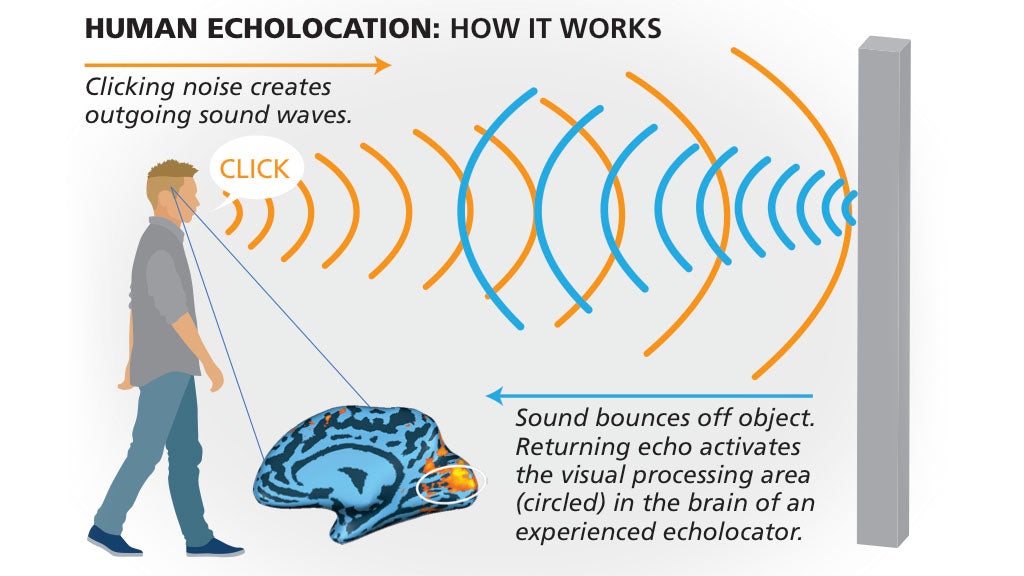
Echolocation, at its core, refers to a sophisticated biological sonar system used by certain animals, most famously bats and dolphins, to navigate and hunt by emitting sound waves and interpreting the echoes that return. This innate ability allows them to construct a detailed “sound map” of their environment, discerning objects’ location, size, shape, and even texture in total darkness or murky waters. For the technology sector, echolocation is far more than a biological curiosity; it represents a profound blueprint for active sensing, inspiring a vast array of innovations that enable machines to perceive and interact with the physical world in ways previously confined to science fiction. Understanding echolocation, in a technological context, is to grasp the principles of emitting a signal, receiving its reflection, and computationally deriving meaningful data from that interaction.
The Principles of Echolocation: A Natural Inspiration for Technology
The fundamental principle of echolocation revolves around active sensing: an emitter sends out a signal, and a receiver detects the signal’s return after it has interacted with objects in the environment. By measuring the time delay between emission and reception, as well as the signal’s intensity and frequency shifts, a sophisticated interpreter can deduce critical information about the surroundings. In nature, bats emit high-frequency ultrasonic pulses and analyze the returning echoes with astounding precision, avoiding obstacles and locating tiny insects with remarkable accuracy. Dolphins, similarly, use clicks and whistles underwater, leveraging sound’s efficient propagation through water to map vast marine landscapes.
This biological marvel serves as a foundational concept for engineers and computer scientists developing systems that need to “see” beyond the limitations of visible light or human perception. The elegance and efficiency of natural echolocation have directly informed the design of numerous active sensing technologies, transforming industries from defense and healthcare to consumer electronics and robotics. The key lies in mimicking this emit-detect-interpret cycle, adapting it to diverse mediums and computational frameworks to achieve specific technological goals.
From Biological Sonar to Human Innovation: Early Technological Adaptations
The inspiration drawn from echolocation has a long history, manifesting in various forms of active sensing technologies long before the advent of modern computing. These early adaptations laid the groundwork for today’s sophisticated systems.
Undersea Eyes: The Rise of Sonar
Perhaps the most direct technological analog to biological echolocation is sonar (Sound Navigation and Ranging). Developed significantly in the early 20th century, particularly during World War I and II, sonar systems were designed to detect submarines, map the seafloor, and locate schools of fish. Active sonar transmits acoustic waves into the water and listens for echoes, much like a dolphin. The time taken for the echo to return, coupled with the speed of sound in water, allows operators to calculate the range to an object. Passive sonar, on the other hand, merely listens for sounds emitted by objects, such as engines or propellers, without transmitting its own signal. Modern sonar systems are incredibly advanced, employing sophisticated signal processing algorithms to filter noise, classify targets, and create high-resolution 3D maps of underwater environments, indispensable for navigation, oceanography, and resource exploration.
Beyond Sound: Radar and Other Active Sensing Systems
While not using sound waves, radar (Radio Detection and Ranging) operates on an analogous principle, employing radio waves instead of sound. Developed concurrently with sonar, radar revolutionized aerial navigation, weather forecasting, and military applications by detecting objects at long ranges. The core mechanism remains the same: emit a signal, wait for an echo, and interpret the returned information. The choice between sound and radio waves depends on the medium and the desired range and resolution; sound travels well in water but is limited in air over long distances, while radio waves excel in air. This broader concept of active sensing – emitting a signal (be it sound, radio, light, or other electromagnetic waves) and analyzing its interaction with the environment – is a direct conceptual descendant of understanding how echolocation works.
Medical Diagnostics: Imaging the Unseen
Another significant early application inspired by the principles of echolocation is medical ultrasound imaging. Since the mid-20th century, ultrasound technology has become a cornerstone of diagnostic medicine. High-frequency sound waves, beyond the range of human hearing, are transmitted into the body. These waves reflect off internal structures and organs, and the returning echoes are processed to create real-time images. Unlike X-rays, ultrasound does not use ionizing radiation, making it safe for repeated use, including fetal imaging. It allows clinicians to visualize soft tissues, blood flow, and organ function, providing invaluable diagnostic information non-invasively. The spatial and temporal resolution achieved by modern ultrasound systems is a testament to sophisticated transducer design and advanced digital signal processing, mirroring the biological precision of natural echolocators.
Echolocation’s Resurgence in Modern Computing and Robotics
In the digital age, the principles of echolocation have found renewed relevance, particularly in the fields of robotics, autonomous systems, and human-computer interaction, where sophisticated computational power allows for unprecedented levels of data interpretation and application.

Autonomous Navigation: Seeing with Sound in Complex Environments
For autonomous vehicles, drones, and industrial robots, robust environmental perception is paramount. While cameras provide rich visual data and LiDAR offers precise 3D mapping, ultrasonic sensors (often colloquially referred to as “echolocation sensors”) play a critical complementary role, especially for short-range obstacle detection and proximity sensing. These sensors are less affected by light conditions, fog, or dust compared to optical sensors, making them highly reliable in challenging environments. Self-driving cars use ultrasonic sensors for parking assistance and blind-spot monitoring. Industrial robots leverage them for collision avoidance and precise positioning. Drones employ them for stable hovering and terrain following. The data from these sensors, when fused with information from other modalities (cameras, radar, LiDAR), contributes to a more comprehensive and robust environmental model, enabling safer and more efficient autonomous navigation.
Smart Environments and Human-Computer Interaction
The integration of echolocation-inspired technology extends into smart environments and novel forms of human-computer interaction. Small, low-power ultrasonic sensors can detect presence, motion, and even gestures within a room, contributing to energy-efficient smart lighting systems or touchless interfaces. For instance, some smart speakers can detect subtle movements to understand user intent without requiring physical interaction. Beyond convenience, these technologies also offer significant advancements for accessibility. Devices like “smart canes” or wearable ultrasonic sensors help visually impaired individuals navigate their surroundings by translating echo data into haptic feedback or audio cues, effectively extending their sensory perception and enhancing independence.
Industrial Applications: Precision and Safety
In industrial settings, echolocation-inspired technologies ensure precision, safety, and efficiency. Ultrasonic sensors are widely used for level sensing in tanks and silos, accurately measuring the fill level of liquids or granular materials without contact. They are critical in non-destructive testing (NDT) to inspect materials for flaws, cracks, or internal defects in components like welds, pipes, and aircraft structures, ensuring structural integrity and preventing catastrophic failures. In manufacturing, these sensors facilitate precise component placement, quality control checks, and robotic manipulation, where consistent and reliable distance measurements are crucial.
The Future of Echolocation-Inspired Technologies
The trajectory of echolocation-inspired technologies points towards increasing sophistication, integration, and pervasiveness. Future advancements will build upon current capabilities, pushing the boundaries of what machines can perceive and achieve.
Miniaturization and Enhanced Processing
Continued miniaturization of ultrasonic transducers and associated electronics will enable their integration into an even wider array of devices, from ultra-thin wearables to tiny IoT sensors. Coupled with advancements in embedded processing power, these smaller sensors will be capable of more complex real-time signal analysis. This will lead to more intelligent and context-aware devices that can interpret subtle environmental cues with greater accuracy and speed.
Multi-Modal Sensing: Combining Echolocation with Other Data
The future will increasingly see echolocation-inspired sensors as part of a multi-modal sensing suite. By combining ultrasonic data with input from optical cameras, LiDAR, thermal sensors, and radar, autonomous systems will achieve a much richer and more resilient perception of their environment. This sensor fusion approach leverages the strengths of each modality while compensating for their individual weaknesses, leading to more robust decision-making in highly dynamic and unpredictable conditions, crucial for areas like urban autonomous driving or complex robotics.
Energy Efficiency and Ubiquitous Integration
Developing highly energy-efficient echolocation systems will be vital for battery-powered devices and the proliferation of pervasive sensing in smart cities and IoT ecosystems. Low-power, long-range ultrasonic sensing could enable new applications in infrastructure monitoring, environmental tracking, and personal safety, where continuous, unobtrusive data collection is desired without frequent battery replacements.

Challenges and the Road Ahead
Despite the remarkable progress, significant challenges remain in fully emulating and surpassing the capabilities of natural echolocation. Signal interference, environmental noise, and the computational demands of processing vast amounts of echo data in real-time are ongoing hurdles. Researchers are continually exploring new transducer materials, advanced beamforming techniques, and sophisticated machine learning algorithms to filter noise, enhance signal-to-noise ratios, and extract more granular information from echoes. The quest for biomimicry – not just copying but understanding and improving upon nature’s designs – continues to drive innovation, pushing engineers to create active sensing systems that are more adaptable, energy-efficient, and intelligent. As computational power grows and our understanding of complex signal processing deepens, echolocation-inspired technologies will undoubtedly continue to expand their footprint, enabling machines to perceive the world with ever-increasing clarity and autonomy.
aViewFromTheCave is a participant in the Amazon Services LLC Associates Program, an affiliate advertising program designed to provide a means for sites to earn advertising fees by advertising and linking to Amazon.com. Amazon, the Amazon logo, AmazonSupply, and the AmazonSupply logo are trademarks of Amazon.com, Inc. or its affiliates. As an Amazon Associate we earn affiliate commissions from qualifying purchases.