
The landscape of technology, particularly in document creation and printing, is often shaped by underlying standards that many users take for granted. In the United States, the omnipresent standard for printer paper is distinctly different from most of the rest of the world, a fact that has significant implications for hardware design, software functionality, and digital document exchange. Understanding this divergence is crucial for anyone engaging with technology in a globalized context.
The Dominance of Letter Size: A North American Standard
When one refers to “standard” printer paper in America, the immediate mental image is an 8.5 x 11-inch sheet. This specific dimension, known as “Letter” size, is the bedrock of printing, copying, and general document handling across the United States, Canada, and parts of Mexico. Its ubiquity means that virtually every printer, scanner, and copier sold in these regions is primarily designed around this format.

Understanding Letter (8.5 x 11 inches)
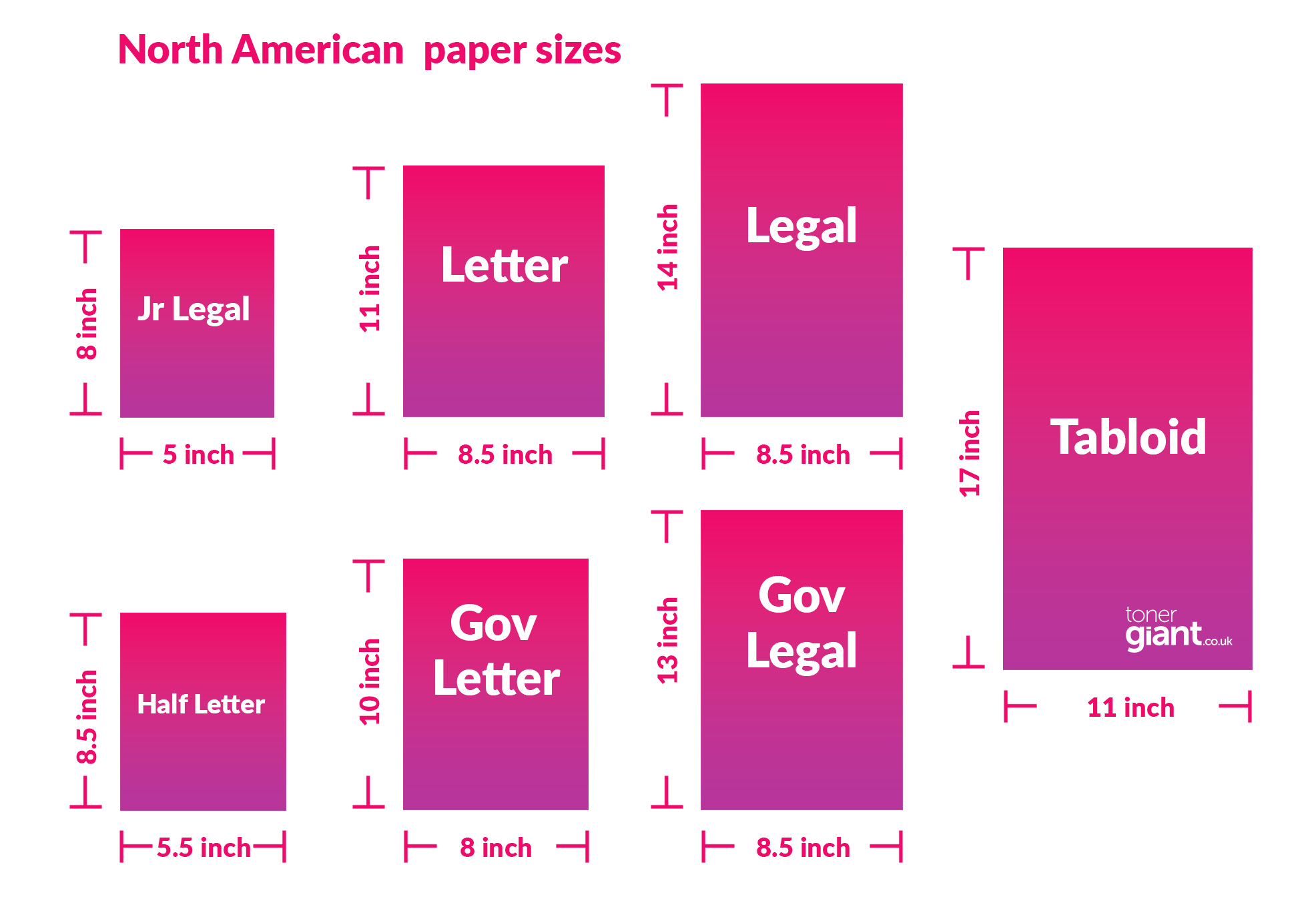
Letter paper measures exactly 8.5 inches in width and 11 inches in height (215.9 x 279.4 mm). This size dictates everything from the physical dimensions of a printer’s paper tray to the default page settings in word processing applications. For decades, it has been the standard for business correspondence, academic papers, legal documents, and everyday home printing. Its dimensions offer a comfortable reading experience for text-heavy documents and provide ample space for graphics and images within standard margins.
The contrast with the international standard, A4, is stark. A4 paper, part of the ISO 216 series, measures 210 x 297 mm (approximately 8.27 x 11.69 inches). While seemingly small differences, these variations have profound technical consequences for document creators and print engineers.
Historical Roots and Cultural Adherence
The origin of the 8.5 x 11-inch Letter size is steeped in history, tracing back to traditional paper-making practices predating standardized metric systems. Its precise historical lineage is somewhat debated, but it likely emerged from early American paper mills and became institutionalized over time. By the mid-20th century, it was firmly entrenched. In 1980, it was formally designated as the standard by the American National Standards Institute (ANSI) as ANSI A.
The primary reason for its continued use, despite the global prevalence of the ISO 216 metric system, is historical inertia and established infrastructure. Shifting an entire nation’s manufacturing base for paper, printers, and associated equipment, alongside redesigning countless forms and document templates, would represent an enormous economic and logistical undertaking. This adherence underscores how deeply rooted legacy standards can become within a nation’s technological and industrial ecosystem, even when an arguably more elegant or globally compatible alternative exists.
Technical Implications for Hardware and Software
The choice of paper size is far from trivial; it underpins significant aspects of technological design and user experience. Hardware manufacturers, software developers, and operating system designers must account for regional paper standards to ensure seamless operation.
Printer Design and Compatibility
Printers manufactured for the North American market are fundamentally engineered around Letter and other ANSI-based paper sizes. This optimization extends to several critical components:
- Paper Trays and Feed Mechanisms: These are precisely dimensioned to hold stacks of 8.5 x 11-inch paper, ensuring proper alignment and smooth feeding.
- Rollers and Guides: The internal mechanisms that pull paper through the printer are calibrated for the specific width and length of Letter size.
- Print Heads and Sensors: The travel path of print heads and the placement of paper sensors are configured to accurately deposit ink or toner across the Letter sheet, detecting edges and preventing misprints.
While many modern printers are designed to be “global” and support multiple paper sizes (often indicated by adjustable trays), their primary alignment and default settings are often regionally optimized. Users attempting to print A4 paper on a US-centric printer (or vice versa) without adjusting settings can encounter issues such as paper jams, truncated prints, or incorrect scaling due to the subtle but significant dimensional differences.
Software and Operating System Defaults
The default paper size is deeply embedded within operating systems and application software.
- Operating Systems: Both Windows and macOS allow users to set their “Locale” or “Region” during setup. This setting often dictates the default paper size in print dialogs and system-wide document properties. A US locale will typically default to Letter, while a European locale will default to A4.
- Word Processors and Design Software: Applications like Microsoft Word, Adobe InDesign, Google Docs, and LibreOffice Writer automatically adopt the system’s default paper size for new documents. While users can manually change the page setup, most users will work with the default, creating documents that are inherently optimized for 8.5 x 11 inches.
- PDF Viewers: When viewing and printing PDF documents, applications like Adobe Acrobat Reader or Foxit Reader interpret the embedded page size metadata. If a PDF was created with an A4 layout and then printed on a system defaulting to Letter, scaling issues can arise.
This deep integration means that software acts as a gatekeeper, guiding users toward the prevailing regional standard and potentially creating compatibility hurdles when sharing documents internationally.
Digital Document Creation and Sharing
The choice between Letter and A4 profoundly impacts the creation and exchange of digital documents, particularly PDFs and other fixed-layout formats.
- Layout and Margins: Documents designed for Letter paper often assume specific text flow, image placement, and margin widths that would be altered if rendered on an A4 sheet. Text might reflow awkwardly, images could be clipped, or blank spaces might appear unexpectedly.
- Print Truncation: If an A4 document is printed “as is” on a printer loaded with Letter paper, the bottom portion of the A4 page might be cut off, as Letter is slightly shorter. Conversely, printing a Letter document on A4 may leave a larger bottom margin.
- Professional Presentation: For international businesses or academic collaborations, ensuring documents render correctly across different paper standards is critical for maintaining professionalism and clarity. Developers of document management systems and collaboration platforms must consider how their systems handle these format differences to prevent frustrating discrepancies. Intelligent print drivers and “fit to page” options exist to mitigate these issues, but they are often workarounds rather than seamless integrations.
Navigating the Global Paper Landscape
While the US champions Letter, the vast majority of the world adheres to the ISO 216 standard, creating a persistent technical divide that needs to be understood and managed.
The ISO 216 Standard: A4 and Its Family
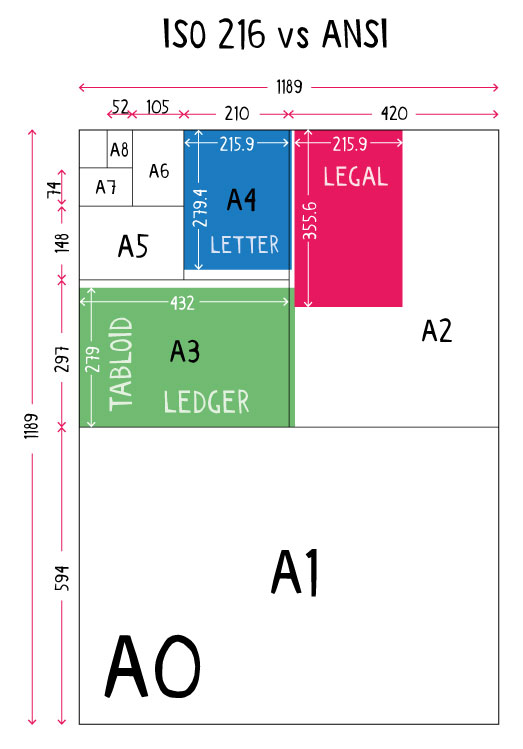
ISO 216 is a metric-based system of paper sizes, most famously represented by the A-series, B-series, and C-series. Its brilliance lies in its mathematical elegance:
- Aspect Ratio: Each size in the A-series has an aspect ratio of 1:√2 (approximately 1:1.414). This means that if you cut a sheet in half parallel to its shorter side, the two resulting smaller sheets will have the exact same aspect ratio as the original.
- Scalability: A0 has an area of exactly one square meter. A1 is half of A0, A2 is half of A1, and so on. A4 is one-sixteenth the size of A0. This proportional relationship simplifies scaling documents between different sizes without distortion.
- A4 (210 x 297 mm): This is the most common size globally, used in most countries outside North America for general printing. Its dimensions are roughly equivalent to, but slightly taller and narrower than, US Letter.
The consistent aspect ratio of ISO 216 papers offers distinct advantages for graphic design, photocopying, and scaling, making it a highly practical and widely adopted standard worldwide.
Challenges in Cross-Standard Environments
For global enterprises, international travelers, or even individuals collaborating across borders, the discrepancy between Letter and A4 can present practical and technical challenges:
- Business Operations: Companies with offices in multiple regions must manage printer inventories, paper supplies, and digital document workflows that accommodate both standards. This often means providing dual-standard printers or configuring specific print queues for regional needs.
- Software Localization: Software vendors must localize their applications to respect regional paper size defaults, but users still need tools to easily switch or convert formats when necessary.
- Technical Workarounds: Common strategies include using “fit to page” scaling options in print dialogs (which can sometimes distort content), manually adjusting page layouts, or converting documents to a globally neutral format like PDF/A that is designed for archival stability independent of print dimensions.
- Intelligent Print Drivers: The increasing sophistication of printer drivers includes features designed to better handle cross-standard printing, often with intelligent scaling and preview functions to minimize errors.
Beyond Letter: Other US Paper Sizes and Their Niche Tech Uses
While Letter dominates, the US also employs several other standard paper sizes, each with specific applications and implications for specialized hardware and software.
Legal (8.5 x 14 inches)
Legal paper is, as its name suggests, primarily used in legal and administrative contexts where longer documents are common. Many printers support Legal size, often requiring an extension to the paper tray or a separate manual feed slot. Software for legal document management, electronic discovery, and case management systems must ensure proper formatting and printing for this longer sheet.
Tabloid/Ledger (11 x 17 inches)
This larger format is crucial for design, architectural, and engineering fields. It provides ample space for blueprints, detailed drawings, marketing posters, and spreadsheets. Specialized wide-format printers and plotters are designed to handle Tabloid/Ledger and even larger roll paper formats. Computer-aided design (CAD) software, graphic design suites (e.g., Adobe Illustrator, AutoCAD), and desktop publishing programs are specifically built to leverage these larger canvases.
Executive (7.25 x 10.5 inches) and Statement (5.5 x 8.5 inches)
These smaller sizes are less common for general printing but find niche applications, particularly in corporate communications, custom stationery, and specialized reporting. Printers capable of handling these formats often feature adjustable paper guides to prevent jams. Some specialized financial or medical software might generate reports optimized for these sizes.
Photo Paper Sizes
Distinct from standard printer paper, photo paper comes in various sizes (e.g., 4×6, 5×7, 8×10 inches) and is tailored for high-quality image reproduction. Photo printers and multifunction devices often have dedicated trays or slots for these sizes, and photo editing software includes print modules specifically designed to crop and format images to fit these dimensions precisely.
The Future of Paper and Digital Convergence
The technological landscape is ever-evolving, and the role of physical paper, even with its entrenched standards, is shifting.
Decreased Reliance on Physical Prints
The move towards digital workflows, cloud storage, electronic signatures, and e-documents has significantly reduced the demand for physical prints in many sectors. This trend impacts printer sales, paper consumption, and the long-term relevance of specific paper size standards. Companies are increasingly prioritizing digital display and sharing over print output.
Software Adapting to Multi-Format Realities
As global collaboration becomes the norm, software applications are becoming more sophisticated in handling diverse paper standards. This includes:
- Intelligent Auto-Scaling: Advanced algorithms that can intelligently scale and reflow document content to fit different page sizes with minimal distortion.
- Enhanced Print Preview: More accurate visual representations of how a document will appear on various paper sizes before printing.
- AI in Document Layout: Emerging AI tools are being developed to optimize document presentation dynamically, regardless of the target display or print medium, ensuring readability and consistency across formats.
Sustainable Printing Technologies
The environmental impact of paper consumption and printing is a growing concern. This has led to innovations in eco-friendly paper production, energy-efficient printers, and sustainable ink/toner technologies. Optimization of paper usage, including printing on the most appropriate size to reduce waste, is becoming an integral part of sustainable tech practices.
In conclusion, while the 8.5 x 11-inch Letter size remains the undisputed standard for printer paper in America, its distinction from the global ISO 216 system is a critical technical consideration. This divergence influences everything from hardware engineering and software defaults to document design and international collaboration, constantly reminding users and developers of the subtle yet significant impacts of entrenched technological standards.
aViewFromTheCave is a participant in the Amazon Services LLC Associates Program, an affiliate advertising program designed to provide a means for sites to earn advertising fees by advertising and linking to Amazon.com. Amazon, the Amazon logo, AmazonSupply, and the AmazonSupply logo are trademarks of Amazon.com, Inc. or its affiliates. As an Amazon Associate we earn affiliate commissions from qualifying purchases.