
In the vast landscape of dramatic structure and narrative technique, the “aside” serves as one of the most effective tools for establishing an intimate connection between a character and the audience. Often confused with the soliloquy or the monologue, the aside occupies a unique space in theatrical history and literary craft. It is a moment of profound revelation, a theatrical shorthand that allows a dramatist to bypass the internal logic of a scene to provide the spectator with privileged, unfiltered information. By understanding the function, history, and strategic application of the aside, writers and scholars can better appreciate how this device shapes the audience’s perception of truth and moral complexity within a narrative.
The Definition and Functional Purpose of the Aside
At its most fundamental level, an aside is a dramatic device in which a character speaks to the audience or to themselves while other characters are present on stage. Crucially, the conventions of the medium dictate that these other characters cannot hear what is being spoken. It is a suspension of realistic dialogue, a meta-textual bridge that permits the character to comment on the ongoing action, reveal hidden motivations, or foreshadow future events.
Distinguishing Asides from Soliloquies
To master the use of the aside, one must distinguish it from its cousins: the soliloquy and the monologue. A soliloquy is a long, uninterrupted speech delivered by a character who is usually alone on stage. It is an exploration of the character’s internal state, often meditative and philosophical. In contrast, an aside is typically brief, sharp, and inserted directly into the flow of conversation. While a soliloquy invites the audience into a character’s private world, an aside acts as an intrusive whisper—a conspiratorial nudge that says, “Don’t believe what they just said.”
The Narrative Utility of the Aside
The primary utility of the aside lies in its ability to manage irony. Because the audience hears the aside while the other characters remain oblivious, the audience is placed in a position of moral or intellectual superiority. This gap between what the audience knows and what the characters know is the engine that drives tension. Whether it is used to expose a villain’s duplicity or to highlight the absurdity of a situation, the aside functions as a spotlight on the truth, cutting through the noise of superficial social interaction.
Historical Evolution: From Greek Roots to Elizabethan Dominance
The aside has a rich history that mirrors the evolution of the theater itself. While the seeds of the aside were present in the chorus-heavy structures of Greek tragedy—where the chorus often acted as an objective observer commenting on the hubris of the protagonist—it was in the Elizabethan and Jacobean eras that the aside truly flourished as a staple of dramatic art.
The Elizabethan Mastery of the Aside
William Shakespeare, the undisputed master of the form, used the aside to transform his plays into psychological thrillers. In Macbeth or Othello, the aside is often the key to unlocking the protagonist’s descent. When Iago speaks in asides, the audience becomes an unwilling accomplice to his machinations. The brevity of the Elizabethan aside allowed for rapid-fire shifts in tone, enabling a play to balance comedy and tragedy within the span of a single conversation. It turned the audience into a group of confidants, creating an immersive experience that traditional, linear dialogue could not achieve.
The Shift in Realism and Modernity
As theater moved into the 19th and 20th centuries, the rise of realism—typified by Ibsen and Chekhov—led to a decline in the use of the aside. Realism prioritized the “fourth wall,” the invisible barrier between the audience and the stage. The aside, which inherently breaks this wall, was often viewed as archaic or overly theatrical. However, the 20th century saw a resurgence of the device in absurdist and experimental drama. Playwrights like Samuel Beckett or Bertolt Brecht utilized the aside not as a narrative crutch, but as a method of alienation (Verfremdungseffekt), forcing the audience to remain critically detached rather than emotionally subsumed by the story.
The Mechanics of Effective Execution
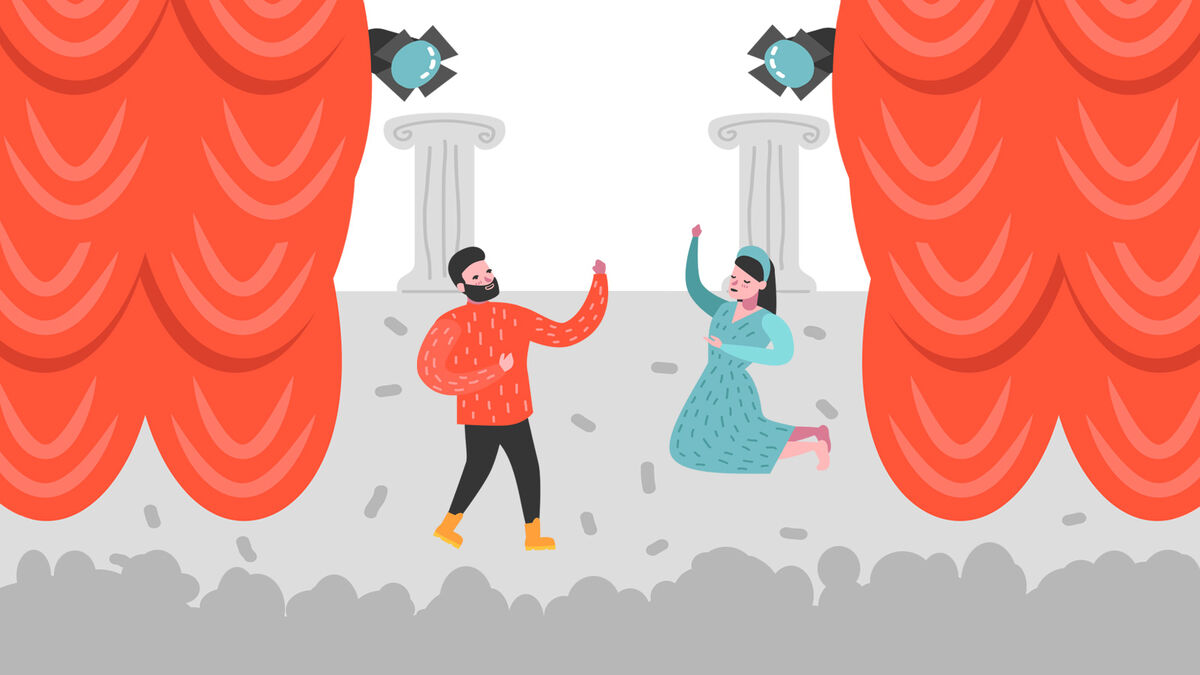
Writing a compelling aside requires a delicate balance of timing and substance. If used too frequently, the aside loses its impact, transforming from a revelation into a tedious interruption. If used incorrectly, it breaks the immersion of the scene without providing a meaningful payoff.
Timing and Pacing
The most effective asides arrive at moments of highest social pressure. A character might be forced to agree with a superior or a rival, only to turn to the audience and express their true disgust or disagreement. The physical movement—the “turn” toward the audience—is essential. It signals a shift in focus. The writer must ensure that the transition into and out of the aside is seamless; otherwise, the rhythm of the dialogue is sacrificed.
Providing Necessary Exposition
Beyond emotional commentary, the aside is a practical device for exposition. In complex plots, an aside can quickly clarify a character’s relationship to a hidden object, an unstated motive, or an unseen obstacle. Rather than forcing a character to explain their history to another character in an unnatural “info-dump,” the writer uses an aside to give the audience the information directly, maintaining the pace of the narrative while ensuring clarity.
Establishing Character Voice
The aside is also an exercise in voice. Because the aside is a moment of total honesty, it should contain the character’s most authentic diction. If a character is typically guarded and articulate, their aside might be fragmented and visceral. If a character is a bumbling fool, their aside might be the only place where they exhibit surprising cunning. This contrast between the “public self” and the “private truth” allows for a three-dimensional characterization that deepens the audience’s engagement with the work.
The Psychological Impact on the Audience
The aside does more than convey plot points; it changes the nature of the relationship between the spectator and the work. By breaking the fourth wall, the aside pulls the audience into the ethical theater of the play.
The Audience as Accomplice
When a character shares their darkest thoughts in an aside, the audience is forced to hold that knowledge. This can create a sense of unease. For instance, watching a protagonist lie to their spouse while the audience knows the truth through a preceding aside makes the audience a silent participant in the deception. This builds a unique form of suspense—the audience watches the scene unfold, waiting to see if the deception will be discovered.
Creating Meta-Cognitive Distance
In more experimental narratives, the aside can be used to question the narrative itself. A character might step out of character to comment on the absurdity of the plot or the predictability of their own actions. This meta-cognitive distance encourages the audience to think about the story as a construct. It challenges the passive consumption of entertainment, demanding that the viewer analyze the themes and structures rather than simply reacting to the plot.
The Role of the Aside in Contemporary Media
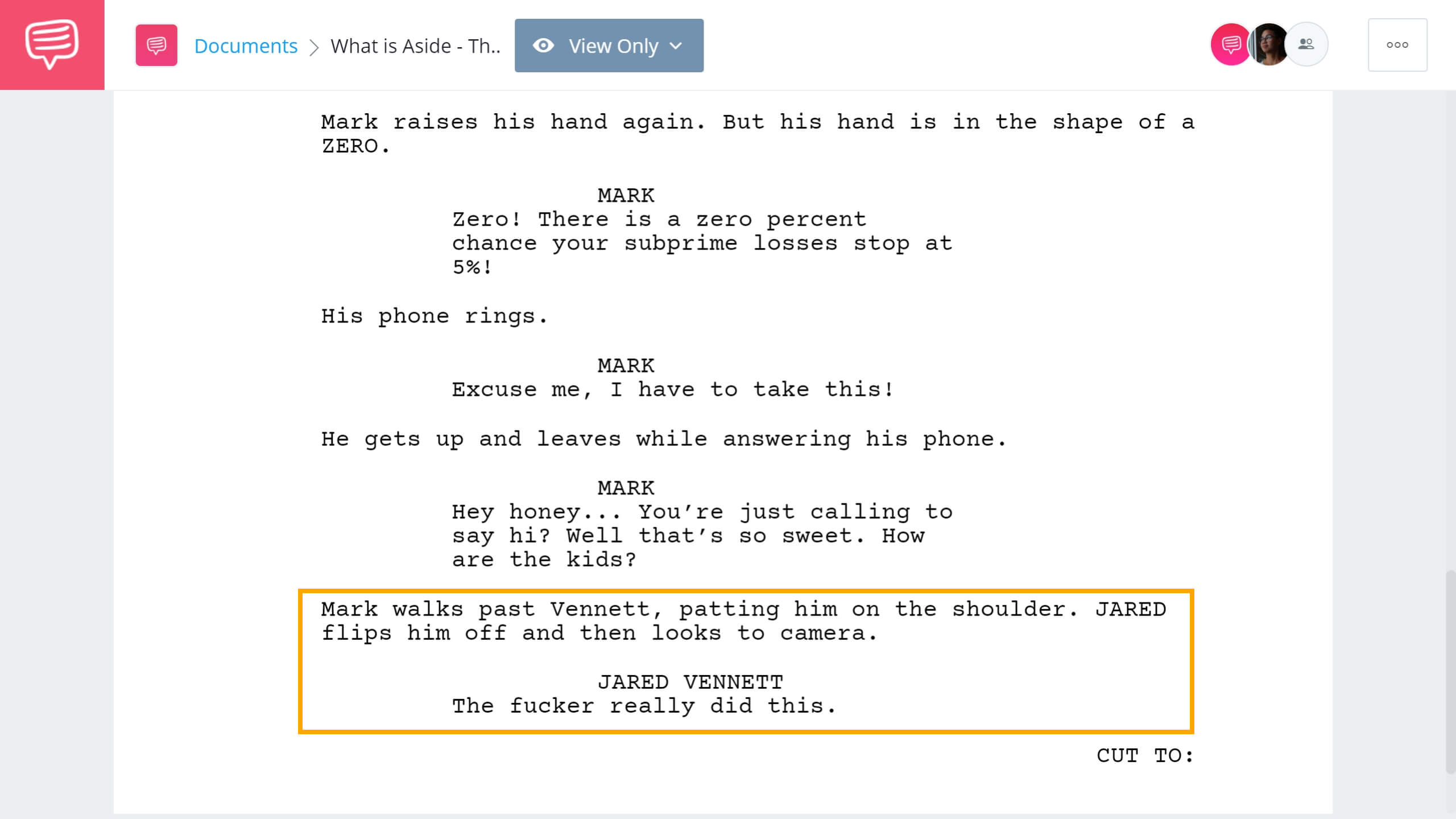
While the aside is primarily a theatrical device, its DNA can be found in modern television and film. The “mockumentary” style, exemplified by shows like The Office or Fleabag, relies heavily on the “look to camera”—a modern, visual equivalent of the aside. These moments provide the same immediate connection to the protagonist’s psyche, proving that the need for that intimate, ironic whisper remains as strong today as it was in the Globe Theatre.

Conclusion: The Enduring Power of the Aside
The aside is a testament to the fact that what is left unsaid is often more powerful than what is spoken aloud. By allowing a character to carve out a private space within a public interaction, the aside provides a lens through which we can view the complexity of human nature. It serves as a reminder that every person carries a hidden truth, a subtext that often contradicts their external performance. Whether deployed as a tool for suspense, a mechanism for exposition, or a means of philosophical inquiry, the aside remains a fundamental component of the dramatist’s toolkit. By mastering its rhythm and respecting its limits, writers continue to bridge the gap between the performer and the audience, ensuring that the dialogue between the stage and the observer remains vibrant, intimate, and profoundly human.
aViewFromTheCave is a participant in the Amazon Services LLC Associates Program, an affiliate advertising program designed to provide a means for sites to earn advertising fees by advertising and linking to Amazon.com. Amazon, the Amazon logo, AmazonSupply, and the AmazonSupply logo are trademarks of Amazon.com, Inc. or its affiliates. As an Amazon Associate we earn affiliate commissions from qualifying purchases.