
The landscape of modern education is shifting rapidly under the influence of digital transformation, and at the heart of this evolution is the support provided to English Language Learners (ELLs). In an educational context, ELLs refer to students who are in the process of acquiring English as an additional language and possess varying levels of proficiency in their native tongue and the target language. As schools and private learning institutions integrate increasingly sophisticated technology into their curricula, understanding the role of AI, software, and digital pedagogy in supporting these students has become a priority for tech-forward educators.

The Technological Foundation of Language Acquisition
In the digital era, the definition of an ELL is no longer confined to the traditional classroom environment. Technology has redefined how language is taught, practiced, and mastered. Software developers and EdTech innovators have turned their attention toward sophisticated algorithms that provide personalized learning paths, ensuring that students can navigate the complexities of a new language at their own pace.
Adaptive Learning Platforms
The cornerstone of modern ELL support lies in adaptive learning platforms. Unlike static textbooks, these digital environments use machine learning to assess a student’s current proficiency. If a student struggles with syntax or verb conjugation, the software automatically recalibrates to provide more exercises in that specific area. This real-time feedback loop is essential for ELLs, who often face unique hurdles in processing new linguistic structures. By leveraging data analytics, these platforms identify “blind spots” in a student’s vocabulary, offering a tailored pedagogical experience that human teachers in overcrowded classrooms might otherwise struggle to provide.
The Role of Artificial Intelligence and NLP
Natural Language Processing (NLP) has become a revolutionary tool for ELLs. Voice-recognition software now allows students to practice pronunciation in a low-stakes environment, where AI agents provide immediate feedback on phonetic accuracy. This eliminates the anxiety often associated with speaking in front of peers, allowing students to build confidence through repeated interaction with AI-driven tutors. Furthermore, AI chatbots provide 24/7 support, acting as virtual conversation partners that help students navigate everyday scenarios—from ordering food to asking for directions—before they encounter these situations in the real world.
Digital Tools and Software for Enhanced Literacy
Literacy is the bedrock of academic success, and for ELLs, the challenge is twofold: they must master both the mechanics of reading and the conceptual nuances of the English language. Digital tools have introduced a level of accessibility that was previously impossible, transforming how students interact with complex academic texts.
Assistive Technology and Accessibility
Assistive technology is no longer exclusive to students with physical disabilities; it has become a staple for ELLs. Text-to-speech (TTS) engines, for example, are invaluable for students who recognize words visually but struggle with phonics. By listening to high-quality audio representations of text, students can synchronize their visual tracking with auditory input, significantly improving reading fluency. Conversely, speech-to-text tools allow students to express their ideas orally, which can then be transcribed. This helps bridge the gap between their cognitive abilities and their written output, ensuring that a lack of English writing proficiency does not hinder their ability to demonstrate knowledge in other subjects like math or science.

Interactive Multimedia and Gamification
Gamification has emerged as a powerhouse for engagement. By turning vocabulary acquisition into an interactive experience—complete with points, levels, and progress badges—developers have increased retention rates among younger ELLs. Interactive multimedia, such as dual-language videos and subtitled learning apps, provides necessary context. When a student sees an image, hears the word, and sees the text simultaneously, they are engaging in multi-sensory learning. This approach grounds abstract vocabulary in concrete reality, a strategy supported by cognitive science to enhance language retention.
Bridging the Digital Divide in ELL Education
Despite the rapid advancement of technology, the integration of these tools for ELLs is not without challenges. The “digital divide” remains a critical issue that developers and educational policymakers must address to ensure equitable access to language learning resources.
Hardware and Connectivity Constraints
Software is only as good as the hardware that supports it. For many ELLs from underserved communities, access to high-speed internet and modern tablets is not guaranteed. Developers are increasingly tasked with creating “offline-first” apps that allow students to download lessons while connected to Wi-Fi and continue their progress in low-bandwidth environments. Designing for low-resource hardware—such as older mobile devices—is a specialized niche within software development that directly impacts the success of ELL programs in global markets.
Data Privacy and Security Considerations
As educational institutions collect vast amounts of data on student progress, privacy has become a paramount concern. Because ELLs are often minors, software platforms must adhere to strict data protection standards like COPPA and GDPR. Tech providers are now focusing on “privacy by design,” ensuring that student data is encrypted, anonymized, and never leveraged for third-party advertising. As we refine the tools used to support ELLs, the intersection of cybersecurity and pedagogical efficacy will define the next generation of EdTech standards.
The Future Trajectory: Personalization and Beyond
The future of ELL instruction lies in the hyper-personalization of the learning experience. We are moving toward a paradigm where the curriculum essentially “co-evolves” with the student.
Predictive Analytics for Educators
Future software updates are expected to move beyond simple progress reports. Predictive analytics will allow instructors to foresee when a student might hit a learning plateau. By analyzing patterns in a student’s interaction with learning software, AI can alert teachers to potential issues before they result in academic failure. This proactive approach allows for human intervention exactly when it is most needed, turning the teacher from a lecturer into a facilitator who uses technology to manage the nuances of individual student needs.
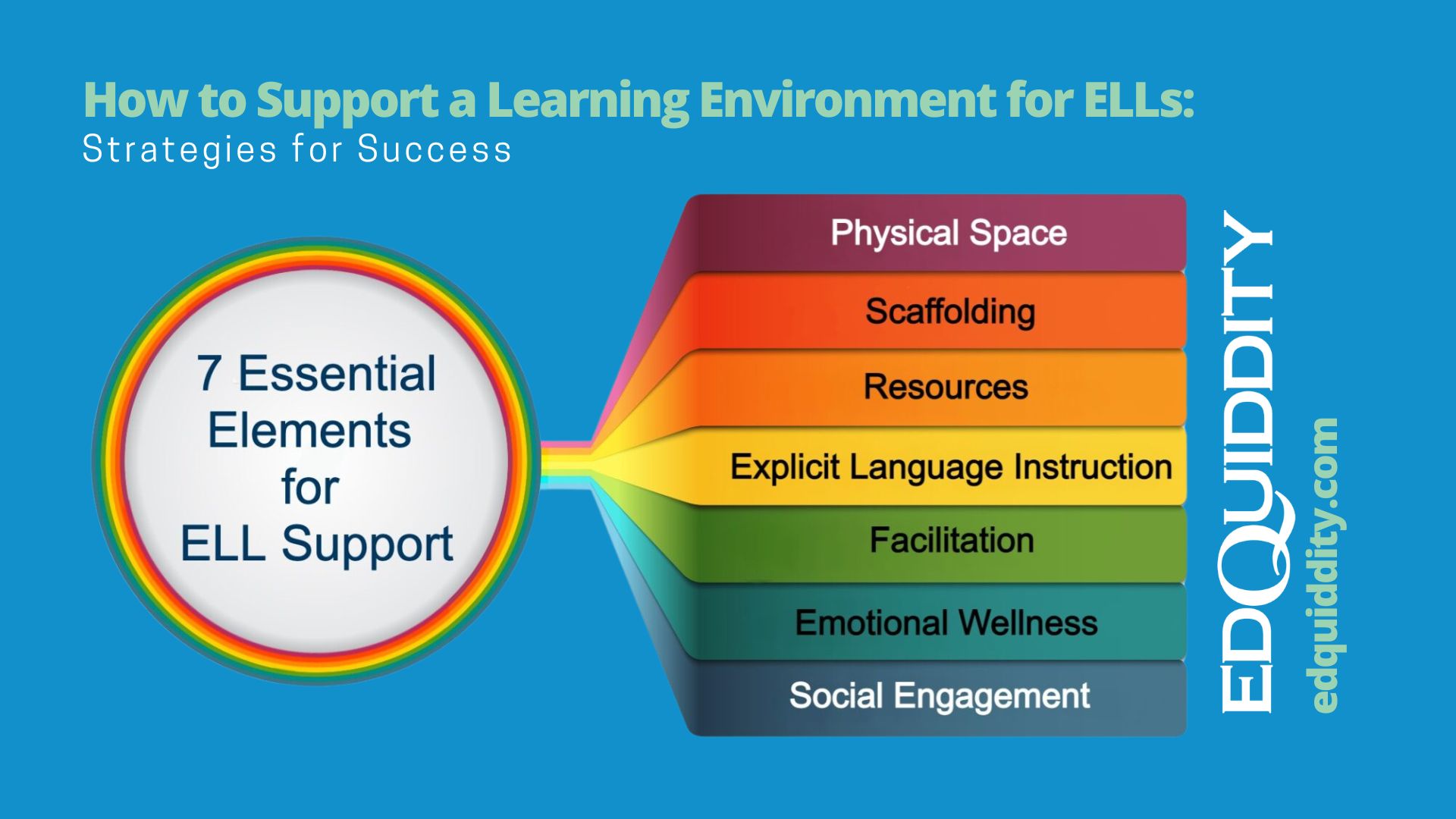
Collaborative Digital Classrooms
Finally, technology is facilitating the creation of global classrooms. Virtual reality (VR) and augmented reality (AR) are beginning to offer immersive experiences where students can “visit” English-speaking environments, such as a virtual London street or a historical museum, to practice language in a simulated setting. This moves beyond rote memorization into experiential learning. By placing the student in a virtual scenario that mimics real-world usage, software developers are providing a bridge that connects digital education to real-life linguistic competence.
Understanding ELLs in the context of technology reveals a fundamental shift: language acquisition is no longer a solitary task of memorizing grammar charts. It is an interactive, data-driven, and highly adaptive process. As tech developers continue to refine these tools, the gap between non-native proficiency and fluency will narrow, empowering a new generation of learners to participate fully in a globalized, English-integrated digital society. The focus remains clear: leveraging innovation to ensure that every student, regardless of their starting point, has the digital scaffolding required to achieve their full academic and personal potential.
aViewFromTheCave is a participant in the Amazon Services LLC Associates Program, an affiliate advertising program designed to provide a means for sites to earn advertising fees by advertising and linking to Amazon.com. Amazon, the Amazon logo, AmazonSupply, and the AmazonSupply logo are trademarks of Amazon.com, Inc. or its affiliates. As an Amazon Associate we earn affiliate commissions from qualifying purchases.