
The United States Constitution is often described as a living document, but its most transformative evolution occurred in the immediate aftermath of the American Civil War. Between 1865 and 1870, Congress ratified the 13th, 14th, and 15th Amendments. Known collectively as the Civil War Amendments—or the Reconstruction Amendments—these additions to the supreme law of the land fundamentally altered the nation’s financial and social landscape. While historically viewed through a legal and civil rights lens, these amendments also established the bedrock for modern American economic systems, corporate personhood, and the stabilization of national markets. Understanding these amendments is essential to understanding the evolution of property rights, labor economics, and the infrastructure of the American business environment.
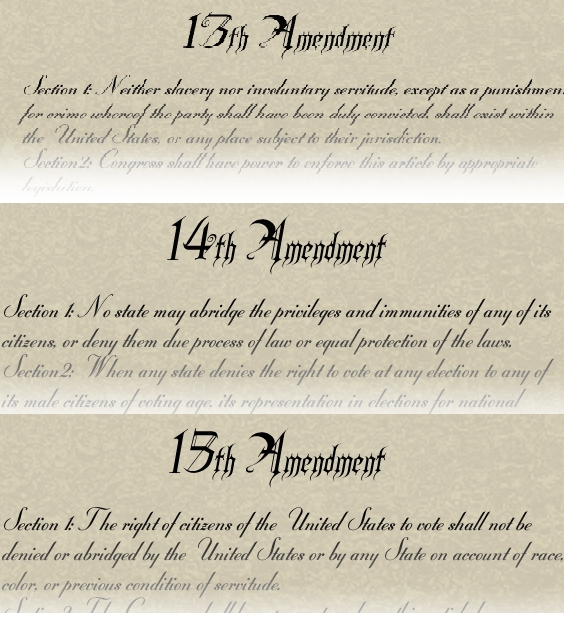
The 13th Amendment: Ending Forced Labor and the Economic Shift
Ratified in 1865, the 13th Amendment did more than abolish slavery; it dismantled the single largest capital asset class in the Southern economy. By ending the system of chattel slavery, the amendment necessitated a total restructuring of agricultural and industrial production.
Labor Markets and Economic Mobility
Prior to the 13th Amendment, the South operated on a coerced labor model. The transition to a free labor system introduced the concept of the wage contract as the primary driver of economic activity. This shift forced landowners and industrial operators to transition from a fixed-asset view of human labor to a variable-cost model. This was a critical step in the development of modern business finance, as it required companies to account for payroll, overhead, and labor productivity in ways that were previously unnecessary under a plantation economy.
Capital Reallocation
The sudden eradication of the property value associated with enslaved individuals sent shockwaves through the financial system. Investment portfolios that had been leveraged against the ownership of human beings became essentially worthless overnight. This forced a massive reallocation of capital toward land improvement, industrial machinery, and the development of new, diversified trade routes. It was the beginning of the transition from a primitive agrarian economy toward the industrial capitalism that would define the Gilded Age.
The 14th Amendment: Due Process and the Birth of Corporate Personhood
If the 13th Amendment provided the labor foundation, the 14th Amendment, ratified in 1868, provided the regulatory framework for American business. While its primary purpose was to grant citizenship and equal protection to formerly enslaved people, the legal interpretation of the 14th Amendment—specifically the Due Process Clause—would become the most powerful tool in the history of American corporate finance.
The Rise of Corporate Legal Status
The 14th Amendment states that no state shall “deprive any person of life, liberty, or property, without due process of law.” Over the subsequent decades, the Supreme Court interpreted the word “person” to include corporations. This was a pivotal moment for business strategy. It granted companies the same constitutional protections as individuals, shielding them from state-level overreach, excessive regulation, and punitive taxation that might interfere with contractual obligations.

Establishing Stability for National Markets
Before the 14th Amendment, businesses faced a patchwork of state laws that made interstate commerce notoriously difficult. The amendment’s mandate for equal protection allowed for a more uniform business environment. Investors could now deploy capital across state lines with the assurance that they would not be subjected to arbitrary state laws that unfairly favored local competitors. This stability was a prerequisite for the growth of large-scale, national corporations and the emergence of the modern stock market, as it provided a predictable legal environment for corporate governance.
The 15th Amendment: Expanding the Marketplace and Economic Inclusion
The 15th Amendment, ratified in 1870, prohibited the federal and state governments from denying a citizen the right to vote based on “race, color, or previous condition of servitude.” While this is a cornerstone of political science, its implications for the financial world are equally profound. By seeking to integrate millions of citizens into the political process, the amendment laid the groundwork for an expanded, more robust consumer economy.
Consumption as a Driver of Growth
An economy is only as strong as its participant base. By asserting the rights of African American men to participate in the political life of the nation, the 15th Amendment sought to create a more inclusive societal structure. When people have a voice in the government, they are more likely to engage in the broader economy, participate in property ownership, and contribute to the growth of financial institutions. The long-term economic goal of this inclusion was the creation of a broader consumer market, one that could support a growing manufacturing base.
Building Financial Infrastructure
The Reconstruction era saw the establishment of institutions like the Freedmen’s Savings Bank. While the history of these early institutions was fraught with challenges, they represented an early attempt to bring the formerly enslaved population into the fold of the American financial system. The 15th Amendment’s push for political equality served as a backdrop for the realization that a modern, industrial economy requires a population that is financially literate, capable of participating in banking, and invested in the national debt through bonds and savings.
The Long-Term Economic Legacy of Reconstruction
The Civil War Amendments did not immediately solve the issues of inequality or create a perfectly efficient market, but they provided the essential architecture for the American dream—the idea that individual labor and capital, when protected by law, can grow over time.
The Foundation of Property Rights
These amendments solidified the concept of property rights as a fundamental aspect of American life. Whether it was the transition to paid labor, the protection of corporate assets, or the inclusion of new participants into the economy, the legal framework established in the late 1860s meant that business could finally be conducted with a long-term horizon. Uncertainty is the enemy of investment; by codifying rights into the Constitution, the government provided the certainty necessary for the 20th century’s economic explosion.

The Precedent for Regulatory Strategy
For modern business leaders and investors, the Civil War Amendments serve as a case study in how political change drives economic outcomes. The transition from state-centric governance to a federalized standard for rights and protections enabled the creation of the massive national corporations that dominate the global financial stage today. When we analyze modern corporate identity, we are essentially looking at the downstream effects of these amendments. They transformed the American company from a regional operation into a protected, legal entity with the power to scale across an entire continent.
In conclusion, the Civil War Amendments were the economic engines of the 19th and 20th centuries. By abolishing the archaic slave economy, providing the legal scaffolding for corporate growth, and signaling the inclusion of all citizens into the civic and economic life of the nation, they turned the United States into a massive, unified marketplace. For anyone looking at the history of American business or the strategic development of markets, these amendments represent the moment the United States shifted from a loose association of agrarian states to a powerful, industrialized economic superpower. Understanding this transition is vital for anyone interested in how the interplay between law, policy, and finance creates the conditions for long-term prosperity.
aViewFromTheCave is a participant in the Amazon Services LLC Associates Program, an affiliate advertising program designed to provide a means for sites to earn advertising fees by advertising and linking to Amazon.com. Amazon, the Amazon logo, AmazonSupply, and the AmazonSupply logo are trademarks of Amazon.com, Inc. or its affiliates. As an Amazon Associate we earn affiliate commissions from qualifying purchases.