
The Apollo 11 mission remains the pinnacle of twentieth-century technological achievement. While the historical milestone is often reduced to a singular image of a boot hitting lunar dust, the success of the mission relied on a sophisticated integration of hardware, software, and human-machine interaction. To understand the timeline of the moon landing, one must examine the state of computing and systems engineering in 1969, a period that set the foundation for every digital tool we rely on today.
The Digital Foundation of the Lunar Module
The timeline of the moon landing is inextricably linked to the Apollo Guidance Computer (AGC). At 20:17:40 UTC on July 20, 1969, the Lunar Module Eagle touched down on the surface of the Moon. This specific moment was not merely the result of manual piloting, but the outcome of a complex marriage between real-time telemetry and digital processing.

The Role of Real-Time Data Processing
The AGC was a revolutionary piece of engineering. It was the first computer to use silicon integrated circuits, a precursor to the microprocessors that drive modern smartphones and enterprise-level servers. When the Eagle began its descent, the computer was tasked with managing the throttle settings, attitude control, and descent rate.
During the final minutes of the descent, the AGC triggered several 1201 and 1202 alarms—errors that indicated the system was overloaded. In modern software development terms, this was a “buffer overflow” or task-scheduler saturation. The software was designed with a priority-interrupt scheme that allowed it to discard lower-priority tasks to focus on the essential guidance functions. This decision-making logic effectively saved the mission, proving that robust system architecture is the difference between success and failure in high-stakes environments.
The Evolution of Flight Software
The code behind the Apollo 11 landing, written primarily in AGC assembly language, consisted of approximately 60,000 lines of code. By today’s standards, this is a negligible amount of data, but in 1969, it represented the bleeding edge of software engineering. The code was “roped” into memory—literally woven into core ropes by hand. This hardware-software integration ensured that the code could not be accidentally overwritten, a form of immutable storage that modern cybersecurity professionals continue to study as an early example of “read-only” architecture.
Navigating Precision: Telemetry and Guidance Systems
The success of the 20:17:40 UTC landing was dependent on the deep-space communication infrastructure that spanned the globe. The Deep Space Network (DSN) provided the digital backbone required to transmit the telemetry that guided Armstrong and Aldrin to their target.
Telemetry Latency and Communication
In the era before high-speed cloud computing, managing telemetry latency was a massive hurdle. The signals from the Eagle traveled at the speed of light, resulting in a round-trip delay of approximately 2.6 seconds. For the software running on the ground at Mission Control in Houston, this latency meant that the flight controllers were always looking at a snapshot of the past.
Modern digital systems handle latency through predictive modeling and edge computing. Similarly, the Apollo flight controllers used simulated models to bridge the gap between receiving telemetry and issuing corrective commands. This period laid the groundwork for how we currently manage distributed networks and satellite communication, emphasizing the need for localized computing power in remote environments—a concept that defines modern edge AI and IoT deployments.
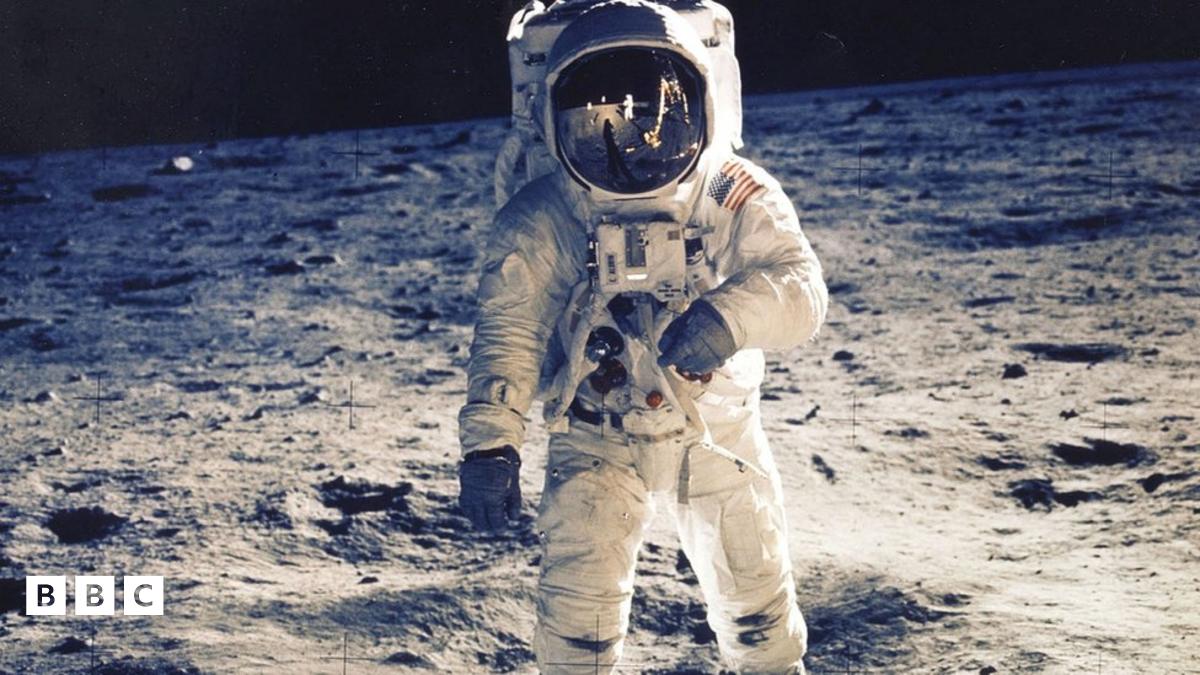
The Digital Interface of the DSI
Neil Armstrong’s interaction with the Lunar Module’s DSKY (Display and Keyboard) interface is an early case study in User Experience (UX) design. The interface was intentionally austere, utilizing a numeric keypad and status lamps to minimize cognitive load during the high-stress descent phase. When we design modern mission-critical software or enterprise dashboards, the principles applied to the AGC interface remain standard: clear data visualization, priority-based alerts, and immediate, tactile feedback.
The Technological Legacy: From Apollo to AI
When we ask about the time of the moon landing, we are essentially looking at the “Big Bang” of the digital age. The technologies developed to facilitate that 20:17:40 UTC touchdown accelerated the transition from mechanical analog systems to digital processing.
The Impact on Modern Computing Hardware
The miniaturization required to place a computer inside the Eagle forced an industry-wide pivot toward integrated circuits. Before 1969, computers filled entire rooms. After Apollo, the mandate was mobility and efficiency. This shift directly influenced the trajectory of personal computing in the 1980s and the mobile revolution of the 2010s. The AGC’s ability to handle multitasking—even under stress—became the template for modern operating systems like Linux and Windows, which rely on similar interrupt-driven architectures to maintain stability.
Automation and Autonomous Systems
The moon landing was arguably the first major demonstration of an autonomous system functioning in a hazardous environment. While Armstrong took manual control in the final seconds to avoid a boulder field, the landing was facilitated by a semi-autonomous navigation system. Today, this logic is mirrored in the development of self-driving vehicles and autonomous drone networks. The software algorithms that calculated the Eagle’s landing vector were the ancestors of the SLAM (Simultaneous Localization and Mapping) algorithms used by current robotics platforms to navigate unseen terrains.
Lessons in Digital Reliability and Design
The Apollo 11 mission offers timeless lessons for current tech practitioners. Beyond the historical significance, the technical documentation of the lunar descent serves as a manual for reliability engineering.
Resilience Through Redundancy
One of the most critical lessons from the landing was the necessity of redundancy. The AGC was supplemented by manual controls, and the hardware components were rigorously tested against failure points. In current cloud architecture, we utilize “high availability” and “failover” systems to achieve the same goal. The lesson is clear: if a system is vital to the user experience or to safety, it must have a path to function even when primary systems encounter errors.
The Human-Machine Loop
The descent of the Eagle highlights the importance of the human-in-the-loop (HITL) model. Despite the sophisticated AGC, the mission required a pilot to interpret the environment and override the machine when the algorithm faced an unforeseen hazard. Modern AI development often focuses on “fully autonomous” systems, but the Apollo 11 success suggests that the most effective technological outcomes occur when high-speed machine processing is paired with human intuition and situational awareness.
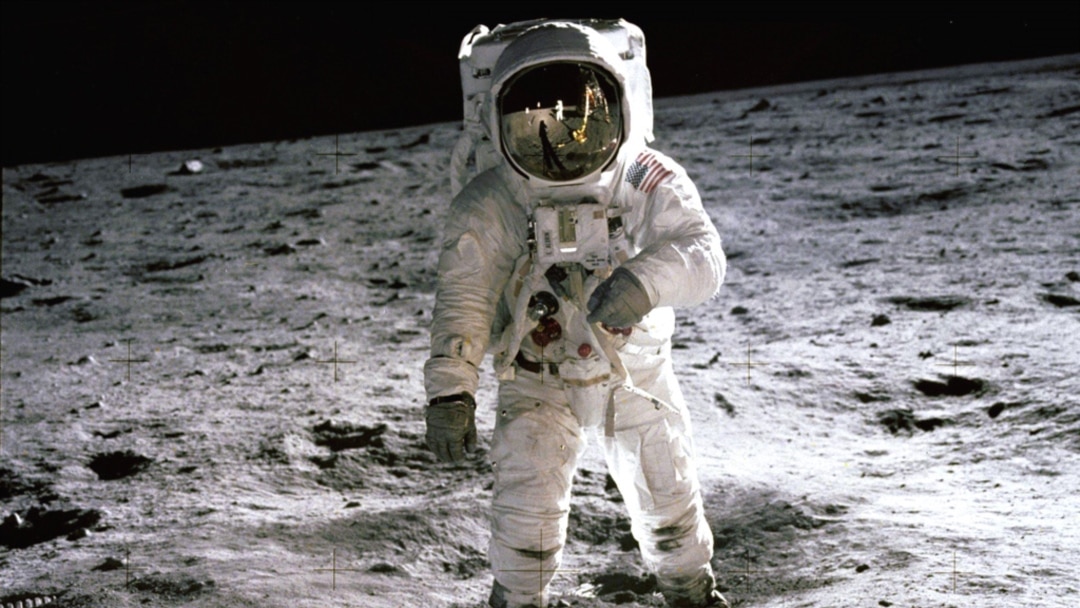
Scaling Innovation
The project management methodology used by NASA to hit the 1969 landing deadline—a project dubbed “Project Apollo”—introduced the world to sophisticated systems engineering. This management style, characterized by cross-functional teams and iterative testing cycles, is the direct ancestor of modern “Agile” development. The ability to manage a hardware and software project of that scale continues to be the benchmark against which large-scale technology deployments are measured.
The moment Neil Armstrong landed on the moon was the ultimate “production release.” It was a culmination of millions of hours of software coding, hardware integration, and rigorous testing. As we look toward the future of technology—whether it be the deployment of AI in everyday life or the next generation of space exploration—the lessons learned during that precise moment in 1969 remain our most valuable blueprint. The digital infrastructure we enjoy today owes its existence to the reliability and precision demanded by the Apollo mission. By understanding the technological context of that landing, we gain a deeper appreciation for how innovation is sustained, scaled, and managed in the modern digital landscape.
aViewFromTheCave is a participant in the Amazon Services LLC Associates Program, an affiliate advertising program designed to provide a means for sites to earn advertising fees by advertising and linking to Amazon.com. Amazon, the Amazon logo, AmazonSupply, and the AmazonSupply logo are trademarks of Amazon.com, Inc. or its affiliates. As an Amazon Associate we earn affiliate commissions from qualifying purchases.