
In the fast-paced ecosystem of digital gaming, communication happens in milliseconds. Whether you are coordinating a raid in a massive multiplayer online role-playing game (MMORPG) or rotating positions in a competitive first-person shooter (FPS), brevity is the lifeblood of team success. Among the myriad of acronyms that have become ingrained in gaming lexicon, few are as foundational as “AFK.” Standing for “Away From Keyboard,” this simple three-letter initialism has evolved from a basic status indicator into a social construct that influences player behavior, community etiquette, and even software design.
The Origins and Core Meaning of AFK
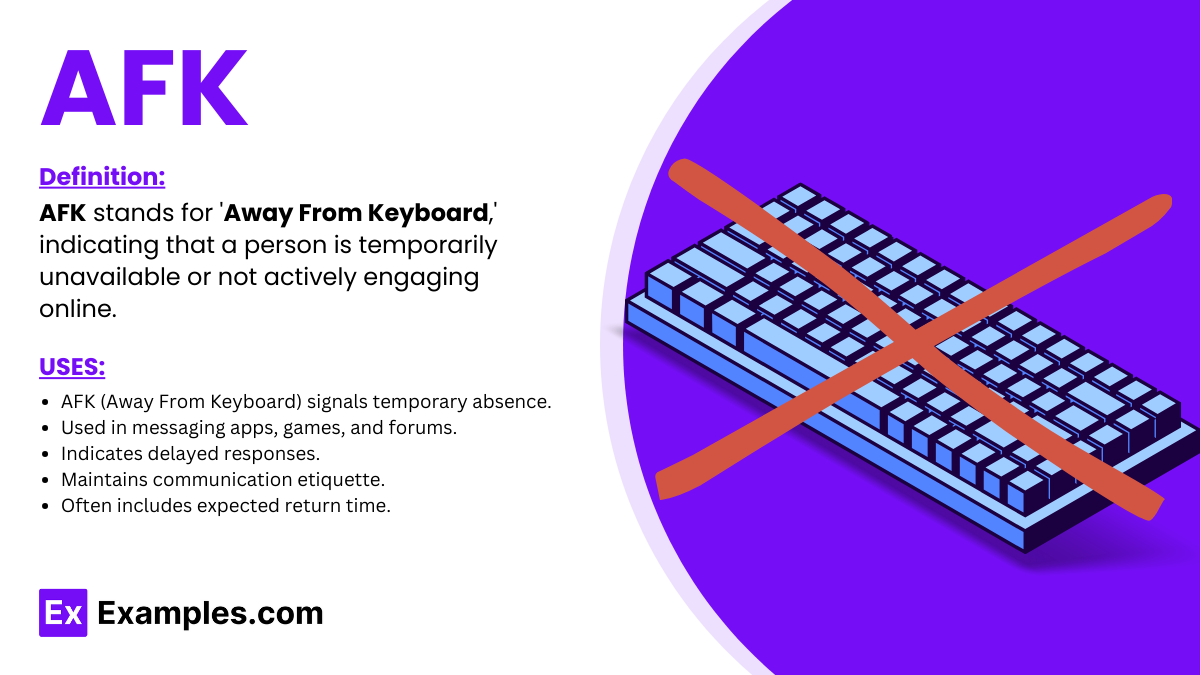
At its most literal level, AFK means that a player is not physically present at their computer terminal or gaming console. In the early days of networked gaming—specifically during the era of Multi-User Dungeons (MUDs) and early Internet Relay Chat (IRC) culture—players needed a way to signal to others that they were not ignoring messages, but were simply stepping away to handle real-life necessities.

The Evolution of Gaming Hardware
While the term originated on desktop computers (the “keyboard”), the acronym has transcended its hardware-specific roots. Today, a console player reclining on a couch with a wireless controller might still type “AFK” into a lobby chat. The term has become synonymous with “unresponsive” or “unavailable,” regardless of the interface being used. It effectively functions as a digital “do not disturb” sign, letting teammates know that the player’s avatar is currently a “sitting duck” and cannot react to in-game stimuli.
Digital Etiquette and Communication
In professional and casual gaming environments, AFK acts as a crucial communication tool. In team-based games like League of Legends or Counter-Strike, an AFK player can be catastrophic for the team’s win probability. By announcing an impending AFK status, a player allows their teammates to adapt—perhaps by playing defensively, pausing the game if the platform allows, or selecting a temporary replacement. Understanding the gravity of this signal is a marker of a mature and considerate gamer.
AFK as a Technical and Social Problem
While the term itself is simple, the act of going AFK creates a complex set of challenges for game developers and community managers. In the realm of software design, AFK management is a critical component of user experience (UX) and digital infrastructure.
The Problem of “Griefing” and Abandonment
In competitive gaming, the term “AFK” is often used as a pejorative. When a player leaves a match without warning, they are essentially sabotaging their team. This behavior is classified as “griefing” in many communities. Developers have had to integrate sophisticated systems to detect when a player is AFK to minimize the impact on others. These systems monitor input signals; if no mouse movement, keystrokes, or controller inputs are registered for a set period, the game server flags the player as inactive.

Software Solutions and Mitigation
Modern game engines employ several strategies to handle AFK players:
- Automated Kicks: Servers often automatically disconnect users who remain idle for too long to free up lobby space.
- Penalty Systems: Many platforms implement “leaver busters” or “priority queues,” where players who frequently go AFK are penalized with temporary bans or are forced to wait longer to find future matches.
- Backfill Mechanics: In casual game modes, developers often implement a “join-in-progress” system where an active player is swapped into the server to replace the player who has gone AFK, ensuring the match remains balanced.
Gaming Culture and the “AFK-er” Phenomenon
The perception of being AFK has shifted as gaming has moved from a niche hobby to a mainstream social platform. In the early 2000s, being AFK was an inconvenience. Today, it is an integrated aspect of the “always-on” nature of modern digital life.
The “AFK Room” and Social Hubs
In virtual social spaces—such as VRChat, Roblox, or World of Warcraft capital cities—going AFK is a regular social occurrence. Players often leave their characters standing in public spaces to signify they are present but “idling.” This creates a unique social dynamic where the avatar becomes an extension of the person’s digital identity, even when the user is away. It is not uncommon to see groups of players gathering around a character who has been AFK for hours, using the idle character as a meeting point or a landmark.
AFK Farming: A Controversial Strategy
In some genres, particularly mobile games and survival MMOs, “AFK farming” has emerged as a controversial meta-strategy. This involves setting up a character to perform repetitive tasks, such as gathering resources or attacking low-level mobs, while the player is not actively interacting with the screen.
- The Developer Viewpoint: Developers often view this as an exploit that ruins the game economy or circumvents the intended progression curve.
- The Player Viewpoint: Many players argue that if a game requires thousands of hours of grinding, AFK farming is a necessary tool to reach end-game content without burning out.
This dichotomy highlights how the term “AFK” has evolved from a status indicator into a catalyst for ongoing debates about game design, balance, and the ethics of automation.
The Future of AFK in an Immersive Tech Landscape
As gaming technology advances, the definition of being “AFK” faces new challenges. With the rise of VR (Virtual Reality), AR (Augmented Reality), and more integrated cross-platform software, the boundary between “playing” and “idling” is becoming increasingly blurred.
Biometric Feedback and Idleness
As wearables become more integrated with gaming rigs, software developers are looking toward biometric data to determine AFK status. Instead of simply monitoring keystrokes, future systems might detect heart rate, eye movement, or even presence sensors. This would allow games to distinguish between a player who is truly “away” and a player who is simply observing the game world. This would fundamentally change the way multiplayer games handle inactivity, moving from “hard” disconnects to “soft” idle modes where the player’s character might enter an automated, non-disruptive state.
The Permanence of the Acronym
Regardless of the technological shift, the acronym “AFK” is likely to remain. It has achieved a linguistic longevity that few other internet slang terms possess. It is concise, universally understood, and perfectly captures the reality of the modern gamer who balances a virtual life with the inevitable interruptions of the physical world.
The next time you see a character standing motionless in a town square or notice a teammate standing still in a heated firefight, you are witnessing the intersection of human limitations and digital connectivity. Whether it is used as a polite notification or a frustrated accusation, AFK remains the most important three letters in the gamer’s vocabulary—a testament to the fact that while our avatars may live in high-fidelity digital worlds, our lives will always be anchored to the physical reality outside of our keyboards.
aViewFromTheCave is a participant in the Amazon Services LLC Associates Program, an affiliate advertising program designed to provide a means for sites to earn advertising fees by advertising and linking to Amazon.com. Amazon, the Amazon logo, AmazonSupply, and the AmazonSupply logo are trademarks of Amazon.com, Inc. or its affiliates. As an Amazon Associate we earn affiliate commissions from qualifying purchases.